
A History of XR Cross Reality Part 3 of 6
 |
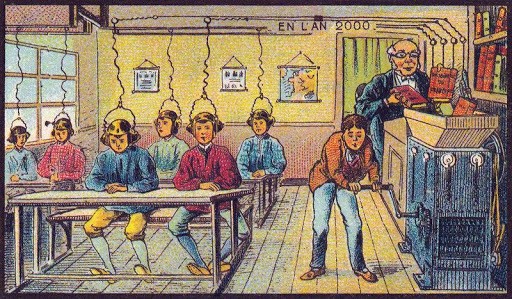
| France_in_XXI_Century._School.jpg: Jean Marc Cote (if 1901) or Villemard (if 1910)derivative work: TVJunkie, Public domain, via Wikimedia Commons |
1910 – 1965
In 1910, the artist Jean
Marc Cote, is commissioned to create artwork for cigar boxes showing
humanity in the year 2000. Some of these predictions hit remarkably
close the mark.
Flying firefighters. No? You do know that departments are incorporating drones, right?
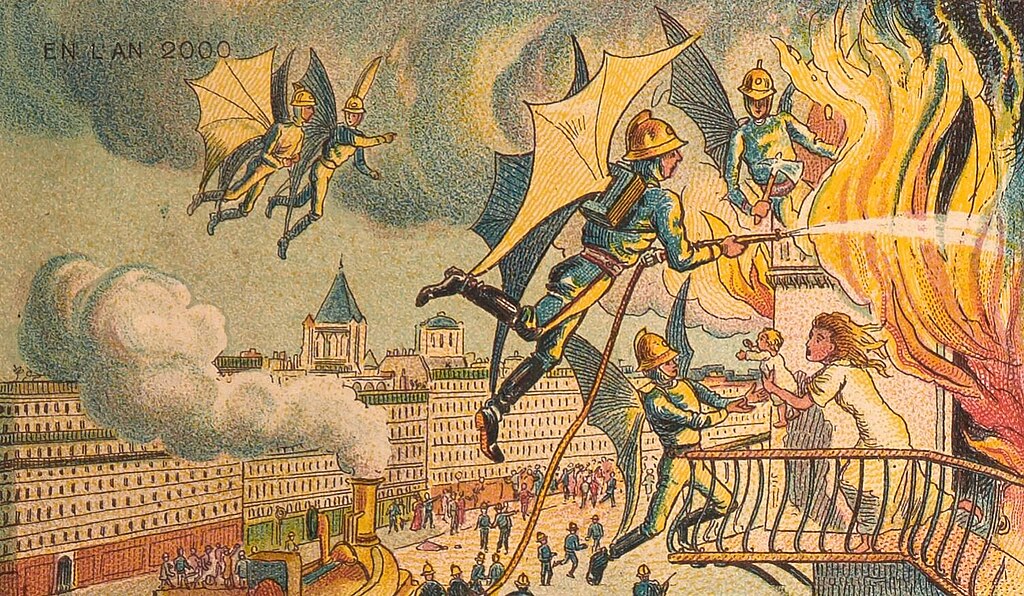 |
| Villemard, Public domain, via Wikimedia Commons |
Schools transformed by just listening-learning (blog banner image).
Now educators and I can have a field day with just this image. I
would ask a group of teachers-to-be to analyze what was correct in this
prediction and what was incorrect. We could go on and on. The main idea
here to get is that learning was going to transformed to occur only by listening. How ridiculous, right? And yet, three years later in real life…
.jpg) |
| Thomas Edison examining some film. NPGallery, Public domain, via Wikimedia Commons |
“Thomas
Edison famously predicted in 1913 that “Books will soon be obsolete in
schools” – but not because books were to be ground up by a knowledge
mill. Rather, Edison believed that one of the technological inventions
he was involved with and invested in – the motion picture – would
displace both textbooks and teachers alike.
“I believe that the
motion picture is destined to revolutionize our educational system and
that in a few years it will supplant largely, if not entirely, the use
of textbooks,” Edison asserted in 1922. “I should say that on the
average we get about two percent efficiency out of schoolbooks as they
are written today. The education of the future, as I see it, will be
conducted through the medium of the motion picture… where it should be
possible to obtain one hundred percent efficiency.” (Watters, 2015)
From
1913 to 1931, we have the age of radio. By 1931, television was
demonstrated at the Iowa State Fair. Just two years after (so quick if
you think about it) that the University of Iowa started to experiment
with this medium. The first broadcasts were only video, no audio.
Because televisions were scarcely available commercially and the signal
was weak, users who could receive the signal tended to be with five
miles of the campus and had built their own TVs from parts. If you
wanted to hear sound along with the video, you had to tune in your radio
at the same time. Descriptions of the image produced in these
rudimentary TVs are actually scary (colors, shapes, very fuzzy). But it
is a start!
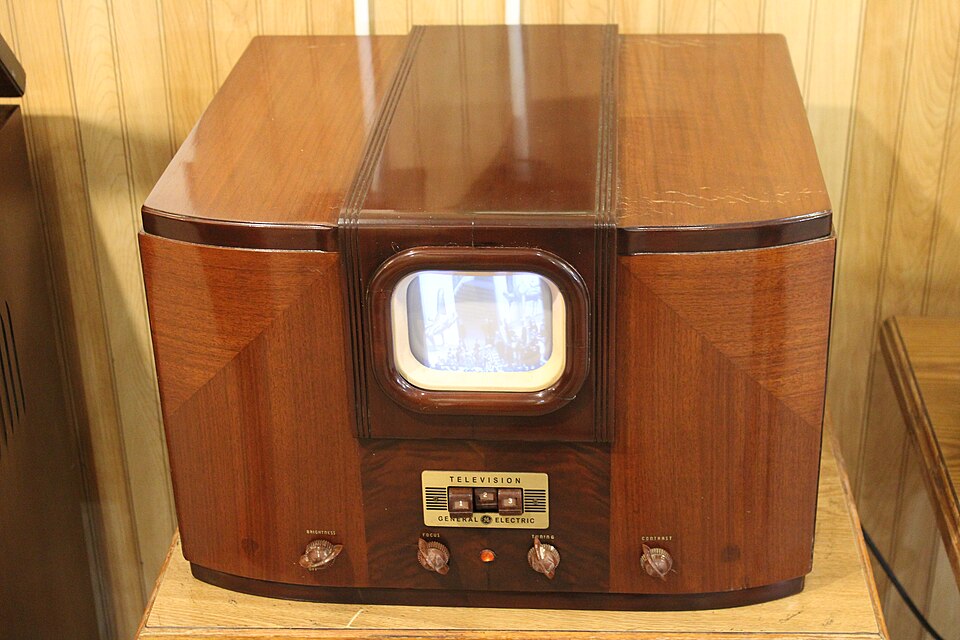 |
| General Electric early television set. DogsRNice, CC BY-SA 4.0 <https://creativecommons.org/licenses/by-sa/4.0>, via Wikimedia Commons |
Professors
quickly figured out that they could broadcast radio from home and then
did so. Students still had to travel to campus and sit in seats to
listen. The next innovation was two way radio so students could ask
questions of the professor.
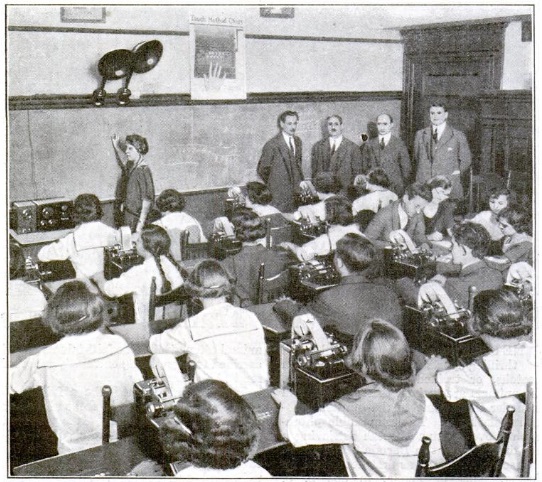 |
| Haaren High School, New York, accounting class, by radio. Source: https://onetuberadio.com/2023/07/10/1923-distance-learning/ |
1957
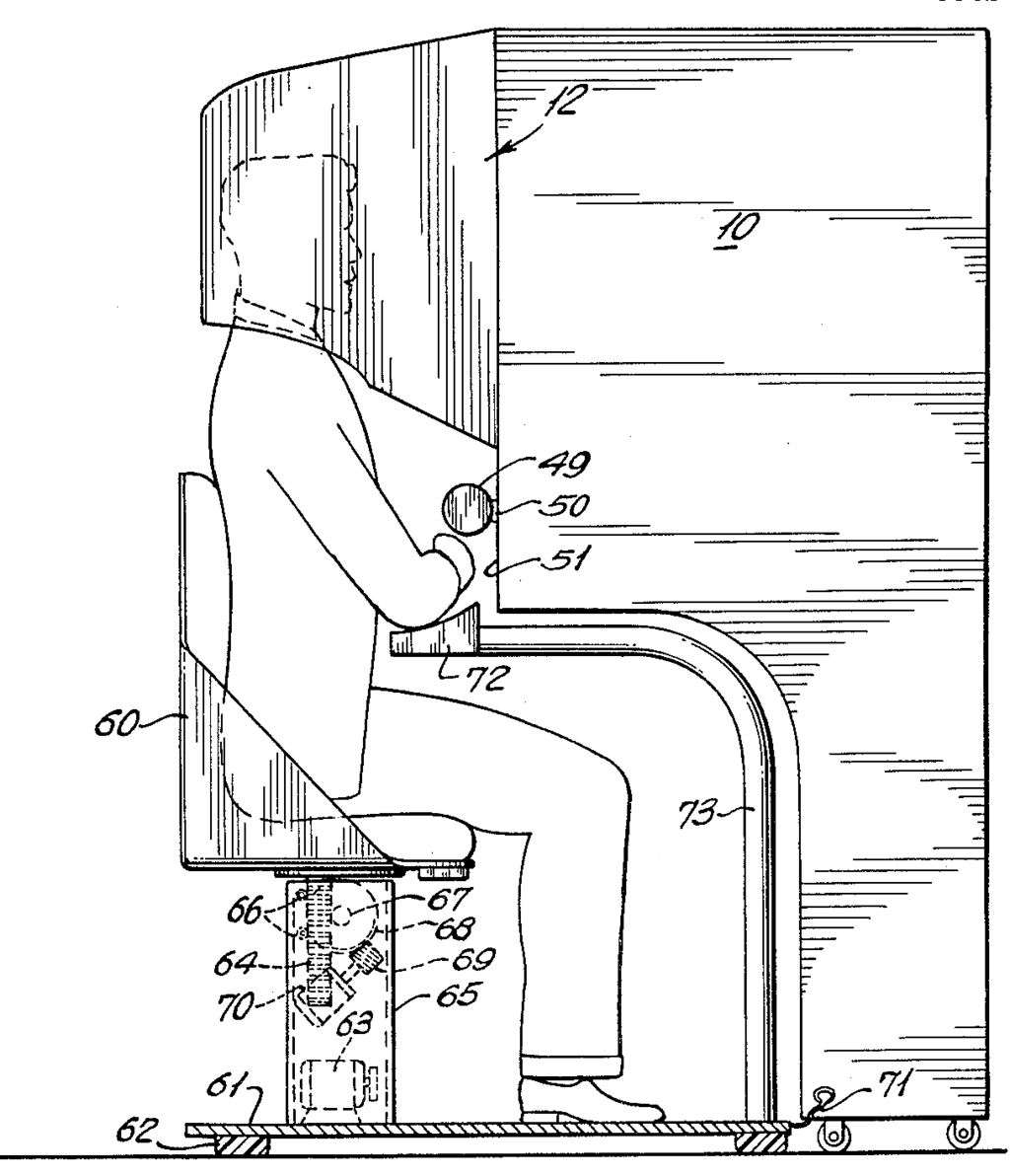
The Sensorama by Morton Heilig is considered the first cross reality
machine. It provided visuals, sounds, vibrations, and smells.
 |
| Sensorama patent filing diagram, side view. |
1958
I cannot resist including this image of an electric typewriter because
use of text is a common theme that carries through our history of XR and
I do believe it will continue into the future. What is interesting is
the boast that her grades will improve by 38% if you buy her an electric
typewriter. Her grades will improve in what…typing class?

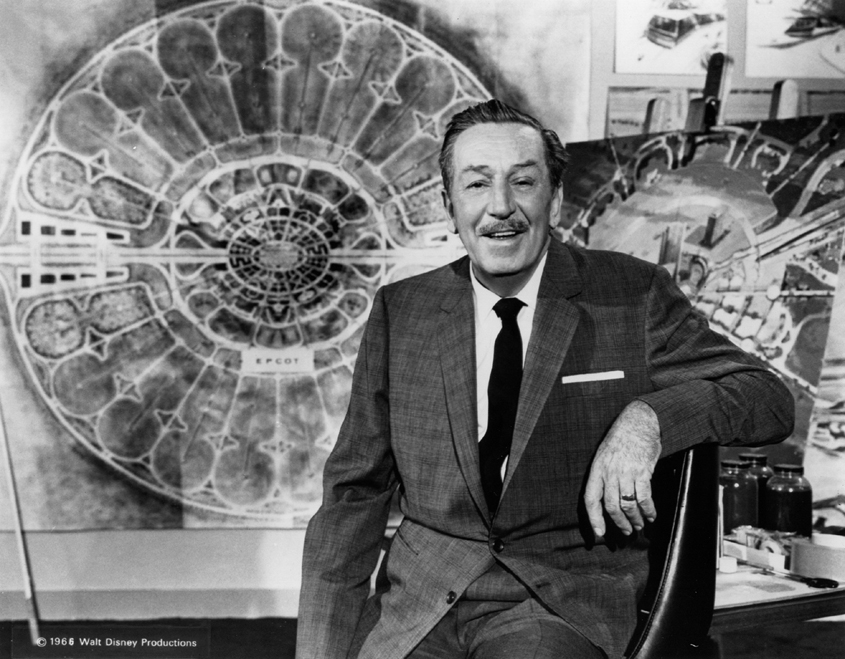
1960 No history mentioning futurism would be complete without mentioning Walt Disney.
 |
| Source: expolounge.blogspot.com |
In
addition to his many other achievements, Walt Disney was a visionary
futurist and he did not stop with just dreaming; he set in place plans
to create the future. This particular image is associated with his plans
for EPCOT, his Experimental Prototype Community Of Tomorrow. I’d like
to point out that this image is from 1960 when Walt Disney was also
planning his displays for the 1964 World’s Fair (what would become It’s A
Small World and The Carousel of Progress). Walt never lived to see
EPCOT open but his flair for looking into the future appeared in the
rides as I will show in a future article. At this point, we note that he
looked at the future with ideas about community, centralization of
services, and the importance of neighborhoods.
Also in 1960, the first videoconferencing was conducted. This gives us the sharing of live video and audio.
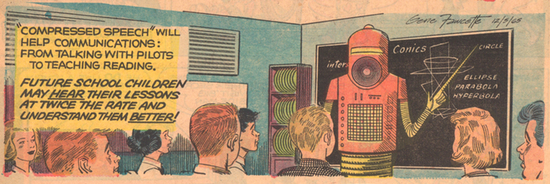
1965 This paleo futuristic cartoon seems to predict a dire future of robots giving instruction.
 |
| “Robot teacher from the December 5, 1965 edition of the Sunday comic strip Our New Age” Source: Novak Archive. |
But
look closely at the prediction: “Compressed speech will help
communications. From talking with pilots, to teaching reading. Future
school children may hear their lessons at twice the rate and understand
them better!”
Did they get that wrong? Ever noticed this choice at YouTube? [I’m not implying that learners can learn at a higher speed, I’m pointing to the availability of speeding up videos– a different thing altogether.]
 |
| YouTube playback speed choices |
1966 Have another cartoon prediction.
 |
| Source: http://publicdomainreview.org/collections/france-in-the-year-2000-1899-1910/ |
“By
2016, man’s intelligence and intellect will be able to be increased by
drugs and by linking human brains directly to computers.”
Well, my intellect is increased by coffee. I won’t speak for you.
#Reality
#CrossReality #MixedReality #VirtualReality #AugmentedReality
#VirtualWorlds #Design #Transmedia #XR #VR #AR #ARVRinEdu #EdTech
#Innovation #Change #WaltDisney #Epcot #ProgressCity #JeanMarcCote
#CigarBox #Year2000 #PaleoFuture #Sensorama #ThomasEdison
This article originally posted on LinkedIn on November 29, 2021. Updated February 24, 2026 with a better font and re-added images.