Author: H

  • The metaverse isn’t just a place you visit, it can change your definition of self

    The metaverse isn’t just a place you visit, it can change your definition of self

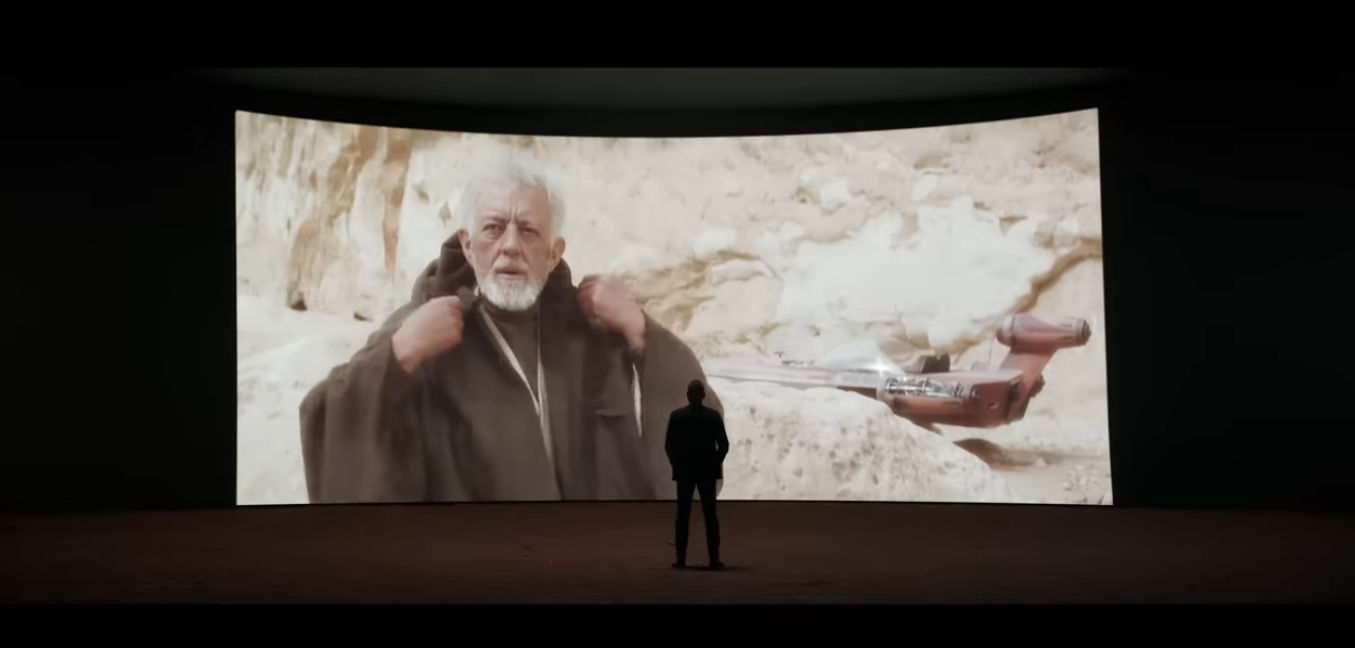
    Capture of Obi-Wan old and new from the Obi-Wan Kenobi; A Jedi's Return documentary.

    I’ve been thinking about applications of the metaverse and how those intersect with storytelling. One of the interesting characteristics of the metaverse is not just it as a place – with all the hardware and software trappings of avatar legs or not, realistic spaces or not, headset or not, basically what you can do and what you cannot do – but that it can impact your definition of self.

    Premise: the metaverse is not just technology, the metaverse is how it makes you feel about yourself.

     
    If you have Disney+, you may have seen Obi-Wan Kenobi: A Jedi’s Return, a documentary on the making of the Obi-Wan series.

    I want to emphasize that this ‘original documentary special’ was directed by Deborah Chow, who also directed the series.

    This isn’t just bits of archival footage patched together like how it was with the original Star Wars movies, although documentaries have now been re-made with a much greater story-telling focus. The same person who helped weave the story of Obi-Wan has also weaved the story of this documentary.
     

    Storytelling: The Object Can Be Beyond A Place

    This is a storytelling director telling a story.

    Deborah Chow is in control and she knows what she wants you to see and feel. She plays up a visual theme that shows up over and over in this documentary:

    An actor standing in and being impacted by a screen similar to the virtual production set: a space 21 feet tall, 75 foot diameter, run by 7 machines by ILM and Epic Games, with a 270-degree semicircular LED video wall called StageCraft, the LED Stage, or The Wall.

    Image: Capture of The Wall from The Virtual Production of The Mandalorian.

    Capture of the LED Stage or The Wall from The Virtual Production of The Mandalorian

    Image: Depiction of how a virtual game engine camera can create a scene on demand.

    Depiction of how a virtual game engine camera can create a scene on demand.

    To be very specific, there are many shots of Ewan McGregor, Hayden Christensen, and Deborah Chow standing in front of a very large screen and another camera is capturing their own faces & bodies while they are watching clips either from the Star Wars movie series or from the Obi-wan series. The implied idea is:

    their emotions are your emotions.

    They are feeling it like you are feeling it. Permission granted to forget that they acted in these visuals. They are sitting next to you now, eating popcorn, laughing, and getting teary eyed just the same as you. This theme is repeated over and over through the one hour.

    Photo collage of scenes from documentary showing people looking at the Wall-type screens of Star Wars scenes.

    Second Siblings

    Deborah Chow is making the point, I believe, that the Obi-Wan series was born and crafted crafted from existing Star Wars film lore. She’s not striking out new. She is claiming the heritage directly from the original Star Wars family. Also, she knows her series is #2 at bat; The Mandalorian came first. So the technical innovation of The Wall isn’t hers to claim. But she can show that she’s learning and growing from it as younger siblings often learn lessons from older siblings.

    As the phrase goes, the early bird might get the word, but the second mouse gets the cheese.

    Being walked through emotions

    Her innovation? She lets a Wall-like experience impact her characters in this documentary. This video has scenes from the teaser.

    It’s the Wall as an actor emotionally experiences it. She takes the time to show you an actor’s face, body, and location near the Wall and then shows what the actor was seeing in that same moment.

    She plays up the idea that Ewan McGregor had to study and pattern after Alec Guinness as an actor. He had to visualize who the character would be 10 years before the original Star Wars movies began. He’s impacted by the Wall. But when he does it, it gives you permission to do it.

    Ewan McGregor walks towards the viewer in a shot that looks like the Wall was Tatooine.

    She also plays up the re-meet of Hayden Christensen after more than decade separation; a person that’s older, wiser, and re-meets a colleague. Ever been there yourself?

    A pensive Hayden Christensen walks on a scene that could be The Wall making Tatooine.

    Image: Capture of Hayden Christensen views the very beginning of A New Hope.

    Capture of Hayden Christensen views the very beginning of A New Hope.

    Image of Deborah Chow viewing an intense Hoth battle.

    Image of Deborah Chow viewing a Hoth battle scene.

    She’s using the Wall as not just something used to create surrounding scenes,

    she’s using it to say ‘it impacts you.’

    Image: A touching moment as Deborah Chow looks at the first introduction of Princess Leia.

    A touching tribute as Deborah Chow looks at the original introduction of Princess Leia.

    Deborah Chow pointed up to The Wall and showed us that the metaverse is not just technology.

    You could be forgiven if you thought that she was only going for nostalgia. ‘Isn’t this just wispy looks up to a screen?’

    Image: Photo collage of Deborah Chow, Ewan McGregor, and Hayden Christensen looking up at screens. There is a faint glow of golden light on their faces.

    Photo collage of Deborah Chow, Ewan McGregor, and Hayden Christensen looking up at screens. There is a faint glow of golden light on their faces.

    No, I don’t think she is letting you off easily.

    I think she’s saying ‘Obi-Wan’s story isn’t over yet. There is more. Come on, let’s find out.’

    Image: Poster for Obi-Wan Kenobi: A Jedi’s Return documentary. Obi-Wan with back to viewer looks over a desert scene production set. Note that: this is not a Star Wars poster. This is a production poster; the Obi-Wan character sees the production crew.

    Poster for Obi-Wan Kenobi: A Jedi's Return documentary. Obi-Wan with back to viewer looks over a production set a desert scene.

    Deborah Chow used the Wall as not just a scene but as an impact device. Disney is late and slow on their metaverse path. But they’ve been on their way as I talked about here. This deliberate storytelling combined with innovative technology is not a misstep.

    The metaverse is not just a place you visit, it can impact your definition of self.

    #Disney #Metaverse #TheWall #StageCraft #VirtualProduction #3D #Storytelling #ObiWanKenobi #Self #Define #Impact
  • XR Will Not Cause Lasting Improvements In Education

    XR Will Not Cause Lasting Improvements In Education


    This post accompanies my XR will not cause lasting improvement in education video and contains a few more details. I wrote this blog post first, then made and remade the video and I’ve come back to finish the blog post with the final script and my notes.

    XR will not cause lasting improvement in education.

    That’s an interesting statement to start a video

    when I’m known for being pro-XR.

    That’s right, I am pro-XR in education.

    But I have expectations that learners will not perform higher.

    With respect: Rephrased
    from the Cambridge Handbook of Multimedia, (2005, pp. 7-9) and Cuban’s
    1986 book: Teachers and machines: The classroom use of technology since
    1920 (pp. 9-26) and Mayer, R. (2020). Multimedia Learning (3rd ed.).
    Cambridge: Cambridge University Press. doi:10.1017/9781316941355.

    Generally, educators are on the lookout for what causes learning and we want to encourage more of it. We realize that content is hard to learn and we want as many learners as possible to successfully learn it. This is given– a belief in the general positive well-being of the learning process, the educators and not least, the learners. It IS important to say that because somewhere along the way, one of the counter arguments against that fact that we don’t find learning gains is “the technology was poorly implemented” or “the leaders don’t care for change” and I wanted to cut both of those excuses off right at the beginning. Nope! Educators IN GENERAL are implementing the technology well and leadership IN GENERAL is pro-change.

    Next we need to visit the scientific experimental model as it is the basis for the experimental models used in education. That means that we observe an effect, some data, some phenomena, and we ask “What caused this?”

    Remember, we are looking for cause and effect.

    This is the scientific experimental model.

    Controlled variables – things hold them constant so that they don’t change.

    Independent variable – what we purposely change to test cause and effect.

    Dependent variable – what we measure as the result.

    There are other models to gain information from; naturalistic…meaning anything outside of a lab

    Or cultural ways of knowing. This could be indigenous or religious knowledge.

    Regardless, the Experimental Model is one of our strongest logic systems and it comes through more times than not at finding cause and effect.

    We can isolate variables down to determining the cause (a deductive reasoning approach, a la Sherlock Holmes), or we can simply start with as few variables as possible to find the cause.

    This is the same experimental model as it appears in educational research.

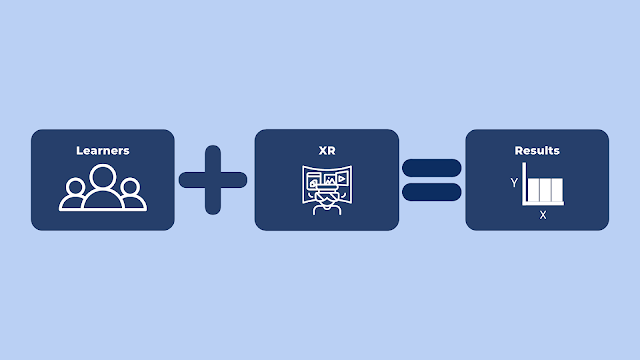
    We have our learners, we add a technology, and we measure the results.

    And it’s not like we just started this research.

    For the purposes of this video, I’ll go back just over 100 years and use the word technology to mean anything powered by electricity.

    For example, Radio

    And here are the results: no lasting improvement.

    Projectors – no lasting improvement

    Television – no lasting improvement

    Computers – no lasting improvement

    Internet – no lasting improvement

    and in the future, cloud-based learning by robots or whatever.

    But in all seriousness, this video is about XR, extended reality, cross-reality, mixed reality or whatever you want to call it.

    Graphic of learners plus XR equals results.

    Now RIGHT HERE, some will become upset. They say:

    But this is different!

    This is learning in 3D!

    No, you don’t understand, this is a computer stuck to your face!

    We need to implement it correctly and THEN we’ll see the results!

    I have a study right here that shows it better when putting VR up against a textbook or a human teacher!

    OK for that last one, I toss that right out as non-comparable methods, but that’s a topic for another day.

    So let’s look at the results, shall we?

    No improvement.

    Now for those that are hearing me right now having a really hard time taking this in, I understand that this is not fitting into your schema. What you are feeling is bias. You want the results to be a certain way, and even when the results are not turning out the way you want them to, you want to reject all of the previous results as not predicting what will happen next. Remember that bias, in research, is a bad thing. We don’t want it. So I need to ask you to check your bias and leave it behind.

    I’ll give you an example that should be in the recent memory of XR enthusiasts. I’ll use 2022 words to explain a 2022 real world example.

    How many studies do we hear of right now that show a spectacular increase in learning with a smartphone (mobile)?

    How many times do we hear from learners that they love learning on their smartphone? “Oh it’s so cool!” “Oh it’s the best!” Oh I love that I can learn from a computer in my pocket! Oh, I love that I can learn on this tiny screen!”
    ~ Oh I love that I’m
    being forced to do my workplace learning on my own device (that I paid
    for, pay for the internet subscription for, and pay the insurance on, to
    say nothing of being tracked by my workplace VIA my own phone!

    What’s that?

    No one says this?

    You’re right.

    Why?

    Said another way, smartphones are ubiquitous. Actually if you listen closely, there is a STRONG amount of conversation about how learning on the smartphone is boring, forced, poorly designed and/or at least equivalent to learning in the classroom—thanks to COVID and 2020.

    So learning on a smartphone is ubiquitous. The learning results have flat-lined.

    I’ve made my case that history predicts that XR will also flat-line after it has become ubiquitous.

    But….why?

    We still didn’t answer that.

    I have 2 reasons. One I’ll share, the other, not yet.

    Let’s go back and look at that experiment model again.

    We said that every technological improvement has proved to produce zero overall learning gains. Learners are simply NOT DOING BETTER.

    We can slip in and out all of these technologies and we keep getting goose egg results, nothing. But…look closely at the model. What other variables are there?

    We said that technology was a variable and our proposed independent variable– we are purposely changing it).

    The results are the dependent variable – they are the output, the effect, or the result of what we are changing and frustratingly, they are NOT CHANGING.

    So what else is there?

    Look. One more variable is present…

    The learners!

    Matching my technology examples: 1920s learners

    1940s learners

    1960s learners

    1980s learners

    Learners from the year 2000

    2010 learners

    I mean, everyone knows that 1920s learners were dumb, right? I mean…

    Oh, you mean the time when Einstein discovered his E = mc(squared) hypothesis? We were dumb?

    1940s? The start of the discovery of the polio vaccine? Saving thousands if not millions of future lives?

    We were dumb then?

    1960s? Early computers being built? Remember…going to the moon?

    1980s? Well no comment from me, I’m from there.

    Many smart well-respected people that I acknowledge, say it is a mistake to assume that older generations were not, at least, as smart as us, and in some ways, we can find evidence that they excelled (for example, try learning entirely by oral tradition, no shared writing, READ: no books).

    So we can’t say that those learners, educators, and leaders were dumb. They were trying to implement the latest, greatest technology in the best way and certainly there’s been plenty of time to try MANY iterations of the technology. For example, radio for adult learning, radio for kids,

    radio for cows. Heh heh, just kidding about the cows, let’s leave them out of this.

    ~I included cows because there is some research already about there about putting VR headsets on cows and I’m totally befuddled by that. I’m like “Why? Just stop it.”

    But the humans are there.

    The humans are the same.

    I’ll repeat that for emphasis.

    The humans are the same.

    So we have experiment after experiment; we change out the technology thinking THAT will cause changes in the learning. But the results come out the same.

    Could it be the OTHER variable– the humans – causing the non-increase in learning?

    I posit, yes it is.

    Brain-based learning science (OK, use the word neuroscience if that makes you more comfortable) gives this as it’s prediction.

    The humans are the cause of why the learning results are always turning out the same, flat-lining, goose egg in improvements. Humans seem to have a “speed limit” when it comes to learning. We all have it. We can’t break past it. (Why? that’s my second shhhhhhh reason.)

    So that’s why I’m so confident that XR will not cause lasting improvements in education.

    As long as we are using humans as our test subjects, the results will peg even.

    To be clear, I’m all for the improvements in AFFORDANCES that VR will bring; for example, safely learning inside a VR volcano, or added safety information with XR glasses. But those will not cause an overall lasting improvement because eventually everyone should be able to learn inside of a VR volcano or with XR glasses at work. Eventually, VR will be ubiquitous and not…

    not the domain of the rich kids.

    (more…)

  • Misleading Headline or I snagged a live one!

    Misleading Headline or I snagged a live one!


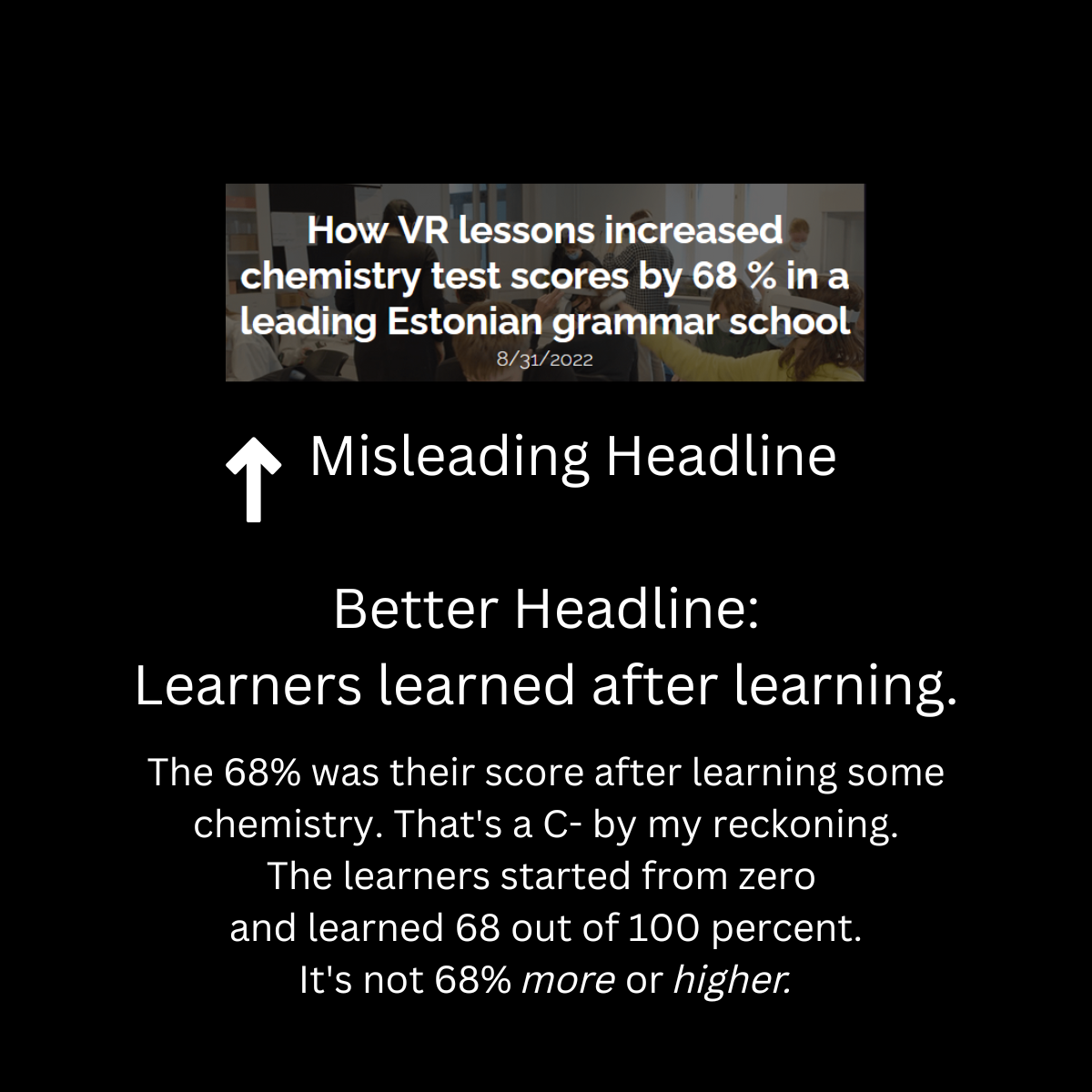
    Image of headline with text: How VR lessons increased chemistry test scores by 68 % in a leading Estonian grammar school. Further text indicates that is a misleading headline and that a better headline would be Learners learn after learning.

    Oh, I snagged a live one! I really didn’t think this image would garner much attention as my posts rarely do on these topics. 2022 has been a bad year for keeping XR friends.

    But I’ve been contacted directly by a nice LinkedIn link.  

    Incoming message

    (DM’ing instead of commenting on your recent post here.) 

     Why are you distorting the facts?

    The article says:

    “The survey revealed that students showed an average of 68 %
    improvement in a test taken after learning with Futuclass VR lessons
    compared to the results before the 30-minute VR lesson.”

    This is very different from “started from zero and learned 68 out of 100
    percent”. 

    The source is here, wasn’t hard to find. https://futuclass.com/blog/how-VR-lessons-increased-chemistry-test-scores-by-68-percentage/ 

    And looking up the teacher involved, quoted in the article, she has
    multiple publications at hard science institutions at Tallinn
    University. I somehow doubt she’d agree in your assessment on her
    scientific rigor. https://www.etis.ee/Portal/Persons/Display/95da33ee-9b4c-4e72-9cab-3e72e3791c0c

    I’m all for criticizing messaging and methodology of these “research”
    reports, but when you skew the actual facts you’re undermining your own
    point.

    So, my response:

    Good sleuthing!  I like that you want to look at the actual numbers.
      

    I did so. I did read the article before I made my post. 

    May I direct to a
    few more sentences lower down in the article?
     
    Some of these will be confusing, so by the end of this, we’ll have to
    look at the entire article and not just stick with exact sentences. 

    Here is the one you quoted and I do see it:
    “As a result, students showed an average of 68 % improvement in a test
    taken after learning the metal oxides during a 30-minute lesson using VR
    compared to the results before.” 
     

    This one is not clear what “to the results before” is actually referring
    to. Could it be referring to: other teaching, to non-teaching, to
    “before” teaching?  I read further down in the article to find out.
      

    This appears to be describing more of the method:  After testing
    different approaches, the best results proved to be with group work and
    paper worksheets. Students with VR headsets were expected to communicate
    what was going on and solve the worksheets together with the students
    without the VR sets.
      

    I thought that was interesting because it implies other approaches that
    but that this one was settled on and it included a non-tech component
    (paper worksheets).
      

    The next sentence is problematic: “Several studies have revealed that
    first-hand experience is four times more effective than traditional
    theory learning. “I believe that we should mix the experience from VR
    equipment and practical work and this would be effective learning,”
    admits Katrin Soika.”  

    It quotes “four times more effective than traditional learning theory”. 
    The “four times” is clued me in. The statement implies that VR is 4
    times as better than traditional teaching. This is debunked research (by
    me).  If it referring to the PwC study (https://www.5discovery.com/wp-content/uploads/2020/09/pwc-understanding-the-effectiveness-of-soft-skills-training-in-the-enterprise-a-study.pdf
    ), that study had learning take place in 1/4 the number of minutes that
    a classroom equivalent would have taken. Those are not apples to apples
    comparison, but it was published by PwC that they thought VR was, then,
    4x as effective. 


    Here is where we get to what the 68% was actually measuring: “With VR
    education, learners are inspired to discover for themselves. Students
    have an opportunity to learn by doing rather than passively reading or
    listening. After the VR chemistry lessons students were surveyed about
    their experience and the results were significant. The survey revealed
    that students showed an average of 68 % improvement in a test taken
    after learning with Futuclass VR lessons compared to the results before
    the 30-minute VR lesson.” 

    In that paragraph, it becomes clear that the 68% was the “average”
    improvement **compared to the results before the 30-minute VR lesson**.  
      

    That’s why I wrote: Learners learn after learning.  

    The 68% was the
    score that they received (on average) after engaging in a learning event
    – in this case – the 30 minute VR lesson.  
      

    So that’s why I wrote what I wrote.
     
    Do you think I missed anything else quantitative in the article? 

    _ _

    The source isn’t here

    About “the source isn’t here”

    That’s purposeful from me. I’m not out to point out the company or publisher’s name or link my comments with them on the LinkedIn network – especially when I have something negative to say. I let my hashtags carry the weight of passing my opinion around my network:

    #XR #VR #VREducation #VRForGood #edtech #Chemistry #ChemistryIsHardIGetIt #VRForLearning #ReadCarefully #WriteBetter

    Note: this article came to me via my LinkedIn network – via 2 friends, actually. So I’m only recirculating my opinion back out and NOT pointing out the article, company, or researchers.

    Additionally, I posted to LinkedIn one image and one line of text “Let’s be careful out there” (a reference to the TV show Hill Street Blues). That’s it. I didn’t include a link.

    _ _

    The researcher’s qualifications

    About the comment about the researcher’s qualifications: I don’t actually think the researcher/educator whose experience is IN this article wrote this article. There is no author quote, so I’d have to go with someone at Futuclass wrote this. I say that because some of the quotes for the researcher are put up close to sentences on something different– and thus, it doesn’t make sense in terms of writing. Usually evidence supports a claim, not says something very different and off tangent.  By the way, when I see this, I always try to figure in possible changes in translation between languages.  For example, could this article have been originally written in Estonian and then translated to English and thus some things just don’t sound like native English?  Yes, that’s possible. However, the problems I see in the writing are more along the lines of illogical ideas or “pushed” writing (advertising) than straight research.  So that would not invade actual word-for-word translations, but it would remain at the sentence & paragraph level- which is what I think I see.

    Here is an example:

    Several studies have revealed that first-hand
    experience is four times more effective than traditional theory
    learning. “I believe that we should mix the experience from VR
    equipment and practical work and this would be effective learning,”
    admits Katrin Soika.

    So the quote shows that Katrin wanted a mix of technology and practical work to create effective learning. That seems to be her point.  But the sentence just before makes the (wild) claim of the four times (but I’m not sure what of four times).  So the ideas don’t connect.

    BTW, the link to her qualifications is in another language. Regardless, I respect that she might have done some nice work here. Actually if you look at her quotes in isolation AND look at the “other properties” section – particularly with reference to chemistry education – I think that this educator is cooking with gas, as in, she’s doing well.

    Conclusion

    Overall my opinion is that I wish the “other properties” section would have actually made the headline and NOT the quantitative data. There is some really good stuff there. It has been 5 days since this interaction and no follow-up response from my link. 😟

    This is just another case of  if it looks too good to be true (68% improvement!!), it probably is.

  • An A Student And A Bad Worker

    An A Student And A Bad Worker


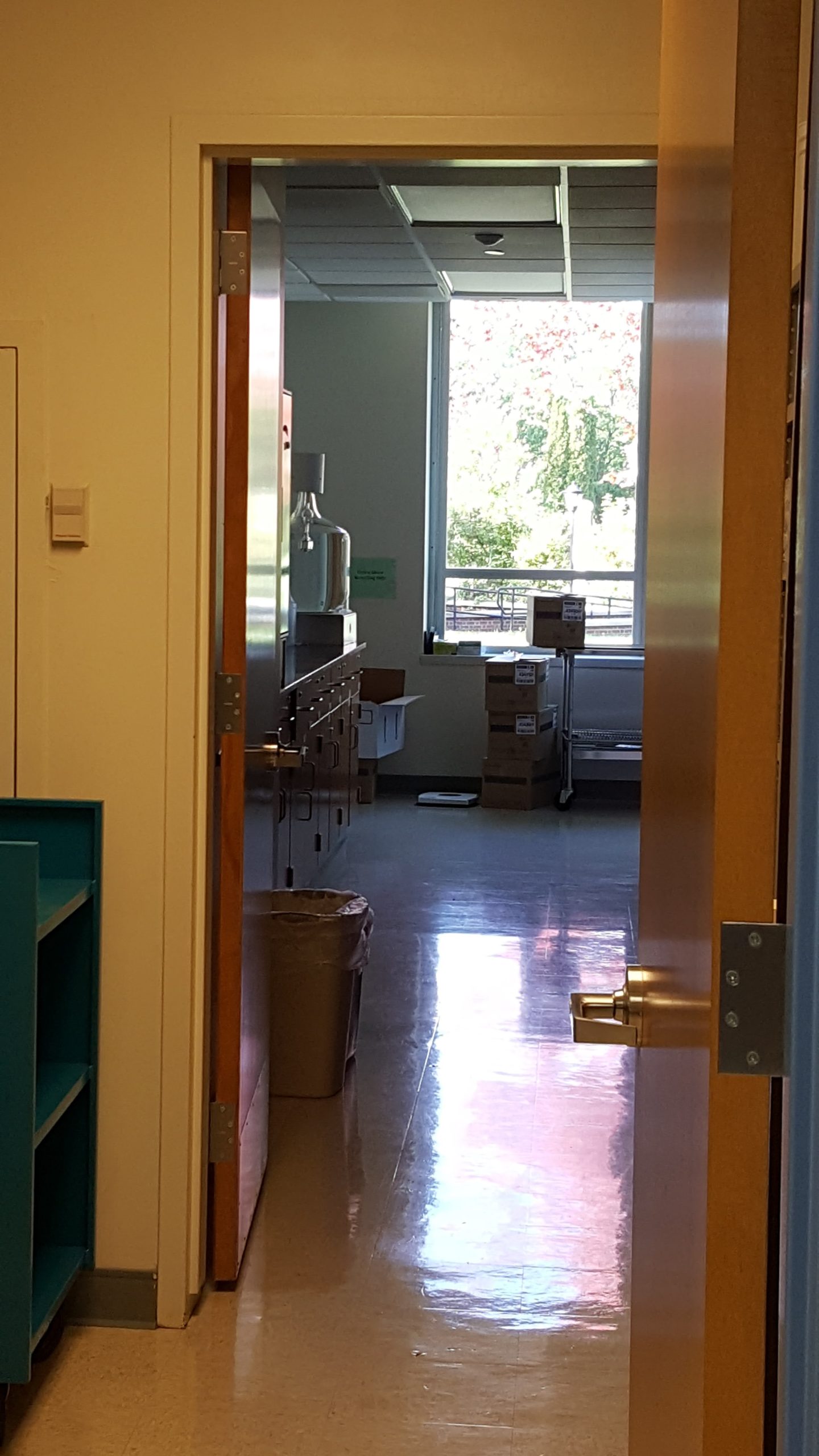
    Photo of the Microbiology Lab Prep Room at SUNY Potsdam. Taken in October 2017.

    Microbiology prep lab room at SUNY Potsdam.


    This wasn’t my first job. But it was my first lesson that a person can be an A student and a bad worker.

    I was in my junior year of university. I was a work-study Microbiology Lab Assistant, limited to five hours a week. Because I was a transfer student, I was 1 year ahead of other students and trained in aseptic technique, material preparation, chemical handling, etc.

    I knew to wash your hands and don’t touch stuff.

    I was also taking Cellular Physiology with Dr. Pei Juo. His class was very hard. And if you got an answer wrong in class, he’s throw chalk at you. I won’t disclose if he threw chalk at me but I sat in the back and ducked. He could not pronounce my name; he would call me “ah-ther”. But a classmate, I forget her name so I’ll call her Lisa, was pulling As in the same class. How was it so easy for her? 

    Lisa also had a job working for Dr. Juo down the hall from the Microbiology lab.

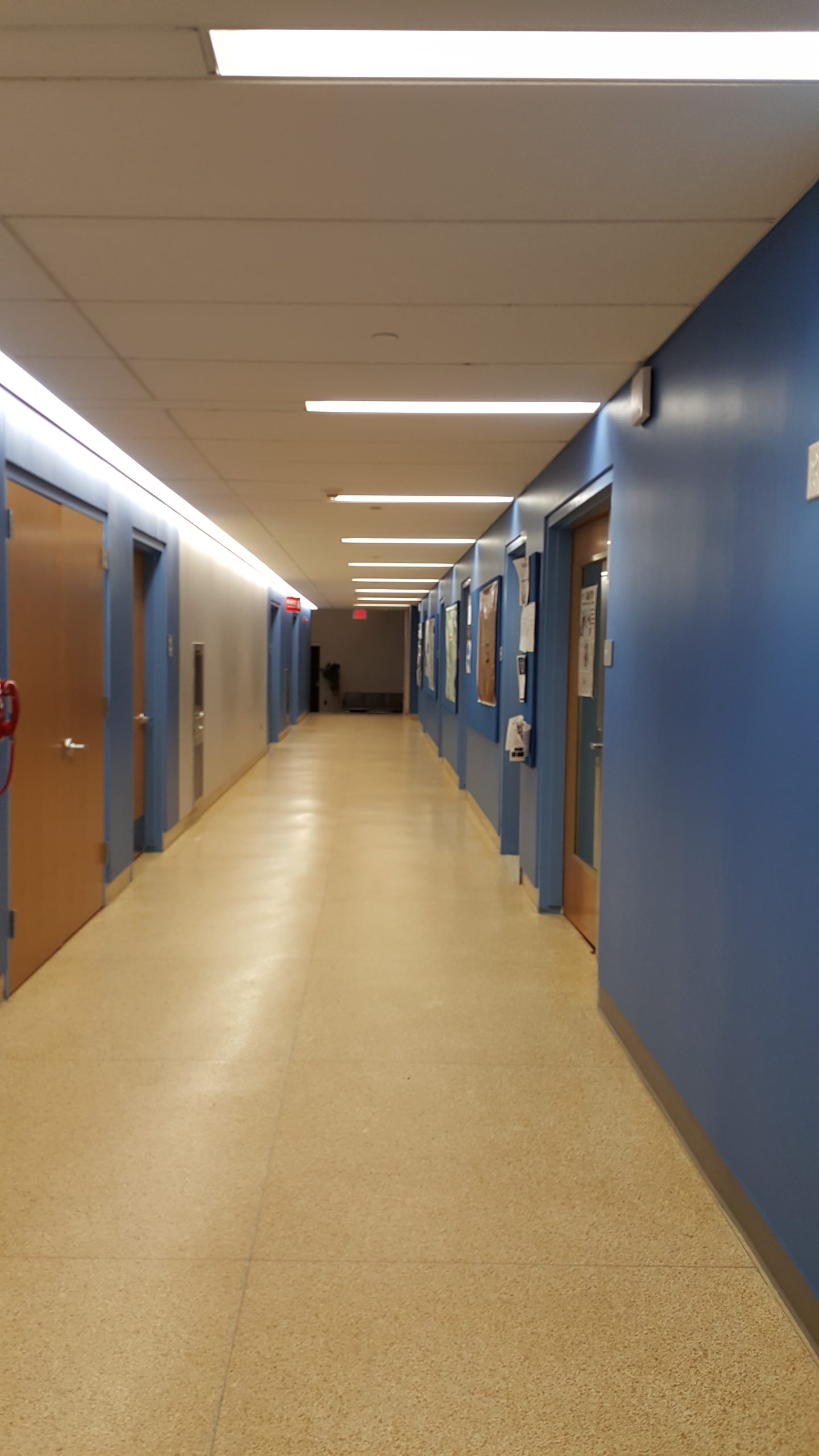
    Photo of the far end of the Biology hall at SUNY Potsdam

    One day, I was still finishing up one of my five weekly hours and Lisa, with backpack, came down the hall past the doorway and stopped for a moment with a glint of gloat that she was sailing out of the building.

    Then I heard her name called down the hallway. Loudly. Repeatedly. 

    Lisa rolled her eyes, sighed, and looked back up the hallway.

    Dr. Juo yelled “You’re not done yet!” 

    “I finished my work” she wined.

    “You left dirty dishes!” he protested.

    “They are not mine. I didn’t dirty them.” she said succinctly.

    I made a face like when a friend gets in trouble but,
    you kinda sorta knew that they totally deserved it.  Like big eyes and a
    mouth that say “oh well!” and I looked back at my work.

    “Your job is to clean the lab. Those dishes ARE your job. Get back here!” He was surface-of-the-sun hot. If he had chalk, he would have been throwing it.

    She sighed and reluctantly walked up the hall. It was the walking version of dragging her feet.

    I hear the clank of dishes being washed and put up to dry.  She finished and left. She didn’t stop at my lab door this time. Then I had to leave. My work was done AND my hour was done. So I put on my backpack and slipped away.

    But the lesson was learned by me. 

    Lisa was an A student and a bad worker; a person could be both. Before her, I didn’t know that was possible probably because As took hard work from me.

    That lesson always stuck with me and when it came time for me to be the boss and hire people, I always looked for teachers that didn’t strike me fully as “A” students. I needed teachers who had pulled some Bs or a few “C”s. That’s because of Lisa; I’m wary of straight A students. They can get good grades and suck at being good workers.

  • Memorial Services

    Memorial Services

    Photo of solitary lit candle with a partially lit blue background.

     
    I’ll tell you, memorial services are good services. Beliefs have to be held to account at this most difficult time. After all, if God is loving, why does death exist?

    At a memorial, good church leaders HAVE to answer that question because attendees are there for comfort.

    I have a cousin that was studying to become a Catholic priest when he died at age 26. His service started with “God got it wrong.” The service articulated our grief and 3 hours and much incense later, I’d cried all of the tears I could and felt much better.

    The Archbishop of York did a good job with this Sunday service memorial for Queen Elizabeth. I’ll provide 2 good quotes:

    “Hence in the Lord’s Prayer,
    the daily diet of prayer for Christians everywhere,
    we say your will be done, not mine.
    Your kingdom come, not the kingdoms of the world,
    and on earth as it is in heaven.
    If you were looking for a simple role model
    of someone who lived their life this way,
    then our dear departed Queen Elizabeth
    would be a good example.

    The paradox of this is hard to avoid.
    It was a monarch, a queen, who it turns out
    is one of the best examples of the fact
    that the kingdoms of this world will pass away
    and we shouldn’t put too much trust in them.
    And Queen Elizabeth was able to live this way
    because she had a clear sense of her place,
    her role, and her duty, which was also for her a vocation.

    The one to whom we bent the knee
    knew to whom she had to bow
    and to whom she would be called to give account.
    I guess this is why she was able to live
    a life of such remarkable service.”
     
    It wasn’t just that Elizabeth ‘tried to be good’ as a Christian, she knew her kingdom was not the Kingdom of all. She would be held accountable for her actions and it was in fear of that, that she put her lifelong service to work. If you think of it that way, it’s not hard to figure out her life at all.

  • In mourning

    In mourning


    Psalm 23, verses 1-4 text over a photo of sunshine coming through trees in an early autumn scene.

    I’m half British. It is a purposeful decision of honor, not a cute decision, to be known on LinkedIn with my middle name, after Queen Elizabeth II.

    A name can be a funny thing. As child, because Heather rhymes easily, I went through sing-song teasing. For many years, I didn’t really notice much about my name, other than relief that it’s somewhat easy for Americans to pronounce. Internationally, I know it’s difficult to guess the pronunciation (the ‘h’s and ‘r’s change), but I always happy to help, encouraging the breathy-ness of “Heather” and the z spelling for “Elizabeth”, and I desired help in return in pronouncing others’ names.

    But lately, I feel the “time” of my name; “Heather” ties me to a time and now, “Elizabeth” to an Era.

    Personally, I’ll be conducting minimal LinkedIn business in order to mourn. As a reminder, death is wrong. Our world was not created to work this way. I constantly pull my strength from my creator and loving God.

    Heather Elizabeth Dodds PhD Consulting LinkedIn Banner in mourning

  • The Battle of Chrysler Farm (not about the Battle of Chrysler Farm)

    The Battle of Chrysler Farm (not about the Battle of Chrysler Farm)

     
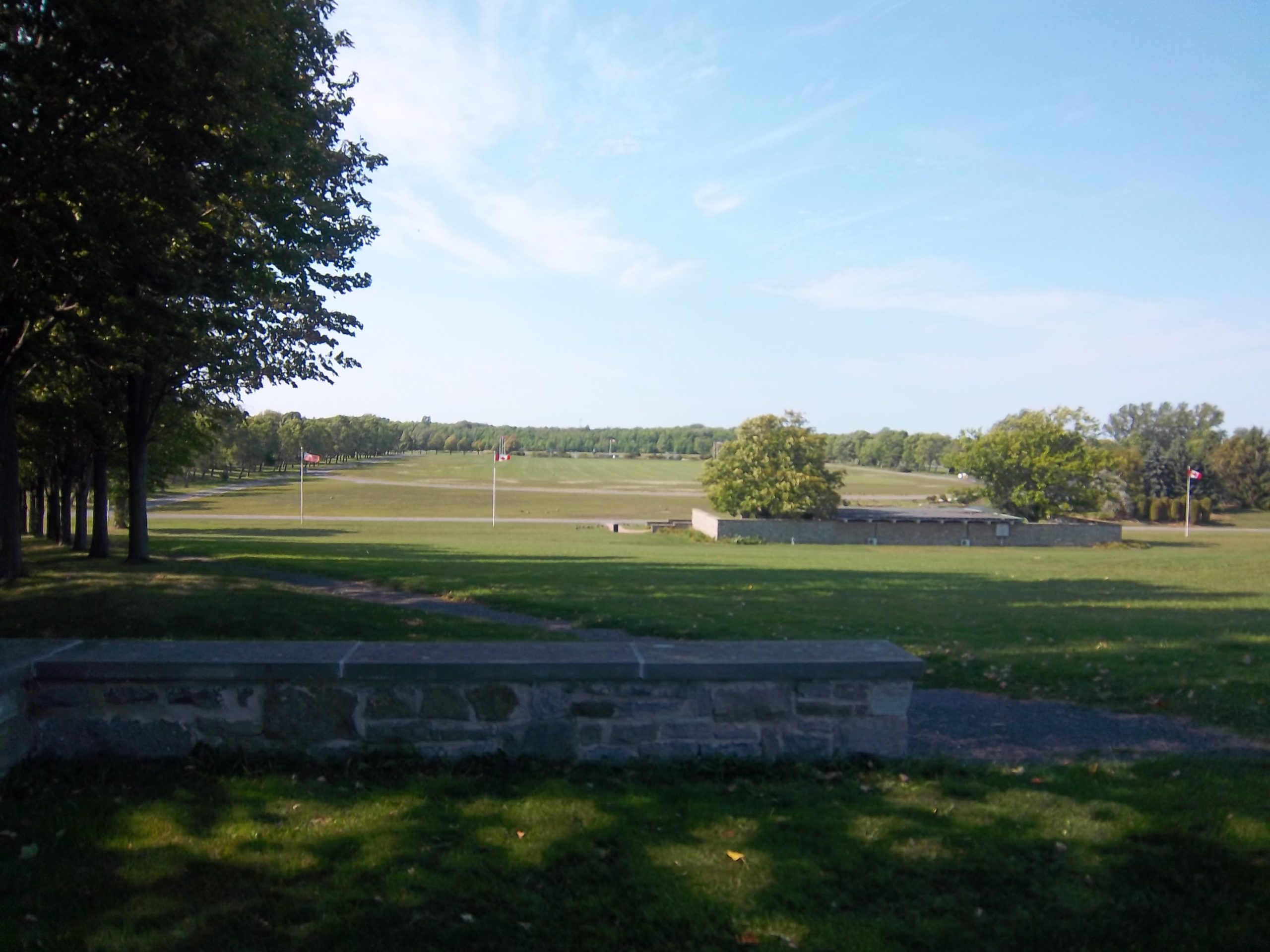
    See this place above? That’s the Visitor Center at the Battle of Chrysler Farm Historic Site at 13740 County Road 2, Morrisburg, Ontario, Canada and have I got a small story for you!

    This story happened 10 years ago, today! I took a day trip over to Morrisburg but I knew I didn’t want to pay the full admission price to Upper Canada Village, especially since I set out mid-afternoon. That’s OK since the gift shop is technically outside of the admission area, and they sell their famous fresh bread in the shop. That’s 2 bonuses! Plus I was intending on visiting the garden and historical site area that is free just next door. I think Upper Canada Village had just installed paid parking so parking for the historical site was free and literally right in the same field.
     

    I did have a nice stroll up to the gardens, which is just in front of the tree line, in the center of this photo above.

    Photo from the Rose Garden area at the Upper Canada Village and Battle of Chrysler Farm Historical Site. 2012.

    (The view back to the historical site from the Rose Garden.)

    I wandered back and around the hill a bit but there were (as ALWAYS) aggressive Canadian geese around, so I had to give them a wide berth or they would honk and chase me.

    So going up to the visitor center, I thought it was curious that the front door was open.

    (This is the view from inside of the Visitor’s Center back out the front door.)

    The door was sort of stuck open, or maybe propped. I thought it was big enough to get a goose through so whoever is inside must be living dangerously.  But it was also open enough for me to slip inside without touching it. So I did.

    There was the entry desk, a computer, an open water bottle, and not seen in this photo, some keys. But no person.

    I’ve been here before so I know that the visitor center is basically 2 rooms. This anteroom that is long and narrow with artifacts in cases and then a larger room with a rudimentary fiber-optic display that re-enacts the battle.

    But I could not hear anything. I walked down the room, looking at the cases; old guns, uniforms, that sort of thing. I remember seeing significant cob webs at the far end. Still, no one.

    At the end, I turned on my heel to enter the other room. Immediately I saw a few dressed up mannequins (British solders), and the display area and wooden benches. It was closed in.

    Photo of the reenactment area at the Visitor Center.

    Then I saw her.

    She was laying on her back one of the wooden benches– out of sight in my photo above– and she was sleeping; totally out. She didn’t stir.

    It was one of those moments where you calculate all of the possible excuses you could make in under 2 seconds for how I got into the visitor’s center without her hearing (uhm, open goose door? I’m alone so not talking? I’m a creep?) I opted for Plan Z: I was never here and I’m outta here; just to get out without waking her now.

    But first, I had one other emotion wash over me.

    I was mad.

    I was mad that she was obviously sleeping on the job.

    I justified that she had a computer, and I guess from the photo I took, cookies and water. Since I worked at an online university, I thought “You could be going to college right now, not sleeping away your summer job!”

    I managed to walk out doing that kind of walk when you want to be silent, letting your foot roll on to and off of the floor evenly.

    I slipped back out the goose hatch and eventually left the site to go home. I thought about writing something up and posting it on Facebook, but I knew if I said anything, she’d be fired. The risk to the visitor’s center and to herself personally was way too high; her employment would not survive. It’s clear to me that she was a summer worker, just pulling a paycheck.

    It’s 10 years since that happened and I was thinking about that story.  It dawned on me. 

    I have no right to be angry. I’m ashamed to say that I had a job once that was so lax that I could snooze while I was on the clock. The situation was that the work was normally significant and constant. But we had changed a procedure and my workload dropped off. My boss didn’t notice and still expected me to be just as busy. Part of my job required me to go offsite for a full morning 3x a week. I simply didn’t need to be gone for that long— but, instead of doing my work and coming back, I stayed out and snoozed in my car in parking spot.

    It was medium-quality hooky; not top notch hooky because doing it was stupid. Top notch would be not working for a GD good reason, like I did when I sneaked away for my final dissertation residency and didn’t tell anyone at my online job for a day. I just kept my head really low and checked email constantly.

    So I’ve been where she was. She was bored– I can see that now. And what she decided to do with her time was her business. I get that the Visitor’s Center could only be interesting so much and then it was boring.

    Still, I wish she had made better choices.  And that poor place, it looks closed now…I don’t see any listing of the Visitor Center being open.

    Photo of Visitor's Center at the Chrysler Farm Historic site, Morrisburg, Canada.
    The Visitor Center, current time (2022).

    Oh, it’s a shame, but…the place was in decay.

    The entire site is ripe for a nice AR history overlay…Standing on the site and looking around, one can think of the battle happening here and the strategic movement of troops to different places.

    For the record, as a boss, I would advise the folks working for me that they were welcome to try playing hooky, but the key is to NOT GET CAUGHT.  If I catch them, it’s not hooky anymore.

    I hope that young lady has gone off to fantastical great things in her life. I change my anger now to a blessing for her. I hope she’s off somewhere chomping on some yummy bread, remembering that summer 10 years ago when she worked in a run-down Visitor’s Center, but at least she could get in a snooze on those hard wooden benches. You needed a nap before out running the geese.

    Photo of the memorial at the Chrysler Farm Historic Site in Morrisburg, Ontario.

  • XR Accessibility & Instructional Design

    XR Accessibility & Instructional Design


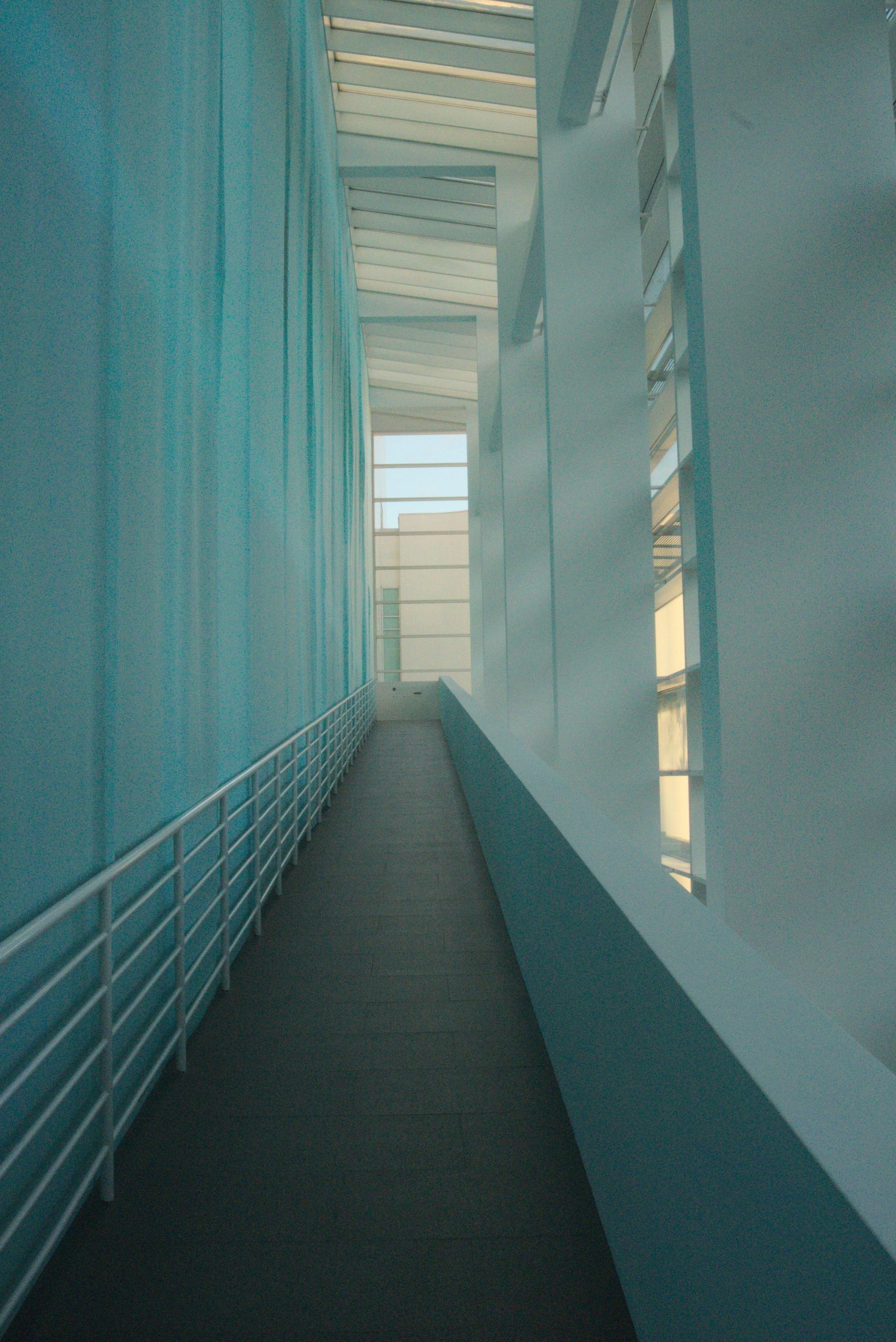
    Photo of ramp going up gradually in a building bathed in light blue colors.

    The topic has come up again. I guess I should start being happy that it’s coming up again and again. The topic is accessibility versus XR as instructional designers see it. The throw-down response of some instructional designers is “XR is not accessible” and they discard it as real learning option for the future.

    Capture of social media post with text: I have had, and continue to have concerns about the accessibility of IR & VR in education.

    So I gathered 7 examples (current as of August 2022) of organizations and people working FOR accessibility and I posted them. I’m re-sharing them here. 

    This is quick in – out, giving IDs examples they can quote that XR is gaining ground on accessibility.

    I hold to my premise: 

    In general, people care and they want MORE people to enjoy XR versus less.

    Sound

    Just this week, the FrameVR platform (a good example of WebXR) announced live captioning along with translations. https://twitter.com/gabriel…/status/1561793880835575808… 
     

    Technology

    WebXR in general is good for smartphone access which can help with
    internet access and speed accessibility problems too. 
     
    I recently
    attended a conference session with examples of how low access continents
    like Africa are racing ahead with WebXR. https://youtu.be/le1WHqtiBzM?t=7164)

    Sight & Mobility

    Organizations like EqualEntry produces video interviews with designers and testers. I would recommend these 2: VR for the blind https://youtu.be/CjILBKqOZ3g and VR for the physically disabled: https://youtu.be/lwmAFHAj6EI
     

    Cognitive (& All)

    XRAccess is another organization that is heavily working on standards https://xraccess.org/
    – these will show up for IDs as *defaults* when we work with platforms
    in the future (READ: default closed captioning, default bubble spaces,
    default no flying, etc.)

    I’m gearing up to talk more about Virtuleap, VR for cognitive exercise & monitoring, on my social media channels. https://virtuleap.com/

    Vision

    There are even efforts to use VR to combat the negative effects of VR (READ: vertigo.) https://youtu.be/E6jFqqy0wes
     
    But
    if you explore nothing else from an ID perspective the first 1:30 of
    this video shows that accessibility is gaining ground…https://youtu.be/rvsZ1ssyom8

    This article is not meant to be exhausting and lord knows I love the
    research teams out there working on these topics. Hey neurodiversity & medical XR research teams, I see you!! They are doing SO
    MUCH.

    Don’t count XR out when it comes to accessibility. Not by a long shot.

    Organizations to watch

    EqualEntry

    Virtuleap

    XRAccess

    FrameVR

    Mozilla Hubs

    #Accessibility #XR #WebXR #EqualEntry #Virtuleap #XRAccess #FrameVR #MozillaHubs #Vision #Sound #Mobility #Cognitive #VirtualReality #AR #MR

    Simultaneously posted to LinkedIn: https://www.linkedin.com/pulse/xr-accessibility-instructional-designers-dodds-ph-d-

  • The Birds Are Gathering

    The Birds Are Gathering


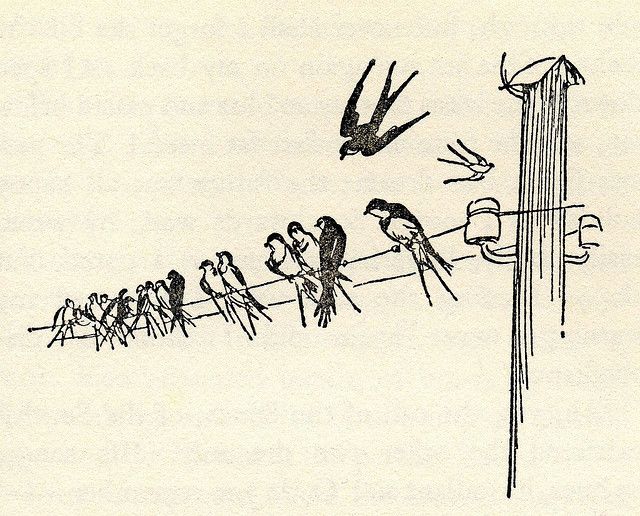
    Ink drawing of swallows gathering on a telephone wire. Original image appears in The Wind In The Willows by Kenneth Grahame, illustrated by E.H. Shepard

    I observed a group of blackbirds on my lawn this morning. It’s a sleepy Sunday in August morning, past the ides of the month, and the timing is perfect. There are two times each year that my thoughts reach for my favorite book, OK three times, when I harken* to analogies of The Wind In The Willows.

    It’s late summer and the birds are gathering to begin their pre-migration chattering. But in the spirit of all things good and all things healthy, I’ll also name it the time of year When Rat Goes Mad.

    Mad. Yes. Insane. Don’t worry, it’s only temporary. But he hears the siren song of travel, of warm ports, and of grain filled ships. He sees visions of a life that could be and he enters it as if in a daze. He nearly leaves–his tiny, well-fitted, pleasant and perfect water rat home! 

    But he doesn’t. And Moley brings him back to reality with an inquiry, ‘why don’t you get back to writing some poetry?’ and Rat’s sanity returns.

    I just watched a video yesterday that admonished that we should be just as fascinated with, OK with, and speak publicly about mental health as we do about physical health. I agree.  Rat went temporarily mad in the last baking moment of summer– when we tire of summer.  There is a reason for the phrase ‘endless summer.’

    I’m not in the mood to go mad this year. Instead, whenever I hear a chickadee now, I am reminded that the chickadees are the ‘boarders who are staying, en pension‘ (Chapter Wayfarers All, second paragraph) and I silently thank them for being here on the coldest of days ahead– when all the world will be frozen below freezing and the chickadees will hop around the bare branches that can’t remember green, or growth, or warmth. Everything will be white, gray, or brown. Finding a seed here and there, the chickadees will tell their story of the happiness of being a family on the crystal clear cold days. And Rat will be tucked in his hole, recounting stories with Moley by the warmth of a fire.

    *Harken, I’m told is an archaic word. Poppycock! I use it all the time. It means, to me, ‘to listen to an outloud call’.  The other 2 times I harken to the Wind In The Willows is very early spring, when Mole gives up whitewashing (a generally good idea no matter the time of year) and when Rat & Mole hole up for the winter (definitely Christmas and after) – doing only winter things like storytelling, eating, sleeping, and staying warm.

    “Nature’s Grand Hotel has its Season, like the others. As the guests one by one pack, pay, and depart, and the seats at the table-d’hôte shrink pitifully at each succeeding meal; as suites of rooms are closed,carpets taken up, and waiters sent away; those boarders who are staying on, en pension, until the next year’s full reopening, cannot help being somewhat affected by all these flittings and farewells, this eager discussion of plans, routes, and fresh quarters, this daily shrinkage in the stream of comradeship. One gets unsettled, depressed, and inclined to be querulous. Why this craving for change? Why not stay on quietly here, like us, and be jolly? You don’t know this hotel out of the season, and what fun we have among ourselves, we fellows who remain and see the whole interesting year out. All very true, no doubt, the others always reply; we quite envy you — and some other year perhaps — but just now we have engagements — and there’s the bus at the door — our time is up! So they depart, with a smile and a nod, and we
    miss them, and feel resentful. The Rat was a self-sufficing sort of animal, rooted to the land, and, whoever went, he stayed; still, he could not help noticing what was in the air, and feeling some of its influence in his bones.” ~ The Wind In The Willows, chapter Wayfarers All.

    https://www.pdfdrive.com/the-wind-in-the-willows-oxford-worlds-classics-e186211936.html


  • Great Diners of North Country and the Adirondacks

    Great Diners of North Country and the Adirondacks


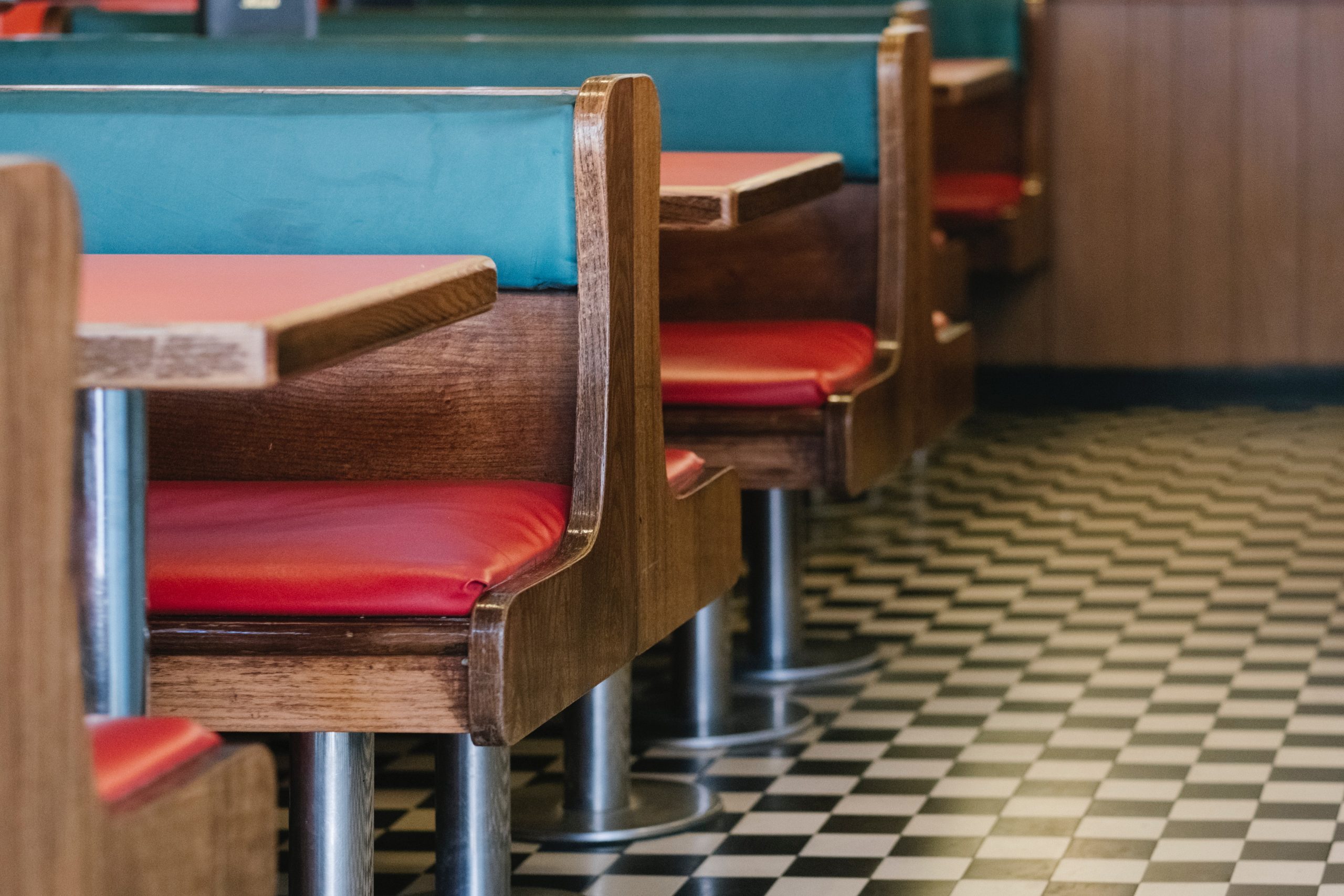
    Photo of diner restaurant booths.

    Photo by Lee Cartledge on Unsplash

    I hasten to say how many years old I was before I learned the secret of diners or shall I say the secret of dining some place new. Because I know I went to diners when I was younger. I can distinctly remember my father picking a place to eat, we’d go in, and in just a few words he’d order something that often looked like breakfast. Meanwhile, I’d be pouring over the menu and end up ordering something like a plain turkey sandwich, that, when it arrived, tasted like it was made 5 years ago. I didn’t get it. Why were these little hole-in-the-wall type of places popular? They were SO old fashioned!

    But after enough tries and failures, I figured something out. Here is my profound wisdom for you:

    When dining someplace new, order the special.

    I can’t say that this advice just came to me as inspiration, I know I read it somewhere and tried it and discovered for myself that, indeed, it was true! The reasoning is that any restaurant that sells 50 or 100 of the same dish MUST be doing it right or their business would die (’cause maybe the guests would die).

    So based on finally figuring this out, it has occurred to me that I must document a few of the places that I would recommend in the North Country and the Adirondacks and for what food.

    Which leads me to what should be your default diner order IF you don’t want the special: 

    BLT and coffee

    With this, you can sample how a diner does 3 staple items:

    • bacon
    • coffee
    • toast

    Plus the cost should be almost the lowest on the menu. Truly, I know it’s getting hard to find meals for under $5, but this should cost you under $8 for lunch, for sure.

    Diners to try

    Ogdensburg, NY – Tim Horton’s

    What to order? Tim bits and a coffee “double double”.

    https://goo.gl/maps/WuaR5RSJfLi3PYxX7


    Burke, NY – Cherry Knoll Restaurant (Route 11 east of Malone)

    What to order? Get a slice of pie and coffee.  

    https://goo.gl/maps/ofGyUArK8qrXvDPR8


    North Lawrence, NY  – The Pit Stop Diner

    What to order? BLT and coffee.

    https://goo.gl/maps/ovQG6PrsE9WcQhwX6


    Saranac Lake, NY – ADK CAVU Cafe

    What to order? The special. Or breakfast.

    https://goo.gl/maps/7jbqAafAkWyvsgs7A 


    South Colton, NY – Robideau’s Mahogany Ridge Bar and Grill aka RMR Bar and Grill

    This is more of a restaurant than a diner. But it’s a big snowmobiler stop place. So I’d say the french fries are a good bet.

    https://www.facebook.com/robideaumahoganyridge

    Peru, NY – Green Acres Family Restaurant

    What to order? BLT and coffee.

    https://goo.gl/maps/AwsmPPxkNtqzKvrL8


    Watertown, NY – Longway’s Diner

    What to order? Honestly this entry is on my list from family history, I cannot remember eating there. Maybe once I grabbed a coffee to go. It’s a truck stop.

    https://g.page/longwaysdiner?share


    Parish, NY – The Grist Mill

    What to order? Coffee. And get out. Really, this is the ONLY northbound food place between Syracuse and Watertown on Route 81- so you’re stuck. I would NOT recommend the food here. Drink coffee until you get to Watertown and pull off onto Arsenal Street. You can get McDonald’s, Burger King, or Starbucks there.

    https://goo.gl/maps/8XnEEmUBqGnj7goz7


    (more…)