In Part 8 of my Dispelling Myths, Navigating Ethical Labyrinths, and Applying Design Principles in the Metaverse series, I explored the first of the mysterious ethical labyrinths of instructional design for immersive environments, that is the most common problems that arise from research interpretation. The first commonly noted problem was the novelty effect– the immersive environment was a one-off or very new experience. Newer experiences cause higher performance scores with learners. The novelty effect, however, can wear off. Few studies push past the novelty. The second problem is that media comparison studies often pit very different instructional approaches against each other, creating a massively unfair cognitive comparison; in short, they compare different cognitive workloads. Unsurprisingly, the immersive environment is often set up to comparatively win. The third common problem is missing design theories and models. The fourth common problem was problematic data in terms of assessment, collection, and sample size.
Here in Part 9, I will explore a second ethical maze addressed in this series are challenges with creation processes, specifically with immersive experience content and the subsequent publishing of results.
Content creation
Because immersive experiences environments are entirely digitally created, behind the scenes are the content creators. Research has noted that immersive experiences and social media share the same landscape of influencing. Immersive experiences can influence through emotions by misleading, inducing, manipulating, personalizing, and distorting reality (Mhaidli & Schaub, 2021). Simultaneously, the immersive environment is suspected to possibly both foster positive feelings (Li et al., 2024) and to overwhelm the learner’s senses (Makransky & Petersen, 2021), both elements which might lower the learner’s resistance to influence.
Thus, the same technology touted with the potential to deeply impact learners can be used in campaigns to influence or prejudice learners. Procopiou (2021) proposed that the stimulating environment of immersive experiences could make learners “more vulnerable to the extremists’ and terrorists’ recruitment approaches, propaganda and radicalisation methods” (p. 31). Undoubtedly, the researchers in the Stanford VR class described having a “jarring experience” when realizing that their learners had depicted the Moon landing as fake (J. Brown et al., 2023, p. 1). Noting this concern, these authors further argued that the high development burden of making misleading immersive experiences should prevent them from being made under anything but the most purposeful of circumstances. Said another way, they felt that only bad actors would put forth the effort to make something elaborate and false. However, the declining cost of immersive experience development and immersive experience’s primary use as social (meetings, events) hints that it does not require flawless builds to influence. This suggests that the perceived development obstacle will not remain for long.
The Virtual Museum of Palmyra
On the other hand, there are examples of immersive experiences being used to counter real world narratives perpetrated by bad actors. In 2015 and 2017, violent extremists destroyed parts of the ancient city of Palmyra (Barnard & Saad, 2015; Unitar, 2017.) Virtual reconstructions began immediately (Denker, 2016). There has been some comment that the digitization by European and American institutions constituted a form of colonization of Syrian heritage (Samad, 2020).
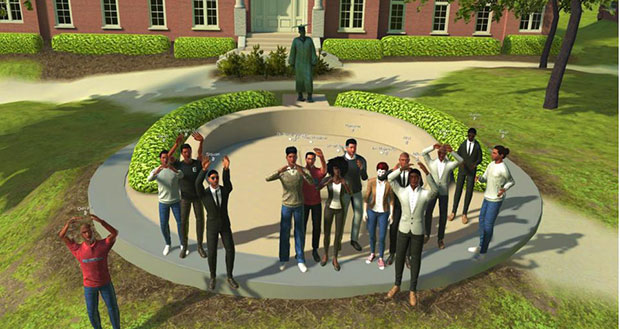
In some cases, immersive experiences technology fails to be representative of its intended users. When Morehouse University adopted immersive experiences, there were concerns that black learners and faculty avatars were poor representations. D’Agostino (2022) quoted Muhsinah Morris, a chemistry professor at the institution, who pinpointed the problem, “Representation matters because of the memories that you create…You are still a person behind that avatar” (para. 33). Millron (2023) referred to these problems as “inelegant and downright crude attempts at representation” (para. 4).
Technological companies have been under scrutiny for a retinue of privacy invasion problems. But there are also concerns that these companies’ main purpose is profit, not education and what that could lead to. Nir Eisikovits, philosophy professor and founding director of the Applied Ethics Center at the University of Massachusetts at Boston contented that there is a future possible overlap of privacy invasion and immersive experiences’ learner data, when he stated, “If you can monetize how much time I spend on a YouTube video or if you can monetize your Google search, imagine how you could monetize your biometric responses to stimuli that you viewed in virtual reality” D’Agostino (2022, para. 24).
The dominance of a few players in the shrinking immersive experiences technology market is also cause for concern. Developers have had to work within constraints to get published on the the Meta Quest 2 VR headset (Lang, 2024; Armstrong, 2023). Platforms and companies like Microsoft’s AltspaceVR and Magic Leap that did seem poised to continue in the immersive experiences market have abandoned their efforts. When major companies dominate the content creation market, they can choke out smaller, independent, and open-source options. Issues with lack of competition and fair choice are detrimental to the success of immersive experiences in education.
Denker, A. (2016, October). Virtual Palmyra: 3d reconstruction of the lost reality of “the bride of the desert”. In 8th International Congress on Archaeology, Computer Graphics, Cultural Heritage and Innovation, 318–320. https://doi.org/10.4995/arqueologica8.2015.3540
Li, L., Hu, Y., Yang, X., Wu, M., Tao, P., Chen, M., & Yang, C. (2024). Enhancing pre-service teachers’ classroom management competency in a large class context: the role of fully immersive virtual reality. Humanities and Social Sciences Communications 11(1). https://doi.org/10.1057/s41599-024-03538-9
Makransky, G., & Petersen, G. B. (2021). The Cognitive Affective Model of Immersive Learning (CAMIL): a Theoretical Research-Based Model of Learning in Immersive Virtual Reality. Educational Psychology Review 33(3), 937–958. https://doi.org/10.1007/s10648-020-09586-2
Mhaidli, A. H., & Schaub, F. (2021). Identifying manipulative advertising techniques in XR through scenario construction. Proceedings of the 2021 CHI Conference on Human Factors in Computing Systems. https://doi.org/10.1145/3411764.3445253
Procopiou, A. (2022, December). Ready player bad: the future rise of extremism and terrorism in the Metaverse. In 2022 IEEE 2nd International Conference on Intelligent Reality (ICIR) (pp. 31-34). IEEE.
Samad, B. A. (2020). Civilizational memory: the transformation of Palmyra as a cultural patrimony of the west. Bowlin Green State University.
Ethics, as a set of rules of practice, is something thatinstructional designers deal with on a daily basis in the form of assuring learner privacy, coursework security, instructor authorship and institutional ownership (Moore, 2021). These topics are recognizable within instructional designers’ professional work lives. However, many instructional design models like ADDIE, Backwards Design, and ASSURE do not include any acknowledgment of possible ethical concerns (Warren et al., 2023). As such, instructional designers might not recognize some ethical decisions which are a critical part of their professional job (Moore, 2021). Within immersive environments, the stakes are higher as learners are primed to experience environments far beyond a classroom or home.
A scoping review of relevant research topics for immersive environments that covered access, content production, and deployment does not mention ethics (Gaspar et al., 2018). However, research on ethics in immersive educational environments is beginning to appear (Moore, 2021; Glaser & Moore, 2023; Zallio & Clarkson, 2022). Zallio, Huang, Osaki, Hong, Chang, Liu, and Ohashi (2024) completed a review of ethical issues in VR and AR technologies and found 15 different and broad ethical concerns including the dichotomy between the virtual and the real world (for example, abuse in immersive experiences), concerns related to user safety (for example, sensory overload) and the ethical concerns of people who surround immersive headset users (for example, caregivers). This series will look at some areas where instructional designers can exert influence even after the decision to incorporate immersive experiences has been made.
Interpreting research
Relying on what the research portrays on the surface does not fully illuminate what is happening within the immersive experiences. Research results were at the core of the myths illuminated earlier in this series. What might be a kernel of truth could be turned into a claim that immersive experiences will revolutionize education.
Instructional designers can conduct literature reviews and quickly review research paper abstracts for studies that are similar to the situation being considered. R. C. Clark and Mayer (2016) summarized how to examine research claims for e-learning, but these questions equally apply to sorting for immersive experience research.
“Are the methods, content, learners, and context like yours?
Does the experimental group outscore the control at a significance
level of p < .05?
Does the effect size favor the experimental group at a 0.5 level or
higher? (p. 63)
Despite experimental results that tout learning success in immersive experiences, those results might not apply to another situation due to different variables, effect size, and other appropriate measures. Readers of research need to become adept at identifying effect sizes, immersion times, and the presence of comparison groups. In summary, “as a consumer of experimental research, you need to be picky” (R. C. Clark & Mayer, 2016, p. 56)
Disgust embodies ‘you need to be picky’
When reviewing research, the reader may sleuth for two primary problems that might appear in immersive experience studies: the presence of novelty effect and the bane of media comparisons.
Novelty effect
This series defines novelty effect as the phenomena when learners are exposed to something new during instruction and the new treatment causes increased motivation, excitement, and effort. There is usually a corresponding learning gain from the increased attention (Lodico et al., 2010). R. E. Clark and Craig (1992) succinctly refer to the novelty effect as the “attitude advantage” (p. 9). Novelty effect can be suspected within a research design when the learners are exposed to a media with which they are not familiar and the learners’ time within the experience is limited. The presence of the novelty effect is generally a negative threat to external validity of a study; the study results cannot necessarily be generalized to be true for other populations.
Certainly, an educator might be buoyed up by the illusory increase from incorporating immersive experiences. Just as motivation increases, however, it can also decrease. When the newness of the technology wears off, the learning gains tend to equilibrate to be comparable with other media choices (Clark & Craig, 1992).
It is valid to ponder how long the novelty effect can be expected to last with immersive experience. The answer is it depends. Novelty effect is unique to each learner. Some learners might personally use immersive headsets outside of learning environments and the novelty of the experience will end sooner for them. At the time of this series’s writing, headsets and immersive learning environments are not ubiquitous, so the novelty effect can be expected for some time into the future.
Media comparison studies
Much research about immersive experiences for learning has focused on the hardware and the learners’ reaction to it in the form of comparison studies (Glaser & Moore, 2023; Stefan et al., 2023). Studies often measure learning gains and do not give balanced consideration of the constraints of time, money, space, and connectivity that might have been present (McGivney, 2023). Indeed, media comparison studies are a debatable topic in instructional design. We must look at the root of the problem
With the arrival of personal computers into education in the early 1980s, a debate arose of what causes the ideal conditions of learning: the media (which at this time was the personal computer) or the method (which is the approach taken to conduct the learning). R. E. Clark’s initial salvo in 1983, drawing on what was then already decades of empirical research, asserted that,
There are no learning benefits to be gained from employing any specific medium to deliver instruction. Research showing performance or time-saving gains from one or another medium are shown to be vulnerable to compelling rival hypotheses concerning the uncontrolled effects of instructional method and novelty. (p. 445)
With this, R. E. Clark called the media emperor naked. He pointed at two possible causes of learning gains seen in media comparison studies: the novelty effect (which was covered in the last section) and uncontrolled instructional methods. This latter item is when two different media experiences are pitted against each other to determine which is better. The problem is that use of different media often requires correspondingly different instructional methods. Thus, if something is taught differently, any differences cannot be the result of the media’s impact alone. The learning accomplished between the two media can be very different.
An example of a poor media comparison would be when learners in an immersive experience are compared to learners in paper and pencil-based learning. The results of a comparison like this should be discounted due to the varying cognitive impact that the different instructional methods have on the learner (Parong & Mayer, 2021). In another example, a control group was exposed to the standard training and an experimental group was exposed to VR training in addition to and after the standard training (Seymour, et al., 2002). The VR group scored higher. The extra training time with the content could have caused higher scores, not the media. The two media conditions of one with and one without immersive experiences were not comparable.
Honebein and Reigeluth (2020) refer to media comparison studies as “a good guys versus bad guys competition” (p. 6). The comparison scenario has been repeated between many media. But R. E. Clark doubled down on this claim against media comparison studies in 1994 by making the “replaceability challenge” wherein he asked “whether there are other media or another set of media attributes that would yield similar learning gains” (p. 21). The research record since 1994 has supported R. E. Clark’s stance, now referred to at times as the no significant difference phenomena with media.
Honebein and Reigeluth (2020) contended that the entire research-to-prove approach, striving to prove which media is better, needs to be replaced with a research-to-improve approach acknowledging the complexity and systemic components for each individual situation. Instructional designers can draw from this research-to-improve idea by advocating for the specific affordances that immersive experiences media might bring that stand separate from learning gains. More discussion of those affordances will be mentioned within the future directions section of this series.
You do plan to have some learning theory in your learning experience, right?
Missing design theories and models
The design work for immersive experiences in education is complex. To design for the highest possible chance of learning, there should be instructional models or beacons for developers and designers to follow. Immersive experiences, as replications of real world experiences, could reasonably utilize any major learning theory. Radianti et al. (2020) reported that in their review of immersive virtual reality applications, 68% of studies did not mention a learning theory. Most papers focused on XR usability and did not connect theory with use. Checa and Bustillo (2023) asserted that constructivism, behaviorism, cognitivism, and connectivism can be foundations for a wide variety of immersive pedagogical approaches. Similarly, Marougkas et al. (2023) found that constructivism was the most commonly cited learning theory in VR studies. However, the specific affordances of presence and embodiment in the metaverse point to simulations and experiential learning as the most appropriate design theories (Reigeluth & Carr-Chellman, 2009; Johnson-Glenberg, 2018; Checa & Bustillo, 2023; Marougkas et al., 2023).
Similarly, Castelhano et al. (2023) conducted a systematic literature review for instructional design models and found that no current model combines the best of what we know about pedagogy from two-dimensional learning with the affordances of three-dimensional technologies. For example, traditional pedagogical research has shown the importance of having clear learning objectives, a consideration of the audience, planned and structured learning, and alignment of assessment choices. All of these are standard instructional design expectations. By contrast, immersive experience research identifies the importance of segmenting training to avoid overload in intensely stimulating and surrounding environments. Also, the research stresses the equal importance of both advance briefings (on-boarding) to prepare learners for what they will experience and post-briefings (off-boarding) to allow the learners to process and engage in generative activities (Dede, 2021). Thus, researchers seem to be not putting the best of what are separate knowledge pools together.
Similar gaps in theory-driven designs were found by Kim et al. (2023) and McGowin, Fiore, and Oden (2023). The emergent use of immersive experiences technology has precipitated haphazard designs lacking guidance:
In these early days, trial and error plays an outsized role in design. Education researchers borrow heavily from the entertainment designers, who focus on engagement, and not necessarily on retention of content. The dearth of studies highlights the urgency for a set of guidelines for designing content that allows users to make appropriate choices in a spherical space. (Johnson-Glenberg, 2018, p. 7)
Indeed, “theoretical frameworks devised to inform design, research, and practice in the field are rare” (Southgate, 2020).
Problematic data
Even after the learning event is done, assessing the results has been problematic. In a systematic review of computer-aided technologies in safety training, Gao et al. (2019) found that evidence supporting the effectiveness of the training is poor. Narciso et al. (2021) observed that the most common form of assessment used in published research of immersive experiences for learning was questionnaires. This contradicts the advice recommended by experts who point out that assessments should be tied closely to future performance (Ziker, et al., 2020). According to Stefan et al. (2023), only one-third of published studies contained some form of evaluation at all. Of those, Kirkpatrick’s Level 1, learner reaction, measurements were found 66% of the time. Some research studies do not seem to go further than asking the learners if they liked the immersive experience (Kavanagh at al., 2017; Stefan, et al., 2023). While liking an experience is pleasant, it is known that what learners like or prefer to engage in for their learning often has no positive correlation to their actuallearning (Thalheimer, 2018; Ruiz-Martin et al., 2024).
Further problems appear once research is published. Lanier et al. (2019) noted that the median sample size in published studies was 25 participants. This number might not represent a large enough data pool to detect anything but large effects. If the impact effect of immersive experiences is supposed to be moderate, pools of 25 participants would only statistically detect the impact in about 50% of the experiments (Lanier et al., 2019, p. 14). This means that even if the inclusion of immersive experiences do positively impact learning, most published research studies cannot detect it because the sample sizes are too small. Despite researchers and educational influencers using the word significant to describe future anticipated impacts of immersive experiences, there is room for doubt that statistical thresholds are being met.
In the next part of these series, I’ll cover the ethical problems inside of the biased content creation process – both in terms of XR content and research publishing.
References
Castelhano, M., Morgado, L., & Pedrosa, D. (2023, November 1). Instructional design models for immersive virtual reality: a systematic literature review. http://hdl.handle.net/10400.2/15232
Checa, D., & Bustillo, A. (2023). Virtual reality for learning. Current Topics in Behavioral Neurosciences, 289–307. https://doi.org/10.1007/7854_2022_404
Clark, R. E. (1994). Media will never influence learning. Educational Technology Research and Development, 42(2), 21–29. https://doi.org/10.1007/bf02299088
Clark, R. C., & Mayer, R. E. (2016). E-Learning and the science of instruction: Proven Guidelines for Consumers and Designers of Multimedia Learning. John Wiley & Sons.
Gao, Y., Gonzalez, V. A., & Yiu, T. W. (2019.). The effectiveness of traditional tools and computer-aided technologies for health and safety training in the construction sector: a Systematic review. Computers & Education, 138,101–115. https://doi.org/10.1016/j.compedu.2019.05.003
Gaspar, H., Morgado, L., Mamede, H. S., Manjón, B., & Gütl, C. (2018). Identifying immersive environments’ most relevant research topics: an instrument to query researchers and practitioners. iLRN 2018 Montana. Workshop, Long and Short Paper, and Poster Proceedings From the Fourth Immersive Learning Research Network Conference, 48–71. https://doi.org/10.3217/978-3-85125-609-3-10
Glaser, N., & Moore, S. (2023). Redefining immersive technology research: Beyond media comparisons to holistic learning approaches. Digital Psychology, 4(1S), 4–8. https://doi.org/10.24989/dp.v4i1s.2272
Honebein, P.C. & Reigeluth, C.M. (2020). The instructional theory framework appears lost. Isn’t it time we find it again? RED Revista Educación a Distancia, 20(64). http://dx.doi.org/10.6018/red.405871
Johnson-Glenberg, M. C. (2018). Immersive VR and education: embodied design principles that include gesture and hand controls. Frontiers in Robotics and AI, 5. https://doi.org/10.3389/frobt.2018.00081
Kavanagh, S., Luxton-Reilly, A., Wuensche, B., & Plimmer, B. (2017). A systematic review of Virtual Reality in education. Themes in science and technology education, 10(2), 85-119. http://earthlab.uoi.gr/theste
Kim, T., Planey, J., & Lindgren, R. (2023). Theory-driven design in metaverse virtual reality learning environments: Two illustrative cases. IEEE Transactions on Learning Technologies, 16(6), 1141–1153. https://doi.org/10.1109/tlt.2023.3307211
Lanier, M., Waddell, T. F., Elson, M., Tamul, D. J., Ivory, J. D., & Przybylski, A. (2019). Virtual reality check: Statistical power, reported results, and the validity of research on the psychology of virtual reality and immersive environments. Computers in Human Behavior, 100, 70–78. https://doi.org/10.1016/j.chb.2019.06.015
Lodico, M. G., Spaulding, D. T., & Voegtle, K. H. (2010). Methods in educational research: From Theory to Practice. John Wiley & Sons.
Marougkas, A., Troussas, C., Krouska, A., & Sgouropoulou, C. (2023). Virtual reality in education: a review of learning theories, approaches and methodologies for the last decade. Electronics, 12(13), 2832. https://doi.org/10.3390/electronics12132832
McGivney, E. (2023). Improving Technology- Enhanced Immersive Learning With Design-Based Implementation Research. Proceedings of the 17th International Conference of the Learning Sciences-ICLS 2023. https://doi.org/10.22318/icls2023.213038
McGowin, G., Fiore, S. M., & Oden, K. (2023). Towards a theory of learning in immersive virtual reality: designing learning affordances with embodied, enactive, embedded, and extended cognition. In Cherner, T. & Fegely, A. (Eds.), Bridging the XR technology-to-practice gap: methods and strategies for blending extended realities into classroom instruction, Association for the Advancement of Computing in Education (AACE). https://www.learntechlib.org/primary/p/222242/
Moore, S. (2021). The design models we have are not the design models we need. Journal of Applied Instructional Design, 10(4). https://doi.org/10.51869/104/smo
Narciso, D., Melo, M., Rodrigues, S., Paulo Cunha, J., Vasconcelos-Raposo, J., & Bessa, M. (2021). A systematic review on the use of immersive virtual reality to train professionals. Multimedia Tools and Applications, 80, 13195-13214. https://doi.org/10.1007/s11042-020-10454-y
Parong, J., & Mayer, R. E. (2018). Learning science in immersive virtual reality. Journal of Educational Psychology, 110(6), 785–797. https://doi.org/10.1037/edu0000241
Radianti, J., Majchrzak, T. A., Fromm, J., & Wohlgenannt, I. (2020). A systematic review of immersive virtual reality applications for higher education: Design elements, lessons learned, and research agenda. Computers & education, 147, 103778.
Reigeluth, C. M., & Carr-Chellman, A. A. (Eds.). (2009). Instructional-design theories and models, volume III: Building a common knowledge base. (Vol. 3). Routledge.
Ruiz-Martín, H., Blanco, F., & Ferrero, M. (2024). Which learning techniques supported by cognitive research do students use at secondary school? Prevalence and associations with students’ beliefs and achievement. Cognitive Research: Principles and Implications, 9(1), 44.
Seymour, N. E., Gallagher, A. G., Roman, S. A., O’brien, M. K., Bansal, V. K., Andersen, D. K., & Satava, R. M. (2002). Virtual reality training improves operating room performance: results of a randomized, double-blinded study. Annals of surgery, 236(4), 458.
Southgate, E. (2020, June). Conceptualising embodiment through virtual reality for education. In 2020 6th international conference of the immersive learning research network (iLRN) (pp. 38-45). IEEE.
Stefan, H., Mortimer, M. & Horan, B. Evaluating the effectiveness of virtual reality for safety-relevant training: a systematic review. Virtual Reality27, 2839–2869 (2023). https://doi.org/10.1007/s10055-023-00843-7
Warren, S., Beck, D., & McGuffin, K. (2023). In support of ethical instructional design. S. Moore y L. Dousay (Eds.). Applied ethics for instructional design and technology, 15-37.
Zallio, M., & Clarkson, P. J. (2022). Designing the metaverse: A study on inclusion, diversity, equity, accessibility and safety for digital immersive environments. Telematics and Informatics, 75, 101909.
Zallio, M., Huang, T., Osaki, Y., Hong, S., Chang, X., Liu, W., & Ohashi, T. (2024). The ethics of immersion: A scoping review of VR and AR technologies. Accessibility, Assistive Technology and Digital Environments, 121(121).
Ziker, C., Ydo, E., Zapata-Rivera, D., Hillier, M., & Casale, M. (2020, June). Special session—Challenges and opportunities for assessment in XR. In 2020 6th International Conference of the Immersive Learning Research Network (iLRN) (pp. 421-423). IEEE.
In the next part of these series, I’ll cover the ethical problems inside of the biased content creation process – both in terms of XR content and research publishing.
Did you miss the other parts of this series? Here they are!
All of these statements, however, are ‘bent’ and are not necessarily true.Why? Watch the video below.
TL:DR
It’s too early to conduct an AI meta-analysis.
Effect size is actually 0.25, with no statistical significance.
Authors did not include papers that show ChatGPT caused harm.
Thus:
Not all research is created equally.
Not all data are created equal.
Knowledge takes time.
Lying with data is super easy.
I’m sharing this because many folks disregard reading research papers altogether and will only hear the headline. Others will only read abstracts. Others will not recognize that the published paper’s research was essentially bad.
Sources matter.
Legitimate sources matter.
Research methodology matters.
It’s a tough world to navigate, instructional designers.
XR Pioneer since 1987; Emeritus Professor; Human Factors Specialist.
“XR’s loveable curmudgeon” 🤣. All comments on LinkedIn are my own, but
they’re damned good ones 😉
He has a huge About section. Bob Stone’s name on LinkedIn is Prof Bob Stone.
I have 2 problems with Bob Stone, the first is much larger than the second.
Bob Stone is a misogynist, a woman hater.
Bob Stone is a coward. He prefers to attack out of direct view and runs with a pack.
Bob Stone is a Misogynist
February 7, 2022 Bob Stone attacks Timoni West, Chief of VR/AR at Unity
Prof Bob Stone wrote: No shit Sherlock (eyeroll emoji)
**Note: my captures above both show Bob’s original writing: ‘No shit Sherlock’ and his later modification ‘No s**t Sherlock’. Notice that he felt he needed to not use a direct swear word, but that his original position of scorn was fine.
Prof Bob Stone replied to Tom Hedges: I’ll try not to! There’s just so many overnight “I’ve been dealing with the Metaverse for decades” proclaimers, it drives me mad. 95% of it is c**p (trying to be polite)!
Tom Hedges replied again to Bob Stone: Prof Bob Stone I couldn’t agree more. So much BS out there!
I replied to Bob Stone: You could be more polite.
Andy Fidel wrote: [To me]. Agree, Timoni West has always been on-point regarding spatial computing. (stars emoji) Wish there was an audio version of the conversation.
Andy Fidel replied to Bob Stone: There are polite ways to express one’s opinion. Let’s be mindful of our words and most certainly welcome new imagineers to explore teh wonders of immersive reality.
That being said, Timoni West is no rookie. A great mind and spokesperson in our field (stars emoji)
Prof Bob Stone replied to Andy Fidel: Andy Fidel (cry emoji)
It occurs to me with all of the bad news about AI in learning, that there may be coming a time when students need to re-learn (in my point of view) or learn-for-the-first-time (in anyone younger than my self’s point of view) how to study.
I grew up socio-economically poor but…I was blessed with an environment that valued education, even if it somewhat forced a solo-journey through that education. (Said another way, I did seek and learn how to be a good student, but at the end of the day, only myself and God truly hauled my ass through learning, nooneelsedid).
My great-grandfather sent his daughter, my grandmother, to college during the depression. I’m still amazed at that: a woman allowed to attend college during the depression using the family car. It says something about valuing education. I went on to graduate from the exact same college. This is not a photo of them–this is an alamy stock photo.
In hindsight, I was lucky to receive actual school class time to prep for:
But scanning some of these articles about how students are learning with AI and other digital tools, I’m fearing that, like lost colloquialisms or story references, students have lost the basics of how to take notes. Yes, I mean how to take notes effectively.
So I thought I would scribble down (ha!) some stories of students and notes from my experiences.
Hexane Ring
Early in my faculty days, I received a frantic email from one of my students asking where the Chemistry book covered hexane rings. Since I had a lower number of students at that time, I remember grabbing the Zumdahl Chemistry book (IYKYK) and immediately flipping to the index. Possibly a little voice inside my head said “I know she has this book. Doesn’t she know how to use the index??”
Regardless, I spent 20 minutes composing a response going over all of the places where the textbook discussed carbons and hydrogen atoms in rings. Pressed send.
Right back, I get the response: I though you said the exam would only contain what was in the book. The exam had a question on hexane rings. You just pointed me to pages on carbon and hydrogen rings.
I sat back in my chair for a moment.
I had to understand that she had studied chemistry for quite a while and yet had never understood that most of the entire depiction of molecules in rings were carbons and hydrogen atoms? As soon as a different word was used to describe this *basic* concept, she went crazy?
That’s almost as bad as studying chemistry for a while and not eventually learning that “C” stands for Carbon. 😬
Besides teaching me to put her on an email governor because this frantic student needed to learn to use the index on her own, I learned that students can sit looking at textbook pages for a long time and still not learn much at all. She was, in the end, hopeful that word recognition alone would get her through chemistry. It will not. Not to mention that it’s wildly dangerous to step into a chemistry lab without any understanding of chemistry. Given that she was a future Biology teacher, I had to worry a bit here.
Google Cut and Paste
Fast forward and we started to provide study guides to students in their courses– these were questions meant to stimulate memorization AND deeper thought. But they were never 1:1 correlated to questions on the exam.
In some policies, students were required to work with faculty if they failed their high-stakes exams. I would ask students to send me their notes and I would happily review them.
Side note: If they were cheating, this was a trap. Why didn’t they understand that? 😕
In reviewing the notes (this happened hundreds of times), I would hone in and listen to the voice they used to answer the questions. Was it theirs or more specifically, could I find out if the voice was someone else’s by hearing a voice change or even better, find directly wrong answers. In many situations, I could take a key phrase from a study question answer, google it, and find that the sentence had been copied and pasted directly from the Internet (and even juicier, I started to know what the top ~20 Google hits were for most of my questions, so I already knew where some of the answers came from).
One of our study questions asked what would happen to Moon if it’s speed increased beyond 11km/s/s (or something like that). I remember laughing the day a student wrote back “It would burn up”. Points for authenticity! But completely wrong. We had never taught anything about any thing burning up in the atmosphere. We did, however, spend more than one hour on gravity, the Moon, inertia, forces, ‘objects moving in a straight line will continue in a straight line’ stuff, and had a large explanation of how the Moon moves in an apparent circle around the Earth as a result of two forces: it’s inertia and Earth’s gravity. If the Moon sped up, it would escape Earth’s gravity and head of to…who knows where…Mars maybe. If the student didn’t pay attention during that 1+ hour, they might dream up that ‘burning’ answer. Or maybe they were thinking of meteorites (which we also did not teach in the course).
I love The Time Machine as a story. But I don’t learn my science there.
All in all, students would cheat on their notes – not really taking them, the notes weren’t in their own voice (which the brain loves best), and they would fail the exam over and over. Until they made the notes on their own– by watching the recorded lectures– they would keep failing. It was truly a case of it would have been faster to study in the first place than fake it for so long.
BTW, what did they think I was going to do with their fake notes? Somehow find that they’d been studying the wrong stuff? (Well, that was technically true, but…) That studying the wrong stuff somehow justifies that the exam is…wrong? And not the student?? Was I going to ride out on a white horse and save my student from…what? I can’t make that make any sense. It was a *complete trap* on my part. I never asked to see notes from any student that passed the exam. I was examining how bad of a cheater they were. Bad notes or not, they were failing because they didn’t know how to study notes! I just needed a door into the conversation of how to do better. Duh.
The plot went further in that students eventually would post the entire pre-assessment online at Quizlet including what some poor sop indicated was the answer to the questions, which earned a SOLID 72-74% (depending on which version of the pre-assessment the student received.) That’s code for a high enough score (above 70%) to get automatic approval to take the high stakes exam but possibly low enough to remain humble (? I’m being really nice here, I just suspect the poor sop really was that bad at science). The truth was often much more base– the student just cheated by using online answers to take their pre-assessment, there was no ‘studying’ about it. Again, the theme is “Not not smart, but don’t know how to study.”
So I had to engage in some ‘challenging conversations’ with students about how many of the answers in the document that they provided to me had answers that appeared to be copied from the Internet. Verbal jujitsu to point out but not accuse. 🥋
Tried and true
To this day, I use paper notebooks. I’ve tried digital ones and just never took to them. I think that’s because I have a few ground rules that work for me, but I realize one of the cool things about notes is that different rules (types of note-taking) work for different folks.
One ground rule I have is: I don’t write down things I already know. Why waste space? Why waste my hand? I don’t need to “study” what I already know, so I won’t write it down. (I remember an environmental science course I took once in college where I went through the first three weeks writing nothing in my notebook because I already knew what the course was covering. That was three very boring weeks.)
You might want to counter with “Well maybe taking digital notes works for me!” I’m sorry to say, long term research says it doesn’t. And I’ve seen that work directly in front of me with workers.
Other ground rules: you do look back at notes to learn. But once you learn, you don’t look back. Notebooks are used and then when done, tossed. Digital notebooks can’t do the same thing. Digital notes can’t really tell you how much you used this section or that you are always forgetting step 2 so be very careful (like notes in the margin can do). Digital notebooks don’t bear the physical marks of how much you needed something and they also cannot physically reward you (with the toss) when you are done.
Given that it looks like EDUMetaverse is headed to the turf, I might as well get a blog post up prognosticating that ENGAGE XR is going down too. I might as well. I’m not even early to these thoughts; I heard through the grapevine that ENGAGE XR was laying off folks within the past 12 months. I did research that and it is true.
LinkedIn shows negative 41% employee growth in the past 12 months.
Not aging well? Morehouse College, ENGAGE XR, and the Metaversity
So this is a case of the chickens coming home to roost. One can advertise all one wants to about how great one’s XR is, but if one is propping up untruths, failure will follow.
Post: If you’re wondering what #immersivelearning looks like. Watch the clip of today’s onsite session till the end. Innovate, Engage, Inspire This is not a ‘flash over substance’ experience, at EDUmetaverse, this is the real deal!
Consider that this is one lesson of ten, from one world out of a hundred, you’ll then get some idea of what we’ve spent five years creating.
Designed by teachers, for teachers. Available now as part of our education bundle for 2026. All you need is a browser..
Then a bunch of key phrases: STEM, relevant, immersive! Probably written by AI. 🙄
I did not find the same video posted to any other EDUMetaverse social media (huh? 🙄) . I’m going to show screen captures with my written descriptions.
Opening scene, upbeat music: It’s Avatar Andrew inside of a FrameVR/Virbela world that looks like a stadium during winter. Avatar Andrew is standing on a blue running track looking towards empty wooden spectator seats where a real world ski jumping video clip plays and 2D picture of a 3D model of a ski jump is displayed.
Students are watching a flat screen monitor 🙄, where an EDUMetaverse world is shown and inside that world there is what looks like an EDUMetaverse produced video and some Olympics mascots. (I searched for matching clip or 3D model, didn’t easily find anything but it isn’t hard to guess that they could have been made by AI.)
Capture of students looking into EDUMetaverse world
An interface shows a 3D ski jump model. I’ve never used EDUMetaverse, so I’m guessing this is a compose or build-type of interface. Interestingly, we can see that AI is doing the building because there is text: “Prompt: An olympic ski jumper in jump mode leaning forward over skis…” and “Generating 70%”. In my experience with VirBELA, this looks like a VirBELA-like interface. Note: this supposed result doesn’t appear anywhere in the video. (cough, AI fail? 🙄 cough)
A little more video of Avatar Andrew watching real world ski jumping video in world. 🙄
Then what must be a post-production edited still shot (NOT video) because an innocent student appears to be pointing to something that doesn’t exist but a ski jump has been placed into the shot. This is AR-like. In my opinion, this is a faked video shot and it is poorly done. 🙄 For fun, I noticed the colored bracelet. Can we see it elsewhere in the video OR was the student’s hand a new creation from somewhere else? (Spoiler: yup, the bracelet is on a student later).
Nomination for worst AR faked video shot
Then a slick EDUMetaverse video clip of a ski jumper.
I asked Google Image to find this image as I thought it might have been a clip produced by the Olympic organizers or broadcasters. Result: “No exact matches found. This could mean the image is unique or has not been widely shared yet.” Technically, that is one hell of a ski jumping video clip if it was based on ANY form of real reality cause the top of that ski jump is literally as tall as mountains. 🙄
Then back to videos of students sketching a ski jump. At this point, I don’t know why since I thought this was a pro-VR video. But I have had a great deal of fun with The Sum of All Thrills where one designs a roller coaster so I’m aware that working on design is a fun step.
Students are creating a ski jump from a cardboard box. Imagine my surprise. Is this a middle design–like between the drawn designs and the 3D one? Looks fun…but…why are they doing this? 🙄
Quick shot of a student navigating inside of the VR world that is simultaneously displayed on a bigger screen. I don’t know why the student is doing this. 🙄 Displaying it on a bigger screen is intriguing, though.
Final scenes with students show them letting a marble roll down and off their cardboard ski jump models. At this point, I’m like “OK, let’s take these skills into VR somehow or…what?” No joy. 🙄 It doesn’t have to go back into VR, I know that. But this is a VR company so I’m looking for them to clinch the promo.
But the piece de resistance that threw me over the edge was the post-production video edit of a ski jumping going the wrong direction on to/ off of the cardboard ski jump.
Yup, ski jump is definitely going UP the jump, left to right across the screen.
Dear Jumper, that is not the correct way to use our ski jump.
Executing a truly miraculous pivot 90° to the right at the height of the jump. Impressive for a ski jumper, that is. To be fair, less impressive for a freestyle skier. 😒
Really nailed the landing well. On the desk. Which wasn’t really part of any of the students’ designs. This is one prescient ski jumper.
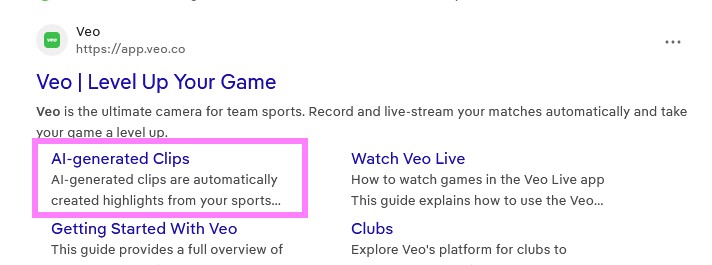
Who is Veo anyway? I just noticed their watermark in the corner.
I won’t link to Veo here because when I surfed there, it took over my browser dominantly. I would steer clear.
Veo makes AI-generated Clips.
Educational value
So…how does this product (which provides no prices upfront, you need to ask for a quote and hope for your educational discount…from a company with EDU in their name 🙄) actually add to the educational experience where students made ski jumps and rolled marbles off of them?
The students watched a video about ski jumping inside a virtual world.
Then they did something with generative AI about making a ski jumper?
Then they made their own ski jump models out of cardboard and rolled marbles off of them.
I didn’t see any measurement of angles or distance.
I even think the students’ faces look a little disappointed as their marble doesn’t sail up into the air much like a ski jumper does.
before and after
So where’s the learning added? Where is the advantage of using the product?
where’s the beef?
Students could have watched that 2D ski jumper video outside of the Olympic world. Technically, everything I saw happening in world was unnecessary.
Yeah, it would be a tad more boring but when the immersive Olympic world doesn’t add anything, it is a distraction. Unnecessary information should be removed (Mayer’s Principle of Coherence).
No, but that’s because I’m a specialist in immersive learning. What you’ve shown ain’t it.
Not ‘flash over substance’?
The video and supposed learning has no real substance. You might want to re-think using the phrase ‘not flash’.
The real deal!
😆
1 of 10, 1 of 100!
When in doubt, dazzle them with statistics!
Spent 5 years creating
what. a. waste.
BTW, your YouTube says you went AI crazy 6 months ago. Sure you want to stick with 5 years?
EDUMetaverse reputation
Interestingly, EDUMetavere’s YouTube account is empty! What?
This channel doesn’t have any content. You’re telling me.
And Andrew’s YouTube account is full! huh? (No comment on this Jess Jones AI agent…but…let’s just say there is a LOT of content with her.)
Did you know that you can spin up ‘blank’ avatars, basically avatar bots, in VirBELA based products?
I got $5 💸saying this image contains bots
Summary
I don’t begrudge the students. Poor souls having to be dragged into this. They remind me of the poor HTC Vive students. I’m glad the students made their cardboard ski jumps IRL. But somebody get them a tape measure. Get a physics teacher in there!
But for the love of God, please have your fake AI video have the ski jumper going down and then up OFF OF THE SKI JUMP, not the opposite. That is, if you are going to highly produce your propaganda about how your VR helps learning, have the ski jumper go from right to left, not left to right.
Here’s how to goes:
Notice how the ski jumper slides down and jumps up off the ramp?
What’s my main problem with the video/post?
It does a terrible job of portraying a possible way to use XR for education. Even if one looked past the faked video shots (and I don’t have a direct beef against using AI for video clips, even though I mourn for the proper actors put out of jobs with this), teaching this way with XR is awful. I see no educational benefit at all.
All in all, posts like this (and Andrew posts like this very often) do more harm than good to the XR for education industry.
Over and out.
Post script
I usually add more to my blog posts after publication; don’t be weirded out. But this one is quite the eyebrow raiser.
The blogger records show that I published this blog post on Saturday February 7, 2026 at 11:27 A.M. EST.
On ~Sunday February 8, 2026, Andrew Wright published on LinkedIn that he was leaving EDUMetaverse, a company by his own LinkedIn tagline he “created” saying that “the project is now in safe, capable hands.”
I’m not implying that Andrew lost his job with EDUMetaverse because of my blog post. Far from it. My read stats of this blog post immediately upon posting/sharing it and all up to this very moment of writing this post script on February 14, 2026 show that there have been at best ~2 views. I highly doubt that Andrew was one and EDUMetaverse (whomever that is) was the other.
But the coincidence is A-MAZ-ING.
And if you followed my inference in my blog post, I immediately wondered if Jess was taking over at EDUMetaverse. 😖
An interesting idea: build AI…and it takes your…job? 😕
I used to be such a fan! Of course, I was a fan of the Great Minds on Learning episodes when Donald Clark went over theory and research. But I just watched an episode and I had to bail around 49 minutes or so because it was so boring.
And this episode had Margaret Korosec and I’ve worked (to my delight) with Margaret so I was really looking forward to listening/watching.
Instead I found some rather boring, not-staying-on-track, and oh-by-the-way-did-you-bring-any-content stuff. It’s interesting b/c even the host John mentions that he’s received some flack for his podcasts and I wasn’t thinking much of it. For sure, even if he lets a live conversation wonder, he does not reign it in much in editing. But after the aforementioned 49 minutes, I was grasping for
some
kind
of
point.
Even my friend Margaret…what had she said simply beyond proposing words as questions?
Teachers should learn from students when it comes to using AI in schools
What are the ethics involved in AI in schools?
What is working and not working with AI in schools?
All questions. No answers. If I paid to go to this conference, for sure I’d have wanted to hear some answers to those questions. I’m in no mood for conscience pricking, thank-you-very-much. I’m an American and right now I’m getting much of that.
The high point that I can remember is that John asked Donald and Margaret who they follow (influencer-types) in either the instructional design, learning and development, or AI in education space and they named some names. Nice, but I could have gotten that all for free off of their own respective social media feeds.
Now let me go for the real point.
I don’t remember The Learning Hack Podcast interspersed with SO MANY ADS.
Ads:
0:33 – 1:12 Learning Technologies Conference 1:13 – 1:51 Synthesia with a discount link (and intros in this podcast were done by “Mariana, An AI Avatar from Synthesia”..what happened to the dear lady?)
26:27 – 26:47 The Podcast Learning Festival 2026
I’m guessing the ads went on but I bailed.
And I’m sorry to say, ads for things like ‘using AI to create your learning materials’— makes me shudder– because I used to come to this Podcast for good content but now I’m going to have to wonder how much John edits in or out just to be favorable to his sponsors.
I get it. Perhaps the man’s gotta make a buck. But there are other choices.
If you can no longer produce your podcast, stop producing it.
If you must have sponsors, try to get one that might not be a conflict of interest. 🎤💧
I’ve had times in my life when I’ve been one of those Holiday-of-the-Month-style teachers. 😀📅 January is, in my determination, the month of contemplation and of quietness. Nature forces you to slow down and sit. Perhaps take the time to write a haiku.
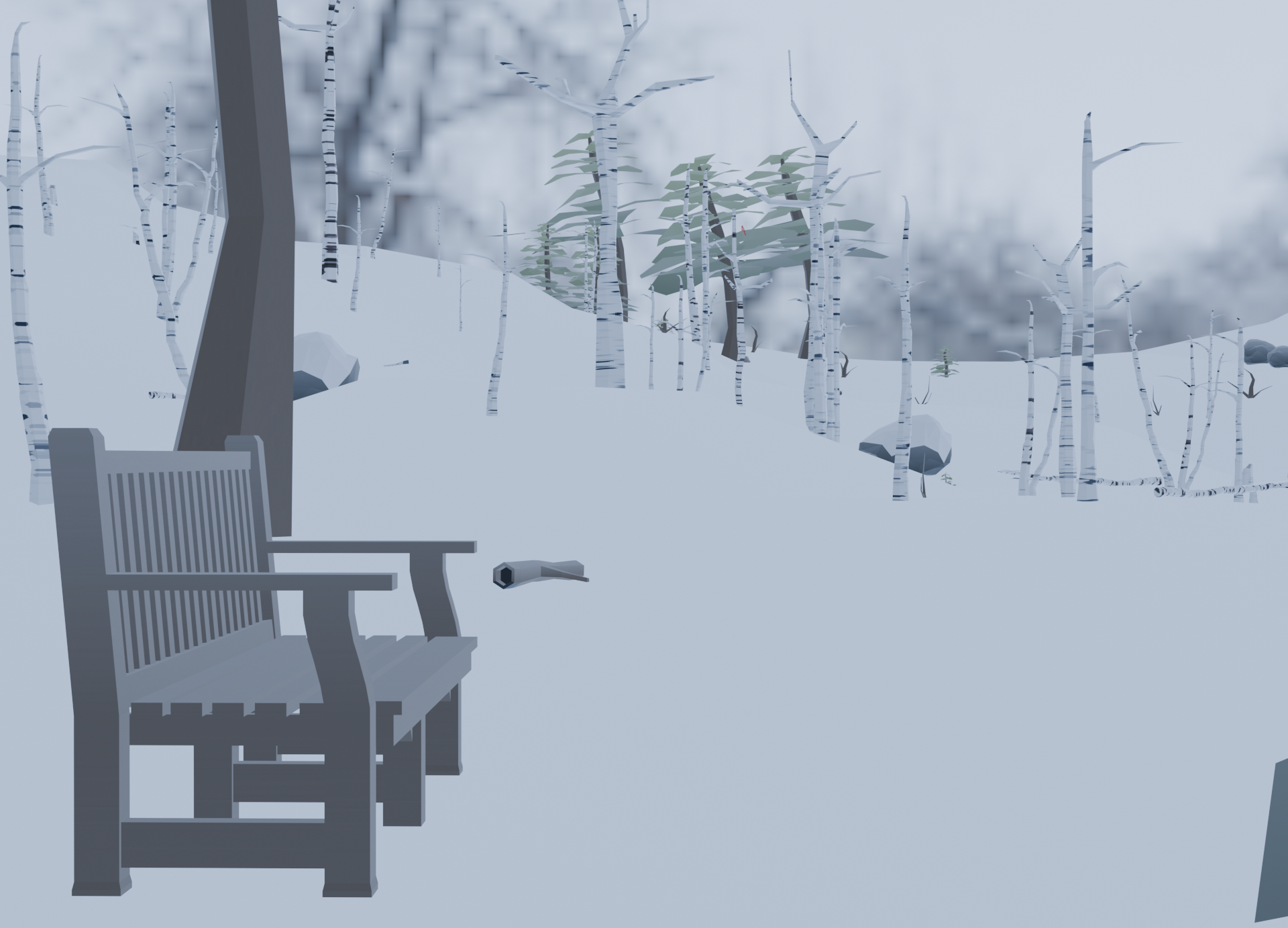
So coming through December into January, I knew this next build with Blender, hosted in Hubs, would be themed as a quiet space in a winter forest. It would be a nice place to sit and think, a place to visit regardless of the actual weather.
Inspiration
For years, I’ve had an image like this tucked into my mind: chickadees and birch trees. Tonal and cool; black, white, and gray. Chickadees stay around here all winter. They pop and hop around on the coldest day and are early to emerge after the biggest snowstorm. They just make me happy like daisies do for Kathleen Kelly . 😀
Chickadees and birch trees
Unlike the earlier months of winter when brown dominates the landscape, by January, we are usually blanketed in snow. The winter solstice has turned the tide of darkness back and at least during daylight hours, everything is in white/gray light.
Since I knew I wanted birch trees, I did a little gathering of birch tree photos that I would use (disregarding the AI images).
More inspiration images
Color Palette
This inspiration photo is where I pulled almost all of my colors from.
From this photo, I pulled out the browns, greens, and whites. I also
made small pines and stick-like baby trees. I also thought about making
the ground a little lumpy.
In this build one of my first new revelations was that all of the colors would look like they go together if I pull them from one source.
Said another way, if something looked good in a photo (tonal and pleasing to the eye) then the same color combinations might go together well in VR.
Of course, lighting is a different problem altogether. In this photo, it was sunny and wasn’t sure yet what my sky would be. I ended up making a blue to white sky gradient that I never used!
UV Texture Atlas
Even though I have thought about and attempted a texture atlas before, I have never successfully made and used one for a full build. I was never trained until I watched this video, How to Colorize Low Poly Fast for Games in Blender 4.3 (49:16) YouTube tutorial by Imphenzia. I like how he prompted to work with the X and Y scale on the UV texture. I did that a LOT and ended up with cool birch trees.
Because I’m proud of it, here is the final atlas, made entirely in Blender 5.0 (most of the scene was built with Blender 4.0.2)
All of these colors came from the photo directly above.
I’ve learned how to make those voronoi textures on the left side, one is shades of black, brown, and white, and the other is just shades of black and white.
Work in progress, showing the shading tab for the black, brown and white voronoi texture
Distribute Objects on a Plane…or not
I wanted to return to Ryan King’s Distribute Objects on a Plane (16:07) YouTube tutorial and I did create my winter birch forest scene twice using geometry nodes.
I had a scene in mind of a birch tree-filled mountain valley with a little stream.
I started with something that was probably 400 meters square and then was filling that space densely with trees.
Work in progress. Birch trees and rocks using geometry nodes. This is taken from inside Blender and I’ve not yet applied the modifier.
More work in progress. Bench, hills, and slightly less trees.
First attempt in Hubs. No lighting yet and geometry nodes modifier is not applied. D’oh!
I foolishly tried the Blender Real Snow extension just to see how my trees might look with some snow on the few branches- and my computer never stopped calculating. I had to force crash Blender. 😦🔨💻😖
After “applying” the geometry node modifier, the truth came rushing at me. I was facing 200,000 triangles for what I thought was a good looking scene. I attempted some heartbreaking deletions to get down to ~85,000 triangles. All this time, I was hearing the advice “It’s always hard to do nature scenes because they are actually complex!” Yup. I’d say ‘live and learn’ but I know I’ll keep attempting these nature scenes.
It didn’t take long before I realized I had to give up this elaborate idea and do a much smaller scene. In addition to the MANY trees, the “lumpy” ground was costing too many polygons and I was designing a place to ‘go here and see this’ and then ‘go there and see that’ on a mountain side.
I realized I had missed my original design idea: a place to stop and contemplate.
I started over again with a ~40 meters square, no geometry nodes. I deliberately placed every tree.
Re-use Assets I’ve Already Built
I was really pleased with how well the birch trees turned out. I ended up making one new birch tree but re-used the birch trees from my Pumpkin Patch build of Halloween 2024.
The birch trees in my Pumpkin Patch build were re-used and re-textured in my Birch Winter Forest build.
To help save even more polygons, I made transparent pngs of my birch trees in Blender and placed some of those ‘images as planes’ on the edge of the scene. Unless you flew around them, you would not know they were flat planes.
Snowflakes are 6-sided
I spent 1.5 days making snowflakes. I also tested them in Spoke but made some final tweaks once I tested the scene in Hubs. I thought of having more than one particle emitter in different parts of the scene, but again, decided to keep it simple with only one covering most of the whole scene.
Layered Sound
For the first time, I didn’t just select a sound file and have it loop. I found a background, Forest Ouareau and a chickadee sound file that I liked and I layered them together. The result worked wonderfully!
Animation
The chickadee file had 5 chirping events, so I made a narrative of those sounds:
1. Chickadee A is very friendly. It will spot you as a visitor and fly down to the bench. 2. Chickadee A will fly to some (imaginary) seed on the ground and call out to Chickadee B. 3. Chickadee B is more shy and will only respond from a nearby tree but will not fly down. 4. Chickadee A will fly back to his original tree branch.
The loop restarts after ~119 seconds.
Chickadee A
Chickadee B
I also added an owl that opens her eyes halfway, but she’s too sleepy and drifts back into her daytime nap.
Can you see her? Far back in the tallest pine
She sees you!
Feedback
I received this feedback on the scene:
Snow on the ground needs to be a little whiter
Snowflakes need to be a lot whiter
Change alpha settings on stream water to see if transparency will work
Combine objects using the same material, not just the same object mesh
Add back in some fog
I made those improvements.
This scene is open for visiting upon request. See my About Me page.
I’m grateful that a #leadership course was required in my PhD program*. It’s the ONE COURSE that I use EVERY DAY. Still, it doesn’t take a course to get your ducks in a row about leadership. It just takes listening and implementing a few key pieces of advice–that you’ve likely already heard.
If you get a chance, it would be a valid question to ask any leader, “Have you taken a leadership course?” and see what they say. If the answer is no, you might want to start surreptitiously dropping some leadership gems for them to pick up. Don’t worry that you are not their leader! How ridiculous! The “secret leader in the crowd” is a favorite human story! We’ve got lots of them! It’s no problem!
We’ve got:
Bard from the Hobbit
David from The Books of Samuel
That guy that yells “You can do it” from the crowd in Adam Sandler movies. etc.
This will be my take on some key leadership ideas that I do use, yes, every day.
Heather’s (Made up) Leadership Manual
Hey, it can be made up and still be legit. Mr. Rogers had the Neighborhood of Make Believe!
Don’t tell me you never wanted to go through that tunnel and explore the castle!
Day 1, Page 1:
Every one is a leader.
Yup, agreed. I know some of you want to throw stones at this and say that being a lifetime follower (ahem, Independent Contributor) is OK. That’s not the point. IC is a job title. The point is to recognize that your decisions chart the course of your life. Taking responsibility for your own self is the start of taking care of your neighbor. Get that straight.
Want some backup on that? Find the research that says that Taking Responsibility is the #1 happiness precursor, culture to culture, time to time, across all disciplines and ages. And remember that the phrase says TAKE, not wait around until it’s OK. Reach out and grab responsibility. Is your neighbor hurting? Well, that’s YOUR problem, Mister! Get out there and do something!
Day 2, Page 2:
Pick a leadership philosophy or, just like a Last Will and Testament, one will be picked for you.
A leadership philosophy gives you the answers to questions in the dark, in unknown locations, in split seconds, and in heartfelt moments. Believe me, leaders are forged in these fires.
Yes, there are multiple leadership philosophies (she says, trying not to roll her eyes). There isn’t just ONE and no, you can’t just be “yourself”. You are likely a jerk. We all are. You really are the product of your experiences, culture, and upbringing. They all influenced your leadership style. If you want to do better, read up, buttercup.
Day 3, Page 3:
Pick the hill you are going to die on.
Isn’t there a Klingon equivalent? It’s probably close to “Today is a good day to die”^. That means: Pick your battles but…when you do arrive at the battle that threatens your life, you need to go forward. My career died on the battle hill of being a whistleblower. I refused to do something illegal and lost my job. Lost my income. Lost a LOT of power. But I would not change my decisions at all. I’m proud that picked doing the right thing over money.
I find that folks that want to be leaders often fail on this one. They think that if they embrace a truly make-or-break decision, they’ll lose their job and hence, lose their power as a leader. So..isn’t it better to live to fight another day (as a leader) on this one?
No. When we talk about dying and leadership, this aren’t chump change decisions. You’ve got to lay it ALL on the line, or nothing is on the line. A true leader who loses their job is still a leader.
Picking the hill you are going to die ALSO means don’t pick silly little fights! I knew a great faculty member once that advanced to leadership. In his first week, he started to take up meeting time with his pet favorite issue. I tried virtually kicking him under the table to say “Really, this is not worth fighting for! You just got here. Save your “OMG the wolves are going to eat us!” for when you really need it.” Long story short: he didn’t get what he wanted. And he’s a known cry-baby from the start. As a leader. That’s a disaster. I would never find myself in a fox hole next to him.
You’ve heard these before
Leadership is not a job title.
This is universal. Just pick an era, google it’s top leaders and you’ll basically find a nice helping of assholes. But the kindest person could be the garbage-pickup man, the nurse in the health center, or the IT help line person. Don’t mistake TITLES for being leaders.
Leaders don’t lead, they serve.
Get this one inside you too. Leaders are there to TAKE CARE of those that report to them, not to dominate, dictate, or demand.
I received a great piece of advice when I advanced to mid-level management in Higher Education (cough, Department Head, cough): I had 5 faculty that just before were my co-workers. Now I was their boss. I was so nervous to lead the first Team Meeting as boss that my knees were knocking together. I turned to my Mentor for her advice. She said:
You’ve got them. Now your job is to keep them.
True enough. There was no reason for them to just up and leave (and OMG, the work of 5 people would all fall on me, I’d be dead in 3 days). So..it was now my job to keep them employed. Over a little time, my Mentor and I worked our philosophy into this statement that we would training other Managers on and repeat to new hires on our teams:
It is my job to keep you employed, until such a time as you make it clear to me that it is not longer my job to keep you employed here.
That meant I do EVERYTHING to keep you in your job and happy & productive in your job. When the time comes that you indicate you want to go, it is my job to help you get your NEXT job (via references, friendship, help with HR after your departure, etc.). If you act like a jerk, you’re making it clear that you don’t want to work here, hence I’ll bring out the counseling (See my 6 Days A Week post) and the ‘we’re gonna fire you’ words. But short of that, my job is to keep you employed, come heck or high water.
The days I felt like this protecting my team as their leader were plethora.
Never think that you can out-think your team.
I had one PhD. My team had 14 PhDs. How could I possibly out-think them?
This one is simple to activate. Watch how Captain Jean Luc Picard handles issues on the bridge in Star Trek: The Next Generation.
He always:
1. Confronts the issue via the viewscreen or audio message. Mutes it.
2. Turns directly around on his heels to look at his crew. He says one word, “Options.”
And of course, being ST:TNG, Riker advocates for aggression, Warf advocates to start shooting, Deanna says the enemy is being deceptive but she doesn’t know about what, and the Doctor, if she gets a voice, advocates for the health and rescuing of everybody.
That method gets you the MOST viewpoints into an issue, rather than one way into an issue.
BTW, there were a few times when I could see further down the road them my team. So I thought my way was best. But, I did NOT force them. I always tabled my viewpoint and just waited them out. They were such good folks that sooner or later, they’d usually arrive at a suggestion I’d made months earlier and they’d exclaim “Hey, let’s do it this way!” and I’d just privately smile and think “Yeah, lets!”
*BTW, this is why my blog is called Cogitate and Percolate. It was what I asked my team to do on issues that they were not ready to arrive at a good answer about. I’d ask them to ‘cogitate and percolate’ about it, think about it and drink coffee about it– both items that take time to do.
Bonus Points!
I’m going to squeeze in one more leadership section, the Bonus section.
In a battle, I’d rather have a historian by my side, than a general.
If you haven’t gotten the memo, I’ll tell you: Historians read minds.
They read the minds of people from the past–and they are good at it. They can almost always give you 2 reasons why something happened. Give them some time, they’ll come up with 10 more! But more importantly, on-the-ground, they can tell what your enemy is thinking.
I’d rather outmaneuver an enemy by having a more powerful mind on my side than any physical force. Brute force only points one direction: death. Live beyond the moment. Yup. Right here is where I put my Obi-Wan Kenobi point.
“You can’t win, but there are alternatives to fighting.”
Start Somewhere
If you have not had the chance to study leadership, start now. Don’t wait. Pick a leader and start watching videos, reading books, and thinking about the decisions you make.
My Jean Luc Picard reference isn’t fake or funny and I’m NOT the first to pull upon him as a leadership source. On Twitter, the @PicardTips account is a must-follow.
BTW, leadership is not always “First up the hill!” or “Last up the hill!” despite my quippy image. You see, if you took a Leadership Course (ahem, circling back to my first point) you’d get exposed to Situational Leadership–which means you do different actions at different times.
I have a “First up the hill!” story here. The point my image is trying to make is to really knock the “LeaDeRS ArE aLwaYS fIRst” storyline off the headlines.
Other sources I use:
1. Jesus. Hey, I have to pick the OG of leadership. ESPECIALLY #ServantLeadership. It all goes back to here, yos.
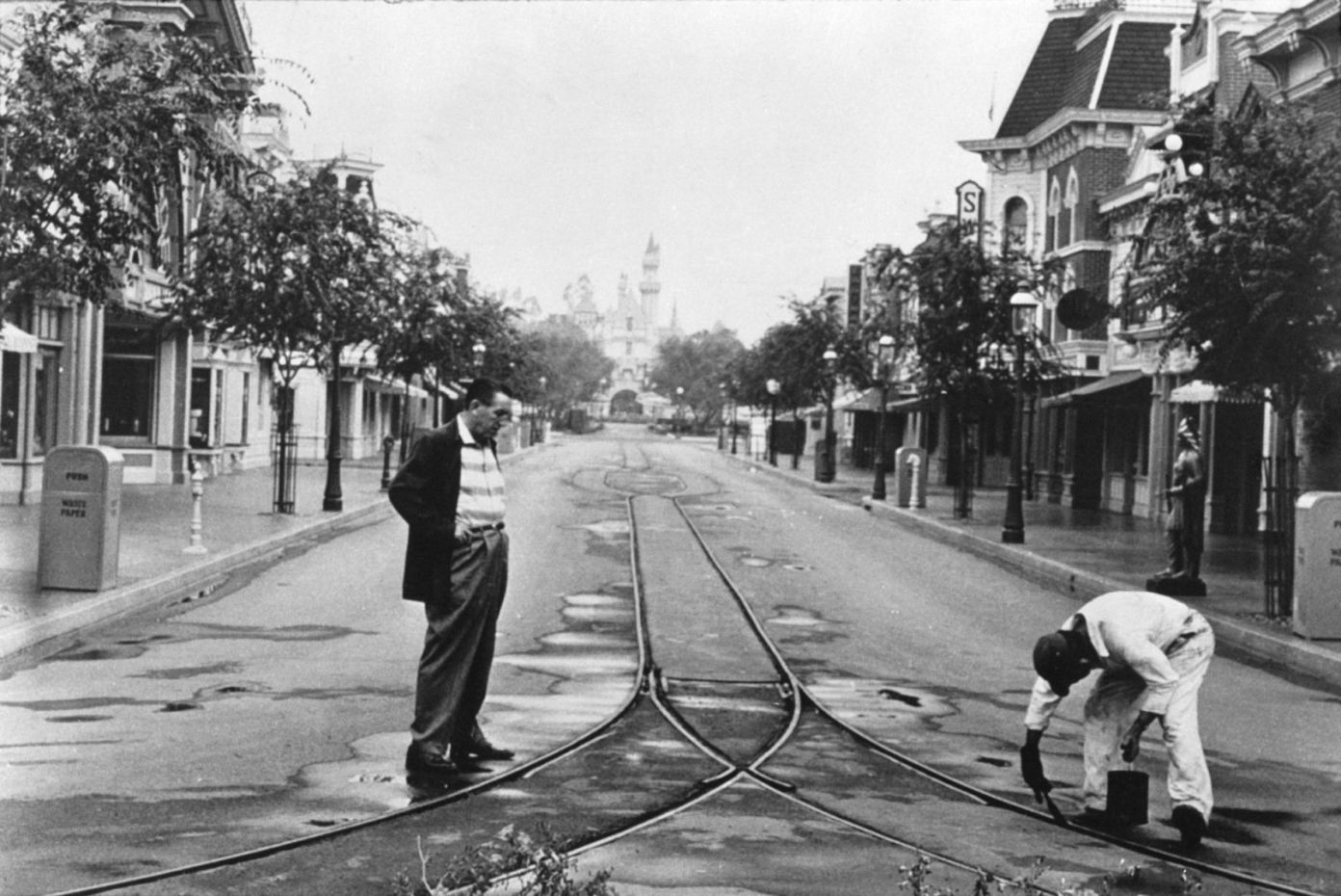
2. Walt Disney. Yes, the original stuff–the original ideas, vision, and feelings that Disney wanted to evoke. Definitely ‘bottom up’ leadership style with he walking the trenches and getting solutions from his employees on the front lines.
3. Daniel Pink. I guess I could sum up his influence as “It’s not always intuitive. Actually, it rarely is.”
4. Simon Sinek. This guy has the pulse of both military (where it really IS do or die) AND business leadership. Every video of his is a must watch. But bear in mind, this isn’t just mind decisions, it’s heart decisions.
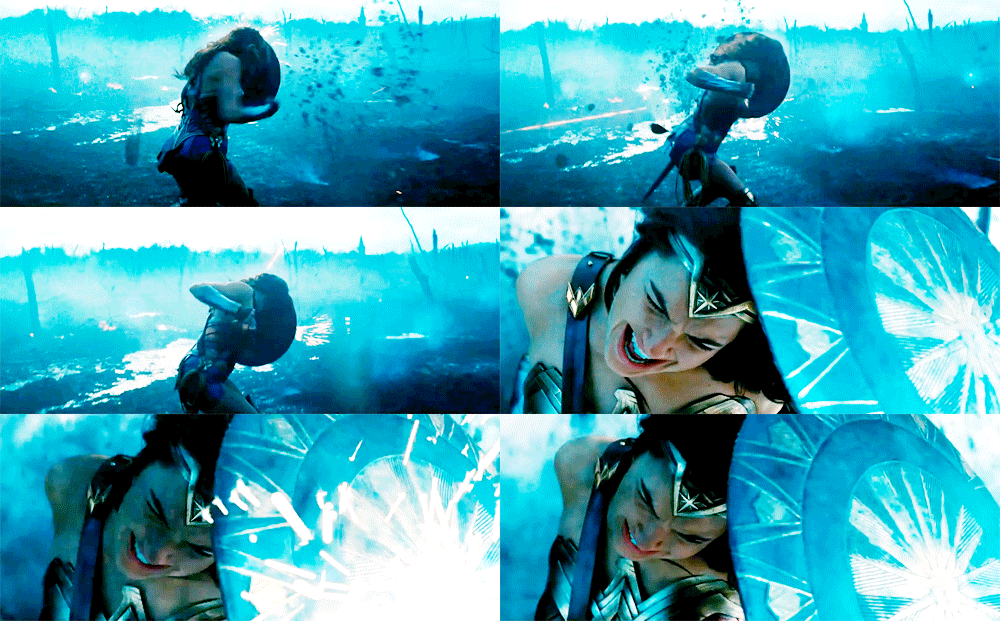
5. Jeepers, all guys, Heather? Can’t you put ONE woman on the list? Maybe because I know women and because women have been the most cutthroat in my life experiences, I can’t raise them up this time. (OK,I know I worked a little Wonder Woman into this article. But I can’t 100% endorse her. Maybe 98%.)