Author: H

  • When Tech Platforms Donate The Resources

    When Tech Platforms Donate The Resources


    [EDIT: This post was originally written in January 2023 and lightly edited in 2025]

    Jeremy Bailenson

    As much as I admire Jeremy Bailenson’s research work (really!) his Communication 166/266 Virtual People course in June 2021 had some real problems. In its defense, it was a first-of-its-kind course, even if it wasn’t the very first course in VR. Depending on how to define VR versus XR, groups of this size, 263, have met synchronously in other platforms.

    Boast Much?

    Bailenson defends: “To the best of my knowledge, nobody has networked hundreds of students
    (with) VR headsets for months at a time in the history of virtual
    reality, or even in the history of teaching.”

    Further, he states:

    The scale of this course is what sets it apart compared to other “in-VR” courses. In addition to having a relatively large number of students enrolled in the course, we also had a large number of sessions taking place in VR over time, many of which were in a networked virtual environment. To our knowledge, prior courses that have used VR in an educational setting have rarely accomplished all three of these criteria.


    Here is a YouTube video, Stanford “Virtual People” class in the Metaverse posted by Bailenson.

    The ENGAGE Platform

    In the video clips, we see the ENGAGE platform.

    Why ENGAGE? It was not deeply explained, here:

    In addition to the headsets, the course also needed software to connect
    the students and teachers. For this, Bailenson said the university
    decided to use the ENGAGE virtual communication system. ENGAGE is used by major companies and educational organizations to hold virtual meetings and events.

    A Big Problem


    I looked at some of the film clips closely. I searched and the early clips appear to be deleted off of YouTube.  I have facilitated small and large events in XR.  

    In the video clips of this course, I can detect that sound appeared to be a somewhat major problem in the platform; getting users to hear, signal that they could hear, or having multiple groups in one space (like a lab) and hear over top of each other.

    The Headsets

    Learners in the course received the Quest 2 headsets.

    “Virtual Reality is becoming mainstream, with more than ten million
    systems being used in the United States alone. This class examines VR
    from the viewpoint of various disciplines, including popular culture,
    engineering, behavioral science, and communication. Each student will receive an Oculus Quest 2 headset, and the bulk of our learning will
    occur while immersed in VR.”

    Each student was given the headset:

    Each was given an Oculus Quest 2 headset

    According to another course from 2022, headsets were to be returned at the end of the semester:

    Screen capture of a Stanford 2022 course with price of US$3699 saying headset would be provided but must be returned

    Facebook Meta provided a “workaround” for the forced use of Facebook accounts in the headsets:

    The Facebook login requirement had sparked complaints and privacy
    worries, leading some organizations to seek a workaround. Stanford
    University uses Meta’s headsets in its courses on VR, said Jeremy
    Bailenson, the founding director of the institution’s Virtual Human
    Interaction Lab. To ensure student privacy, the lab had to seek Meta’s help in creating anonymized accounts for classroom use.
     

    This article comes right out and says this:

    And money for the project—as well as donated VR headsets for students at
    the participating colleges—comes from Meta, the company that owns
    Facebook.

    The connection between Facebook Meta and Stanford has been documented.

    While the experience was good in that, at the beginning of trying out any new technology, there will be false starts. Said another way, it is good to learn that bringing in 30 learners to one large-ish lab space to teach separate labs of 5 people each won’t work if there is flat sound. That has be learned. I think his course showed that.

    But overall, conducting a course with donated technology and then turning around and saying the learning was great* is a conflict of interest.

    I found a written summary here, but it’s light on conclusions. There a few glimmers, but otherwise, they did seem to hint that the groups versus sound problems that appeared in the video did happen.

    * What does “the learning was great” actually mean?  Bailenson and Han claimed better presence, enjoyment, motivation, and transfer. While I could let you consider if any of those deserve merit, I railed against the conclusions of the course in my The Immersion Delusion post.  This post, being written more than 2 years before I hit publish, focuses on the hype just as the course was starting. Therefore, obviously, this particular post does not hit hard on hype versus results. It only focuses on hype and the conflict of interest of hitting the airwaves with how amazing your course must be, to be a first of its kind, learning about VR in VR, yada yada yada. 

    [EDIT: I decided to publish this post on 12/26/2025. I’ve done quite a deeper dive on that course and the publications around it.  I feel even more confident and I edited this article to come right out and say that Bailenson had a conflict of interest, rather than a “dis-authentic event in research” around the entire course and following publications.]

     
    Learning About VR in VR

    Video of spaces from Victory XR  (Unsure if these were used in the Stanford course or not)

  • My Tron Build Part 1

    Lore, Textures, and Basic Shapes


    Decorative image with text Request Access as key phrases from the TRON movie.

    As promised, I’m starting blog posts about my Hubs/Blender builds. This will be a bit like stepping into a running stream as I’m over 2 years into my learning journey.  I’m not that far in, still working primarily in modeling and I’ve done a little animation and I’m currently learning Grease Pencil (2D).  Plus, I hope that some of my writing will help others.

    What I do in Hubs and with Blender, for now, is pure art

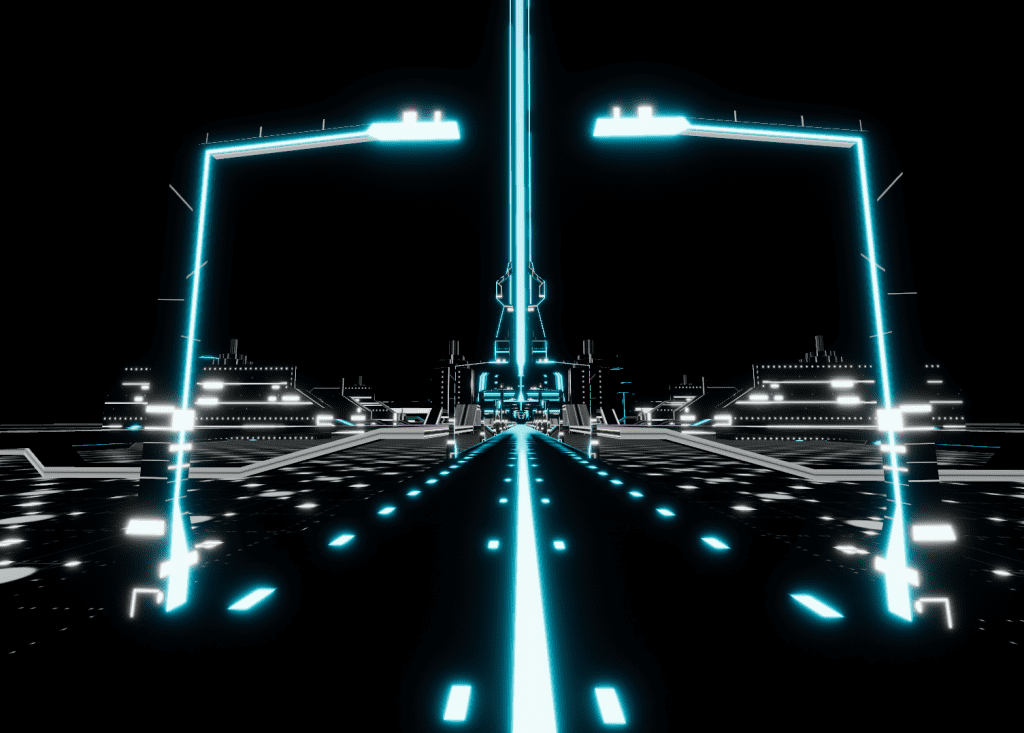
    And that’s a good starting point for this blog because My Tron build, The Grid, was a really fun art study in negative space. In other words, this build had me work on what was not there just as much as what was there.

    Tron

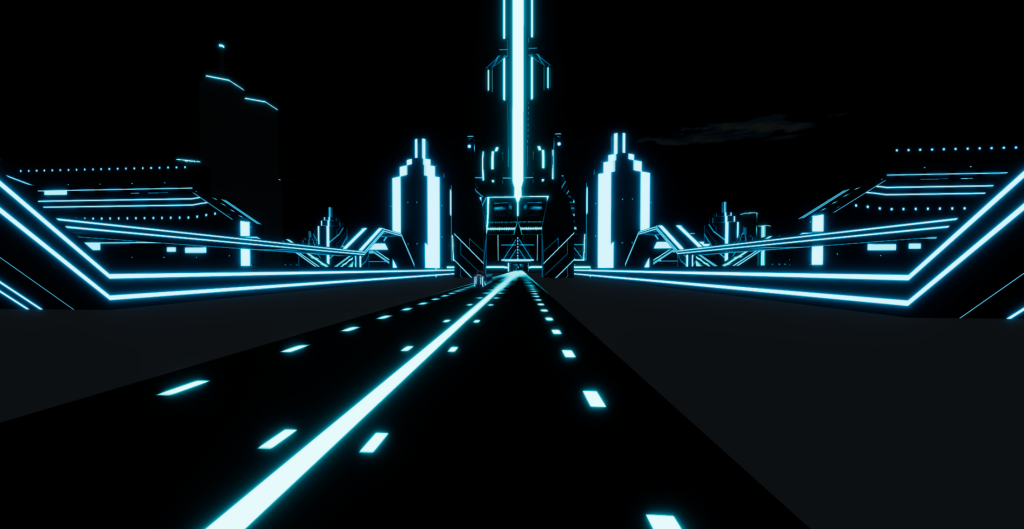
    I don’t remember how me and YouTube started cross-pollinating on Tron. Truly, I’m not that into the movie (you will not believe that by the time this post is done because now, my Tron lore cup runneth over). It might have been this video, Sweet Dreams are Made of These, Epic Tron Version. I just find this song mesmerizing.

    At some point, probably when searching out YouTube Blender tutorials, I ran across this video, Make Tron City in Blender, Real Time Render.

    I watched this, it’s only 39 minutes and the creator is true to his word (mostly) that the build can be made in a short period of time. (There is little sped up footage.) That means a lot when evaluating a Blender tutorial. Many creators speed up time and give building ‘the hand wave’ approach.  However, a close watch will show that this creator, Daniel Grove, made the Tron city three times as there are two different showcased cities (the center building changes) and then the one he builds as his how-to in real time.

    Nonetheless, it looked very simple. I was intrigued to play with bloom.  Making my own textures with Blender was something I had just learned to do. I started.

    Textures

    This video and I think perhaps one by Grant Abbitt on using Grease Pencil Drawing in Blender got me going with using the Drawing tools in Blender and practicing something relatively easy, straight lines. I input a few circles but most of the textures are straight lines with a few angles.

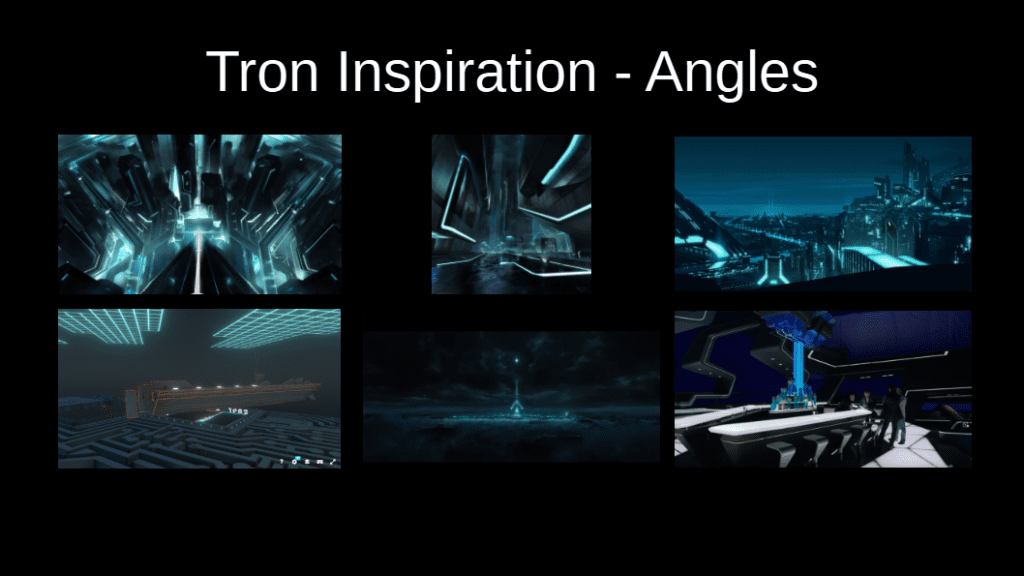
    In my “lit review” of Tron art, angles are a cool element. They are not quite 45 degrees, but they play near there.

    Collage of 6 images showing various angles in Tron fan art or movie captures.  Aesthetic is black with glowing blue grids.
    Inspiration images – note some of these are directly from the Tron movies/books but some are fan art.

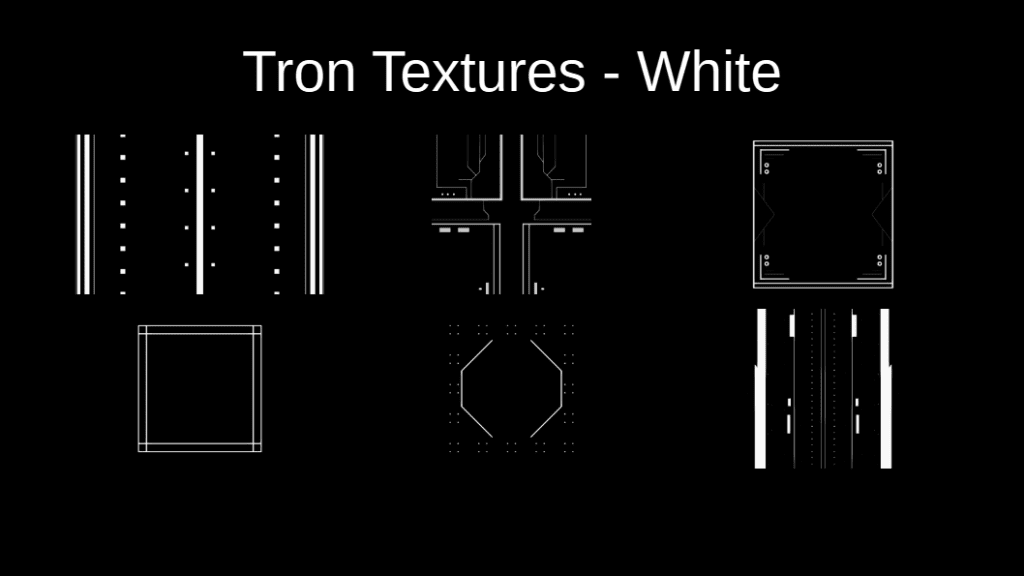
    So I had my first bunch of textures, these were all made in Blender.  Note that they are white on black.

    Collage of 5 textures using straight lines and dashes used to form the textures of a Tron City.
    None of these show up in the final build

    I got the rest of the buildings made (and conceived of my “Halloween twist”), put the textures on and ramped up the bloom.  The tutorial has you build a Color Ramp to turn the white to blue. In Blender, it looked fabulous!  Essentially, I’m done! No, I’m not. I make immersive art.

    I put the build up into Hubs to get inside it for the first time.  

    Nothing. Blackness.  But that’s because my build was unlit– as in completely unlit; no light source.  I had to play with some HDRIs to get the lighting I wanted.

    And, I had bloom off on my own browser. That’s the problem that you can partially see below. It’s not glowing.

    Work in progress. Note that the blue color is working but nothing is glowing.

    So starts the work of translating what is a great scene in Blender to work in the WebXR platform, Hubs. There are LOT more settings to be worked on. In total, lighting took me ~3 days, slowing tweaking each setting and using the Hubs Blender Add-On after every tweak to see if was working towards the effect I wanted.  Plus I had to turn bloom on.  

    Problem

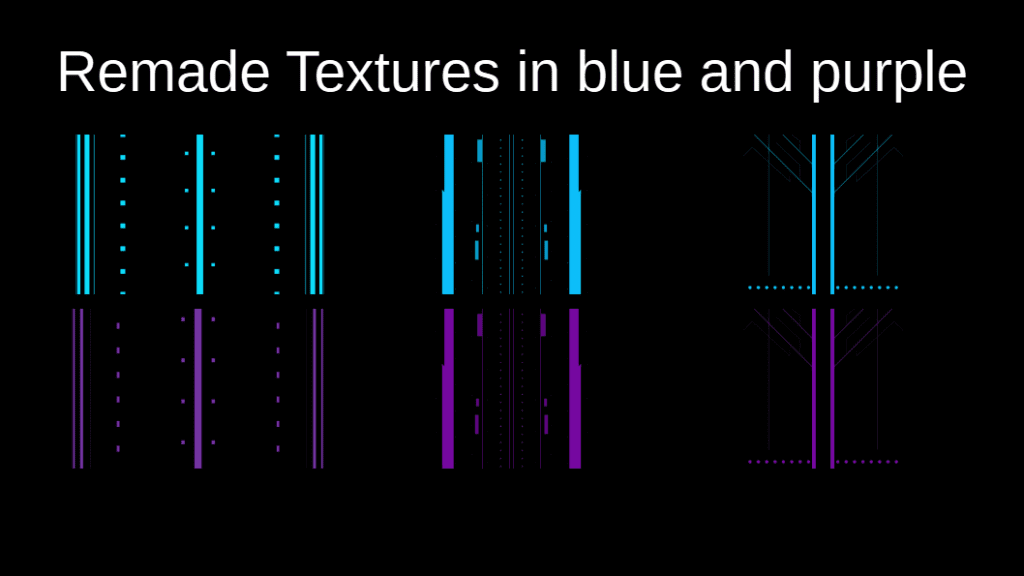
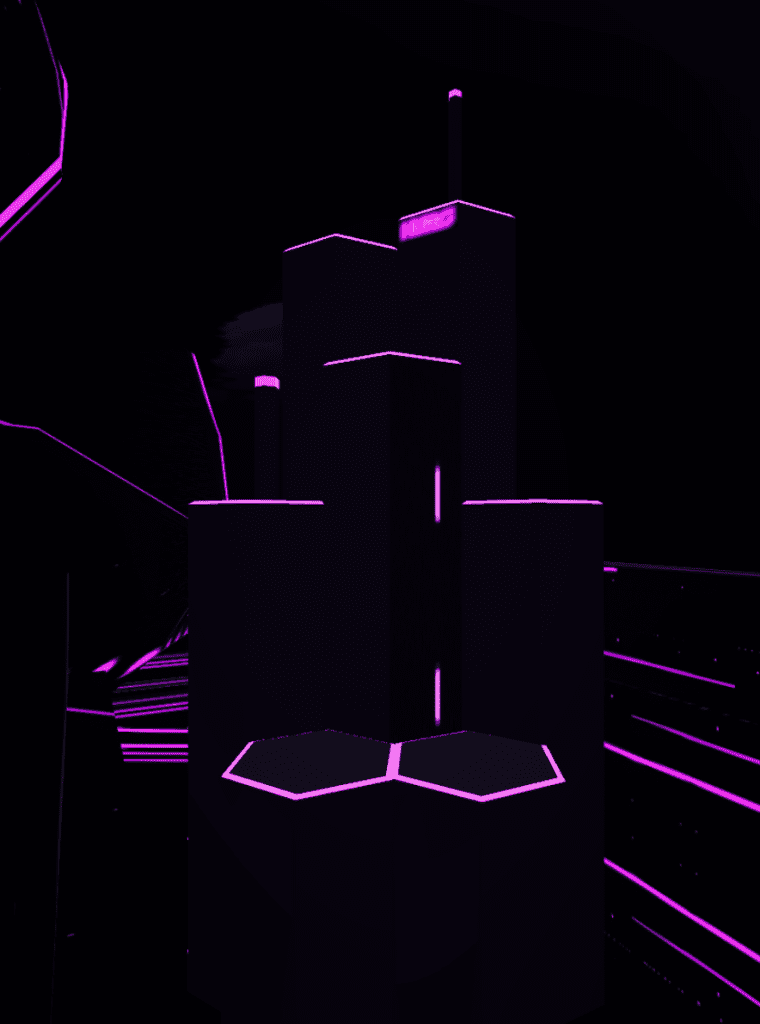
    But of course, Hubs cannot understand the color ramp taught in the tutorial. So now I had to rebuild my entire set of textures in blue on black. Plus by now I know I want a set of purple on black for Halloween. I didn’t quite keep a set of Blender files for each texture, so I had t remake most of them from scratch.  Bummer. That was another two days work.  Plus I had to check for just the right “blue” (HEX 0DC2FF) and “purple” (HEX 7809A4) inside of Hubs. I would reference those 2 HEX codes frequently. In hindsight, the blue worked great. But the purple– even though I tried 3 different purples (a dark, a mid, and a light) was still too dark; it didn’t glow much in general. I’d pick a lighter purple if I did this again.

    Notice how the purple just seems darker.

    At this point I have one of the textures in blue (the road) but I’m still tweaking the bloom. Notice the white in most of the textures. The street lights are glowing from a blue material with emission, not a texture.

    Capture of work in progress from Blender. A cityscape is visible but some elements are white on black while others are blue on black. The blue parts are glowing.
    Only the blue is emissive at this point. I haven’t replaced all of the textures yet.

    In addition to re-texturing, I was adding Flynn’s Hideout (aka apartment or safehouse) and heavily researching Tron lore to determine the purposes for things. I learned a LOT more about Tron that I ever wanted but it was cool to explore a world that was a computer simulation. 

    Collage of images from Tron, Flynn's Hideout. Elements of a glowing floor and ceiling, fireplace, meditation pool, some "bits" (rubic's cube like decorative elements) on the mantel.

    For example, there is a fireplace with a mantel in the hideout. I had to ask “what is fire in the Tron world?” and found that it appears to be blue transparent cubes (Tron Wiki, Flynn’s Safehouse, Trivia). Blue transparent cubes coming up! First, actually made in 3D in Blender. Then I picked a camera viewpoint and rendered one in 2D to be used with Hubs spawner. The result? Close enough. I’m still hesitant with transparency in Blender and Gimp. If I were to make these again, I would not have as many lines.

    Image of a black cube with a glowing blue outline.
    My Tron fire cube

    Design Elements for Flynn’s Hideout

    • Should be spawn location
    • Can see Tron city (The Grid) from an outer deck
    • Includes water or meditation pool
    • Has angled black shiny walls (entire Tron world is black angled shiny rock)
    • There needs to be a book shelf in the back. Books appear to be significant in Tron lore. Books containing “text” might be the only part of the real world that computer programs can attempt to understand. The poorly done ‘do you know Jules Verne’ joke implies that programs struggle with fiction/nonfiction text.
    • No real food, but Flynn does eat. Note: humans are users. Users are self-powered in the Tron world. They are the only entity that is self-powered. That self-empowerment grants them somewhat of a god status in the Grid.  It also allows Flynn to live separate, off the Grid, and beyond the reach of Clu.
    • There should be a bedroom to the side. 
    • The fireplace has objects that seem to bemuse and simultaneously confuse Clu.  I recreated this scene in my video. #CluDoesNotGetTchotchkes
    Image from Tron: Legacy and my video, showing the moment Clu reaches out to the objects on the mantel.
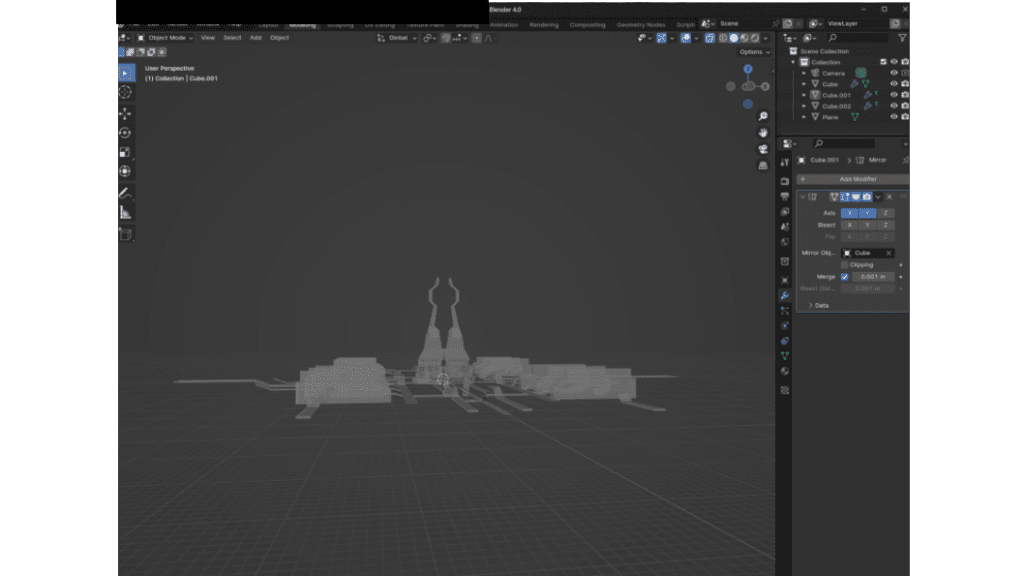
    Capture of Blender 4.0 showing only 3 cube shapes made an entire city.
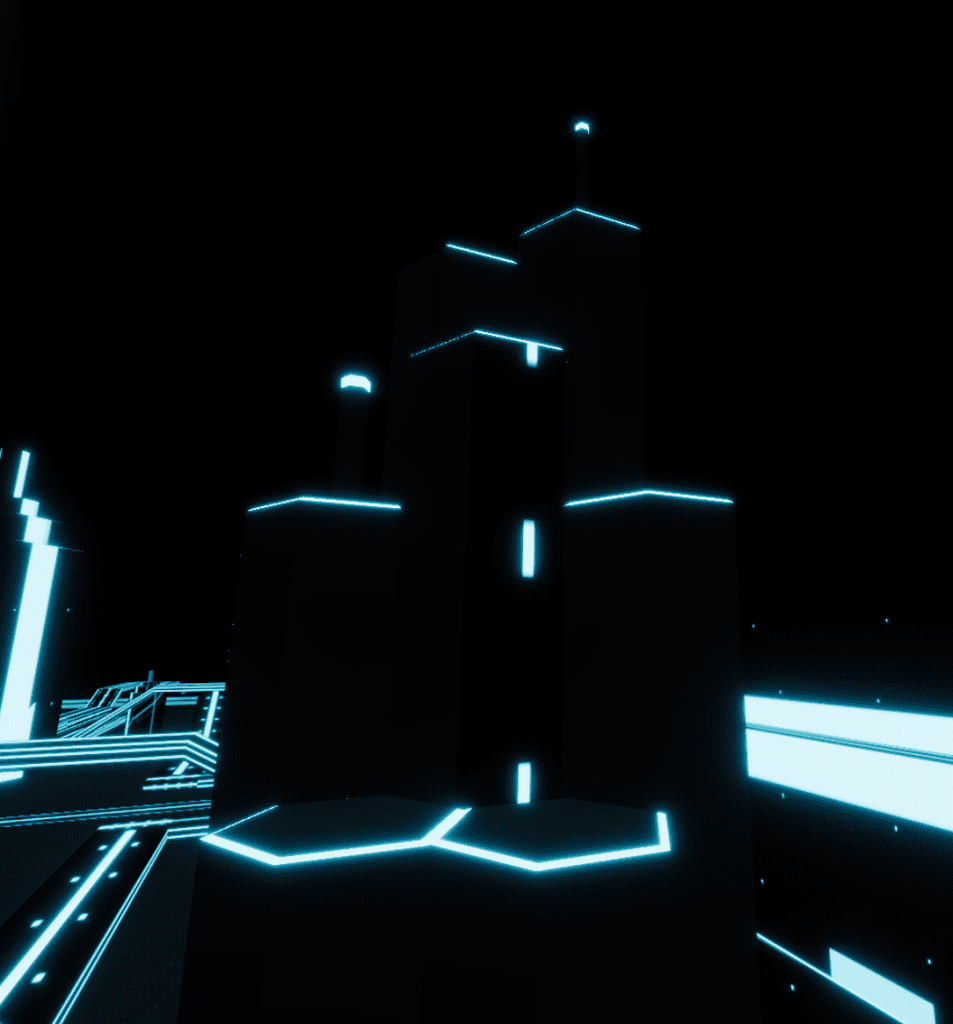
    Work in progress: Blender screen showing that the basic city is only 3 cubes

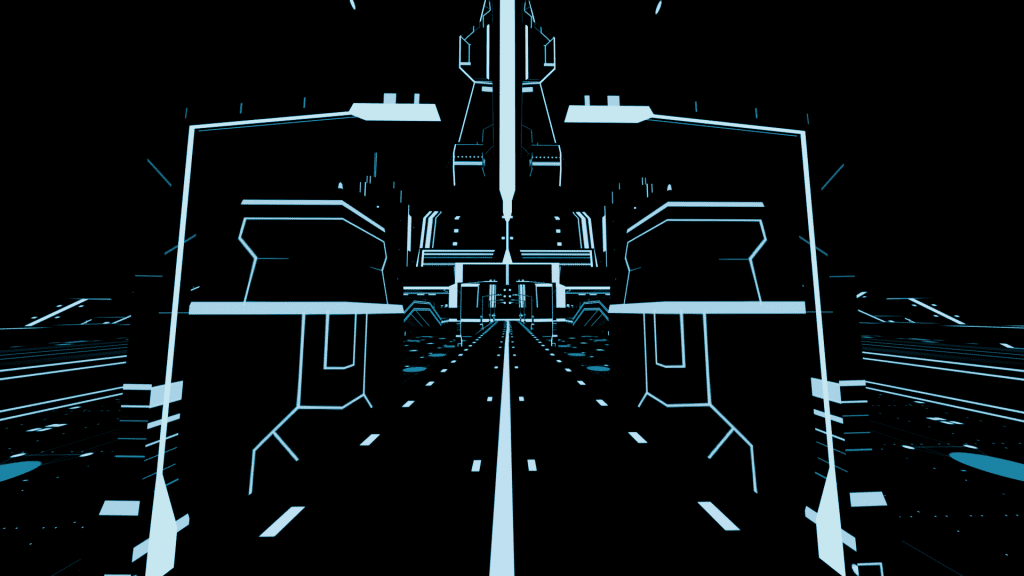
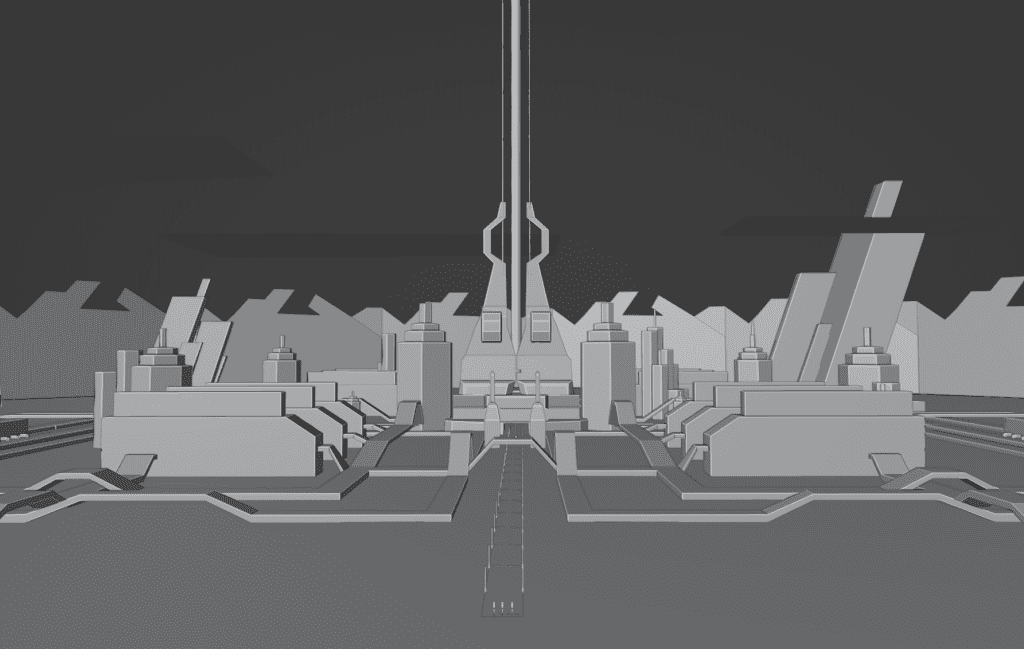
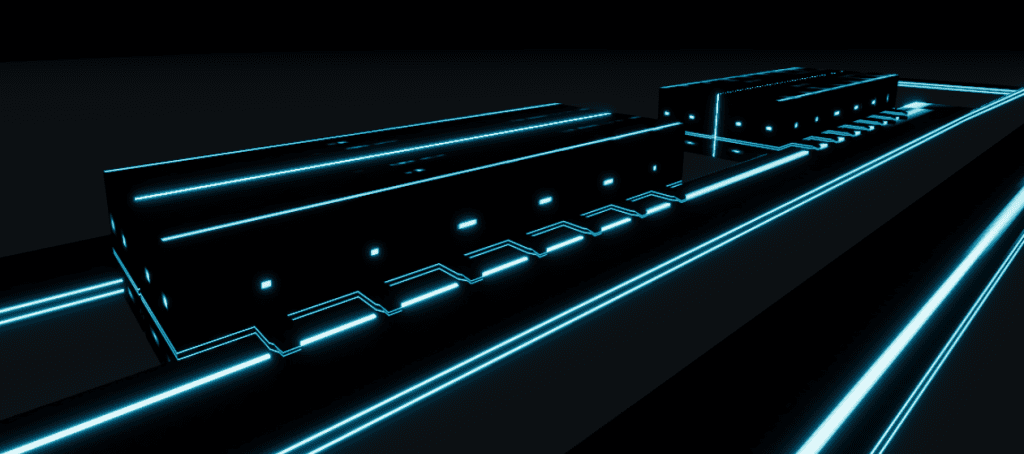
    Capture from Blender of the basic shapes of Tron City.

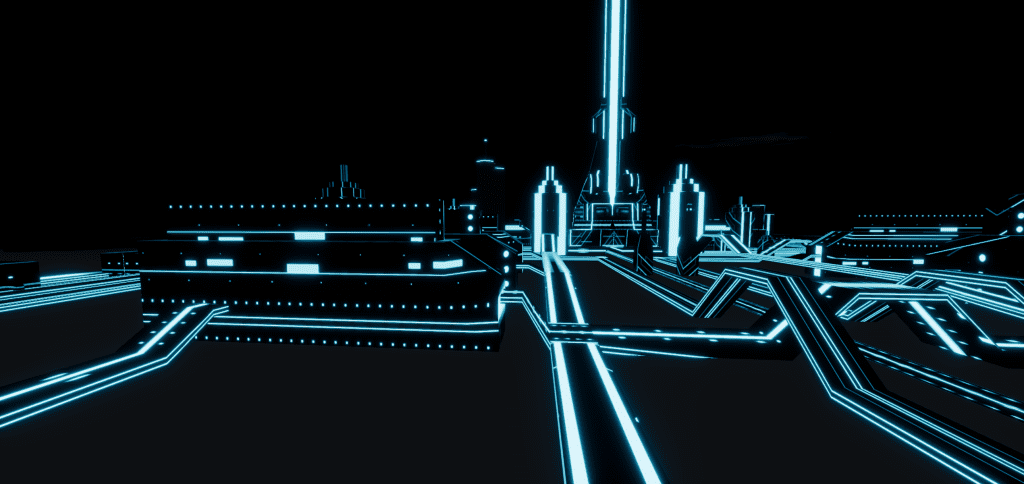
    This series of images shows what I mean by “the textures carry the weight” and the use of negative space is compelling. The textures add what could be windows, doors, or programming through the scene. On the “roads” the textures give a sense of movement. It’s wild that all that busy city is from a few cubes, with the Mirror Modifier and some linear textures.

    Tron City Elements

    • Apparently, it’s always dark and stormy in the Grid. Technically, it can rain and the Grid is rather proud that it can simulate rain. I did not make rain. I added some blue-tinted clouds that float across the scene via my animation. The black rock everywhere is shiny.  Perhaps it is a break in the rain.
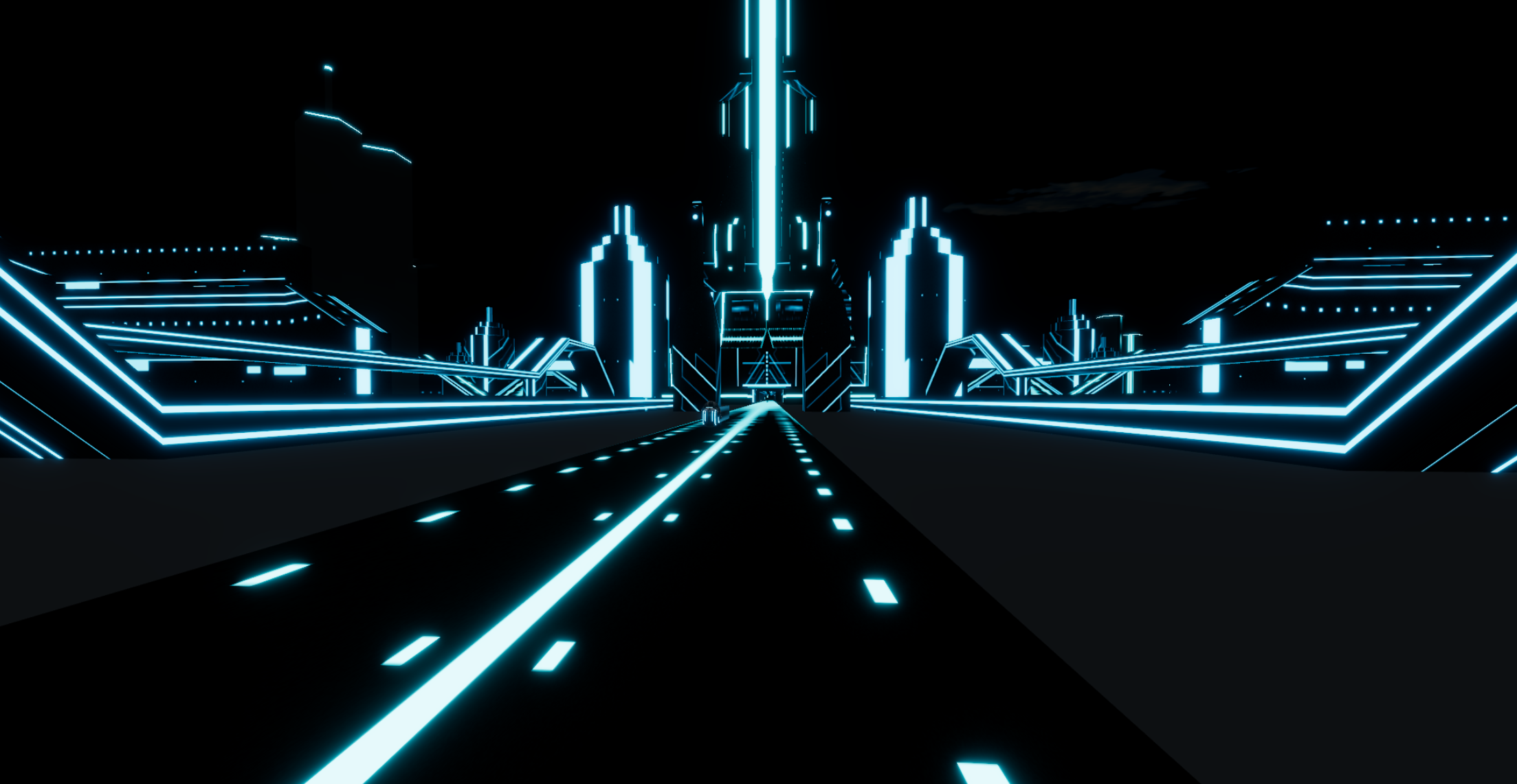
    Capture of Tron City in Hubs. A blue tinted cloud floats above roads with glowing lines.
    It’s always stormy in the Grid
    • I became much more comfortable with the Mirror Modifier in Blender in this build because the tutorial has you create the city with one mirror (i.e. X axis) but I simply added the other horizontal mirror (i.e. Y axis) for things like the roads and you quickly get a much larger symmetrical city!
    • The city is NOT fully symmetrical. I created some extra buildings that I manually placed into the scene. 
    “Ram” buildings- like the computer part.

    The Socket Set


    I created some fun “socket set” Emerald Plaza buildings, like in San Deigo. 


    • I chose not to make the Games stadium.  It’s already a big build and I didn’t need another building complex for my story line. 
    • I thought about having the Solar Sailer arrive at some sort of tethered location at an antennae. I built the building for it to arrive at (per the Tron plot). But I decided that I liked the look of it just sailing through and past better. 

    About that center power beam

    The tutorial doesn’t care how high the beam goes up as you just get it going up out of the animation render camera shot. But since my city is immersive, I had to think about how high of a beam I wanted. The beam IS part of Tron lore and it represents communicating back with reality so I thought it should go up forever! I really thought I had a perfect application for Fading Assets Gracefully with Vertex Alpha. But with Blender 4.0 (or some version near there), alpha has changed and changed how it is done. Thus, I’m lost and could NOT get it to work. I’m sure the problem is with me and I just need to adjust to the new system, but still I’m floundering.

    Still, a mantra that I keep repeating did work: There is more than one way to do things in Blender.

    So I tried Hubs black fog instead. Plus, since I already knew by that time that that beam was about 500m from the spawn point, if I set the fog to 500m it should just about perfectly hide the beam until a visitor goes out to the cliff edge.

    View of Tron city after just stepping outside of the Hideout
    Capture of a blue glowing city that is closer now, with a center power peam just coming into view.
    View of Tron City further out on the cliff edge
    WIP image: Note the elements: the cushion, the water pool, the bedroom, and the far off city.

    By The Numbers


    The final build of Tron City with Flynn’s Hideout: ~18MB. I’m very sure most of that were my textures. But all things considered, that’s a tiny number for a build 1 kilometer in size.

    40,000 triangles

    Environment Map: Quarry Cloudy HDRI from Poly Haven, 1k

    Seeing cloud reflections indoors? VR fail, but I’m sure that will get fixed someday.

    World Surface Rogland Clear Night HDRI from Poly Have, 1K 

    Tone Mapping: Blender Filmic

    • Exposure 1.0
    • Bloom on
    • Threshold 1.0
    • Intensity 0.30
    • Radius 0.50
    • Smoothing 0.03

    Hubs Fog

    • Linear
    • Black
    • Near 100
    • Far 500 

    In Part 2 I’ll show my Tron Light Cycle, the Solar Sailer, and Tron Avatar.

    In Part 3, I’ll describe the Live Event.

  • My Tron Build Part 2

    My Tron Build Part 2

    Light Cycle, Solar Sailer, and Avatars

    Tron Light Cycle

    There are MANY fan art pieces for the Tron Light Cycle (Sketchfab Tron Light Cycle search results, ArtStation search results) showing many styles, emphasizing different elements. I did giggle at a model out there that used a human with bare feet. There is even a significant difference between the Light Cycles shown at Comic Con (green and blue) and in the Tron 2 movie (orange and blue). I picked the features that I wanted to for my 3D Light Cycle object which I made in blue and purple.

    The Light Cycle was a two day build and I completely restarted it once. Relatively, this was a fast build but I had a lot of fun making it. It’s too bad that it does whiz past in the actual scene, but I know it’s cool. 😎

    Collage of Tron Light Cycle images gathered from the internet. Elements highlighted are where the handlebars and footrests are, the engine, and the overall top view shape.
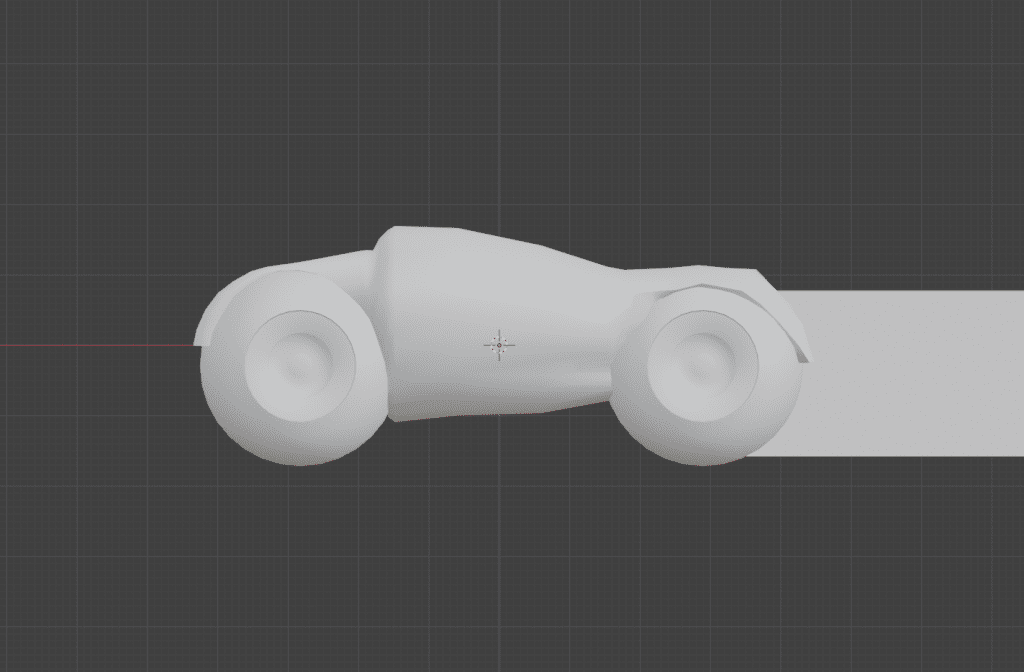
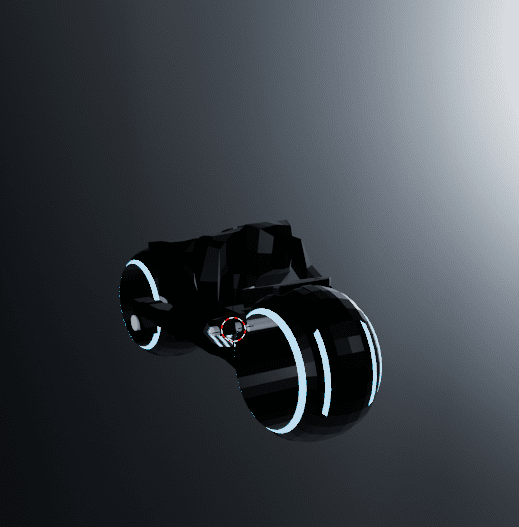
    Light cycle version 1

    In my first attempt, I started with the wheels which turned out pretty good. But I was primed by this video of a Light Cycle remake. But I didn’t like that core which was a mesh cylinder.

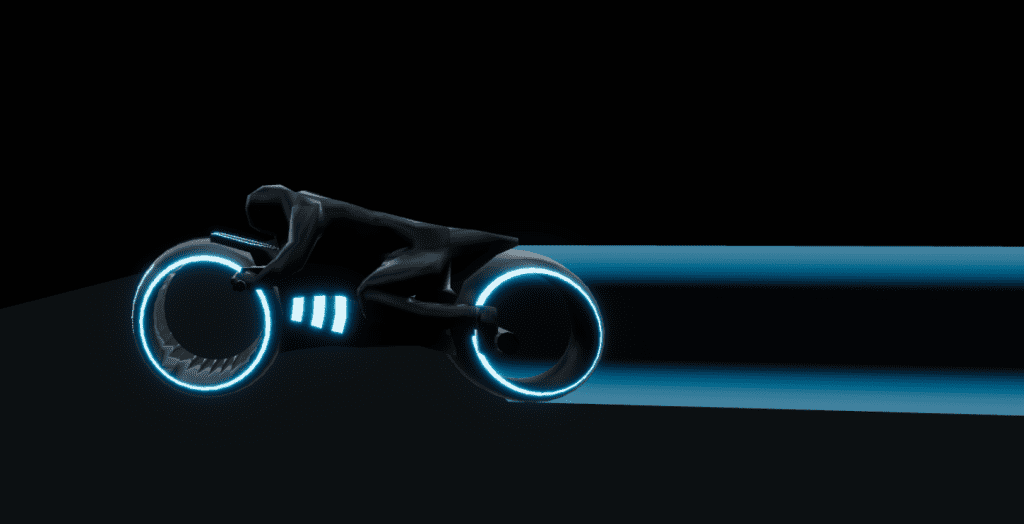
    In my second attempt, I just used a mesh cube because that was easier to use loop cuts to get faces that I could pull the arms, legs, and head from. I did add in a mesh cylinder, however, for the light “engine”. I knew that it needed an added glowing tail, but I made the texture for the Solar Sailer and reused it for what Tron lore calls the Light Cycle Ghost Tail.

    Light cycle, version 2
    Capture from Tron City in Hubs. The driver leans forward and the motorcycle has a blue glowing tail.
    Light Cycle, with glowing transparent tail (made in GIMP).

    Similar but different

    POST SCRIPT: This section added

    I realized after I pressed Publish (the world’s greatest proofreader) that I had not fully explained what I meant by this build utilizing negative space. Also, I need to properly give credit for the light cycle animation, which goes to Hubs community member, Theanine. I did look at his Synthcity Blender file to find out how he animated his spaceships.  I was wondering: did he use a generator of some kind or did he use animation. The answer was animation.

    However, while I was there looking at his blend file, I realize that there was a some common “look” from his Synthcity build and my Tron build– both used glowing colors. However, I used a negative space idea and depended on my textures to carry the work and he actually HAS the heavy work in his build.

    Here is an example. In Synthcity, windows are added planes that have their own glowing material shading. In Tron, any windows are created as a result of rectangular shapes in the texture. So I didn’t build windows into my buildings.  I left my buildings (all of them) as plain shapes.  But when I applied the texture, I saw how Blender applied the 2D texture to a 3D shape and with little editing, I went with the results. The straight lines and dashes on the textures became apparent as windows and road paint.  So I didn’t bother with the details that Theanine had, but I got a very similar result!  Synthcity is going for a video game city look and Tron is going for a city as circuit board look.  But Theanine was gracious to comment favorably on my Tron build and that should make all artists happy.

    Collage of images comparing how Synthcity used added planes for windows and Tron just let the texture create the appearance of windows.

    Tron Solar Sailer

    Collage of images for the Tron Solar Sailer ship. Hexagonal shapes and the final ship, which has an organic bee or butterfly look.

    In the Tron 2 movie (TRON: Legacy), it is implied that Sam and Quorra fall in love on the Solar Sailer– which I find a bit rich. 😕 But the scene of them on the Solar Sailer sailing into Tron city is beautiful and I wanted to replicate that.

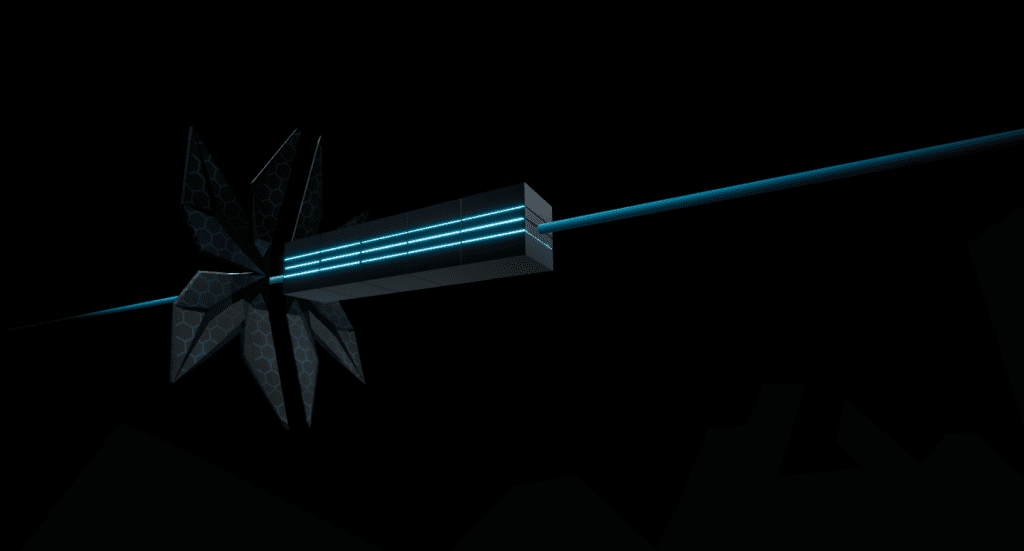
    I used Blender make the shape of the solar sailer (easy, one day). I made the sail texture in Blender as well, which turned into what I call a happy accident when I’m making my art. I made a cylinder, shaped as a six-sided hexagon, made glowing beveled edges, duplicated it, snuggled them up to each other to fill the camera view with a good scale. I did a bit of tweaking to try to make the texture seamless but alas, no one really notices it so far into the sky.  But when I went to render a 2D image out of this 3D object set, you guessed it – completely black. I had not put ANY light into the scene so Blender was like “Nope, you get completely black as a result.”  So I threw a “light” source haphazardly over the scene while saying something like “Give me SOMETHING lit” and Blender rendered the texture I show in the Inspiration image—it’s a lit just a bit of left-center.  And I realized— YES! That’s how I see my Solar Sailer moving through the scene! It will float through on the right side of the city so it will be “lit” from the left.

    What a cool, happy accident! I ran with that texture. It’s actually one of my proudest accomplishments because instead of a flat texture, I had a texture that meant something real inside the scene (and I simply changed the color for a purple equivalent Solar Sailer). 

    One Hubs note here: I thought about trying to put a waypoint on the Solar Sailer so that visitors could go up and sit on it (ride it?) just like the Inspiration image above.  But I did remember that Hubs doesn’t do moving objects to ride on. Later, I asked a Hubs expert about it and he said that a visitor could go to the waypoint (utilize it) but then they’ll stay on one place in space as the object the waypoint is attached to moves on.  Oh well, a future version of the software will accommodate moving waypoints, I’m sure.

    Capture from Tron City in Hubs, Solar Sailer bulk transport ship. Insect-like wings at the front pull several bulk containers along a glowing line of blue  light.
    My Tron Solar Sailer

    Tron Avatar

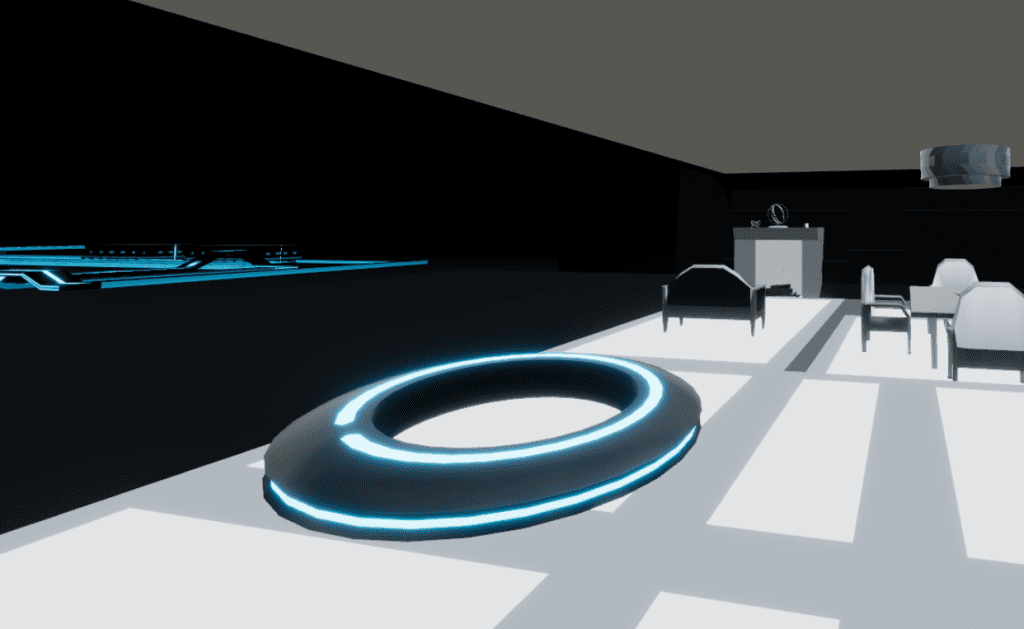
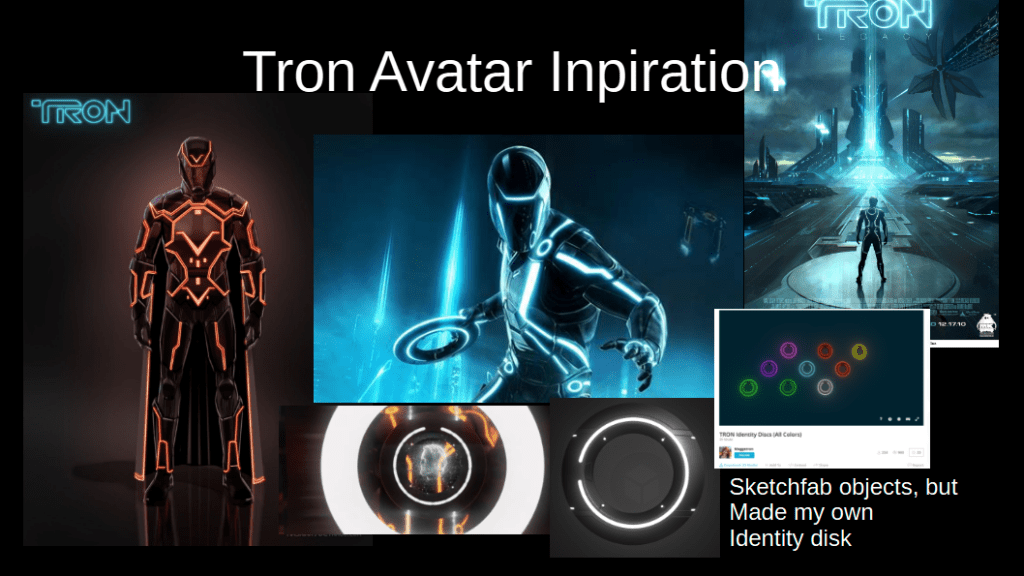
    No Tron avatar is complete without an identity disk so I attempted that first. 

    Collage of Tron identity disk images. Disk colors, shapes, details, and forms.
    Sketchfab models in wireframe mode are very helpful for building
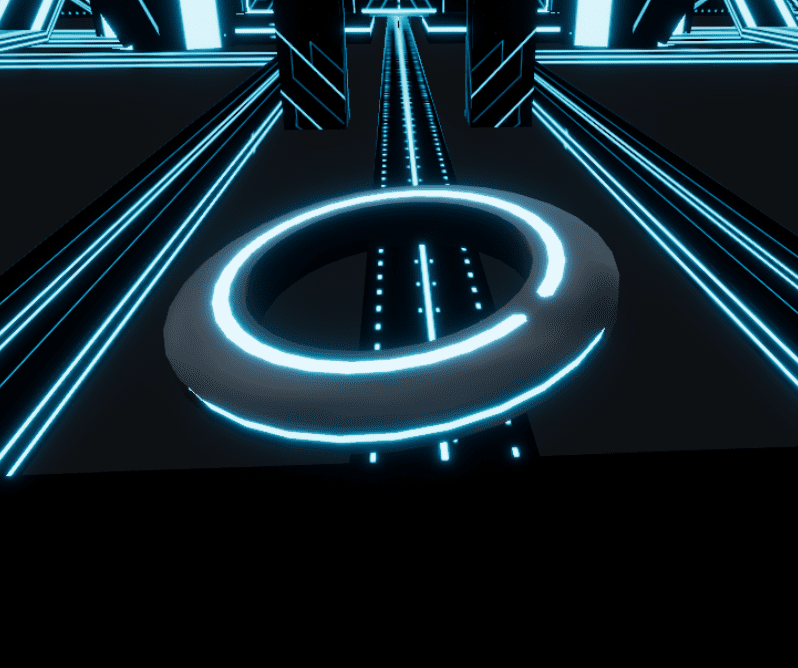
    Capture from Tron City in Hubs, Identity disk as my 3D object. Frisbee-like disk with a glowing blue outline.
    Capture from Flynn's Hideout in Hubs, Identity disk as my 3D object. Frisbee-like disk with a glowing blue outline.
    My Identity Disk in blue

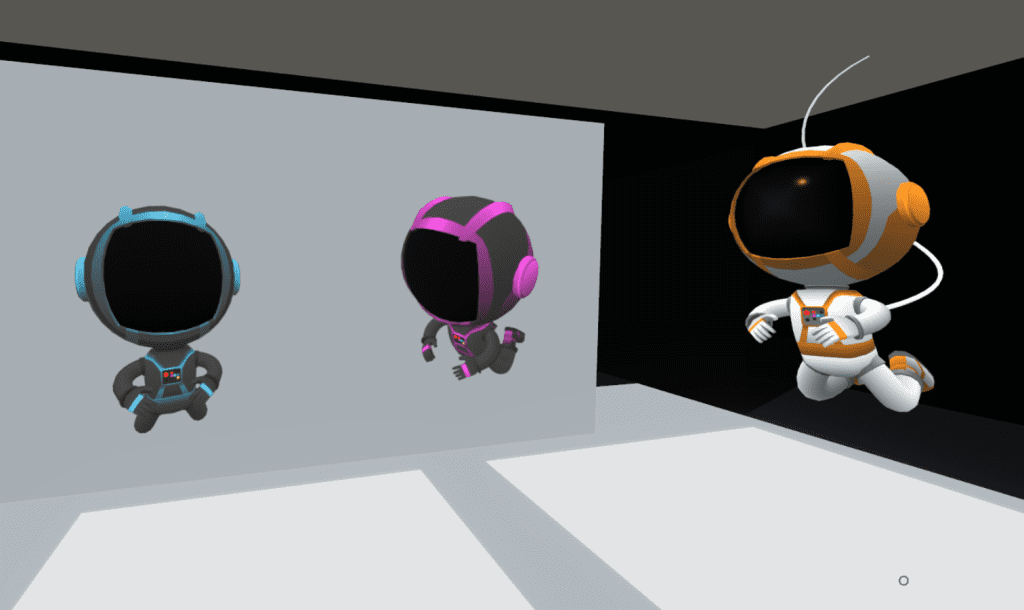
    I customized an already available orange and white “Spaceman” avatar from Hubs, created by Jim Conrad. 

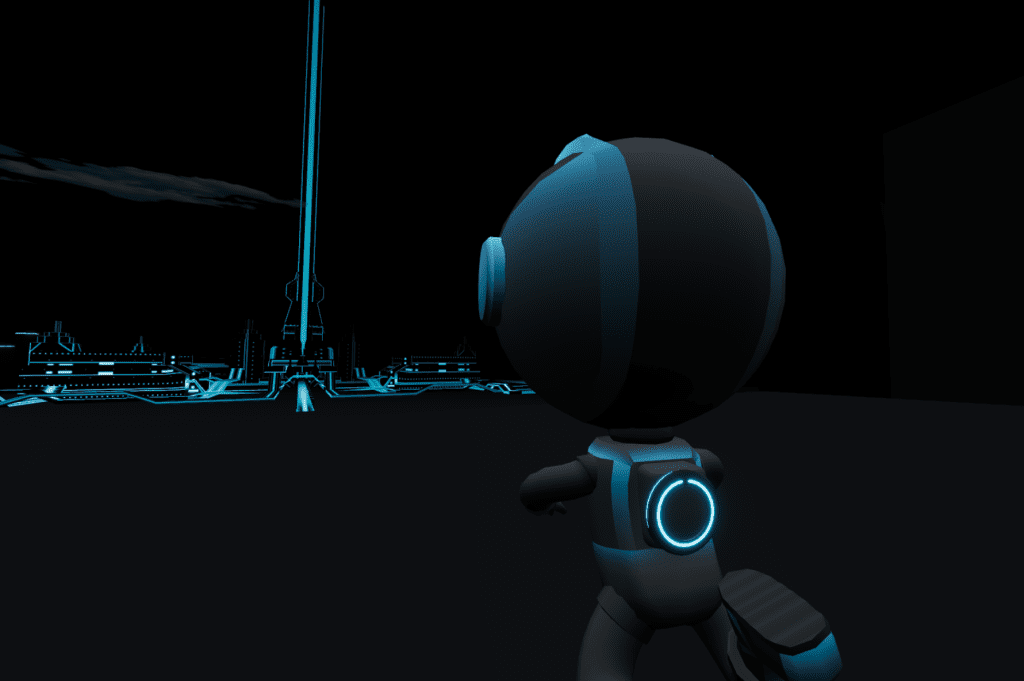
    Capture of the Spaceman avatar from Hubs with my Tron Blue and Tron Purple avatars

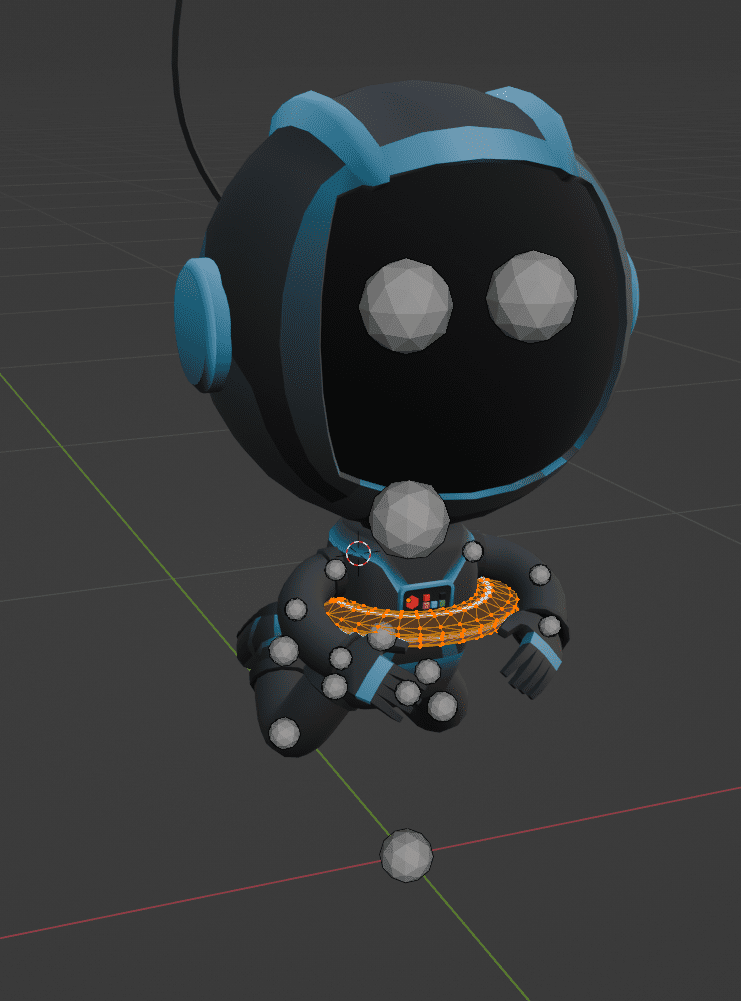
    I changed the base texture using GIMP and removed the air supply hose. I added a Tron Identity Disk on the back

    Capture from Blender, Edit Mode of adding the identity disk to a Tron blue avatar.
    Work in progress: Adding my Identity Disk in Blender

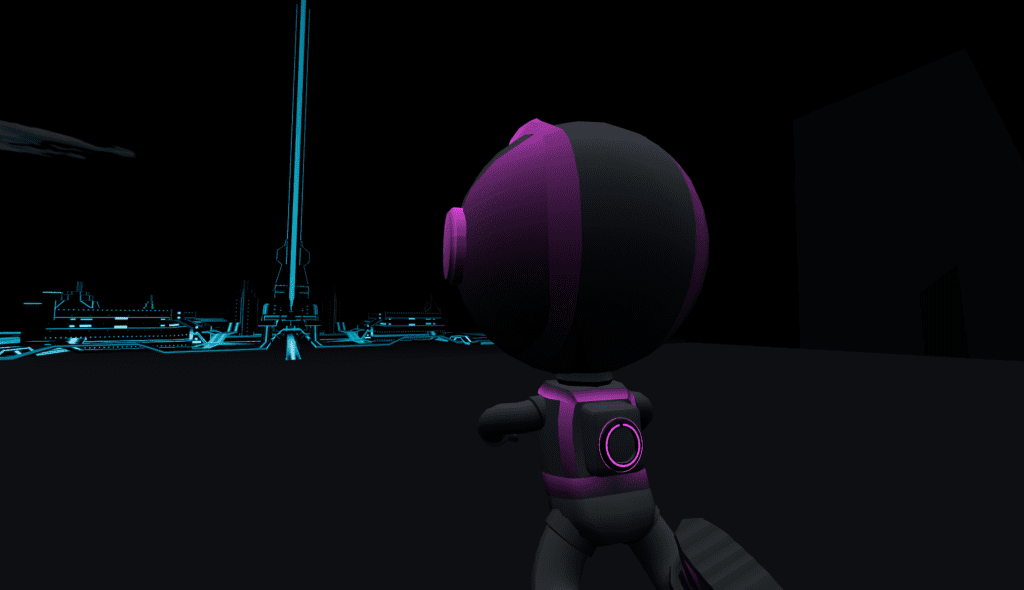
    I made a blue avatar for all of my attendees by placing it up on my Hubs instance and taking all other avatars offline for guests via the Hubs Admin Panel. Then I made a purple avatar for me to wear as host (and it was a hint that a purple Grid was coming).

    In Part 3, I’ll cover the big reveal as this build was not even leaked to the public before the opening day, Halloween 2025.

  • My Tron Build Part 3: The Live Event

    My Tron Build Part 3: The Live Event


    Decorative image: A duck in sunglasses with vampire teeth. Text: Hubs for Halloween, Friday October 31 at 2:30 pm EDT
    Made in Blender and Canva!

    The Live Event

    I
    launched this build to celebrate Halloween. Not because it is in any
    way scary, but because it is dark. 

    Hey, that’s as far as I go with
    Halloween. 😑

    But I did add a twist for my planned live tour of 3 scenes.  The story line for the experience would have a beginning, middle, and end. It was not just about visiting and looking around.

    Scene  1: Start in Flynn’s Hideout. A wall is hiding the full city. I will
    play the music because without Behavior Graphs at this time, I did not
    know how to otherwise time the wall to descend at the same time as the
    “Tron” aspect of the song arrives. I invited folks to look at the
    fireplace for something to do.

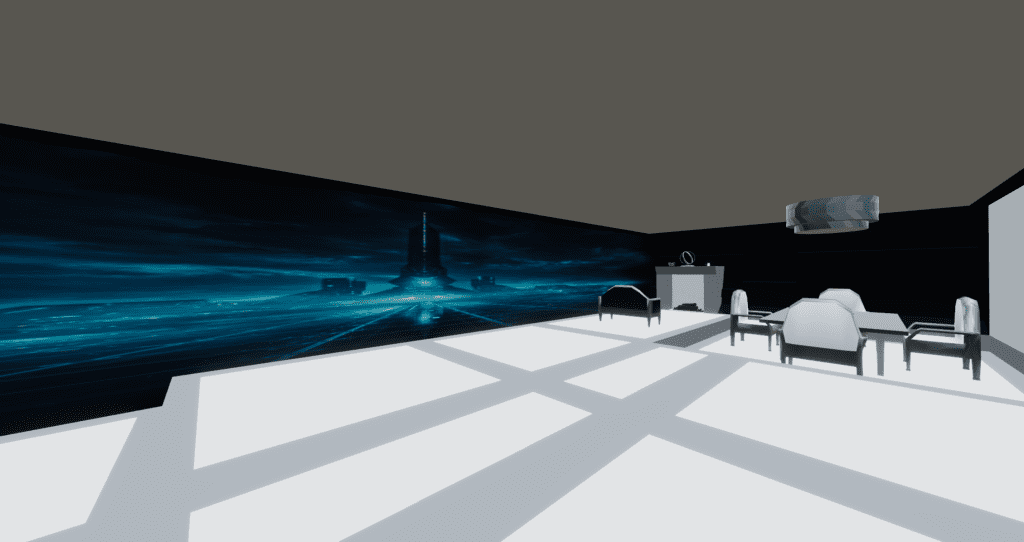
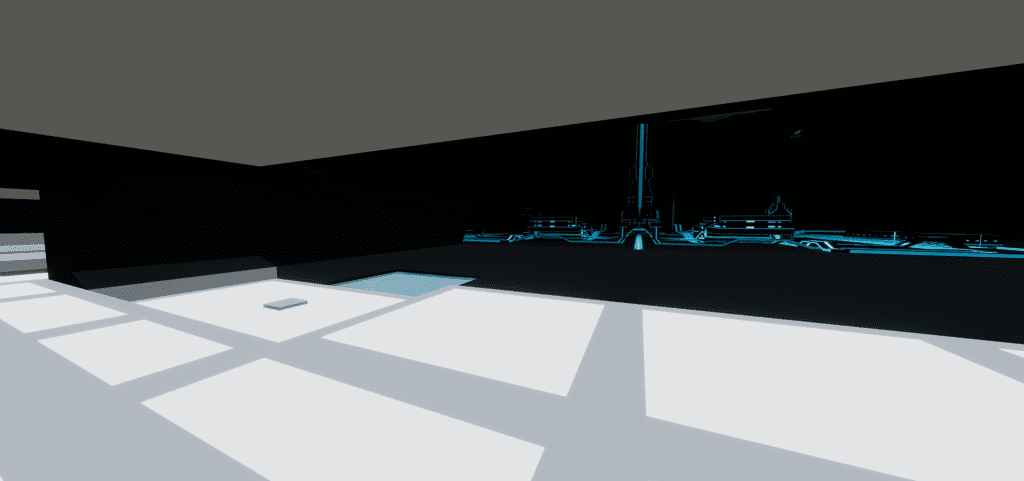
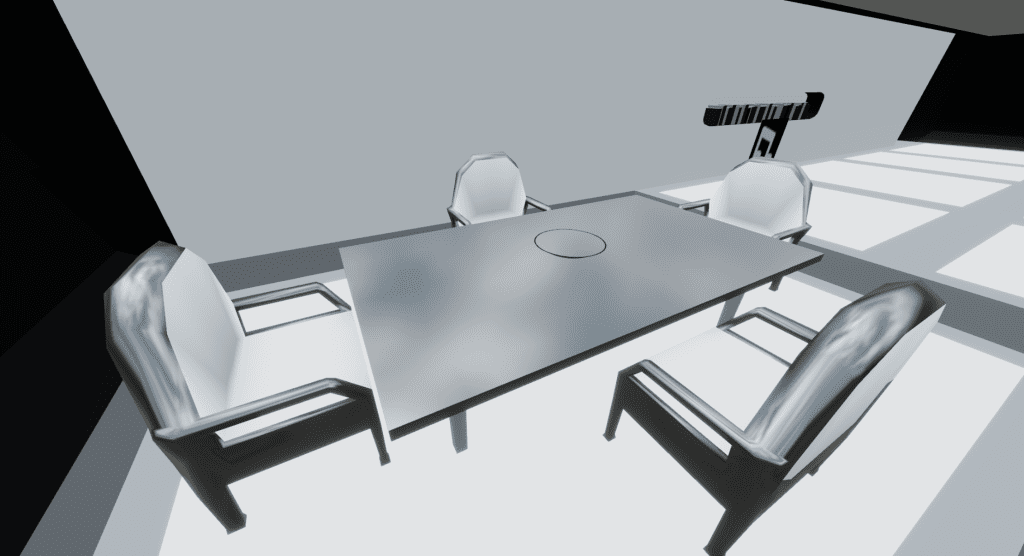
    Capture from spawn point into Flynn's Hideout. A glowing white room has a fireplace, table and chairs, and a view (that is an image) of Tron City.
    Tron arrival view. Notice the “Tron City” is an image on the wall.

    Scene 2: Explore Tron city (The
    Grid).  It’s really fun to turn your movement speed up to 2.0 and zoom
    down the main entry road.  I did it nearly every time I visited the
    build while working on it.

    Capture from Tron City in Hubs. A light cycle zooms down a city road.

    Scene 3 (an actual other whole Hubs scene):  I switched scenes once everyone was comfortable.  

    The center building was replaced with a “5th Element” style duck (IYKYK),
    everything now purple monotone for Halloween, and eliminated Flynn’s Hideout. The sky
    changed from black to a purple/orange gradient. Inadvertently, the navigation mesh which I only flirted with in Blender, worked.

    Collage of ideas of making a purple Tron City just for Halloween. Duck elements are seen as those are associated with the Hubs WebXR platform.

    The Bummer

    Unfortunately,
    no one who showed up for the Halloween event knew the Tron movies.  So
    all of my work adding in references and allusions was for naught at the time.
    😔 Hopefully I’ll be able to show this build live to a real Tron fan someday!

    The Video 

    Because
    I knew I was launching this space on October 31 at ~3:00 p.m., I
    prepared all of my social media in advance of the event to be able to submit it to the show-and-tell Hubs Discord channel for October.

    Other inspirations

    I would like to point out some other inspirations that I used because this build took me about 8 weeks. 

    I heavily listened to this music mix, Tron – Psybient, Progressive Psychill, Cyber Sci-Fi Ambient Music Mix and Quantum Polarity by MyNoise.net

    The Tron font generator was brilliant! Another happy accident was getting the purple neon Hubs in Tron font work well in the Hubs space.

    Capture from Tron City Purple in Hubs of a neon-like sign with text Hubs in Tron font.
    Combination neon from the Tron font generator with Hubs bloom.

    I did not know that Disney was releasing Tron: Ares
    but I did notice that Tron red clips started showing up in my YouTube
    searches. Tron: Ares released on October 10, 2025 and did very
    poorly.  My build released on October 31, 2025 and was completely unrelated!!  Cringe!

    I did attempt some UV scrolling but in the end, I didn’t like the effect inside of the build; it was too flashy against all the black. The neon bloom was already enough.

    Early
    on, I collected a few Sleeping Beauty images because I’ve been
    intrigued by the angular branches on the trees in the background.  These
    didn’t show up in the build but I’m keeping those ideas for the future.

    I did not make a Recombinant. Thought about it, because it is very basic geometry (it makes the Solar Sailer look very complex).  But decided not because in the Tron lore, it is sorta a bad guy.

    Easter egg hidden: I made a back door and garage where the Light Cycle starts it’s straight line run across the city. The door does not open until the wall opens, but I figured that I could direct everyone to look towards the city and NOT see the door opening behind them at the same time. That way, that Easter egg would stay mostly hidden until I pointed it out.

    Collage of varied inspiration images for my Tron build. Different computer cities, furniture and one non-matching image from Disney's Sleeping Beauty.

    Lessons Learned

    • Keep Blender source files for everything.
    • Keep a Project folder in my browser for images, fonts, music, anything. 
    • Plan the experience – I liked my 3 scene narrative plot.
    • Make the social media early. It is stressful but it did work.
    • Write a blog post, perhaps, as I go along. 😏

    I hope you did not miss Part 1, Lore, Textures, and Basic Shapes and Part 2 Light Cycle, Solar Sailer, and Avatars of this TRON series. 

    Would you like to visit this TRON scene?  You have to ask me for the link (and I’ve not made my contact info easy to find…yet).  Stay tuned.


  • From Myths to Principles Part 7 Myth: Immersion creates empathy

    From Myths to Principles Part 7 Myth: Immersion creates empathy

    From Myths to Principles: Navigating Instructional Design in Immersive Environments
    Part 7 Myth: Immersion creates empathy

    Decorative image of the Roman Collosseum with text: Immersion creates empathy myth


    I’ll be the first to point out that my blog posts are not published regularly. As I’ve mentioned before, this series is an updated version of an older series. But these first four myths are mostly ground I’ve covered before. Additionally, since the myths are just basic lies, it’s really hard to muster the motivation to write about them AGAIN.

    Every time I have a difficult project, I weigh up working on it versus cleaning the toilet: which would I rather do? Yo, the toilet is pretty clean. So…these blog posts have not been winning that decision.

    I’m truly in the dark part of the woods on this entire topic.

    But what makes me continue?  I’ve said it before and I’ll say it again:  

    The lies keep being repeated

    In the past week [EDIT: I wrote this on February 27, 2025], I’ve heard:

    • In a sales pitch to a school to use VR, that there are (proven?) tangible learning outcomes.

    • When learners were using VR headsets, engagement happened.


    I’m reminded of a baseball quote that I used to motivate my team when they were having really long hard days at work:


    “You win a few, you lose a few. 
    Some get rained out. 
    But you got to dress for all of them.”


    Satchel Paige


    You’ve got to suit up for them all. 


    I take from this, that choosing to enter the arena is more important than the outcome of the arena.  I may loose the war against false, malicious, money-making claims about XR in education, but the important point is that I chose to speak out.

    So here I go, suiting up for our final myth of this series: Immersive experiences are empathy-generating experiences. Here we go.

    (more…)

  • Where have I been?

    Where have I been?


    Meme from Princess Bride with text Let me explain. No, there is too much. Let me sum up.

    You know that feeling when you want to break into conversation, but there is just no way without it being awkward?  Yep, I’m there. And this isn’t the first time.

    But I really felt that I have GOT to get back onto this blogging horse, for many reasons.

    I will briefly (ha!) explain where I’ve been since ~March 2025 and my intention going forward.

    You see in March, I started a huge privacy kick. I wanted to move my blog away from a Google-based platform. I tried 2 different free platforms, Git Pages at GitHub and write.as.  Both experiences were lacking. Git Pages seems to have a governor that makes any site more than 12 pages unstable (I have ~150 blog posts that might stick around).  Write.as banned me on Day 2.  They interpreted my use of references as violating their ethic of “don’t link to others, just write”.  I investigated paid options but really could not square myself to even $5/month for a blog, for now.

    I’m also noticing a trend that I admire: pulling back from sharing on social media and just making information only available as “pull technology” (a 90s term that I do like, it is opposed to “push technology”, RSS feeds are pull technology). It means that if you want to read about whatever, you go search it out and read it. You don’t sit back and let some algorithm feed it (or not!) to you.  I trust that if you want to read and keep reading, you’ll look in whenever it suits you.

    Another item that took a long time was I working on a large volunteer writing project that took a lot of energy over the summer.

    And finally (ending on an up note), I kept up my Blender learning and building skills.  What’s cool about that is that I realized that I need to start solving a problem I’ve detected out there—there are not enough “how to” sources for the Hubs/Blender combo. So when there is a gap and you are hacking your way through the forest anyway, I might as well document my decisions and results here for whatever future reason. If they become pre-instructions for someone else, perfect. The upside is that you, dear reader, will be able to see a LOT more of my activity here because I’m pulling back from social media.

    So, there.

    I see I have 35 reads on my Buh Bye Instagram post— that’s weird. I can only think of one or two creeps that would still be reading my blog. 😈Who the other 33 of you are, I don’t know.

    Nonetheless all the same (a favorite phrase of mine), here we go!  First up is to move one post already written from drafts into published.  I’m picking up at Part 7 of my latest series which I can’t even remember the name of…

    Oh well.  Bear with me.

    Meme with text: I love the phrase Bear With Me  because it could either mean "Please be paitent" or "The heist at the zoo was a success".

  • Buh bye Instagram

    Buh bye Instagram


    Photo by Jon Tyson on Unsplash

    I’ve deleted my Instagram account.

    Why?

    One night, I opened Instagram to look at it for a few minutes. Typically, Instagram hands me the latest post from Petey The Seeing Eye Donkey. I also like to see posts from We Rate Dogs and dog skits. But Instagram had an habit of giving me Petey updates at night.  Petey is a donkey who is the ‘seeing eyes’ for a blind horse named Luna. The posts are almost ALWAYS the same: Petey leads Luna out of the barn in the morning, Petey lead Luna into the barn at night.

    But I wasn’t shown Petey.

    Instead the first post was video of a stunned hummingbird lying on a cement floor of a fire department garage and in first person video style, a firefighter was trying to revive her. First he tried sugar water, then he untangled some cob webs from her wings and feet. The bird flew away.  

    Good resolution, but dramatic video.

    Then, I was shown a post of a baby elephant that had somehow gotten into a large water trough and was struggling to get out. Again, first person video style, someone drove up with a Range Rover-type of vehicle. First, they tried lassoing the baby elephant but eventually just got into the tank and another person assisted in pushing the baby elephant up and out of the tank. Then the baby was disoriented and kept going to the vehicle as if it was the mommy so they had to push the baby towards the elephant mom who was distraught and nearby.  Very soon, the mommy came to fetch and reassure the baby as the rescuers backed away.

    Good resolution, but dramatic video.

    (more…)

  • FrameVR: Showing their cards

    FrameVR: Showing their cards


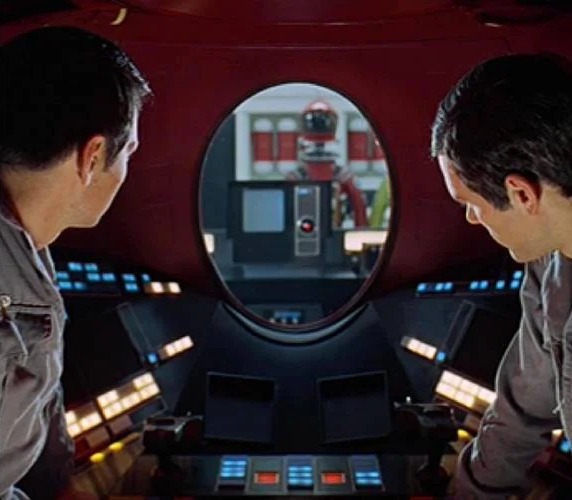
    Capture from movie 2001 A Space Odessey showing HAL reading lips in a crucial scene
    LANDMARK MEDIA / Alamy Stock Photo

    For quite some tie, I’ve been wondering what cards FrameVR.io (hereafter called Frame) had to play in the AI-in-XR space. They were flirting with the concept right around the time of the Mozilla Hubs announced shutdown, but despite witnessing the entire XR industry contract around them, they kept claiming “We’re all in on AI”.  They seemed to mean more than just AI characters in XR space. I just didn’t know how.

    With Gabe Baker’s “AI In Meetings: Treading on Sacred Human Space” LinkedIn article of January 23, 2025, I got a much clearer vision.  And I’m disturbed.

    This post, therefore, is a response. I write it with a pang of regret, but here goes.

    A Brief History of FrameVR, from Heather’s perspective

    I have the date when Frame arrived on my radar: March 27, 2020. I was exploring easy-to-access XR platforms and spent some time exploring Frame with the great Scot Daniel Livingstone.

    Capture of a fun photosphere of Star Wars Lego toys in Daniel Livinstone's living room.
    Exploring Daniel’s 360 photosphere in Frame

    Frames are essentially web rooms in 3D. As Frame’s website says, “Frame is a beta product from Virbela. Frame makes it easy to communicate and collaborate in 3D environments, right from the web browser.”  Frame was one of several no-download required (hence WebXR) platforms that included Mozilla Hubs, Janus, rumii, and Cryptovoxels. Similar competitors had native apps that needed to be downloaded including ENGAGE, Second Life, and Somnium Space.

    Awkwardly, the landing page for Frame used to drop a visitor directly INTO a Frame, which while demonstrating what it was immediately, was unnerving for the unready.  I’m glad to see now that they redirect into a more traditional webpage now that has a bit more of “who we are, what you get, and how much this costs” layout.

    After that first exploration, I’d go back into Frame on and off for years, mostly for events, meetings, and conferences. To give Frame some credit, they were and still are marketed towards business or professional use, that is meetings and events. From the default spaces available to the business attire avatars, they bend to the professional market.

    As of today, Frame’s top 6 use cases listed on their website are professional: team meetings, recruitment, vendor showcase, meetings, campus twins, and networking.  This is not to say that they didn’t cater to the education market – they did! It’s just that most education uses were from the same list: meetings, recruitment, campus classrooms, etc. I see one “soccer strategy” use in the use cases– that’s interesting. But most the education uses are just the same as business uses. I’m going to guess that if there’s an educational use that is completely unique (Hmm…underwater basket weaving?), that’s either proprietary and therefore NOT shared by Frame or those Frames relay entirely on clients bringing their own 3D builds with them and not having Frame provide them.  Either way, it looks like overall “creative” use is limited to creatively using what they already offer.

    Disclosure


    It’s time to veer off and talk a bit about Virbela and I have to throw out TONS of disclosures now.
    I owned a Virbela Virtual Campus (VC) in my role as Chief Operating Officer of the Immersive Learning Resource Network (iLRN).  iLRN’s deal with Virbela was:

    iLRN had unlimited capacity campus for free for spin-ups. We could generate new rooms, new building floors, new buildings, and entire new islands at our demand. (That was actually wicked fun.) In return, we paid Virbela 50% of the rent we collected on contracts that we signed into our Campus. So iLRN was a subletter.

    My COO responsibility was that Campus, account management, and finances. I also conducted tours, did training, and provided tech support. We hosted some lovely events, but meetings were basically all we did.  There were a few random boat rides as well.

    However, as anyone that knows me could guess, I tangled horns with Virbela.

     
    Here are two specific times:

    Sales


    When I came on board as COO, I was soon contacted by a Virbela employee to set up a daily meeting to ‘talk about my pipeline’.  She wanted to talk about sales leads. Virbela could always see a Google doc where I kept all leads. She spent her time encouraging me to frame (haha) my conversations with future clients with Virbela essentially answering their (whatever) needed use case. Said another way, sales; I was being treated like I was a salesperson, learning the ropes.

    Bear in mind that Virbela had a right to see the future as grand and rosy. 🤩🌹 I had heard informally that the home Virbela Virtual Campus had leaped from a paltry 30 visitors a day to over 300 visitors a day during the pandemic. So much traffic had increased that they staffed a concierge desk with 1 or 2 salespersons standing by for many hours each day, ready to break off, give tours, and assist in collecting specs for contracts.  They saw no end to the possible companies and schools that would want to walk in and book a contract for fully made and ready to go VR space.

    This request to meet everyday to discuss sales struck me very badly.  

    1. My job was not pushy sales. I’ve never loved sales. Yuck.
    2. My ethics as a instructional designer forbids me from recommending an educational product that does NOT meet a clients’ needs. If it doesn’t fit, you don’t recommend it. 
      Screen capture from inside of a Virtual Campus meeting room showing blurred faces.
      Capture from a meeting inside of the VC with a client where the VC did not fit their needs; they had users mostly with smartphone technology.  VC was a native app that needs a computer. I voted against offering a contract. Fortunately, the client didn’t take one either.

    3. We were a non-profit, so beating the bushes for money was not our style. Later, iLRN would get chided by Virbela for offering rental prices 5x lower that other Virbela campuses, to which we were stymied and replied with “You, Virbela, told us our prices.”  Talk about greedy.


    So one day I had a chance to fill in a “how are we doing?” Virbela survey which I thought was large and somewhat anonymous. I said “I don’t need daily watching over my sales lead pipeline.”  Virbela sat me down in a following meeting and said “Sorry, I guess you don’t need daily meetings.”  To which, I was more perplexed that my feedback had been directly identified with me.  Oops. Either way, sales lady backed off.

    Avatars

    iLRN had booked in a major speaker into an event, but we also knew that this speaker would prefer to wear a hijab.  We had no hijabs in our avatar collection. We checked. We checked because we knew it was important to be as ready as possible in advance for a speaker. I think we also asked Virbela if we could have hijabs on our VC. I don’t remember a response.

    Our speaker arrived, worked on their avatar, and settled on a hat/hair combo that was the same color, which visually was close to a hijab.  But as we thought they might, they blasted Virbela on social media, pointing out that hijabs were not available.

    Before you could say spit spot, Virbela socials responded right back, “Oh but we do have hijabs! You must have missed them!”

    I call bullshit. OUR VERSION of Virbela did not have them. We checked, in advance, remember? My conspiracy theory is that Virbela loaded them into our version just after the speaker complained publicly.

    Total freaking bullshit, to claim that we had them. I really didn’t like the way Virbela treated the speaker OR us as their subletters.

    ~~

    After I left iLRN, I’ve used FrameVR as a contractor to host a fun student trivia game; the ability to turn audio zones on and off was fun.

    In all of my dealings with Gabe up to this point, I found him to be a kind, dedicated, upbeat, and friendly ‘would do anything to help you’ person in the WebXR world. It’s funny that I had a friend that also knew Gabe but confusingly (to me), he did NOT get along with Gabe at all. I eventually broke off that friendship but I joked that “In the divorce, I got Gabe.” 😁

    The horizon darkens

    When Mozilla announced that they were no longer be supporting their Hubs WebXR product, Gabe wrote a lovely tribute initially on LinkedIn.  I thought it was a classy move, given that FrameVR and Hubs had been up to that point been direct competitors.  I was hoping that Gabe would hold Frame above the fray that was about to happen over at Hubs…but alas, in reply to one comment on his post, he pitched Frame to a listless Hubs user. 

    Oh. Those warm fuzzies were nice while they lasted. 🤦 But, abrupt end.

    Seeing XR companies contracting and closing (AltspaceVR closed in March 2023, Mozilla Hubs closed in May 2024), I wondered how Gabe was seeing Frame go forward. He kept sending out the “Frame’s going all in for AI”-type message.


    Capture of Gabe Baker's AI in Meetings: Treading on Sacred Human Space LinkedIn article header.

    From the title of Gabe’s January 23, 2025 article AI In Meetings Treading on Sacred Human Space, I was a bit hopeful thinking, “OK, an acknowledgement that humans have such a thing as sacred space…and it means something.”  Initially, Gabe does a good job acknowledging the tasks that AI does well and not well in meeting space (because remember Virbela/Frame is all about meetings). It really sounds like Gabe has had a year+ of AI attending meetings and he’s got his finger on the pulse of what works and what does not. Still, most of his examples are stale & predictable.

    He seems to claim that when teams are talking about something, “seeing it” in 3D is the next and better step to take:

    “When people come together to meet, I think there should be as little friction as possible when this question comes up: “I wonder what that would look like?”
     
    Yet many meetings don’t need 3D or a visualization at all (i.e. working on accounting on a spreadsheet or writing for a webpage).

    Red flag

    In as much as I want to give Gabe all kinds of doubt, with this, my spidey-sense meter went to 100:


    “As someone who has seen how helpful AI can be across many domains,
    I desperately want AI to be present and accessible during meetings.
    When people see the results of our vision, they will want it too. In
    fact, I think it will seem silly not to have it!

    Those who don’t want
    it will be the people who really want to seem like the smartest person
    in the room at all times.
    But those who are interested in results and
    not ego will be happy to have AI-powered teammates at their meetings.”

    Gif of the amp maxing out analog dials from Back To the Future movie


    Wait, what?

    People who don’t want AI in a meeting room ‘want to seem like the smartest person in the room’? 

    What about people who don’t want AI in the room stealing the peoples’ creativity and sharing it to who knows who or selling it to who knows who? Or what if AI just plain summarizes it wrong? Or AI gets it wrong? It’s been known to happen. (Schools Using AI Emulation of Anne Frank That Urges Kids Not to Blame Anyone for Holocaust)


    Gabe made it seem as through if you are anti-AI, you are anti-Google, anti-learning, and much worse, egotistical!  I guess privacy got checked at the door? For the record, I’m very pro-Google and pro-internet use during meetings or classes.

    This specific statement is a red flag because it is an emotionally laden argument popping right out of the middle of this discussion. It is as if Gabe ran out of patience and burst out “If you don’t want AI, you’re an ego monster!” 😠

    When a calm reasonable discussion suddenly goes emotional, something is wrong. Gabe lost his shit for a moment there. As Spock would say “Reverting to name-calling suggests that you are defensive and therefore find my opinion valid.”  So, he’s probably getting pushback on this AI thing.

    I hoped he didn’t really mean it so I read on.

    Nope, he doubled down…I mean tripled down. He wants AI agents in every meeting, in the name of eliminating duplicated work across companies. (So much for visualization?) He wants AI inserting itself fully into conversations, setting up follow up meetings etc.

    Is anyone else getting a creepy feeling here?  This is way beyond “all meetings will be recorded” –which would make me make tracks outta there anyways. The invasion of freedom of speech (because some folks will NOT say things if they knew they were going to be hyper-on-the-record) during work meetings will be staggering.  Stymied talk equals failing organizations and failing people. This is going to end badly.

    Meme showing HAL and the text: I'm sorry Dave I can't do that line from 2001 A Space Odessey

    OK, so here’s the $64,000 question: Would I, as a consultant, recommend Frame for educational contexts in the future?

    My answer: I’ve agonized over this, but I probably could not recommend it.  I cannot in good faith recommend using a platform that might record children or learners without their expressed consent and use those recordings, summaries, or derivatives for a future plethora of uses not being disclosed now.  It’s not worth it to “visualize” a solution or have an AI set a future meeting. I can do those on my own, thanks.

    For the moment, I find that sacred human space IS being treaded upon. I can’t in good faith say that’s a direction that education needs to go.

    ~~

    #InstructionalDesign #edtech #XR #VR #AIInXR #AI #Frame #Virbela

  • From Myths to Principles Part 6 Myth: Immersive learning is active learning

    From Myths to Principles Part 6 Myth: Immersive learning is active learning

    From Myths to Principles: Navigating Instructional Design in Immersive Environments

    Part 6 Myth: Immersive learning is active learning

    Photo by Blake Cheek on Unsplash

    The next myth is that learning in immersive experiences is active, kinesthetic, or like an internship, which is “the way most people learn best” (D’Agostino, 2022, para 17.)


    Active learning was first associated with immersive experiences because learners could observe or engage with or, more properly described, engage within simulations (Dede, 2009). The term active simply meant that the learner was present at a simulated place and time; the original use of the active learning phrase with reference to immersive experiences did not imply that a learner could do anything other than observe. The emphasis was much more on the time and space travel afforded by XR.

    This claim has been controversial (Khorasani et al., 2023), in part because of the differing degrees of activity that a learner can have – ranging from simply being inside an immersive environment and observing (e.g. historical re-enactment simulations) to taking actions that have non-trivial consequences (e.g. practicing a surgical technique).

    Active learning is a phrase on the move


    Dede (2009) referred to actional immersion as situations where learner actions have “novel, intriguing consequences” that are “highly motivating and sharply focus attention.” (p. 66). The active learning claim moved from a focus on the learner’s actions and instead focused on the learner’s body ownership illusion. Further, the relationship between user bodies and virtual depictions (avatars) was reformulated and later called implicit learning (Slater, 2017, p. 29).

    I want to pause here and really dissect the difference because in this area, there has definitely been vocabulary “drift”.  Learner’s actions focus on what the learner causes to happen.  Learner’s body ownership focuses on parts of the body that the learner uses to cause actions.

    For example, picture a chemistry lab simulation.

    Image: Labster

    Focusing on the learner’s actions means that we could use a 2D display screen and mouse and have the learner click on the pipette, click on a liquid to suck up with the pipette, and then click on a vial within which to dispense the liquid.  Those could be right to left actions, but the learner is causing the actions to happen on the screen. They are using a mouse and moving their hand generally right to left.  No hand needs to be visible to do these actions. Activities could be “ghost like” in that they could be caused by no visual physical object whatsoever.  In reality, the computer mouse is doing the most physical ‘work’.

    Focusing on the learner’s body ownership however, would have the learner reaching out (they need to be able to reach) to the pipette, to grab it (they need to be able to firmly grasp), to possible depress the button on the top to create the needed suction, to move the pipette, see the liquid and subsequent vial, and depress the button to dispense the liquid. The movements could be all right to left. Key in this visual depiction, however, is A HAND with workable fingers that is somehow connection via experience to a learner’s IRL hand.

    In the former example, the learner causes the actions to occur but we are not focused on their body parts doing the action. In the latter example, we are very interested in the body parts doing work that is replicate (in this case) to the real world work of operating a pipette. In the former, we could have confidence that a learner is exposed to the cause and effect of pipette work; it sucks up a reliable amount of liquid and can squirt it back out. In the latter, we could have confidence that a learner is exposed to how pipettes physically work (button press down equal prime for suck, release equals suck, button press down again equals squirt). 

    See that the focus is different?

    My point is that the FOCUS of what was coming to be called active learning with reference to XR was changing already between 2009 and 2017.


    Drawing from the educational history of the Montessori method and considering the interfaces available within immersive experiences, implicit bodily learning (from 2017) transformed to embodied learning (by 2018). Indeed, Johnson-Glenberg initially postulated that “doing actual physical gestures in a virtual environment should have positive, and lasting, effects on learning in the real world” (2018, p. 1). Movement became synonymous with active learning. “Active, motor-driven concepts may stimulate distributed semantic networks (meaning), as well as the associated motor cortices which would have been used to learn long ago, in childhood” (Johson Glenberg, 2018 p. 3). [Hat tip, by the way to all research into the mind-body connection within learning. This post throws no shade on the phenomena.] With specific, other than meaningful, actions now excluded, some researchers appeared to support the claim that all movement somehow begets learning. (That sentence is confusing, I wrote it and even I’m wondering what I meant. It’s this: Inside a XR-for-learning experience, a learner might be instructed to do something. Pick this up, move it there.  Because that learning is specific to the learning event, I’m setting it aside. It’s not part of this argument.  What I am referring to are the learner-instigated but non-instructed movements. Let’s say, a learner joins XR and wanders to the left for 2 minutes before a lesson begins. Or let’s say instead of looking to the “front” at the end of the experience, the learner is looking to the “back”. These random but learner-instigated actions are…wait for it…somehow the secret sauce of learning in XR.  I kid you not. I really try to pin down the meaning from educators that belief this myth and THIS is what they come up with; because you can move in XR, you are learning (more) in XR.


    The supporting hypothesis then became that immersive experiences are an inherently active learning method precisely because the learner can move. 

     I’m going to repeat that for emphasis:

    The supporting hypothesis then became
    that immersive experiences are an inherently active learning method
    precisely because the learner can move. 

    The Emperor’s New Clothes. Image by Helen Stratton, Public domain, via Wikimedia Commons

    Did you catch that? Are you catching on? Aren’t the emperor’s new clothes splendid?


    By incorporating the word “active” educators are reminded of the belief that active learning is better than passive learning (Slater, 2017). Ooo! Shade thrown there, for sure, because no teacher wants to be accused of being a passive educator.

    [BTW, there is reams of garbage research out there for anyone looking for a topic. Go ahead and dig into active versus passive in educational psychology papers. It’s almost as big of a research garbage dump as XR; teachers radically redefine and appeal to this topic. My point is that the appeal to “active learning” when coupled with XR provides scant evidence of such. To this day, I RARELY see active learning in XR.]


    Let’s bear down now. To be specific, the ‘active learning’ coupling with ‘XR’ claim is not about being fidgety, randomly moving about, or purely reacting as a user would in a game. It is movement, usually performed by the learner via an avatar or minimally via hand controllers where the learner is autonomously and purposely manipulating content.  This is known as embodiment or embodied learning (Johnson-Glenberg, 2018; Markowitz et al., 2018) although definitions of embodiment vary. The definitions vary including how much a learner is embodied. It should also be noted that the term embodiment is often used interchangeably with ‘embodied learning’, which is a theory that the meaningful gestures in and with the environment aid a learner’s cognitive processes (that’s the no shade thing I referred to earlier). But even ’embodiment’ and ’embodied learning’ are slightly different things. Whew! Keeping up?

    The Emperor’s clothes should be splendid


    In 2018, Johnson-Glenberg claimed that presence and embodiment were “profound affordances” of immersive environments and this embodiment affordance should facilitate learner control, also known as agency (p. 1). One further hat tip to Mina: she did actually use a somewhat scientific body action in her research –I believe it was catching butterflies with a butterfly net– something that biologists WOULD do with their bodies. So it’s a real world action.  I point this out because some XR actions are nonsensical. I’m looking at you people who change vocabulary words to bouncing balls or something.

    But aren’t


    A follow-up paper by Mina, however, found that while embodiment does have a connection to learning, it does not exclusively cause learning, or perhaps better said, it doesn’t interact with learning. Referring to high or low embodied VR and the connection to learning, “platform is not destiny” (Johnson‐Glenberg et al., 2021, p. 20). So in lay talk that means it had no effect.
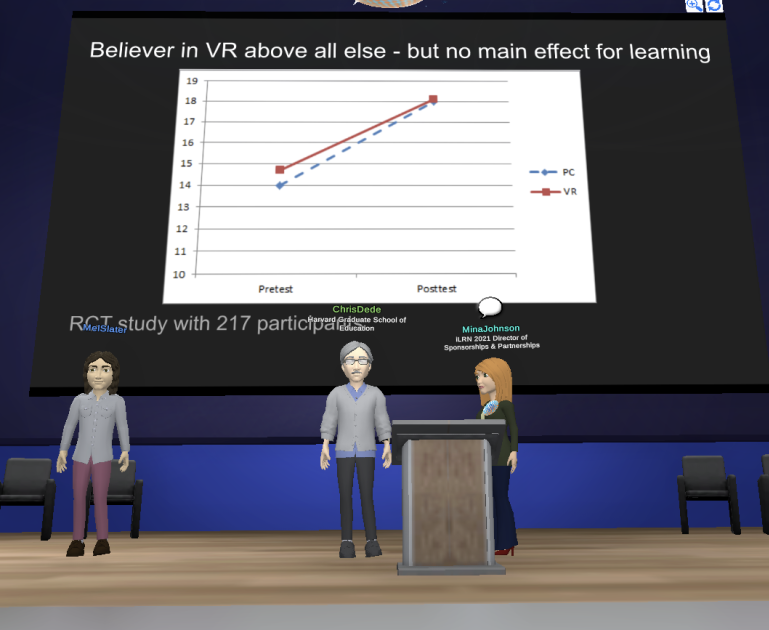
    A capture that fell flat with the audience: VR had no effect on learning, even when embodied.


    This confounding (confusing/muddling up/drift of vocabulary) of movement in immersive experiences with active learning forms the myth. Because active learning is considered better than passive learning, claims are made that immersive experiences must cause more learning due to the body-movement connection. The research, however, does not support that claim.

    The active learning myth appears to be referred to more often in academic literature than evidence to the contrary. It is true that immersive experiences can allow for more movement-based learning experiences than other forms of media, but it is not definitive that immersive experiences cause learning simply because they can contain learner movement or agency.

    Just because you can move in XR, doesn’t mean you do learn. Full stop.

    Part 7 will be our last myth for this series: Immersive learning causes empathy.

    References

    D’Agustino, S. (2022, August 3). College in the metaverse is here. Is higher ed ready? Inside Higher Ed. https://www.insidehighered.com/news/2022/08/03/college-metaverse-here-higher-ed-ready

    Dede, C. (2009). Immersive interfaces for engagement and learning. Science, 323(5910), 66–69. https://doi.org/10.1126/science.1167311

    Johnson-Glenberg, M. C. (2018). Immersive VR and education: Embodied design principles that include gesture and hand controls. Frontiers in Robotics and AI, 81.

    Johnson‐Glenberg, M. C., Bartolomea, H., & Kalina, E. (2021). Platform is not destiny: Embodied learning effects comparing 2D desktop to 3D virtual reality STEM experiences. Journal of Computer Assisted Learning, 37(5), 1263-1284.

    Khorasani, S., Syiem, B. V., Nawaz, S., Knibbe, J., & Velloso, E. (2023). Hands-on or hands-off: Deciphering the impact of interactivity on embodied learning in VR. Computers & Education: X Reality, 3, 100037.

    Markowitz, D. M., Laha, R., Perone, B. P., Pea, R. D., & Bailenson, J. N. (2018). Immersive virtual reality field trips facilitate learning about climate change. Frontiers in Psychology, 9, 2364.

    Slater, M. (2017). Implicit learning through embodiment in immersive virtual reality. Virtual, augmented, and mixed realities in education, 19-33.

    The content cannot be used to train or be reviewed by AI. All copyrights retained.

    Did you miss the other parts of this series? Here they are!

    Part 1: From Myths To Principles: Navigating Instructional Design in Immersive Environments

    Part 2: The Immersive Environment Delusion

    Part 3: The Case Against Virtual Campuses

    Part 4: Myth: Learners Learn Faster

    Part 5: Myth: Learners Learn More

    Part 6: Myth: Immersive learning is active learning

    Part 7: Myth: Immersion Creates Empathy

    Part 8: Ethical Labyrinths, Interpreting Research

    Did you miss the other parts of this series? Here they are!

    Part 1: From Myths To Principles: Navigating Instructional Design in Immersive Environments

    Part 2: The Immersive Environment Delusion

    Part 3: The Case Against Virtual Campuses

    Part 4: Myth: Learners Learn Faster

    Part 5: Myth: Learners Learn More

    Part 6: Myth: Immersive learning is active learning

    Part 7: Myth: Immersion Creates Empathy

    Part 8: Ethical Labyrinths, Interpreting Research

    Part 9: Ethical Labyrinths, Biased Content Creation

  • From Myths to Principles Part 5: Myth: Learners Learn More

    From Myths to Principles Part 5: Myth: Learners Learn More

    From Myths to Principles: Navigating Instructional Design in Immersive Environments
    Part 5 Myth: Learners learn more

    The
    foundation of all learning, or child’s first book, by which a child
    will learn more in one month than by many others in twelve, Author Unknown, Date 1800. Source: Compositor, University of Birmingham

    Myth: Learners learn more in immersive experiences

    This myth shrouds itself within a cloak of research. Citations will state that learning in immersive experiences is somehow greater when pitted against an implied traditional learning approach. The claim could appear as retention, but it is related to how well the learning was accomplished when measured up against learning objectives or a final goal.

    When referring to the PricewaterhouseCoopers (PwC) report results mentioned earlier in this article series, Scott Likens claimed, “We found the realism and performance feedback in virtual reality simulations helped people learn faster and retain more information around soft skills,” (Zielinski, 2021, para. 9). He claimed they retained more information. This specific claim has been repeated in academic literature, which stated, “Studies have found that students who use XR training are more engaged with the content, display more confidence with the material, and retain more information than students who use traditional training methods.” (Rode, 2024, para 2.)
    A close examination of the PwC report, however, reveals that the claim was unsupported within the report’s own data. When comparing information retention in VR versus an e-learning course, the authors “quickly discovered retention scores were inconclusive, as the delta between pre-and post-assessments in each modality was not significant” (Eckert & Mower, 2020, p. 44). Thus, there was no statistical difference between VR-based, e-learning, and traditional classroom learning. 
    Claiming
    something happened but your instrument didn’t pick it up is the knomes-did-it territory of cause-and-effect, dudes. Watch out.


    The report therefore does not provide statistical evidence of more or greater learning within VR, yet it has been cited in academic publications (O’Dwyer, 2021, Etienne et al., 2022,  Jelki et al., 2022; Bäckelin, 2023; Etienne et al., 2023; Lønne et al,. 2023) and touted in media outlets (Murad, 2023; Schwantes, 2020). For the dubious claims, the report has been debunked as untrustworthy (Neelen & Kirschner, 2020). 

    There are similar claims about greater learning retained from immersive experiences. Advocates for digital twin campus environments claimed that they “create greater retention of the information that is learned” (D’Agustino, 2022, para. 5) and “students’ grades go up” (Victory XR, 2024, Who We Are). 


    While this is just one tiny sentence, keep in mind how much money VictoryXR makes from these claims.


    In another example, the CEO of the Miami Children’s Health System touted that learners had 80% retention after one year after using VR, but traditional learners had 20% retention. A close look at the supporting documentation shows that the CEO actually said that the difference between VR learners and traditional learners can be the 80% to 20% difference. 


    However, the CEO’s statement did not refer to any published results; it was opinion. The CEO explained their claim by saying that, “The level of understanding through VR is great because humans are primarily visual, and VR is a visual format” (Gaudiosi, 2021, para. 4). Cue learning styles!

    Nonetheless, the quote of 80% retention has made its way into academic research (Iacono & Vercelli, 2019; Mathew & Pillai, 2020; Ternès, 2018). Some claims are extreme. One keynote speaker, Alvin Graylin, speaking as a leader at HTC (a VR headset maker) declared that as a result of VR use in the classroom, “Every single child has the potential to be a genius” (Educators in VR, 2020, 23:33). 


    “Every single child has the potential to be a genius.” You just need to buy a (HTC) headset.

    Justification for the greater learning or retention claims seems to be conjecture. Claims refer to how real an immersive experience feels to a learner. Returning to the PwC report, Likens credited “the realism and performance feedback…helped people..retain more information.” (Zielinski, 2021, para. 9). But long term studies measuring retention are hard to find within the body of academic literature. Some studies measure retention three weeks after the immersive experiences. Given that many of the examples of immersive experiences relate to hands-on disciplines like nursing or construction, things learned in immersive experiences would be needed on the job more than three weeks after the training.

    Hamilton et al. (2020) stated that finding “learning outcomes, intervention characteristics, and assessment measures associated with immersive virtual reality has been sparse” (p. 1). Beck, Morgado, and O’Shea (2023) pointed out that details of methods are missing so that outcomes become questionable, “Very few literature reviews focus on the educational practices and strategies used in immersive learning environments. Thus, the problem is that we are evaluating outcomes without a comparable way to describe the educational approaches that led to those outcomes” (p. 2). Lawson et al. (2024) completed a systematic review of immersive experiences and found that research studies rarely isolate instructional methods and conditions when describing research studies and thus impact real world classroom decisions.

    Meta analyses are starting to illuminate this area. Akgün and Atıcı (2022) observed that there was only a moderate effect on learner achievement after surveying 31 studies. Kaplan, Cruit, Endsley, Beers, Sawyer and Hancock found that “XR does not express a different outcome than training in a non-simulated, control environment. It is equally effective at enhancing performance” (2020, p. 1) Some researchers are starting to incorporate machine learning and artificial intelligence into this challenge in order to determine what the published records states about immersive experiences. Markowitz et al. (2024) recently surveyed 196,734 paper abstracts with this method.

    Basically
    this graph says that because the numbers are so small and so close to
    zero, there is no discernible effect of VR on learning, regardless of
    immersion (Kaplan et al., 2020).
     

    (more…)