
A History of XR Cross Reality Part 5 of 6

As a reminder, we are using science fiction as our time
machine vehicle to examine how good we are at predicting the future and
our intention is to predict the future of cross realities (XR).
1999 – 2013
1999 Tom Clancy’s Net Force

I
think I am probably one of the only writers that would put this in an
XR history timeline. The namesake is a police force of a future internet
where world citizens can relinquish country-based citizenship and
become a citizen of the internet. But the prediction I liked was the
description of how the internet could become an interface where the user
could customize their interaction with it. It is hard to describe (read
the book!). I find that prediction really tantalizing. The
closest reality we have right now is the fact that everyone’s home
screen on their smart phones is different, but this interaction with
large data sets is still in front of us. More on this topic in 2007.
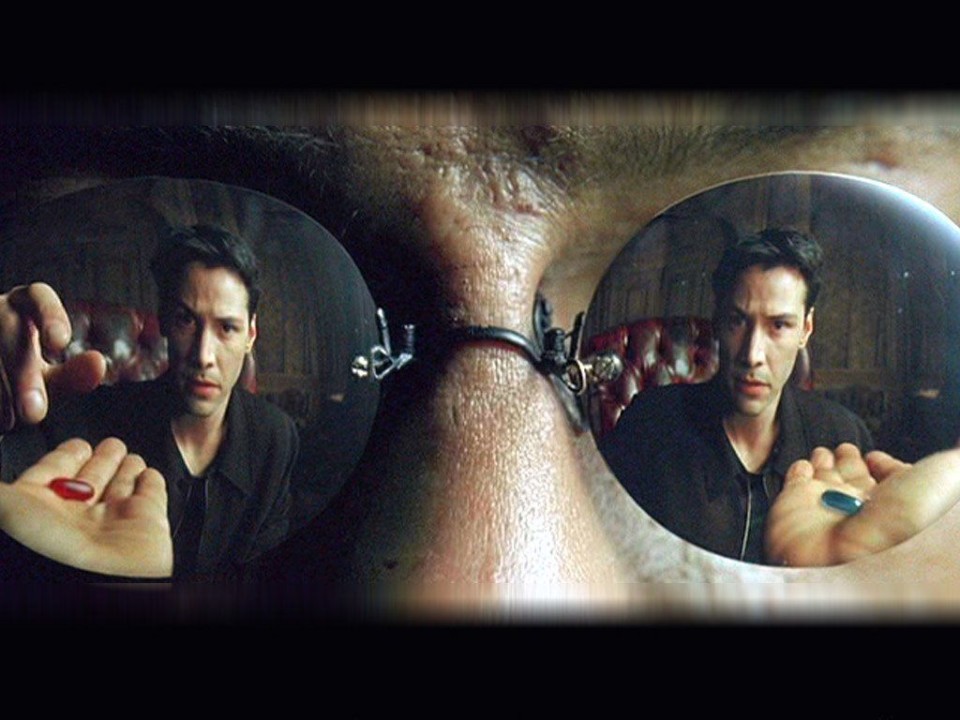
1999 The Matrix – considered the first truly dark interpretation of the power of the internet.
 |
| Source: IMDB |
In this story, the internet is a place to escape from. Take
one more look at that date: 1999. We’re really only about four years
after the big 1995 America Online expansion of subscribers. Only four
years and we’re already starting to suspect that this internet thing is
something to be wary of.
2002 Minority Report – Gloves used to manipulate screens and displays.
 |
| Source: IMDB |
I
agree with the futurists that say that this vision of screens and
displays will be accurate (floating in the air, perhaps only visible to
the direct user). However, I predict: ditch the gloves.
You won’t need them in the future. Radar will be able to detect your
finger location in real time, so you don’t have to wear a device on or
in your body for this functionality.
2003 – Birth of Second Life – an immersive persistent world.

It’s still around. But multiple iterations of virtual worlds now exist.
2007 – The Croquet Project.
This is a now defunct project that basically embodied Tom Clancy’s
customizable browser. I love the idea. I still think that versions of
this idea will arrive in the future. (Sorry the picture below does not
come close to showing what it was. It’s hard to use images to describe
this.)
 |
| Source: Wikicommons |
2007
– The first iPhone. Hard to believe we’ve been through all this history
and only just now did we arrive at the first smartphone.
 |
| Source: Wikicommons |
2010 – The first tablet, the iPad.
 |
| Source: Wikicommons |
I
didn’t originally plan to take us directly from Apple launch of iPhone
to launch of iPad, but I would like to show the likely user experience
pathway between these two items. Let’s pretend we are in an Apple
meeting room in 2008. We’re asked “What are our users experiencing?” The
report is “Well, they like pulling up the internet and messaging from
wherever, but still when they get on a (frequent) business flight, they
lug along their full laptop (for work files), a book (for reading when
they have a few hours ahead), some magazines (for light reading during
short delays) and something that might play a few very small videos.” So
Apple sees 3 different devices:
A phone – that does what phones do, and a little more
A laptop – that carries huge files and has a keyboard, but is otherwise clunky to carry
Print media & some stored music – stored on a device that does ONLY that function
So the iPad is the combination of those three needs. You might remember that the iPad was not launched as a phone replacement though.
Need a phone for communication? Actually, not so much. We now know that
smartphones are used for phone communication 5% of the time. That’s 95%
of the time they are not used as phones. The iPad allowed all of those
other needs to be met. Remember that Disney robot vacuuming, but the
true future was the combination robot vacuum. The combination – put
technologies together- wins again!
2013 Microsoft Kinect – Defunct but considered a commercial success at 35 million units sold.
 |
| Source: Wikicommons |
Personally,
I love this device for the accessibility. Nothing touches the body! You
could be in a wheelchair and use this. You could not have hands and use
this. Love this idea! I pin this as a VERY future workable idea: devices that do not need to touch you.
2013 “Modern” smartwatches born.
2013 Google Glass – another defunct innovation
 |
| Source: Wikicommons |
Interesting
to note the privacy backlash that happened in 2013. Everyone was
concerned that the camera on the Glass (wore by the user) would be
watching & recording them (not the user). Fast forward to
2019 and people whip out their phone, camera, & filter in a second!
My, how times change!
[Update from 2026: The backlash against Meta’s AR glasses grows.]
In case you missed the other articles in this timeline, here they are:
#Reality
#CrossReality #MixedReality #VirtualReality #AugmentedReality
#VirtualWorlds #Design #Transmedia #XR #VR #AR #ARVRinEdu #EdTech
#Innovation #TomClancy #NetForce #Matrix #MinorityReport #ARGloves
#SecondLife #CroquetProject #iPhone #iPad #MicrosoftKinect #GoogleGlass
This article originally posted to LinkedIn on December 1, 2019. Updated font on March 31, 2026 with replaced images.