Author: H

  • The Trip and Fall


    “Trip And Fall” is used here in my case to mean accidental or unforeseen happenstance. Other similar phrases might be “clumsy” “bumbling” or “fat fingering it” implying that someone has made a mistake with no harmful intent and yet, they’ve arrived at that place or set of circumstances. In remote team environments, this would be dialing someone’s phone number by accident or messaging the wrong person. I would use this remote team leadership method in a very specific set of circumstances.

    There are times as a leader when you know something is going on with a direct report that is pulling down their productivity but you are not at liberty to share the information nor it is really not at the threshold point of some sort of company intervention. You might know your employee needs help, but your options are limited because in this set of circumstances, stepping in would be highly inappropriate. Here are some examples of situations to use a Trip and Fall:

    Employee Adam’s uncle has died. Adam has disclosed this to you, his boss, and says that while he was not raised by his uncle, he’s taking the loss hard and it’s hard for him to concentrate on his work at hand. By this disclosure, you know you cannot grant bereavement leave to Adam, but this also seems like information that you’ll leave up to Adam to disclose to his workmates; it is not your information to share.You are detecting that Adam is struggling at work.
    Employee Betty recently sat in a company-wide meeting and heard an announcement that she took very hard; she yelled in the hallway outside the meeting afterwards, stating how badly this was going to go for everyone. Betty seems frustrated and disillusioned. You depend on Betty for some of your toughest work problems and you start to detect that if Betty doesn’t find a way through her frustration, she will contemplate leaving this job.

    In both of these scenarios, I’ve shown that you have detected an impact on the employee’s performance and a heartless boss would simply calculate the productivity has dropped. A thoughtful boss would realize that the situation has impacted the employee BUT it has not reached the level– at all- of a negative mark on a performance evaluation. Said another way, the employee has done nothing wrong. The employee is just having a bad moment.

    So there are things you can do as a boss covertly that will not bring attention to this employee, like shuffle easier duties in their direction, give them an afternoon off with no pull on their vacation hours (I phrase that as “Take the afternoon off. Go get a cup of coffee…2 hours away.” Hence, I’m showing that I want them REALLY out of the office, not thinking about work under the guise of being off) or stop any really bad work situations from rolling their way for a little while.

    But the key characteristic of the situation where you would use a Trip And Fall is that it is a situation where it would be INAPPROPRIATE for a boss to step in and directly try to fix something. Said another way, the boss is not the fix.

    Here is an example of that:

    Let’s say there is a terrible boss. He’s demanding, micromanaging, and threatening. Friday at the end of work, a small group of employees walk out and the boss overhears the Happy Hour at Smokies Bar phrase. So the terrible boss decides that in order to do some back slapping, joke-telling, ha-yuck type of encouragement of his team, he’ll drop at the Bar. He does. What happens next? The employees are immediately uncomfortable– they went there to vent–in this case, specifically about him– and their privacy is invaded. It’s weird. So they try their best to finish their drinks and get out of there. Happy Hour was ruined and the boss was way out of line.

    So let’s go back to Employee Adam and his grieving. You know it is impacting Adam and you are doing what you can for a few days to shuffle hard work away from him. But to do a Trip And Fall, you find someone at Adam’s same power level. You do not want Adam’s Best Friend At Work, but you still want a Friend.

    Same power level is very important. A Trip And Fall won’t work if there is any power discrepancy. Remember that power level does not necessarily mean the same team or same job title. It just means someone who has NO direct power tie to Adam, it is a true co-worker (or equal worker) to Adam.

    So you call Dave. You need to make this request BRIEF and NON-Qualifying. That means, don’t “infect” Dave with what you specifically want to happen, just set up the conditions.

    “Hi Dave, I need a Trip and Fall with Adam. A family member passed away 2 days ago and Adam’s having a hard time. Could you call him and just be his friend for a few minutes? Yes? OK. Thanks. Oh, and no need to tell me how it goes. Thank you.”

    See that was VERY quick and I already preloaded this much– to “be his friend.” But the point is that Adam needs to —at least initially— think that Dave has honestly just tripped and fell into contacting Adam so while he’s there…they might as well chat.

    Now, now. I can hear you accusers saying right here “I knew it! This is a method of deception! You are asking your employees to lie! You are asking them to “pretend” to reach out to Adam by a “pretend mistake” and then “buddy up” with them. You are doing this to get more information or worse, to simply increase productivity!!”

    OK, yup, I am doing this to increase productivity. But it’s Adam’s welfare that I’m worried about and his productivity WILL increase when he feels better at work. And much larger than that, these little problems can stack up and become bigger problems–that lead to things like Adam not having a job and Adam not working on my team. These are “bigger” than the problem of how I got Dave to call Adam.

    Besides, my team started to learn that I would call for “Trip And Falls” so much that they knew I did it. I never hid the fact that engineered interactions around my team. So it’s not deception if it’s wide open to see.

    What happens next is that a same-power-level employee like Dave can give Adam the space he needs to talk about whatever he wants–indeed, they might not talk about the uncle at all and that’s fine. The point is that Adam needs a friend and Dave is there for him with NO STRINGS ATTACHED. Nothing is on the line.

    It’s the digital equivalent of taking a coworker out for a beer. It’s a safe space where they can talk, free of judgment from someone who has the power of a job or no-job over them. That’s why bosses cannot do this. They have too much power. And all the time, bosses use employee weak spots to manipulate employees into joblessness.

    So when you want to keep your team and when you want to help them recover, try a Trip And Fall.

  • 2 out of 4

    2 out of 4

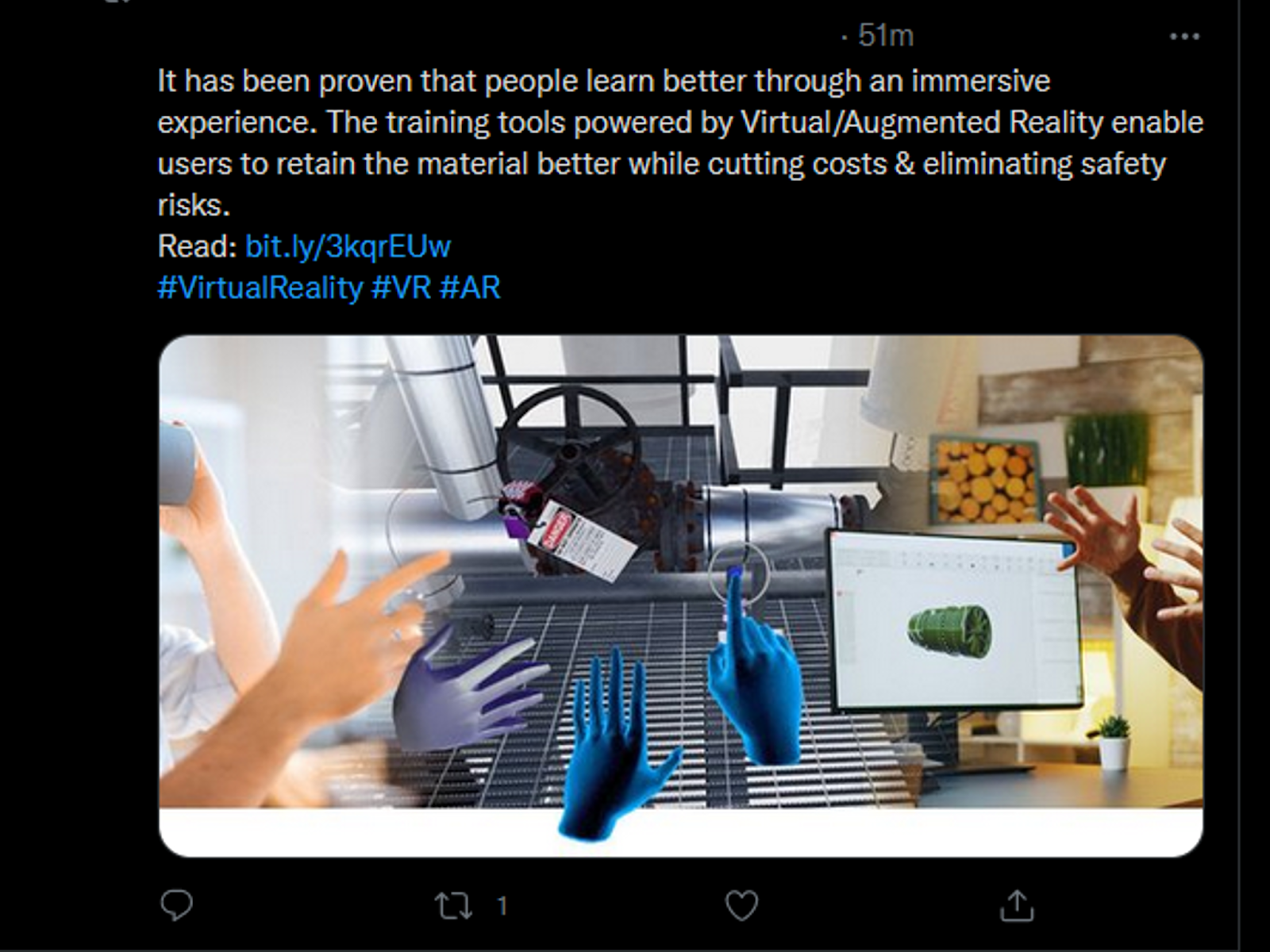
     Twitter post dated November 29, 2021.

    “It has been proven that people learn better through an immersive experience. The training tools powered by Virtual/Augmented Reality enable users to retain the material better while cutting costs & eliminating safety risks. Read [link].  #VirtualReality #VR #AR

    So there are 4 claims here:

    A. people learn better through an immersive experience

    B.  enable users to retain the material better 

    C. cutting costs

    D. eliminate safety risks.


    And here’s my vote on these claims: 

    A. people learn better through an immersive experience – No. 👎

    B.  enable users to retain the material better  – No, because ‘better’ is flaky. I’ll shoot at “retain” too. 👎

    C. cutting costs – Yes. 👍

    D. eliminate safety risks.- Yes. 👍


    The link provided goes to a business website that is selling developer services to make things in Unity.  On the front page, there are NO claims about learning that I can find at all.  So the “Read:” doesn’t seem to invite you to read more about facts supporting those claims. They are asking you to read all about how their business is cool.


    Overall. that’s a score of 50%.  Still, failing.


    Remember that I’ve pointed to how dangerous & misleading “hand waive” language is.  As soon as this started with “It has been proven that…” my hackles go up. 

    😦

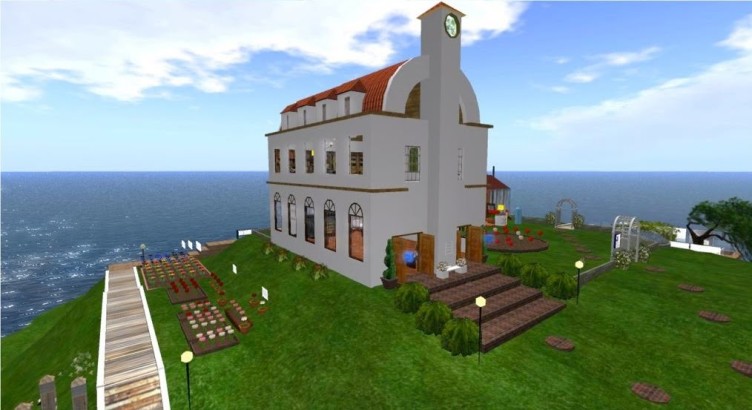
  • A Tribute to Second Life. Yes, it’s still around.

    A Tribute to Second Life. Yes, it’s still around.


    I purposely start articles with “A” when I mean to not be definitive but exemplary. In this case, I would like to pick out a few of the early education influencers and memories that I knew from Second Life (SL) (and Heritage Key, 3rd Rock Grid, OpenSim, and other early virtual worlds).

    One of the observations that brings on this article (besides the true desire to give credit where credit is due) is that educators are starting to stream into the metaverse or cross reality (XR) – especially with the $299 Oculus headset cost and the pandemic forcing isolation – and I find that in education & XR development – there is a disturbing lack of knowledge of the foundation of virtual reality studies. That is, people that know about the role Second Life played in XR for learning research are not writing enough about it now so that what it did in the past is captured for the future.

    Remember the ‘we stand on the shoulders of giants’ thing?

    The giant is, in part, Second Life.

    I would suggest that what is lacking in this background research is the fact that the vocabulary (and somewhat, the meaning) of words has changed so even a well-meant Google Scholar search might not pick up valid research from 10+ years ago because search terms were simply different words.

    So, first – Search on virtual world (VW) as your primary term. Virtual world was a more dominant phrase than virtual reality. Other words to use: immersive, MUVE, multi-player online, persistent, HIVE (highly interactive virtual environments), online games, simulations, visualizations, online reenactments, distributed classrooms, and hypergrids. Indeed, find one good metastudy from ~2009 and you’ll probably hit the vocabulary jackpot. In researching this article, I found the term Sloodle which I had forgotten but that was an incorporation of SL into the Moodle course management system. You will find a great of research on identity, presence, and immersion with avatars (not so much with locations or “doing stuff” in VWs because object physics was/is very primitive and you can’t “do” too much there. There are pose balls, but really that’s a subject I’m not going to get into here). Bear in mind that headsets only existed in research so this was all what we would know in 2021 as 2D virtual reality or 2DVR (VR on flat screens, monitors, and tablets). Because there were few consumer headsets, there was no “us versus them” that you find now between 2D and Head Mounted Device-based (HMD) 3DVR.

    Next, I very well realize that in some circles, Second Life causes giggling, either in derision (see the hype cycle image below) or in acknowledgement that SL did primarily serve the adult content market more than the education market. Sorry, but someone needs to write the obvious. Just recently, when the metaverse conversation popped up with some SL users on Twitter, they were adamant that they would never move to a platform that didn’t allow “adult content.” Second Life was never a place that you wanted to wander into the dark alleys as an educator. At least, if you did, you would learn some stuff you’d rather not know. The sexualization of Second Life is still prominent. Just do a google image search on second life. NSFW. Second Life was always a place for college and university educators (READ: Over 18 years of age). 


    Gartners Hype Cycle for Social Virtual Worlds showing a start at 1987 and going to 2012.
    Source: http://www.muvedesign.com/the-virtual-worlds-hype-cycle-for-2009/


    Thus, educators tended to stick together. You heard about SL from another educator and you went in with them. I went in with a professional development group and had my first “meeting” in a hot tub at the Burning Life festival in SL in 2008.

    There were some GREAT educator groups and some of them are still going! I mention my favorites:

    1. Virtual Worlds Educators Roundtable (VWER) – my home base and it is still going! I volunteered on the organizing committee and hosted a “Reading Meeting” where we invited the author of an article in for a presentation and Q&A (I was able to talk with the Whyville Pox article researcher, which is still a GREAT study). At its heyday, VWER had 2 grids: 1 for meetings and we had a Quidditch pitch/outdoor ice skating rink and 1 for parcels for educators as a sandbox and I had a virtual office.
    2. Virtual Worlds Best Practices in Education (VWBPE) Conference – still going as of 2025!
    3. Real Life Educators in Second Life is an in-world group (READ: notification list) you can join. Users post different events to that group.
    4. ISTE  https://www.iste.org/…/explore-these-virtual-worlds
    5. VSTE: VA Soc. for Tech in Education https://vste.org/
    6. Second Life Community Convention (SLCC) – a larger group but education was a subset. Now defunct.
    7. The SLED group – an email list serv that had the first collection of educators as subscribers. Now defunct.

    Other groups still going but not necessarily education-focused nor restricted to Second Life:

    Virtual Ability http://blog.virtualability.org/2021/08/by-gentle-heron-you-can-teleport-to-any.html

    Non-profit Commons Community https://nonprofitcommons.avacon.org/

    OpenSimulator Community Conference https://blog.inf.ed.ac.uk/atate/2021/10/31/oscc21/

    Special shout out to independent journalists that still cover Second Life:

    Ryan Schultz https://ryanschultz.com/

    Daniel Voyager on Twitter @danielvoyager

    Great “places to visit” included NASA, NOAA locations. Rockcliffe University Consortium, Glascow University Online, California State University, Chico (defunct? I think?). Then there were one-off builds that were also great like the Edgar Allen Poe House and the walk-through heart and colon.

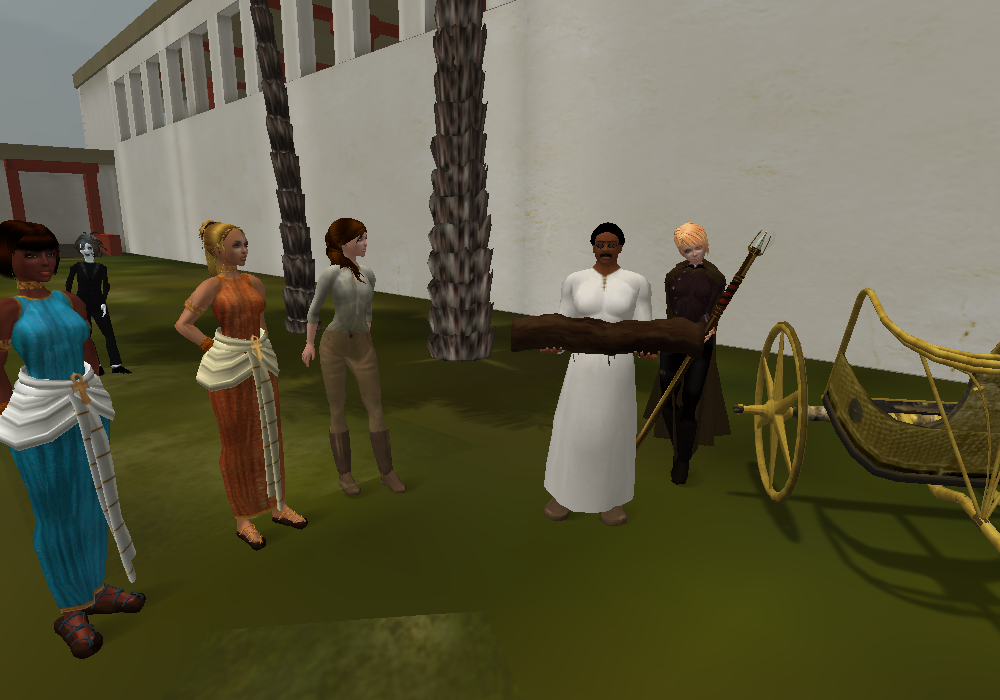
    During this same time, other virtual worlds were coming up and visiting them was fair game. My favorite was the short lived Heritage Key that needs to come back! That place was so cool and educational, you could visit Stonehenge over 5 different time periods and help build it

    You could travel to both Egypt and Stonehendge in Heritage Key.  Avatars received costumes and had roles to play at each site.
    What happens when 2 Egyptians, 2 Adventurers, 1 Druid and 1 Zombie all go to Ancient Thebes?

    So…what happened?

    There are many commentaries now. All of them have a piece of the truth. Probably the biggest factor was money. Hosting a grid literally cost money and universities had to pay for it. Over time, it just didn’t make sense to keep paying monthly for a place rarely visited.

    College and university builds represented a huge investment of time. You should have heard how much the word “Primmy” was used back then. Primmy is short for primitive which meant the building blocks of virtual realities which are primitive shapes (spheres, cubes, columns, pyramids, etc.) Some clever instructors had their students do the builds and then called that assessment (I’m not calling that wrong, I’m just saying…clever.)

    The locations, indeed, themselves brought on their own demise. Many builds became ghost towns because avatars would visit a “virtual campus” (OFTEN a replica of their real campus buildings (cough, mistake, cough) but walk inside the buildings that may or may not have had enough “prims” to put separate rooms inside those buildings, and so visitors found the building completely empty during off hours, wonder what the big deal was, and then leave.

    This was one positive result of those early days. Many educators realized that “replicating reality” should NOT be the goal because for now, you’ll never get there. The human eye is too good at discrimination. But what you do want to do is the phantasmagorical.

    Do the impossible. Virtual reality is very good at the impossible.

    Remember this was before VR was called Social VR, so the ‘social’ part was truly touch and go. In SL, you either found groups of people or you didn’t. Most positive SL stories going around right now will involve relationships and groups. Truly today, I only go into SL for events. I hardly ever go in to just explore. It’s not built for that. What was it built for? Well, it had some characteristics that were interesting and unique. (Alt opinion here.)

    Born creator

    First and foremost to me, every avatar is endowed as a creator. An educational psychologist I know immediately deemed this a “God complex” program. Indeed, every bell and whistle of creation (object creation and space manipulation) was available in the overwhelming UI. I’ve been a SL citizen for more than 10 years and still I don’t know what half of the UI choices are for. Even though I’ve done it a lot, I’m still not sure what rebaking does.

    Screen capture of the original Ruth avatar from Second Life.
    The original Second Life Ruth avatar


    The default avatar was “Ruth”. She made new users learn how to change appearances. Impressive abs though. She must have never eaten a potato chip.

    Avatar customization

    The avatar customization is in Second Life (still) is top notch.

    Seriously, OpenSim and Second Life have the best clothes’ animations! I once saw someone who wore a top hat to a Christmas party and the around the rim of the hat was a tiny puffing train! (If you are reading this and that was you, please reach out to me, I LOVED your hat!! I want a video of it!) But, I find Sandsar and sinespace is coming up fast on good clothes and avatars.

    You can get married and divorced in Second Life. There are also active furry communities. I’ve got no comment on all of that. I would just remind everyone that what is in a virtual world is what you bring with you. It is definitely not all innocent and it is definitely not all healthy.

    Even though you have creator controls, you cannot build just anywhere. Land is owned (permissioned) and you have to essentially pay to have land. Early objects were NOT copyright protected. So copying, stealing, and replicating was rampant. (Hat tip to Somnium Space, who addressed this problem from the very start by tying assets to NFTs.) I suspect a lot of artists hiked out of SL because their work didn’t stay under their control for long. For educators, there was an active “free sharing” market and I still wear my first set of “professional educators clothes” I picked up free from some place.

    Hat tip to the word rezzing. I still use it. When I arrive somewhere, I rez in. The spot is the rez in spot. The current term in 2021 is “spawn point”. Yuck. I think this term, rez, should NOT be lost. Rez means resolving, which is what your avatar would do when it was still “coming into” the VR space. It’s the ghostly cloud you see here:

    We would lost without our Path…finder

    But I’d like to get to the tribute part of this tribute article. I would like especially point out the impact that John “Pathfinder” Lester had in Second Life. Everyone who was on staff for Linden Labs officially had a Linden last named avatar. John was Pathfinder Linden and all educators knew he was the one to talk to about ideas and problems. He “led the development of the education and healthcare markets while evangelizing the innovative use of virtual worlds in research, art and immersive learning.” Truly John cared and helped. I remember the day I sat next to his avatar at a meeting. I was so, so, so thrilled. But I never figured out why his avatar looked like a boot to me. It must be the eyelets and the shoestring. Apparently this is a bit of British culture I don’t know…that’s a character?

    Early John:


    Pathfinder Linden


    Many of us observed in stunned silence as Linden Labs pared down staff infamously. I watched in foreshadowing because I knew that it was like to work for a company that would drop you easily. I followed John’s blog “Be Cunning and Full of Tricks” closely during that time and noticed how he rebuilt his professional life.

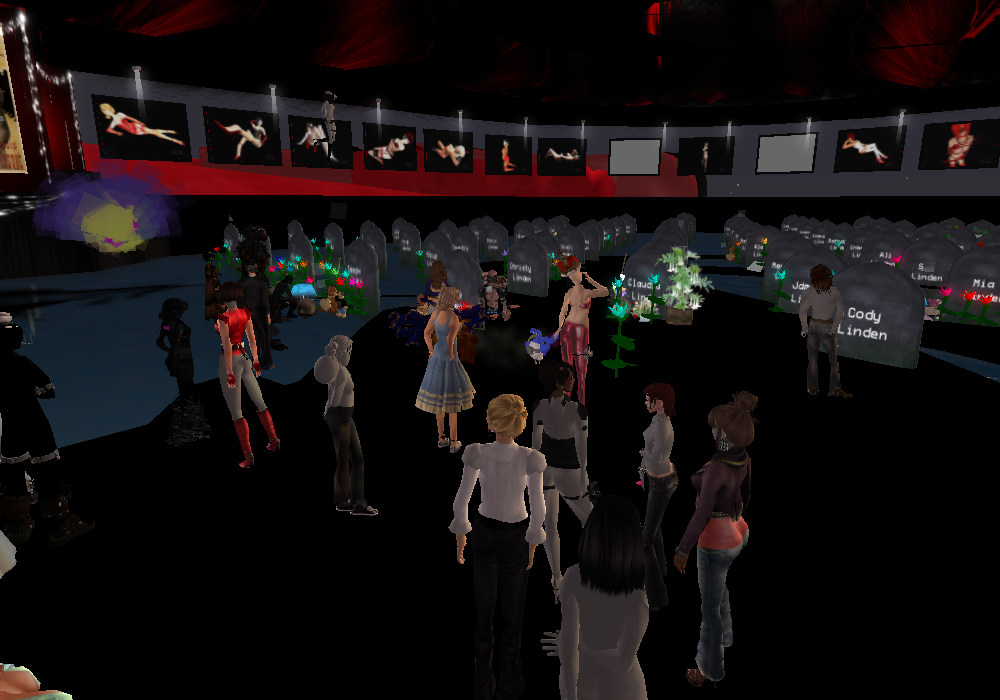
    The Linden Graveyard. This image specifically shows the named gravestones as many Linden Lab employees were let go over time. Note this space is NSFW.


    The Linden Graveyard. The fact that this place was made still haunts me. 

    John is doing well and every time I hear that he’s back near virtual worlds, I’m so pleased (and I’m still part of his fan club).

    My last call of affection goes to the VWER Planning Committee of 2012. I’m still in touch with Evelyn. 🙂

    • AJ Kelton, Montclair State University (SL: AJ Brooks)
    • Joe Essid, University of Richmond (SL: Ignatius Onomatopoeia)
    • Ann Steckel, California State University, Chico (SL: Olivia Hotshot)
    • Evelyn McElhinney, Glasgow Caledonian University (SL: Kali Pizarro)
    • Margaret Czart, University of Illinois at Chicago (SL: Margaret Michalski)
    • Charlotte Burch, retired middle school principal/Pres. Friends of Humboldt Bay NWR (SL: Mimi Muircastle)

    So in response to the question: Is Second Life still around? Yes.

    She has her children now, Sansar, sinespace, and High Fidelity.

    See you in world!

    #SecondLife #Metaverse #XR #VR #VirtualWorld #Avatar #Sansar #sinespace #HighFidelity #VWER #VWBPE #VirtualAbility #immersive #MUVE #multi-player online #persistent #HIVE #highlyinteractivevirtualenvironments #onlinegames #simulations #visualizations #onlinereenactments #distributedclassrooms #hypergrid #cyberspace


    This article was posted simultaneously to my LinkedIn account on 11/23/2021. https://www.linkedin.com/pulse/tribute-second-life-yes-its-still-around-heather-dodds

  • Next stop: Bad VR Implementation

    Next stop: Bad VR Implementation

    In my published writing of August 2021:

    “Especially with decreased technology prices and increased access to XR,
    campus administrators might want to buy the technology first and think
    about use second. Instructional designers are obligated to advise on the
    best use of the technology even if that advice is sought after the
    purchase.”

    Immersive Learning Environments: Designing XR into Higher Education. 

    It feels like the ink is still drying…and this pops up. An instruction designer asks how to best use VR headsets, after the boss has committed to buying some.

    That set off my “bedonkers” filter 😜, so I replied:

    After I posted the phrase “@ss backwards” that thread stopped for almost a day.  Then one more post has arrived talking about a suggested resource.

    But here we are folks.

    Bad Implementation is our next stop on this train.  Other stops on this train include:

    • Overspending
    • Results the same as other forms of learning
    • Bosses disappointed in results
    • Bosses reluctant to invest in the next big thing
    • VR learning becomes laughable but slowly adopted.

    Does all this seem familiar? If you are over 30 years old, it should be. It’s the e-learning adoption story.  Go further back and it is the Internet-in-all-schools adoption story. And DVD-adoption story. And TVs in classrooms…

    And film strips…

    And radio…

    And “moving pictures”

    And individual textbooks

    And chalkboards.

    Think I’m kidding? I wish I was.

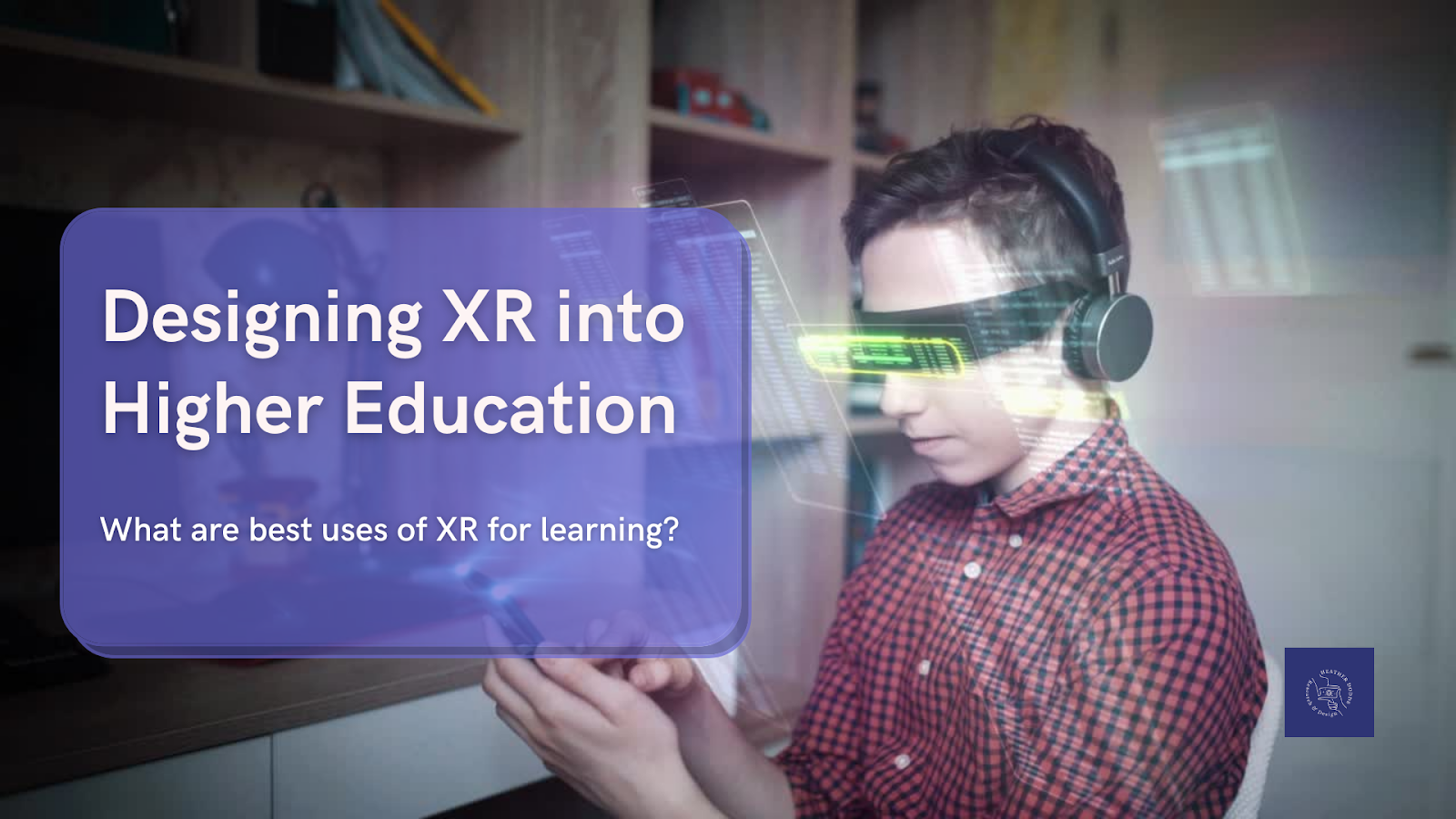
  • Designing XR into Higher Education

    Designing XR into Higher Education


    With the dramatic shift to online learning with the arrival of the
    COVID-19 pandemic, faculty, staff, and students within higher education
    worldwide have made the sudden but necessary initial steps to
    incorporate technology into the learning environment in ways never
    imagined. However, forward-thinking administrators are wondering, “what
    comes next?” Immersive learning and XR answer this call. 

    Created with care in Canva. 


    Sources: 

    Definitions come from my own writing here: 

    Ziker C., Truman B., Dodds H. (2021) Cross Reality (XR): Challenges and
    Opportunities Across the Spectrum. In: Ryoo J., Winkelmann K. (eds)
    Innovative Learning Environments in STEM Higher Education.
    SpringerBriefs in Statistics. Springer, Cham. https://doi.org/10.1007/978-3-030-58948-6_4 

    Dodds, H. (2021). Immersive Learning Environments: Designing XR into
    Higher Education. In J. E. Stefaniak, S. Conklin, B. Oyarzun, &
    R. M. Reese (Eds.), A Practitioner’s Guide to Instructional Design in
    Higher Education. EdTech Books. https://edtechbooks.org/id_highered/immersive_learning_e

    Slide 6: 

    Mordor Intelligence. (2021). Extended Reality (XR) Market –
    Growth, Trends, COVID-19 Impact, and Forecasts (2021 – 2026) https://www.mordorintelligence.com/industry-reports/extended-reality-xr-market 

    Slide 8 does not have one source but over 20 years research (including
    my dissertation study) with technology-facilitated immersive learning
    has yet to show a significant improvement other any other learning
    media. This aligns with this important article in the history of
    instructional design: Clark, R. E. (1994). Media will never influence
    learning. Educational technology research and development, 42(2), 21-29. 

    Slides 9, 10, 11 “XR reduces Time, Money, Danger” (similarly expressed
    in my dissertation). There are parallel comments made by Jeremy
    Bailenson documented here as his “DICE” advice. https://stanfordvr.com/video/2019/transformative-experiences-vr-for-good/
    It should be noted that the DICE advice are the 4 occasions for which
    to NOT use VR (against) where my 3 are 3 occasions TO use VR (for). 

    The combination of 4 different models is my own published creation:
    ADDIE (traditional ID model), Design Thinking (from UX), 3DLED (from
    Karl Kapp), and narrative plot (loosely credited to Pixar). They are
    displayed here to show the remarkable similarity of steps/pathway across
    each model, thus supporting the validity of the proposed path.

  • What’s Wrong with XR Collaboration Guide Spring 2020 V4

    What’s Wrong with XR Collaboration Guide Spring 2020 V4


    When the XR Collaboration Guide was published around February 20, 2021, I was looking forward to reading what was shaping up to be a competitor document to the still-in-editing State of XR Report from the Immersive Learning Research Network.  I knew that the Guide was going to be focused on the XR producer community (content, hardware, events, etc.) so they would have a focus more on business and less on research.

    However, I still opened it eagerly to see what they would say.

    This is the disclosed group of authors:

    The reason I posted the authors is that at least one *should* have the education background to know better for something that caused my jaw to drop later in the report. As a matter of fact, I would have thought that the presence of this contributor would have stopped bad data from circulating. However, my hopes were dashed.

    The report opens with a Glossary. That makes me snicker just a tad since, academically, that would be called “Definitions” but oh well. To-may-toe, to-mah-toe. 🍅

    The “explanations” are, I must observe, wishy-washy and tend to include a distinct head-nod to what the reports considers NOT the item (AR, VR, XR, or MR).  This includes a troubling swipe at 2DVR (p.14): 

    Note: Handheld device and computer users also have the ability to join these events, but
    with far less immersion. In particular, you have to do a lot more work to control your
    “camera” position or your rendered point of view. This makes interacting more of an effort.”

    It always bothers me when part of the industry tries to say “We’re the real thing and they are not the real thing” when there is a long road that led to where we are.  That road is paved with pioneers saying “it’s  the real thing” and scratching to get even a tiny bit of progress acknowledged (I’m looking at you Second Life educator community).

    Some of the writing veers too.  For example, a statement about shipment dates in the middle of the “glossary” looks like a hardware person just tacked that in there.

    After this is a confusing section where, in 3 events, they give you the history of teleconferences as–apparently– done in 3D.  I said it’s confusing.

    Here it comes…

    Now let’s get down to it.

    The whole page of text starting the Presence section. My eyebrows went up when I realized there is not a single reference on the page. Actually, it reads like “talking” like what one person would say to another when talking them into XR.

    But by the next page, these authors are willing to land on some bad research– hard. I’ll screen capture this because even looking at this more than 20 months after it came out, I can’t believe these folks put their names on this.

    Oy. Where do I start with this mess.

    First, Dale’s Cone of Experience is debunked

    Second, the pyramid is NOT explained in the text.  OK.

    The pyramid is rainbow colored…that already sets some academians off as it was NOT even originally a triangle or a pyramid! 

    Actually the rest of the writing is what I would call lukewarm (as in, you want to spit it out of your mouth) with little to NO connection to research, no cause-and-effect reasoning, and a lot of “what if” statements and a saw a scant “brain science” phrase in there.  If I could summarize the writing, it says “we can collaborate in XR “far beyond what is possible in traditional collaborative structures”. 

    Next is a section on avatars that doesn’t really fit the Guide but oh well. Then some comments on trying for accessibility (OK, I’m down with that!) but seems to be surface level talk given that they just dissed 2D earlier in the same Guide. If you are not following along, many forms of XR need 2D equivalents to be accessible.

    The Guide goes on to do some “hand waving” arguments that XR allows for better collaboration (the date of February 2020 is not lost on me…the planet was about to switch into Zoom mode and collaboration…like it or not…was about to happen on a huge scale.)

    The reasons they give for XR being better for collaboration are:

    1. Less distractions during meetings

    2. Highly customized meeting environments

    3. Increased presence/immersion

    4. Interaction with 3D objects

    5. Text input can be challenging (this appears to be an ‘anti-reason’….sooooooo….does it really fit on this list? The heading style says yes. I say no. But I’m not loving that list anyway.)

    I don’t see anything remarkable about the rest; some of the Guide is OK, some of it is “meh”.

    In general, I’m just really sorry that this report didn’t really hit hard on what XR can do really well and instead clung to the “but it’s really cool, you’ll like it” argument.  Oh well.

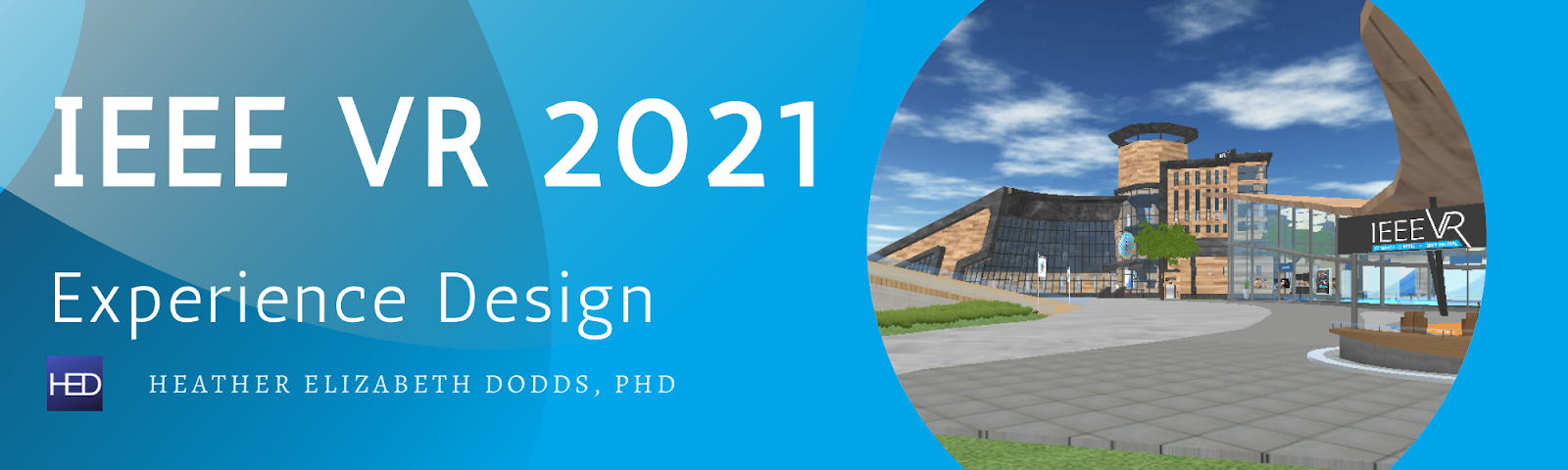
  • IEEE VR 2021 Production Design

    IEEE VR 2021 Production Design


    I was recently asked if I have service design experience and I realized that I have more service design
    experience than product design experience in VR. Truly, my focus has
    been on bringing new clients into VR experiences, explaining the
    benefits and challenges, and customizing a solution for their own needs.
    I love doing this work!

    So here is an example of service design experience that I did for the IEEE VR Conference in 2021.

    First, as I stated my remarks at the Opening Ceremony
    (held at 3:30 a.m. my time, 8:30 a.m. Lisbon, Portugal time), the
    institution that I worked for pursued getting this particular client
    because they were an ideal fit with similar mission and demographics.
    Additionally, both organizations had switched on online conferences in
    2020 (IEEE VR to Mozilla Hubs and iLRN to Virbela)
    and so we shared the common ground of bringing large amounts of users
    into new virtual spaces. We won the contract to host their posters,
    doctoral consortium, demo, 3DUI contest, and video presentations on the iLRN Virtual Campus
    powered by Virbela. (The rest of their program was handled on Zoom,
    YouTube, and Twitch.) We had approximately 2 months prep time and worked
    directly with organizers from Portugal, New Zealand, and the US –
    drawing together meetings, tours, and set up times across multiple time
    zones.

    My support was being online to help with registrations,
    account access with translation to virtual access, technical support
    inside the virtual reality spaces, and providing options when the
    organizers wanted to dream up something new on the spot.

    And did they dream! Out of this one 7 day event, 3 brand new in-VR conference events started and I was part of all of them.

    All
    of these events had a theme to them: they used the basic affordances of
    the platform and put those pieces together in a new way.

    Said another way, these events were not pushing the VR boundary. They used the VR platform in ways it could perfectly perform and thus the execution was great! Think: using basic legos, not a kit, to build something like the Millennium Falcon.

    Treasure Hunt Ready Player 21

    Just
    a few weeks before the conference opened, our island gained the ability
    to passcode spaces. This meant that users needed to enter a code into a
    pop-up box in order to teleport or arrive in a specific space (usually a
    meeting room). One of the conference organizers, Rob Lindeman,
    listened as we described the basic features of the passcode system and
    he realized that he could create a treasure hunt game. He called it Ready Player 21.

    http://www.lindeman.com/vr2021/live.shtml
    (This landing page has 1,211 hits as of October 13, 2021. Rob documents
    that it had over 900 hits just during the treasure hunt game.)

    “If you are seeing or reading this, it means I am dead…I mean I am an avatar, and so are you. My name is James HOLIDAY.

    I
    have created a set of puzzles for you to solve. Each puzzle results in a
    key that you can use to unlock a secret room within the campus, where
    you will find clues to finding the next key. There are four keys in all,
    and the first person to find all four of them and reach the final room
    will receive an extra special prize.

    Half a billion…No, wait…I mean an NVIDIA GeForce RTX 3090 graphics card!

    There
    are leader boards displayed around the campus, and each time someone
    finds a key, their name will be added to the leaderboard, along with the
    time of earning the key.

    If you would like to take part in this adventure, please use the QR code that you find below.

    Good luck!*”

    As
    I was part of the support crew, I could not participate to win the
    prize but I had fun visiting the first 2 rooms to check out their
    function and I actually solved the puzzles! (I’m good at lateral
    thinking.)

    When the treasure hunt game opened, there were QR
    codes placed around the Campus inside of images and participants ran
    around collecting them– mistakenly thinking that just collecting QR
    codes would win the game. The QR codes, however, were only the START of
    the game. The actual puzzles were inside the passcoded rooms.

    The hunt ran about 4 days.

    I was proud to witness that a woman, Xioadan Hu,
    won the game and this screenshot shows us in the winning puzzle room as
    we were taking her celebrating photo, with a research colleague. I
    asked her how she completed all of the puzzles and she said “you just
    have to be very detail-oriented!” I’m sure she’s going on to great
    things. There was great envy for the graphics card that she won because the COVID-19 pandemic had curtailed graphic card production.


    Speed Networking

    The next experience was dreamed up and put into action in just a few hours. One of the organizers, Francisco Simoes,
    had realized that we could make for them a large office space of 36
    offices that each had private sound (sound restricted to inside that
    space). So with some added Portugal theming and a few ground rules, we
    instituted “Scientific Speed Dating” when networkers could just show up
    and meet new people every few minutes. Everyone at the conference was
    invited so this was a great time for students to meet potential
    colleagues or new research contacts!


    The VR affordances that we used were:

    • Sound isolated rooms connected by open office spaces.
    • “Flat sound” or sound all of the same volume transmitted through the entire space
    • The ability to send a “room notification” to every avatar in the space notifying them of time remaining or time to switch rooms.

    So remember those spaces:

    An office is a sound isolated space with walls, ceiling, floors, and a door. You could see into the office from outside.

    A
    team suite is a group of offices bound together by a common floor.
    Sound is NOT spatial or isolated, sound is flat so therefore “traffic
    control” could be done by voice by being in one spot and describing or
    saying a number and you could be heard a hallway away.

    The ground rules were very easy and I was drafted to be the Master of Ceremonies so I kept repeating these rules all through the hour.

    Rule 1: Find an office.

    Rule 2:

    • If there is no one in it, go in it!
    • If there is one person in it, go in it!
    • If there are 2 people in, don’t go in it! (Find another office.)

    Networking was for 5 total minutes: 4 minutes to meet/greet, then a 1 minute warning to exchange contact info.

    At
    the 5 minute point, the person who was first into that office stayed
    and the person who arrived 2nd stood up and walked to a new office.

    Given that this was an international conference, instructions had to be as simple as possible.

    We had “Hall Monitors” of sorts, really just roving volunteers, who would call out
    if an office had only one person waiting to network. We discovered that
    numbered offices, therefore, were better than named offices because
    folks could navigate by looking for a increasing or decreasing number.

    In all, the event was a great success!
    We actually ran it twice with 36 available offices. That meant capacity
    of 72 attendees and we pulled in ~50 for the first session and ~35 for
    the second (including some repeat attendees!)

    Kent Bye commented that it was “One of the best virtual conf activities I’ve seen”

    Flash Mob

    The
    final event took advantage of the VR affordance that Virbela empowers
    every avatar to dance. From the F7 dance command to longer robot
    dancing, it didn’t take long for the IEEE VR organizers to realize that
    if everyone synchronized their dancing, it would look like a flash mob.

    We put a flash mob on the agenda and LOTS of folks showed up! I took a video and Kent Bye led the instructions.

    https://twitter.com/kentbye/status/1377718061231349760?s=20


    Conclusion

    Working
    with the volunteers and conference committee was great! We often worked
    simultaneously in multiple systems: Discord, Virbela, etc. In a classy
    maneuver, the conference chair, Joaquim Jorge, also made sure that he treated his volunteers with the utmost respect, dancing with them,
    inviting them to virtual drinks at the rooftop bar, and trusting them
    completely with projects like organizing volunteer coverage.

    The combined effort led to the LARGEST IEEE VR conference ever!

    In
    summary, the design experience used the basic affordances of the
    platform, passcoded rooms, sound-isolated rooms, and dancing avatars,
    and created unique and successful VR events. It was not the case that we
    imported unique objects or transported the users to phantasmagorical
    locations. The entire Virbela platform is a software download that looks
    very traditionally like conference and meeting rooms. But it was taking
    the basic building blocks and imagining them in new ways that was the
    key to this success.

    A good design lesson for me and I hope, for you!

    Check out IEEE VR 2022 set for Christchurch, New Zealand!

    #ServiceDesign
    #ExperienceDesign #VRExperienceDesign #VirtualEvents #VR #IEEE #IEEEVR
    #virbela  #ResearchConference #OnlineConferences #TreasureHunt #FlashMob
    #SpeedNetworking #VREvents #Lisbon #Virtual #2021#VRheadset #VRglove
    #PosterSession #SocialVR #Engaging #MarketGrowth #Meetups #SurgeInDemand
    #edtech #technology #StudentVolunteers #2DVR


    This article originally posted to LinkedIn on October 15, 2021

    https://www.linkedin.com/pulse/ieee-vr-2021-experience-design-heather-dodds

  • Measuring Remote Team Productivity or When It All Goes Wrong Part 5 of 5 Keeping work in its place

    Measuring Remote Team Productivity or When It All Goes Wrong Part 5 of 5 Keeping work in its place


    This is the fifth and final article in a series about keeping work in its place.
    As a reminder: emails are equivalent to messaging and I’m specifically
    referring to work situations involving remote teachers and students in
    educational contexts.

    This last article is a grab bag of smaller stories to wrap up my topic of Keeping Work In Its Place. I’ll prime you where we are going so that you can keep up.

    Measuring Remote Team Productivity is about using spreadsheets to discover the chilling truth that remote workers tend to over work, not under work.

    Take a Chill Pill is about directing students to be responsible unto themselves. It’s not a sin.

    Slow Down Responding To Students
    is about supporting and backing up remote teachers so that if they do
    not answer a message, there is a support system filling in the whys and
    hows.

    What Happens When It All Goes Wrong is
    Heather’s own story of checking email during a vacation, that lead to
    the direst of consequences. What was lost was more important than a job.

    Education Is An Insatiable Monster
    I’ve been tagging these articles with this phrase all along. It’s the
    unpleasant underbelly of the education profession. I’ll explain what the
    problem is. Spoiler alert: I don’t have a tidy solution.

    Measuring Remote Team Productivity

    For this story, I have to go backwards in time quite a bit and then forward in time.

    Many
    years ago, when I was within my first few years of working full time
    remotely, the university I worked for started a data collection effort. 
    We had to fill in spreadsheets of every work activity we did down to
    the 5-minute increment.  To which, smarmy Heather asked her boss if she
    could create a category for her time called Filling in the Damn
    Spreadsheet. My good-hearted boss said yes.

    What predicated this
    census of remote activity was a long-standing belief (that has NEVER
    GONE AWAY) that remote workers are lazy and don’t actually work if they
    can help it.  Human Resources had reported that remote workers were not
    taking time off. Bosses put their suspicions and the HR data together
    and said “Ah ha!  Everyone is out there relaxing. They are not working
    at all! They are eating bon-bons, sitting in the sunshine and answering
    an email or two once in a while! That explains why our success rate
    never rises!”

    So we filled out the spreadsheets for weeks and sent them in.

    The results chilled our bosses to their bones. It didn’t surprise us remote workers at all.

    Folks were actually overworking.

    Anyone who was scheduled for an 8 hour day was actually working 10 hours.

    Anyone who was scheduled for a 10 hour day was actually working closer to 12 hours.

    The reason no one was taking leave was because we felt like we could not take leave
    The punishment, in terms of catching up on or worse, student loss, was
    too devastating to risk.  So folks worked all the time; we worked
    through holidays, sicknesses, everything.  There were many times when
    folks were ON WORK TRIPS doing work right in front of the university and
    folks would have their laptop open, typing away on emails during
    training sessions. When asked why, the answer was “If I don’t answer
    these emails now, I’ll never catch up.”

    Take a chill pill

    One
    time when I was on one of these work trips, I was caught by one of my
    colleagues walking down the street, literally with my hands in my
    pockets looking like the embodiment of relaxation. She said “Why do you
    look so different to everyone else here, who is basically panicking?” I
    said “Because I told my students to shut up.”

    Now…I actually did
    say that to her, my colleague, because that language was acceptable with
    her. But I didn’t say “shut up” to my students. I professionally
    informed them that I would be traveling for work and that for a few
    days, they would have to make do on their own. Translation: Find your
    own ISBN number for the Chemistry textbook!

    And I lived.

    Did I mention I earned a 100% satisfaction rating from my students?

    The
    end of that story is that 3 hours a day of emails was, in my experience
    for that job, normal. I was not going to budge on that. And I was NOT
    going to suspect my faculty, once I became a manager, of being lazy.

    Slow Down Responding to Students

    We
    had an expectation to answer student emails within 4 working hours of
    receiving the email. Most of the time, we hit that metric ‘with bells
    on’ but I never cracked down on my team on that metric. I would hold
    them back when an email was from an –ahem– upset (that’s a very kind
    word) student. I told them, “If anyone asks, I’m taking responsibility
    for you not answering that email today. I’m specifically asking you to
    NOT answer that email today.”

    Why?

    I have learned from personal experience that

    the email you write tomorrow will always be better than the email you write today.

    Why is that?

    Forgiveness.
    I had learned that with time (an overnight, often) I could be much
    kinder and forgiving of my students. I could answer better.  I might
    have thought of more solutions.

    So as a boss, I’d ask my faculty
    to put on forgiveness “like a shirt.” I said “You don’t have to mean it,
    but I want you to truly try this. You have to be authentically looking
    at this problem from the student’s perspective” (aka remember the days
    YOU struggled in college).  Many times, a student was simply being
    difficult because they felt that they were hurt by us first. It was a tit-for-tat war breaking out. But we could stop it.

    Even
    if a student was wrong in every possible way, we could find forgiveness
    for them. My favorite line was “No one wanted this to happen to you”
    because it was true! We didn’t want our students to have difficulties!
    Starting with that acknowledgement and pouring forgiveness on the
    student solved many problems. (To be clear, you can forgive a student
    even if the student is totally in the wrong. This isn’t about being
    dumb, it’s about being hyper-aware of their perspective. This is active
    listening, in other words, in action. You listen, but you don’t necessarily agree.)

    The
    most common response after we had composed a kind, understanding email
    was “Oh thank you! I was so upset! I’m sorry. It’s just been so hard to
    go to college with…” and you’d get the backstory.  I was amazed at the
    backstories that had nothing to do with the problem at hand but you’d
    learn that the student was facing some unimaginable obstacles.

    Adding
    in time and forgiveness meant that a great deal of student issues never
    had to go past me and go to my bosses. Problem solved.

    (P.S. If
    you’d like more tips on what to say to slow down to responding to
    students or how to craft off-hours email coverage – ask me!)

    What Happens When It All Goes Wrong

    OK,
    what happens when Heather doesn’t follow her own advice?  What happens
    when she checks email on her day off, in the middle of a vacation? She
    worked when she should not have been working.

    Oh, it got ugly fast.

    I
    can’t remember the impetus but I checked my email on a Monday in the
    middle of my annual birthday week off. I must have been thinking “Oh, I
    need to check on this other issue something-or-other.”

    To my
    horror, there in my inbox was notification that a major accreditor of
    our coursework was pulling accreditation because they didn’t find one of
    my courses to be rigorous enough.  If we lost that accreditation, I’d
    lose faculty immediately because about ¼ of the university would close. I
    sat there, tears welling in my eyes thinking “Oh my God, what are we
    going to do?” I saw others on the email thread. So somehow, I shut down
    my computer, gulped back my tears, and hoped that if it was necessary
    for me to come into work from vacation, my boss would let me know. But
    it was Monday and I would not be back at work for 8 more days. There was
    plenty of time for the worst to happen. With me out, around 4 of my
    faculty could be unceremoniously fired before I came back.

    I worried every minute of the next 8 days.  Vacation destroyed.

    When
    I came back into work and started reading through my emails, I found
    out what happened. One person on the thread had replied, “Hey, I know
    the chief accreditor. I’ll give them a call.”  So the accreditor was
    called.  The rigor of my course was explained. A little back room “Hey,
    it’s all good, whatcha gettin worked up about” conversation and problem
    solved.

    No one was fired.

    No one was dumped.

    But I lost my vacation. All because I checked my email when I wasn’t supposed to.

    So
    I share this story because I know plenty of folks are going to counter
    this Keep Work In Its Place series with comments like “It’s all fine and
    good to say, but in real life…..[dire situation/consequences]”  or
    “These actions put people’s jobs on the line!” or “You will be accused
    of not helping students!” I wanted to show you that I’ve walked the line
    of ‘everything being on the table’….everything… my job, others’ jobs,
    students’ success and students’ failures. Through it all, the better
    decision was to preserve myself to fight another day. Work when you are
    at work. Don’t work when you are not at work.

    It can be considered
    a numbers game and I hope you’ve seen that through my stories. When one
    teacher or instructor or faculty member is saved from burnout or
    overworking, they go on to help 10, 100, or thousands of students in
    their teaching lifetime. But when I lose one student, I have thousands
    to replace that one.  Sorry!! I know that’s REALLY hard to read,
    really.  But you have to know where to invest if you have limited
    resources and unlimited demand, which is what online education is.

    Education is an Insatiable Monster

    I
    used to subscribe to the idea that I had joined a noble profession,
    education.  Education is ‘the gift that cannot be ungiven’.  Oo, that
    was my favorite.

    But then one day I read that Education is an Insatiable Monster
    and I paused to really think. The article is about building buildings
    and then recruiting students. Then building buildings and recruiting
    more students. It’s a geographical, place-based problem that puts
    universities in a cycle that never stops eating; it is insatiable. No
    one stops it.

    Philosophically,
    education is a field in humanity where we never argue that one has had
    ‘enough.’  When does one have enough?  I’ve heard medical suicide
    patients claim on their last day of life that they learned something
    new! When do you reach ‘enough’ learning??  No one ever argues AGAINST
    learning. 

    Translated to online learning, how can teachers, then, argue against:

    • answering that parent’s text question?
    • answering that student email before the assignment deadline?
    • being offline for a few hours or a few days? (ahem, we called those weeknights and weekends but teachers don’t get them)

    When
    can teachers disconnect? As I think of some major problems I know of in
    education (e.g. grade inflation, rising tuition, unfair & cruel
    teachers, institutionalized racism), they point back to this central
    force; education never gets enough. Even today, people on both sides of
    the COVID-19 vaccination debate think that the other side simply has not learned enough!

    That
    is not to say that Education is wrong and we need to stop it. It just
    means that we need to be vigilant and watch out for problems. Overworking –now, in this remote teaching world– is one of those significant problems.

    Keep work in its place.

    This was the article that started this series: Defending a Teacher’s Right To Disconnect.

    Article 1 I am the woman who did not check her email and lived.

    Article 2: You replied too quickly!

    Article 3: I’m going camping!

    Article 4: 6 Days A Week

    Now turn off LinkedIn for awhile. Go look at some nature. We’ll be here when you get back.

    Man holding camera looks over a sunset and mountains.

    #KeepWorkInItsPlace #RemoteWork #TimeManagement #SelfControl #EducationIsAnInsatiableMonster

    This article was originally posted to LinkedIn on October 7, 2021.

    https://www.linkedin.com/pulse/measuring-remote-team-productivity-when-all-goes-wrong-heather-dodds/
  • 6 Days A Week – Part 4 of 5 Keeping work in its place

    6 Days A Week – Part 4 of 5 Keeping work in its place


    This is the fourth article in a series about keeping work in its place.
    As a reminder: emails are equivalent to messaging and I’m specifically
    referring to work situations involving remote teachers and students in
    educational contexts.

    I wish this story had a happy ending. But it
    doesn’t. This was a direct report of mine that did spectacular work.
    She was a gem of an instructor; I’ll call her Gem for this story. She
    gave me great feedback that I implemented with other hires.

    But I lost her. I lost her to burnout.

    Very
    early on in the hiring process, I made sure that I emphasized that I
    was hiring for 5-days-a-week schedules. I would say specifically “5
    days, not 6, not 7.”  Sometimes I’d meet a traditional faculty candidate
    transitioning to online who would tell me that they provided their
    mobile phone number to their students because —and they would always say this like they were a saint
    that way they could help the student anytime. I didn’t advance them in
    the hiring process. What they thought was excellent customer service
    actually told me that they didn’t have self control. Further,
    they couldn’t see themselves as part of team, relinquishing control to
    others, trusting others, and the environment that they were applying to
    was about to go so fast and so intense, that it would eat them up.

    (True
    story: Once I sat in a focus group of new online faculty hires and they
    reported how surprised they were with how much they felt tied to their laptops
    “Tied” was the actual word they used.  The Vice President running that
    focus group knew I was sitting in the group.  He turned to me and asked
    “Have you ever felt tied to your laptop?” “Never” I said a bit
    breathlessly because I was wondering what the new hires were doing so
    wrong to be “tied.”  But that was because I knew how to keep work in its
    place.)

    So this faculty member Gem was leaving a few clues
    around.  First, I had hired her for a 5 days a week Monday – Friday
    schedule (within those 5 days, we also asked faculty to work 10 hours that were “student-facing”
    which meant that they had to be hours where students could reasonably
    meet with the faculty member…this usually meant 2 evenings per week.
    The other 30 hours could be at more faculty convenient times.) I saw
    emails from her to her others with time stamps of Saturday or Sunday. 
    Later on, I became famous for my checking of time stamps…my direct
    reports actually learned to use “delayed send” if they didn’t want to
    get caught overworking.

    I asked her about those time stamps. “Why did you feel the need to answer So-And-So on Saturday?”

    “Oh, I have my laptop open on the kitchen table. So I saw the email come in and I wanted to help her.”

    ‘Laptop on the kitchen table’ told me that:

    • She
      wasn’t always working from a space that encouraged professional
      behavior.  We firmly asked employees to provide “dedicated home office
      space” that reflected a professional atmosphere with our students.
      #NoBedsInTheBackgroundPlease Even though she obviously was not on
      camera to answer an email, she didn’t separate work from home.
    • Working
      from a non-ergonomically planned space could bring on problems like
      carpal tunnel syndrome or back pain. When you don’t work at a desk, I
      worry about a compensation claim.

    I was already worried.

    “I’d
    prefer if you don’t check email when you are not at work. While I
    appreciate your dedication to our students, this probably could have
    waited.”

    A few more months went by. I see the timestamp problem
    again and it is discussed around the team.  I had another private
    conversation with her.

    “I need you to work when you are supposed to be working. I need you to not work when you are not supposed to be working.
    It’s very important that you get rest and get away from work because
    then, when you come back to work, you are happier, more productive, and
    can help more students.”

    Her response– a peel of laughter–the ‘mad scientist’ kind.  She said:

    “You don’t understand! 

    I like helping students!”

    Uh-oh. I was up against the “what could ever be wrong with helping a student?” argument.  It was the #EducationIsAnInsatiableMonster rearing its head.

    I
    said “I’m very serious. When you work on your days off, I get very
    concerned. The next stop on this train is burnout. At burnout, you help no students.”

    She
    ignored me and kept going. I started trying to figure out how to word
    this problem for her written performance review. I’d given her two
    verbal warnings so it was time to up my rhetoric.

    It ends up, I didn’t have to.

    She called me one day.  She said “I’m resigning.”

    Stunned, I said “Why?”

    She answered, “Because I want to spend more time with my daughters.”

    I screamed into the phone, “That’s funny, because I wanted you to spend more time with your daughters too.  Only, I wanted to PAY you to do that. And I wanted you to be able to tell your daughters that Mommy is a Full Professor. Now you won’t!”

    No, I didn’t scream that into the phone.

    I
    accepted her resignation and wished her well. But ever since that day,
    I’ve known…she never learned the lesson I was trying to teach. She
    burned herself out. She’ll do it to herself again in other jobs.

    If you like my article series, you might want to check this out: You are not your job: Writer Arthur Brooks on why careers shouldn’t dictate your identity

    This was the article that started this series: Defending a Teacher’s Right To Disconnect.

    Article 1 I am the woman who did not check her email and lived.

    Article 2: You replied too quickly!

    Article 3: I’m going camping!

    Article 5 will be: Measuring Remote Team Productivity or What Happens When It All Goes Wrong

    #KeepWorkInItsPlace
    #RemoteWork #TimeManagement #SelfControl
    #EducationIsAnInsatiableMonster #Working6DaysAWeek #Leadership #Success
    #Failure #Management #Email #Burnout

    This article originally posted to LinkedIn on October 7, 2021