Everything’s Coming Up Metaverse

 Photo by Sophie Grieve-Williams on Unsplash

December 1, 2021:

Hey, we’ll be having a Christmas party on December 18. You’re invited.

December 14, 2021:

Actual party invitation

Advertisement for a Christmas party calling it St. Nick's  Frosty Metaverse Party.


Now it’s a St. Nick’s Frosty Metaverse Party. I wonder if they served Metaverse cookies? 😣

January 24, 2022:

Email:

Recently the concept of Education Metaverse is
sweeping the world. Lots of people are developing products and
researching on this topic. I have just co-published a concept paper on
Education Metaverse. If we can add Metaverse to our site, that would make it
more timely and trendy. Immersive Learning is the pedagogy underlying Education Metaverse. We just added Metaverse for Learning as a theme to (Anonymized Conference) 2022.

That’s an academic researcher advocating that an academic group should use a trendy word.

February 17, 2022:

Metaverse Conference (not it’s real name)

Opening day (ahem, one day, but still). Opening seconds after 30 second countdown. 

Camera goes on. Live microphone.

First word broadcast: “Shit.”

Presenter leans back in chair, takes earphones off, and says to someone back off camera, “What?”

Sighs quickly. Strips off headphones, jumps up out of chair, and runs out of room and off camera.

Dead air.

This is 9 a.m. local and 11 a.m. Eastern US time zone on a Thursday in mid-February. I’m just reminding you of that because I’m stating the point, as a conference organizer myself, that these folks were right in the sweet spot of being able to handle an emergency no-show. They had a 30 second jazzy countdown graphic, with music!  They could have had a “green room” concept. They could have published their one-day schedule earlier before the conference so that each presenter had plenty of time to know exactly when they were on schedule. Their admin staff could have expressed the presentations times to the presenters in their own home/local time zone (that’s only polite). There are many support steps to prevent what happened—it’s not like this presenter was woken up at 3 a.m. to suddenly go on camera.  That’s what I’m saying…

Presenter comes back into room.

With no apologizes starts talking about the difference between Mountain time and a new made-up phrase ‘Metaverse time’ (which turns out to be an old allusion, I think to Second Life time which was Pacific, where Second Life was headquartered, because the other co-presenter was an hour off…late, which can only be construed as Pacific time with reference to Mountain time.)

The next 30-40 minutes are a bit of a jumble as the original presenter patch-presents a ~15 minute introduction and then the intended host shows up and also presents at a first compacted and then expanded set of concepts (which is recycled from other conferences). The intended host, to my chagrin because I like him, doesn’t even know who is coming next on the schedule and when.

The rest of the day has only one session that I found grounded in research and practice. The other sessions wildly pushed the “technology” button for the Metaverse. ‘Want to get started in the Metaverse? Build something!!’  I was actually surprised how much the host college pushed their own technology classes, but then again, what are you going to get for free…

It appears that many attendees were newbies to Metaverse because they kept saying that the concepts were “new” to them.

A definite low-lite was when a fight broke out in the chat about the WHO.  Yes, that WHO, (not the band or the Doctor.) I took a break at that point. It’s clear that politics is coming into the Metaverse with us.

There was one high-lite but I can’t say what it is without saying which conference it, therefore, was so I’ll let that go.

But over and over, institutions wonder why women and minorities do not feel welcome.

Revisit that first few seconds of broadcast. You had your chance, after weeks of social media buzz, to make an impact.

You did.

You advertised your quality.

In one word.


Analysis of The Total Economic Impact™ Of Mixed Reality Using Microsoft HoloLens 2

 Analysis of The Total Economic  Impact™ Of Mixed Reality Using Microsoft HoloLens 2

(Image: Crowds gathering outside New York Stock Exchange Source: https://commons.wikimedia.org/wiki/File:Crowds_gathering_outside_New_York_Stock_Exchange.jpg)


This report, The Total Economic Impact™ Of Mixed RealityUsing Microsoft HoloLens 2, dated (November 2021) came through my LinkedIn feed in this post:


What most caught my eye was the fourth bullet:

Mixed reality increased
training efficiency by 60%, saving $1,440 per trainee while improving
knowledge acquisition and retention. 

I posted my response:

With
respect, a company that sells a product that then claims the product
increases training efficiency with these kinds of numbers is to be
doubted.

In the case of the 60% increase, my eyes land on the
table on page 21 and the source of the 60% increase in task efficiency
data is “Interview data”, not quantified data. That means the
interviewees that Microsoft picked provided verbal estimates to the
interviewers. While the report takes great pains to describe how the
results were calculated– and I respect that– this is a “commissioned
report” (page 1)– that was paid for by the very company selling the
product
.

Long term, results like these do not hold up.”

To which, an Associate Fellow at Lockheed Martin replied:

While the numbers seem outlandish they are very real based on our findings.

We
use mixed reality to build spacecraft and see well over these numbers
(~93% reduction) in touch labor. This was analyzed across 10
manufacturing sites and numerous spacecraft manufacturing programs.

Technicians consistently finish 8 hours worth of traditional work in 45 minutes, and other companies are seeing similar results.

For
training we see an 85% reduction in training time. Mixed reality also
offers greater comprehension than traditional methods.

While the numbers seem incredible, they have been validated with more than four years of shop floor implementation.

If you would like to chat details, just let me know. I would be happy to provide insight to our findings.

I did not reply further at the time to this post because I was not actually arguing time-based measurements. I was arguing improving knowledge acquisition and retention via task efficiency– admittedly their own squirrely wording. Said another way, claims that users learned more

This blog post is, in part, my response.

The Failure of Technology-Centered Approaches To Multimedia Design


Photo by Birmingham Museums Trust on Unsplash

Within the same morning, I had scanned The Total Economic Impact™ Of Mixed Reality Using Microsoft HoloLens 2, A Forrester Total Economic Impact Study Commission by Microsoft, headlined by the Senior Mixed Reality Specialist at Microsoft.  I found the numbers inside dismal and took screen captures of the most egregious numbers so that I would not forget what jumped out as the most ludicrous (60% increase in efficiency in learning as an verbal report given in interviews by interviewees selected by Microsoft).


I also had been invited to a group that will “build a community of practice around applications of learning experience design in XR modalities.”  But I had watched this community do a series in 2021 where they picked individual pieces of research and tried to derive principles for design in XR. I gave them feedback for the first 3 days. They kept hand-picking research and trying to establish large principles.

Err, that’s ethically wrong.

Plus, when I pointed out that some pieces of research– while fine as independent pieces of research, could not be applied broadly because of problems like cognitive load, comparative design, sample size, novelty effect etc. they would give me the hand wave response of “Oh yes, we saw that” but they never retracted or stepped back from the total theme and they had the ability to.

So….

I don’t see much hope there.

Therefore, I was in a pit of despair. Everyone around me is in some sort of technology-haze thinking it will solve all of their problems. Come to think of it, much of the field of instructional design for the past 18 months has been soaking in a technology tools fantasy.  And yet, not a word about learning gains. Funny, that.

Disney Patents Virtual World Simulator


On January 6, 2022, Disney announced that it received a patent for what they called a Virtual World Simulator. Commentators on Twitter, Facebook, and blogs all began outputting opinions, most of them along the line of 

“Is this Disney entering the metaverse?”

and

“Can Disney patent existing technology?”

Haters gonna hate.

Comment seen on Twitter:


 Comments seen LinkedIn:

Matthew Wren on LinkedIn dug up the actual patent.

Both of us were reading it with an eye to “What makes this different or deserving of a patent?”  To date, most commentators have their own ideas and this blog is represents my hypothesis.

2021 Bests and Worsts


I drew up my list of Best and Worst for 2021 and to make it balanced, it has 3 on each side. Here we go:

Best

1. Meeting Sriya Chintalapalli.

I count meeting Sriya as a golden moment of 2021.  I actually haven’t had long chats with her. But I was given a small heads-up for a student XR conference that I was supporting that a speaker was coming that was going to be amazing. I think the ‘knock socks off‘ phrase might have been used. I was under FERPA regulations to know that she needed extra protection at the conference and I volunteered to give it. That means I stood on the virtual stage with her, playing the role of direct tech support but also crowd control if necessary.

But what did happen meant something much more to me.

Sriya gave her presentation. It was a great topic and very forward looking. Then, she took questions from the audience. Because the topic was on brain-computer interfaces (BCI), it didn’t take long before questions of invasion of privacy questions came from what were obviously professors in the audience.  

I’ve seen these verbal examinations before. I’ve seen them break college seniors and Master’s Degree students. It’s just enough questioning to find where the student does not know the answer. That’s the push point. Several men in the audience were going right for her, directly and academically.

Standing on stage with her, without her knowing it, I would have thrown up a shield if she needed it and blocked those men from getting to her/embarrass her/humiliate her by making some excuse that we’d run out of time, audio wasn’t working, etc.

But, she held the stage. She held her ground. More than once she said “The data doesn’t say.”  

Good line! Don’t let them pin you where you have not staked a claim.  She’d been trained well to enter an academic fight.

When she was done, I let out my breath.

Were those men plants in the audience? Not sure. Maybe. Either way, my hackles were real.

And the lesson for me that day was: if I can do anything to help women like Sriya…even if it is only shouting “Make a path!“, I will.  It’s very hard to be a woman in the technological sciences. The road ahead will shape her in ways I’m sorry to contemplate. May she always find a woman like me standing by, ready to help.  

Please follow her. Great things are ahead.

2. A small unheralded research paper, HMD Type and Spatial Ability: Effects on the Experiences and Learning
of Students in Immersive Virtual Field Trips.

I was able to meet the first author, Pejman Sajjadi, at the IEEE VR conference in March/April 2021 in avatar form here. This small piece of research stayed in my mind all year as a great example of the piecemeal way that scientific research works its way slowly towards practitioners and teachers.
 

The write up of this study is pay walled behind IEEE, I believe, and Pejman would be the first to point out the small sample size. Therefore, there was no fanfare and no social media on this paper. If you look at his research background, what you see is this paper is just one of several papers generated from one research event, so it’s pretty generic par-for-the-course research.
 
Taking into account all those discount factors, this tiny study investigated something that teachers do really want to know:   
 
Are expensive VR headsets worth it?
 
The answer is no.
 
There is much more to the no, of course, related to content, learning objectives, scalability, etc. But more so than ever in 2021, educators turned to VR as a more realistic mainstream learning choice. The price drop of the Oculus Quest 2 to $299 and further, the Facebook push for the work use of Workrooms to bring VR use directly into the workplace show that we are going to have to get more and more comfortable with VR headsets and quality will be a question.
 

 (Image source: https://about.fb.com/news/2021/08/introducing-horizon-workrooms-remote-collaboration-reimagined/)

Quietly researched, small sample size, no social media presence.  
 
But bit by bit, researchers are answering these questions. I hope teachers are listening to the work of Pejman.

P. Sajjadi, J. Zhao, J. O. WallgrĂźn, P. C. La Femina and A. Klippel,
“HMD Type and Spatial Ability: Effects on the Experiences and Learning
of Students in Immersive Virtual Field Trips,” 2021 IEEE Conference on Virtual Reality and 3D User Interfaces Abstracts and Workshops (VRW), 2021, pp. 546-547, doi: 10.1109/VRW52623.2021.00155. https://ieeexplore.ieee.org/abstract/document/9419337


3. Equal Entry and XR Women 

It’s a tie! Both organizations work for similar goals: 
  • Equal Entry has a strong drive for accessibility and has a section of work dedicated just for VR, AR, and XR.
  • XR Women‘s mission is dedicated to getting women’s voices up on stage as part of the narrative about the ongoing and future directions of XR.  
  • Both organizations stay focused on their task and welcome listeners, newcomers, and allies.
Both groups alike are working on accessibility into the coming metaverse for all.  I applaud their efforts.
Now time for the worsts.  Is worsts a word?  You will notice a theme from the Bests that carries through.  Here it comes…

Worst

1. Not necessarily restricted to 2021 sadly, say the phrase “Women in XR” and you will likely get this image:

Or this one.  That’s not even a woman on the right. #dehumanizing means you treat women like animals.

Actually, as I prepped for this article, I went to find one screen capture of a woman in a short skirt playing Beat Saber so that I could use it as a example of a poor behavior.  I thought finding one image of a woman in a skirt would be hard. I had remembered seeing one.  
 
Much to my shock and horror, it turns out….it was drop dead easy.  So easy, nearly EVERY image on YouTube for playing Beat Saber is of a young female scantily dressed.  Check it out:

I counted ~9 images of women playing with either bare legs, bare midriffs, sports bras, etcs, for every 1 man.
Think that’s a coincidence?  Oh no. It’s BY REQUEST.  Look video info at the bottom of this image I just posted above again.
 
 
It says:
 
“Song + Outfit per George T’s request! To request songs & outfits/costumes become a Patron at…”

This woman is taking money to have herself videoed/green screened playing Beat Saber in a short skirt.  Don’t tell me that the Patron isn’t begging for that skirt to fly up at some point. I know what you can see through that black skirt by outline.  In these videos, women have not only lost body space control, they are selling it.

 
It’s disgusting. And this is ALL OVER YouTube.  There’s a research project in there to count the views of Beat Saber videos without skirts versus those with.
Remember that the Quest 2 was a major Christmas gift for 2021 and your daughters are now –January 2022– watching YouTube videos to learn how to get better at Beat Saber.  Is getting better at the game the only thing they are learning?
Think that this is just about fun, though?  Really? Did you read what happened at late 2021 a technical conference ad?  Reminder: Major “Game” conference, no women speakers on the ad, and a sexbot prominently featured. This is what women in tech are facing when we “go to work.”

Women have been getting groped at tech conferences during large standing-room only keynotes. It’s real that women feel less comfortable in HMDs because they give up body space control. 
 
At any conference right now, by putting on a headset, women take a risk that men do not.

2. Major immersive learning researcher responds to an accessibility question with “I don’t know why a blind person would ever use VR.”

I was running tech support. I was on mute. I sputtered.  But the researcher’s mic was hot. The video caught that…I think. It’s out there.  
 
But what does that matter if it’s on video or not, if the researcher truly thought that?
 
I don’t even know what to do with that.
 
Major. US. Immersive Learning Researcher.  
 
😔
 
By the way, for you, reader,  in answer to the question, contemplate this:

Screenreader Experience of a Virtual Reality Conference by Rhea Althea Guntalili

and  

Virtual Reality in the Dark: VR Development for People Who Are Blind | Accessibility VR Meetup Recap by Aaron Gluck (YouTube link and transcript available at this link)

3.  Microaggressions against women in the XR industry
 

I left 3 organizations in 2021 and am no longer associated with them. It’s apparent now that I could not stand up for the rights of women and for accessibility in XR without being targeted myself.
 
“A microaggression is a subtle behavior – verbal or non-verbal, conscious
or unconscious – directed at a member of a marginalized group that has a
derogatory, harmful effect. Chester Pierce, a psychiatrist at Harvard
University, first introduced the term microaggression in the 1970s. ” https://www.thoughtco.com/microaggression-definition-examples-4171853
 

The last organization I left questioned if I was a dues-paying member, so they used an institutional rule to execute an exclusionary move.

We’ve heard about headset straps that do not adjust for varying hair styles. Women and people with disabilities that are not recruited into research studies so that research results are invalidated when applied to major populations, conferences that not only host but advertise manels with sexbots, and the list keeps going already 7 days in 2022…
😔
 

I thought this story would end differently

I had stepped out of one meeting into another. It is rare that I have back to back meetings now.

But I left a truly back-slapping ha-yucking good time with 2 of my fellow instructional designers who were presenting on future horizons in education. We were all having such a good time (she says just like Uncle Albert, who loves to laugh, from Mary Poppins). And I had stayed in that meeting 15 extra minutes over time and wiped tears of laughter from my eyes hurriedly to prepare for the next meeting where I thought I would turn on my camera.

I had dropped into the next group meeting late before so I know it wasn’t a problem. I was an attendee, not a presenter. I scoped out the attendee list as I listened to the presentation. The topic was Native American use of XR in education. 20 attendees.  From the names, there appeared to be 3 total women. I was the only one on camera. I was the only one that spoke at the end the meeting as it wrapped (the speaker had to leave quickly and didn’t take direct questions but the attendees did a little talking amongst themselves). We did a few polite comments– which included me commenting on how intelligent the speaker’s wife was–that he had referred to in his presentation/she wasn’t there– and the session wrapped up.

Later, I thought about the day and I thought about dropping my ID friends a note to explain the comparison of just how remarkable our friendship is…given that the following meeting was staid, and somewhat difficult to find a place for women (the 3 out of 20 thing.)

But I just contemplated that thought and didn’t share it.  And then, the story changed.

That second meeting runs on a 2 week rotation.  Before the next 2 weeks came up, I received an email in my inbox. I’m paraphrasing:

“Are you having a problem paying the membership dues?”

Oh, crap. I knew what this was. Exactly.

Now I have to take this story backwards before I take it forwards again.

Because we have to go back 2 1/2 years ago to when a certain educational organization advertised on LinkedIn that they were looking for new members. The topic of educational use of XR was very interesting to me so I submitted my interest.  The President of the group replied by email to me directly that I would be welcome to join. He directly sent me the meeting information at that time (I actually still have it at this very moment, ahem.) He also directed me to the page where the membership fees were posted.

Now, here is where the story starts to turn.

The New Testament In Its World Book Review


889 pages that I had hoped to finish over the summer, at one chapter per night was actually finished by Christmas when the pace slowed to one chapter per week. 😳 This book is touted as graduate seminary-level first year. I’d say it’s not enough, it would need more supplementary readings.

I have MANY notes but I put them inside the book and I haven’t decided what to do with them yet. I might transpose them out (likely) or will re-read and simultaneously transpose (somewhat likely) or use the book as reference and look at my notes from time time (less likely).

I’m not a voracious book reader, I tend to read non-fiction quickly in digital formats being an online omnivore for more than 2 decades.

What I lose in time, I make up for in volume 🌊

In this book’s case, however, I read not only the hardcover but I have the workbook (shown in the image) and I have the matching video series. I also followed Michael Bird on Twitter. 🐦

Right at the end of the workbook, it asked 5 questions which form a nice book review:

The biggest ‘aha’ moment you had:

So hard to pick, but the parallel texts from the Roman leaders complaining about the Christians were interesting– particularly for their blandness. ‘These Christians don’t do much of anything and yet everyone thinks they are weird’ seems to be the befuddled tone.

Your biggest disagreement with the book:

In a few places, the book uses too much “negative language” to express something.  So a statement like this:  

It should never be done to touch a hot stove.  

This is harder to understand than:

Do not touch a hot stove.

I could feel when the authorship changed, which isn’t bad, but there were times when it felt like the book was one author speaking to a group of other authors like “scribbling in a bathroom stall”

75 funny bathroom graffiti people couldn't ignore ...

The strangest thing you read in the book:

Chapter 2, The New Testament As History; learning the difference between modernity, post modernity and critical realism. I’ve read that part at LEAST 2x and need to spend more time on this.

The funniest thing you read in the book:

It wasn’t really in the book, but in the video, N.T. Wright uses what must be northern English phrases aplenty.  “Get on with it” is a common English phrase but Wright uses a few more obscure ones. These are phrases which soar in sermons, yes, but stumble a bit in textual contexts. If I imagine Wright saying it, it rolls a bit better.

The wisest thing you read in the book:

Another very hard thing to pick out. I appreciated all the work that went into describing the background, the “in its world” part of the book; the Roman emperors, the Jewish culture, the writing, the traveling, the churches, synagogues,writing, etc.

The concluding paragraph – notwithstanding the prior 888 pages and hat-tipping to the 100-pages-that-will-keep-you-warm-at-night-flipping-through-concordance– is beautiful.  If I may and with no copyright violation intention, I share it with you as I think the authors’ voices come through:

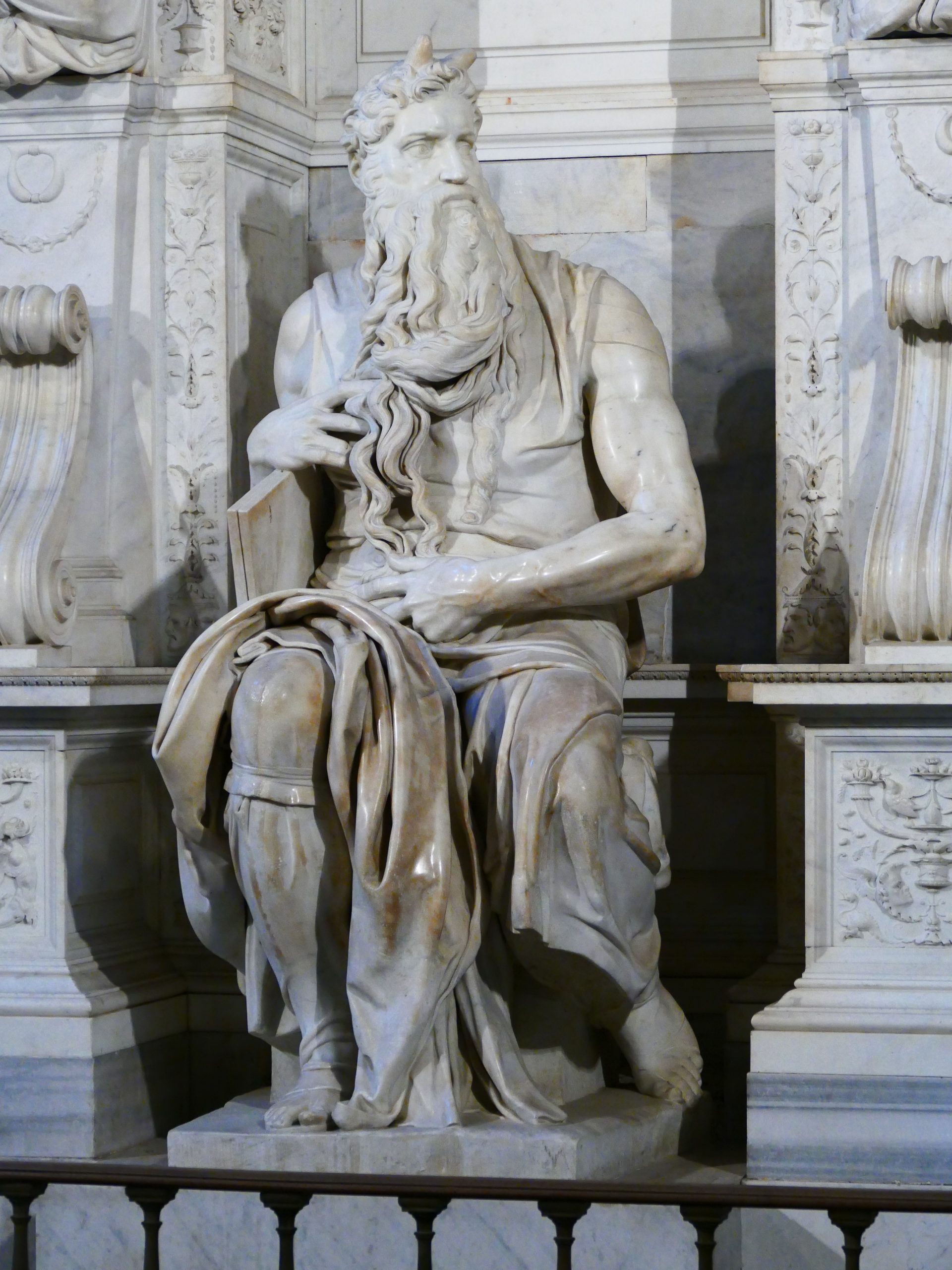
The Moses and Aaron Trick


This is written for remote mid-level managers (those that have both bosses and direct reports, so they are in the middle) that face problems where the bosses want problems solved but they do not want to involve your direct reports in the problem-solving.

Said another way, the bosses do not want to be honest that they are human, don’t know all the answers, and struggle like all of us with image, reputation, and honesty.

So here are the characters in our trick. Pay attention to who is who.

Your bosses will be the people seeking enlightenment. They need to solve a problem and look amazing doing it. They need the heavens to open and for the solution (so obvious!) to come beaming down to them. They will receive all of the sunshine and glory in this model. Thus bosses = ancient people of Israel, they seek direction or answers.

You are mid-level management. I only define that as someone who has a boss or bosses of your own that you answer to AND you have people who answer to you. There can be many middle levels–it doesn’t matter how many levels for this trick to work.

You are Aaron, you are the speaker, you talk.

The direct reports or the hoi polli are your front-line workers that have direct hands-on with the problem. They report to you. Because they are front-line, they know the problem the best and thus, they are Moses.

Your direct reports are Moses, they hold the knowledge or enlightenment.

Got that? It’s a bit inverted in terms of “power” but it’s correct in terms of “enlightenment” or “who knows what.”

So, pre-pandemic, web conferencing or conference calls were not very common as they are post-pandemic with Zoom being now a noun and verb in addition to a brand name. In my situation we primarily used phone-in conference calls but at the end of this article, I’ll give some suggestions on how to do the Moses and Aaron Trick with Zoom.

Here is the scenario: your institution faces a problem. The front line workers know the most about it, but the bosses have been tasked with finding a solution. The bosses, however, do not want the hoi polloi in meetings with them, so front line direct reports are excluded from problem-solving meetings. Thus, only mid-level managers will be there to represent the front line. So that is a key characteristic cluing you into this situation. You have to be the lowest ranking person in the remote room to successfully use the Moses and Aaron trick.

We used a phone conference calling system for meetings (a 1-800 number plus a passcode). If you were invited to the meeting, you received the passcode in the meeting invitation. What I knew about this system is that attendance WAS tracked and could be traced (this is an example of the tech back doors that I often detect at my workplaces). But I also knew that almost no one ever looked at attendance logs of internal-only meetings. There were “beeps” on the line when someone entered or left the line but again, few presenters were nimble enough to remember what codes to press on a keypad to get the number of current attendees.

So, you could sneak someone in.

I sneak in my Moses.

When the meeting conditions were just right, I prepared my Moses to join the call. We staged it so that they would dial in just at the same time I would and in case there was any question as to “who just joined us” I would make some excuse about hanging up accidentally instead of hitting mute and that I had entered twice. In truth, the second beep was my Moses entering and staying on mute. I also had my Moses especially situate themselves in a quiet situation just in case the mute broke (yes, mutes can break.) Final set up item: Moses would be on instant messenger with me.

Ha! You really need to pick up these remote tips, people!

In my cases, I was not on camera but you can be (I’ll explain how later). So I could tip-tap away on my keyboard during the meeting and even if the sound of the keyboard came through the call, typing during calls was very normal for my bosses.

They were somewhat famous for instant messaging back and forth all day to each other to the point of obvious distraction during our supposed 1:1 phone call check-ins, but whatever. My point is that typing was not considered rude or out of bounds. I generally observe now that it is even MORE true now.

I knew I was going to be asked detailed questions about the problem during this problem-solving meeting (how many? Did we try…? What shade of blue was it?) so my Moses would IM me the answers that I would then talk (I’m the Aaron, the talker.)

This trick worked brilliantly!

When it came time to leave, I would just do a “pretend fumble” again so that they would not notice 2 departing beeps (if they noticed at all).

Before I tell you the next story, you might be thinking “Oh but, this seems dishonest!” You are right! It is! I’m using a tech loophole–they are not checking that 6 people are on a 5 person call. But I would like to point out that the solution is for the bosses to be OK with hoi polloi being in the room helping problem solve in the first place!

It is about bosses not wanting those direct reports to see or hear them that represents the true problem here. I’d point out that some organizations don’t have this problem. Disney is famous for asking their front line employees for proposed solutions when they face a problem. It is possible to ask for help and NOT lose face as organizational leaders.

And my next story starts right there. My workplace was facing a problem and the problem-solving meetings were being drawn up. My direct reports knew that they were not being invited and they wondered–why? What’s the big deal? What is discussed in these secret meetings that they cannot be witness to?

It was about to be revealed to them.

Now, I have to take you on a very short side story where karma comes to visit:

One day, my boss was unhappy with a team metric and instructed me word-for-word to bring the hammer down on my team. I did so. One of the team members went to HR and said “Our boss is creating a climate of fear.” HR called my boss and said “We have complaints about your underling creating a climate of fear.” In an evil genius move, my boss said “I’ll handle this.” He raked me over the coals. I reminded him that this ‘climate of fear’ was instigated and approved of by him. He kicked that away, saying it was all my fault. He then returned to my team and reassured them “I’ve warned her. You can trust me.”
Meanwhile, I went to HR and explained my side of the story. When I said “Yes, I created a climate of fear–because my boss told me to.” HR said “Oh well, he must have been having a bad day that day.” I said “Yes, but he has the power to target my bonuses and pay raise with his bad day– that would be highly unfair.” (Not to mention the damage done to my team by said fear climate). HR was unconcerned. And my boss did use this as an excuse to target my pay. I received no manager bonus and no pay raise that year. Boss 1, me 0.


But what ho! Here arrived a need to do the Moses & Aaron Trick with this exact team and with the team leader who went to HR about me. Even though my team was wrong about me, I knew they had been misled, so I harbored no ill will towards them.

So here we go: I prep for Moses and Aaron Trick because I needed it for a separate work problem.

I prepped this new specific Moses to join the call. The call was cantankerous. Multiple departments were casting blame. It’s your fault! No, it’s your fault! At one point, a different department lobbed a particularly tough accusation at me and my Moses/team “They are lazy. They are not doing their work! They should all be written up for not doing their jobs!”

My Moses heard this. It was about HER.

And my boss heard it too. Before I could get a word out, he immediately kow-towed to the accusation “You know, you could be right. Maybe they are not doing their jobs. Maybe I should have them written up. Hmm.”

My Moses had a FIT on instant messenger with me.

“How dare he? We are working 60 hour work weeks on this problem!…” and further protests.

I sat there aghast and covered my mouth to stop my giggling. I had just seen the boss that had so happily driven the bus over me a few months prior now drive the bus over my Moses.

Karma, Fate, Call It What You Will.

My Moses was devastated. I still laugh about the entire incident with tears in my eyes (it was ridiculous and terrible) because I snuck her in. I could have witnessed my boss drive the bus over her on my own, but instead, she heard it directly from him. He never knew that she heard.

After the meeting ended, I kept working on the problem and life continued but I have not forgotten that my Moses really got an earful that day.

How would you do a Moses and Aaron trick now with Zoom and cameras? If the meeting is in a non-Zoom platform, there are still plenty of ways to be anonymous or conceal your identity online.

If you are at a workplace, of course, you MUST assume that all keyboards have keyloggers (they probably do) and all internet traffic is watched (it probably is) and use a different internet connection but I hope you are wise enough to figure that out.

Just yesterday, video dropped of the Better.com Zoom call layoffs. From the video, it’s clear it was captured from a phone that was watching a laptop. Basically, a well-backed up smartphone is a good alternative access system for meetings.

What about typing your IMs during the call? I recently observed that it seems to be acceptable now, without question, that people will be typing during meetings. I’m happy to see this– as kinesthetic actions during meetings can really help some of us that need to move to stay mentally active. It might be assumed that you are typing notes. Just be nimble with explaining your typing. 🙂

If you made it to the end of this, bravo! Remember that the Moses and Aaron Trick is about problem-solving for mid-level managers. Sometimes you are stuck between the folks that know the answers (but can’t enact the power) and the power holders (who don’t have a clue what to do). It has been done and I encourage you to use this trick if you need to.

I hope, truly, that you never do.