

From Myths to Principles Part 5: Myth: Learners Learn More
From Myths to Principles: Navigating Instructional Design in Immersive Environments
|
 |
|||||||||||
|
The
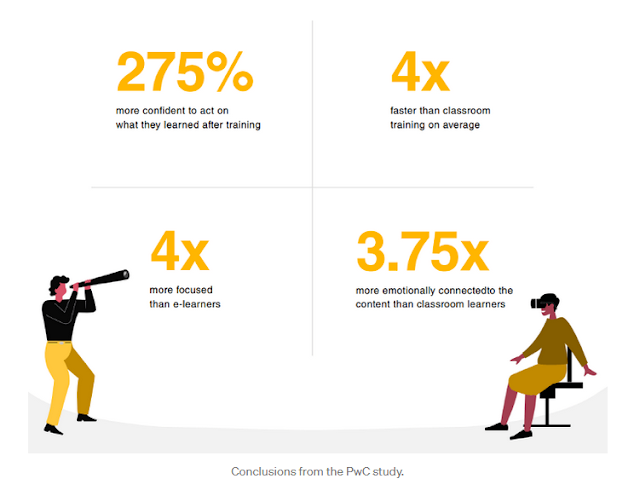
foundation of all learning, or child’s first book, by which a child will learn more in one month than by many others in twelve, Author Unknown, Date 1800. Source: Compositor, University of Birmingham Myth: Learners learn more in immersive experiencesThis myth shrouds itself within a cloak of research. Citations will state that learning in immersive experiences is somehow greater when pitted against an implied traditional learning approach. The claim could appear as retention, but it is related to how well the learning was accomplished when measured up against learning objectives or a final goal. When referring to the PricewaterhouseCoopers (PwC) report results mentioned earlier in this article series, Scott Likens claimed, “We found the realism and performance feedback in virtual reality simulations helped people learn faster and retain more information around soft skills,” (Zielinski, 2021, para. 9). He claimed they retained more information. This specific claim has been repeated in academic literature, which stated, “Studies have found that students who use XR training are more engaged with the content, display more confidence with the material, and retain more information than students who use traditional training methods.” (Rode, 2024, para 2.) A close examination of the PwC report, however, reveals that the claim was unsupported within the report’s own data. When comparing information retention in VR versus an e-learning course, the authors “quickly discovered retention scores were inconclusive, as the delta between pre-and post-assessments in each modality was not significant” (Eckert & Mower, 2020, p. 44). Thus, there was no statistical difference between VR-based, e-learning, and traditional classroom learning.
The report therefore does not provide statistical evidence of more or greater learning within VR, yet it has been cited in academic publications (O’Dwyer, 2021, Etienne et al., 2022, Jelki et al., 2022; Bäckelin, 2023; Etienne et al., 2023; Lønne et al,. 2023) and touted in media outlets (Murad, 2023; Schwantes, 2020). For the dubious claims, the report has been debunked as untrustworthy (Neelen & Kirschner, 2020). There are similar claims about greater learning retained from immersive experiences. Advocates for digital twin campus environments claimed that they “create greater retention of the information that is learned” (D’Agustino, 2022, para. 5) and “students’ grades go up” (Victory XR, 2024, Who We Are).
In another example, the CEO of the Miami Children’s Health System touted that learners had 80% retention after one year after using VR, but traditional learners had 20% retention. A close look at the supporting documentation shows that the CEO actually said that the difference between VR learners and traditional learners can be the 80% to 20% difference.
 However, the CEO’s statement did not refer to any published results; it was opinion. The CEO explained their claim by saying that, “The level of understanding through VR is great because humans are primarily visual, and VR is a visual format” (Gaudiosi, 2021, para. 4). Cue learning styles!
 Nonetheless, the quote of 80% retention has made its way into academic research (Iacono & Vercelli, 2019; Mathew & Pillai, 2020; Ternès, 2018). Some claims are extreme. One keynote speaker, Alvin Graylin, speaking as a leader at HTC (a VR headset maker) declared that as a result of VR use in the classroom, “Every single child has the potential to be a genius” (Educators in VR, 2020, 23:33).
Justification for the greater learning or retention claims seems to be conjecture. Claims refer to how real an immersive experience feels to a learner. Returning to the PwC report, Likens credited “the realism and performance feedback…helped people..retain more information.” (Zielinski, 2021, para. 9). But long term studies measuring retention are hard to find within the body of academic literature. Some studies measure retention three weeks after the immersive experiences. Given that many of the examples of immersive experiences relate to hands-on disciplines like nursing or construction, things learned in immersive experiences would be needed on the job more than three weeks after the training. Hamilton et al. (2020) stated that finding “learning outcomes, intervention characteristics, and assessment measures associated with immersive virtual reality has been sparse” (p. 1). Beck, Morgado, and O’Shea (2023) pointed out that details of methods are missing so that outcomes become questionable, “Very few literature reviews focus on the educational practices and strategies used in immersive learning environments. Thus, the problem is that we are evaluating outcomes without a comparable way to describe the educational approaches that led to those outcomes” (p. 2). Lawson et al. (2024) completed a systematic review of immersive experiences and found that research studies rarely isolate instructional methods and conditions when describing research studies and thus impact real world classroom decisions. Meta analyses are starting to illuminate this area. Akgün and Atıcı (2022) observed that there was only a moderate effect on learner achievement after surveying 31 studies. Kaplan, Cruit, Endsley, Beers, Sawyer and Hancock found that “XR does not express a different outcome than training in a non-simulated, control environment. It is equally effective at enhancing performance” (2020, p. 1) Some researchers are starting to incorporate machine learning and artificial intelligence into this challenge in order to determine what the published records states about immersive experiences. Markowitz et al. (2024) recently surveyed 196,734 paper abstracts with this method.
|