Tag: Research

  • Analysis of The Total Economic Impact™ Of Mixed Reality Using Microsoft HoloLens 2

    Analysis of The Total Economic Impact™ Of Mixed Reality Using Microsoft HoloLens 2

     Analysis of The Total Economic  Impact™ Of Mixed Reality Using Microsoft HoloLens 2

    (Image: Crowds gathering outside New York Stock Exchange Source: https://commons.wikimedia.org/wiki/File:Crowds_gathering_outside_New_York_Stock_Exchange.jpg)


    This report, The Total Economic Impact™ Of Mixed RealityUsing Microsoft HoloLens 2, dated (November 2021) came through my LinkedIn feed in this post:


    What most caught my eye was the fourth bullet:

    Mixed reality increased
    training efficiency by 60%, saving $1,440 per trainee while improving
    knowledge acquisition and retention. 

    I posted my response:

    With
    respect, a company that sells a product that then claims the product
    increases training efficiency with these kinds of numbers is to be
    doubted.

    In the case of the 60% increase, my eyes land on the
    table on page 21 and the source of the 60% increase in task efficiency
    data is “Interview data”, not quantified data. That means the
    interviewees that Microsoft picked provided verbal estimates to the
    interviewers. While the report takes great pains to describe how the
    results were calculated– and I respect that– this is a “commissioned
    report” (page 1)– that was paid for by the very company selling the
    product
    .

    Long term, results like these do not hold up.”

    To which, an Associate Fellow at Lockheed Martin replied:

    While the numbers seem outlandish they are very real based on our findings.

    We
    use mixed reality to build spacecraft and see well over these numbers
    (~93% reduction) in touch labor. This was analyzed across 10
    manufacturing sites and numerous spacecraft manufacturing programs.

    Technicians consistently finish 8 hours worth of traditional work in 45 minutes, and other companies are seeing similar results.

    For
    training we see an 85% reduction in training time. Mixed reality also
    offers greater comprehension than traditional methods.

    While the numbers seem incredible, they have been validated with more than four years of shop floor implementation.

    If you would like to chat details, just let me know. I would be happy to provide insight to our findings.

    I did not reply further at the time to this post because I was not actually arguing time-based measurements. I was arguing improving knowledge acquisition and retention via task efficiency– admittedly their own squirrely wording. Said another way, claims that users learned more

    This blog post is, in part, my response.

    (more…)

  • 2 out of 4

    2 out of 4

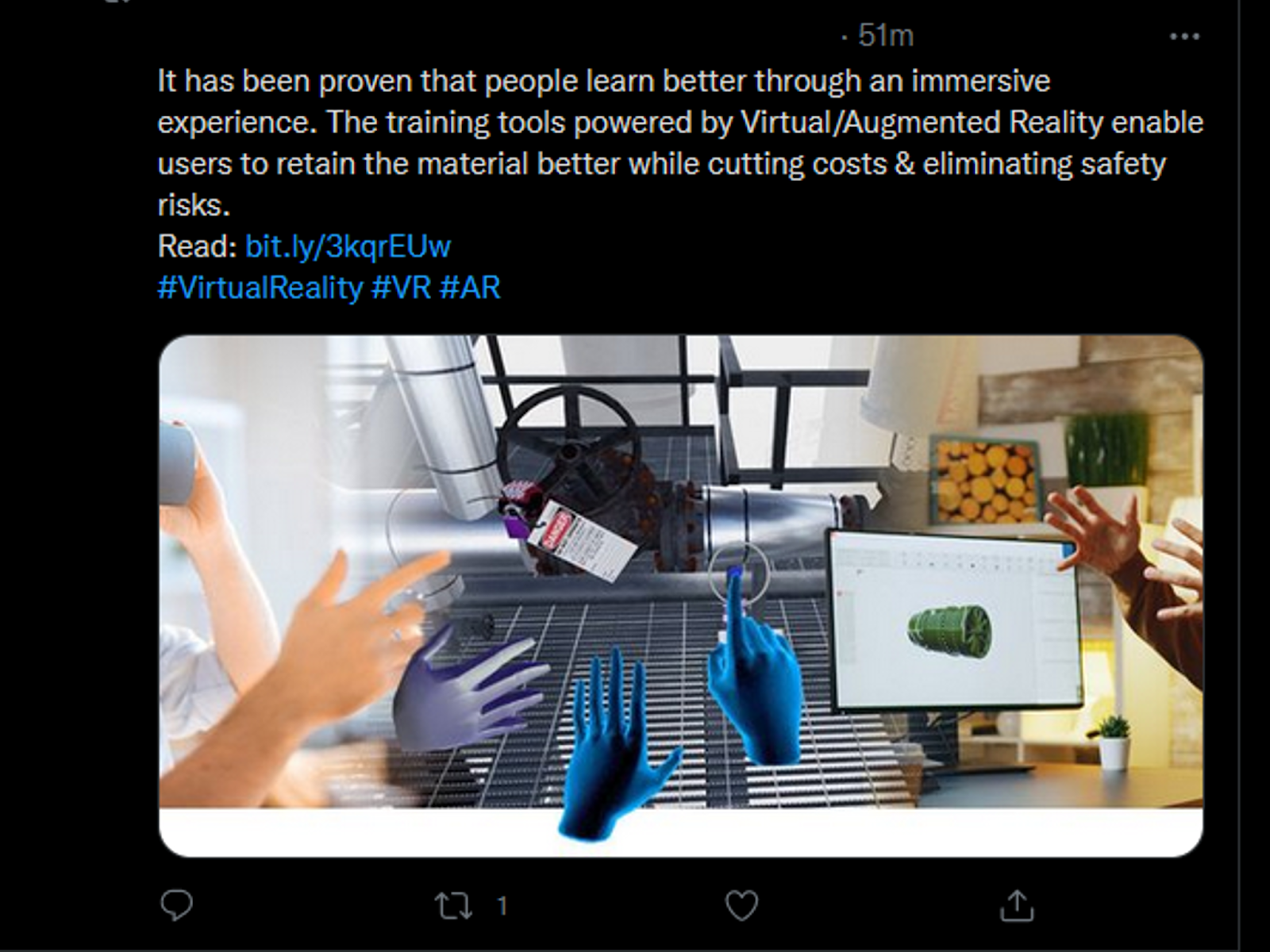
     Twitter post dated November 29, 2021.

    “It has been proven that people learn better through an immersive experience. The training tools powered by Virtual/Augmented Reality enable users to retain the material better while cutting costs & eliminating safety risks. Read [link].  #VirtualReality #VR #AR

    So there are 4 claims here:

    A. people learn better through an immersive experience

    B.  enable users to retain the material better 

    C. cutting costs

    D. eliminate safety risks.


    And here’s my vote on these claims: 

    A. people learn better through an immersive experience – No. 👎

    B.  enable users to retain the material better  – No, because ‘better’ is flaky. I’ll shoot at “retain” too. 👎

    C. cutting costs – Yes. 👍

    D. eliminate safety risks.- Yes. 👍


    The link provided goes to a business website that is selling developer services to make things in Unity.  On the front page, there are NO claims about learning that I can find at all.  So the “Read:” doesn’t seem to invite you to read more about facts supporting those claims. They are asking you to read all about how their business is cool.


    Overall. that’s a score of 50%.  Still, failing.


    Remember that I’ve pointed to how dangerous & misleading “hand waive” language is.  As soon as this started with “It has been proven that…” my hackles go up. 

    😦

  • Beware the VR Straw Man

    Beware the VR Straw Man

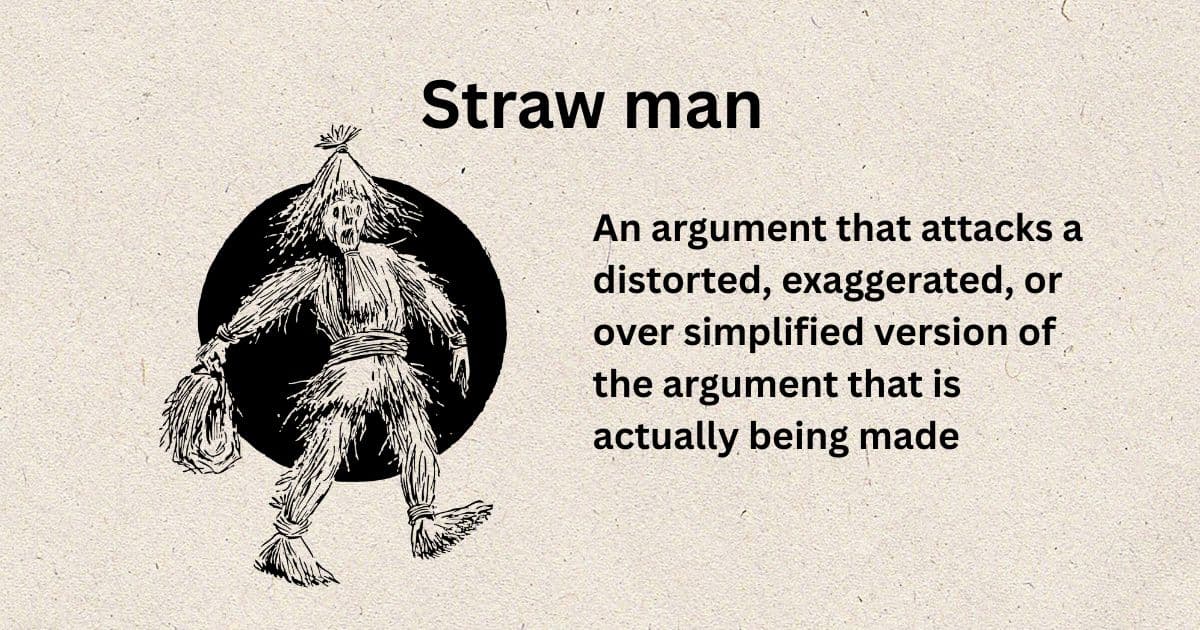
    Merriam-Webster’s first definition of straw man is a weak or imaginary opposition (such as an argument or adversary) set up only to be easily confuted. Said another way, a straw man is a type of logical fallacy where the argument is a false or fake version of the opposing argument that can then be easily broken down.  The straw man is meant to imply flimsy or weak. Think of how easy it is to tear apart a form stuffed with straw compared to attacking a real person.  

    When I was working on articles about poor virtual reality (VR) and learning research, I found 3 instances of myths surrounding VR learning & training:

    In each case, the myths were communicated by companies selling something in VR.

    That’s an AMAZING coincidence, yo.

    Too coincidental. 

    Yeah, it’s not a coincidence. 

    This is classic, slick, ‘don’t fall for the snake oil,’ from the snake oil salesman.

    Additionally, I’ll add my own opinion here: I’ve never heard these statements circulated about VR. These are three examples below with seven, five, and five VR straw man arguments, respectively.


    AIXR: 7 Myths and Misconceptions About VR Training

    1. VR Training Is Expensive, Especially At Scale
    2. VR Training Requires A Lot Of Space
    3. VR Training is Distracting and Counterproductive
    4. VR Training is Unhygienic
    5. VR Training Sessions Are Very Long
    6. All VR Training Makes Users Sick
    7. VR Training Isn’t Here To Stay

    Learning Solutions Magazine: Debunking – Top 5 Common Myths of VR In Education

    I honestly forgot name of company that put out this infographic, so I can’t give you the link.

    Capture of inforgraphic with title: Debunking Top 5 Common Myths of VR In Education
    1. It requires heavy investment
    2. You must have headsets 
    3. You cannot build VR yourself
    4. VR cannot compliment existing learning
    5. You cannot track your learners

    Learning Solutions Magazine: Debunking 5 Myths: VR-Based Training Effective At Any Age

    capture of headline: Debunking 5 myths: VR-based training effective at any age
    1. VR-based training appeals only to younger workers.
    2. VR is only useful for entertainment, not serious training
    3. You need a large space for people to take VR-based training
    4. VR training is prohibitively expensive
    5. Learners will feel isolated in a VR headset

    All of these statements above are VR straw man arguments. They are propped up only for the article to tear them down. However, here is a myth that I do hear all of the time: VR will revolutionize education.

    And here’s my response:

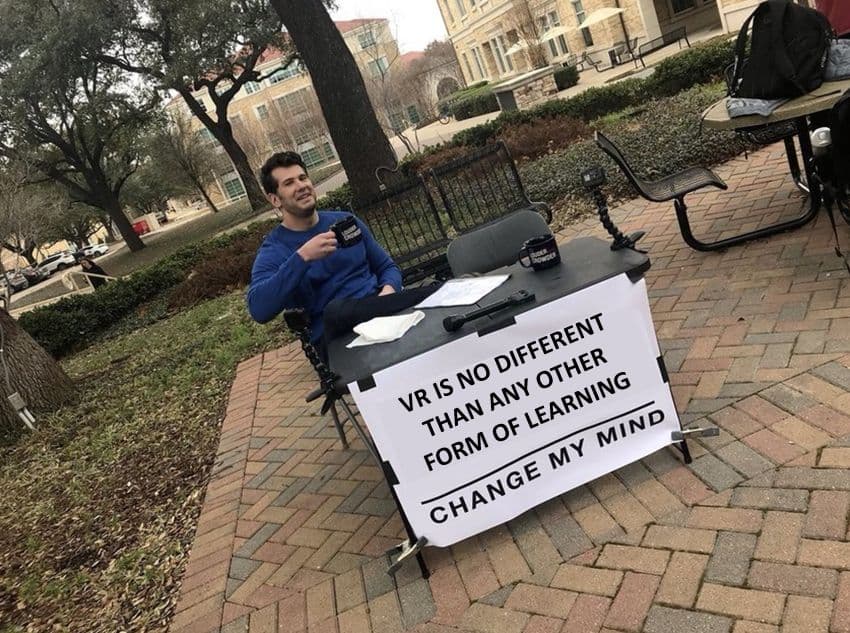
    Virtual Reality (VR) learning is no different than any other form of learning.

    Photo of man with poised coffee mug sits at plain outdoor table with poster. Text: VR is no different than any other form of learning. Change my mind.
    Come at me, bro.

    Remember that I’m for VR in education. It’s just that VR is not a panacea. It will be one more tool in our toolbox of media to use for learning. It will EXCEL in areas where it:

    • Saves time
    • Saves money
    • Reduces danger

    This is the Way.

    #VRMyth #VR #VirtualReality #Debunking #LearningMyths #VRForLearning #VREducation #VRIsNoDifferentThanAnyOtherFormOfLearning

    This article originally posted to LinkedIn on August 27, 2021. Updated with images as of February 18, 2026 because I don’t know, Google eats old images maybe.

  • Given equal results, instructional designers recommend the least expensive option. Or do they?

    Given equal results, instructional designers recommend the least expensive option. Or do they?


    To my regret, I recently deleted this sentence from my soon-to-be published book chapter:

    Instructional
    designers are ethically bound, that if all learning outcomes are equal,
    to recommend the least expensive, most environmentally sensitive, and
    most socio-culturally aware method.

    I was asked to provide references to back up this claim. Hmm…isn’t this considered a tenet of instructional design?

    Actually, isn’t this a basic truth about all designers everywhere? Part of the job of a designer is to

    A) know all of the options and

    B) know the strengths and weaknesses of those options which naturally leads a designer to

    C)
    present the options to their client, highlighting the designer’s
    judgment of BEST choice, even if that best choice is not what the client
    is hoping for.

    (more…)

  • State of XR 2020 – My Conclusions

    State of XR 2020 – My Conclusions


    After my participation of the State of XR 2019 2020 project, I
    have come to the following three conclusions. The overall results
    edited by iLRN will replace what was known as the New Media Consortium
    (NMC) Report for 2020, albeit for XR topics (Virtual Reality, Augmented
    Reality, Mixed Reality, Virtual Worlds) only. The following are the
    schisms present within XR that most fascinate me.

    Decorative image showing a venn diagram with text: Accessibility overlapping with Immersion saying "Almost Impossible To Find"


    Accessibility versus Immersion

    Again
    and again, when my fellow researchers and I examined sources, papers,
    and examples of XR being used in research and education, we found gaps
    in either of these concepts. It is as if you can have one but not the
    other.

    If a technology is accessible, it is not fully immersive.

    If a technology is amazingly immersive, it is not accessible to some population.

    This
    tension spreads far beyond a physical campus or location as well. If a
    university is investing in maker spaces, 3D printing, or immersive
    headsets (all items that are by definition limited to a certain space
    and time), the tradeoff is that only a few users can partake of an
    experience at any given time. This opens up the conundrum of do you
    invest heavily in spaces where only a few students benefit? To increase
    accessibility, do you design immersive rooms instead of VR headsets?
    Then, if you have a room, do you put more than one person in it? 

    To be clear, I feel that this conundrum can be overcome. We’re just not there yet. I feel that the solution lies in the fact that we (as in humanity) will be able to adapt to not fully immersive experiences and we’ll call that good enough.

    The Most Effective XR has the Highest Stakes

    Over
    and over, as I stack up the pile of research studies that show that XR
    is an effective conduit of education, the majority of studies right now
    are from the emergency services: medical, military, police, and fire. 

    Why is that?

    Putting this conundrum in another light, we know that immersive experiences heretofore have used fear as their greatest emotional coinage
    (2018, Bailenson). For example, put a learner into a training situation
    where they have to find and rescue a person from a burning building and
    then begin CPR, you will find that XR gives very impressive learning outcomes. 

    So
    why was the high stakes emotion of fear the same effective coinage in
    both situations? Was that destined to be XR’s first proven success?

    I don’t have a problem with this. Don’t misinterpret me.

    But
    I wonder what it is about ‘high stakes’ and fear that made this emotion
    the first to show it works via the research in XR? Bring humans into an
    experience where it feels scary, but make sure they remember that the
    situation isn’t real. The result becomes high entertainment value (i.e.
    Grand Theft Auto). My point is that there are many other emotions that
    we could pick for XR to ellicit/play on.

    We could have selected love as our emotion. What about wonder? Awe? Compassion?

    I’m not saying that there are not XR applications out there that don’t pull upon the non-fear emotions; there are. But why did fear get to the front of the “effective” line?

    The Role of Justice is Coming to XR

    If you followed my exploration of the History of XR series, you know that I was engaging in an exercise of future prediction. As such, I sensed two choices:

    1. All possibilities are possible.
    2. Patterns predict what will happen.

    After
    my study, I decided, as a designer, that choice #2 is the better bet.
    That is, if I could find a foundation upon which a feature, design, or
    product was built and *that* foundation was successful, then I would bet
    that the future feature would be successful.

    Here is a simple example:

    At this point, books
    are one of humanity’s greatest design successes. Many users want to
    read (there is market desire) and are more successful after reading
    (effectiveness is high). Books are predictable; they contain many
    patterns that are widely understood: title, table of contents, letters
    form words, words form sentences, sentences form paragraphs, paragraphs
    are contained arguments, books proceed through an argument from
    beginning to an end (in different directions depending on language).

    An
    example conclusion, therefore, is that future XR technologies *must*
    contain some element of text to be successful. Purely icon-based
    communication does not feel successful.

    But back to XR as an entire picture. Justice was built into the very first concepts of human’s imaginings of alternate realities.
    (Hello Plato!) I believe justice is still there, but it is very buried.
    I look for justice to show up more prominently in the future. There are
    already calls for XR to be a harassment-free or a prejudice free zone.

    I’ll be spending 2020 contemplating this and looking for examples of justice in XR applications.

    I seek to find justice in:

    AR
    – I look forward to the day when disciplines described today as ‘for
    those who have vision’ to be opened to all. For example, in science we
    know it is very hard to envision electron orbitals as
    ‘statistically-likely places to find electrons.’ AR will be able to add
    that sight to anyone studying the Periodic Table. Just the same for
    envisioning the flow of electrons in electricity.

    VR
    – Lucas Rizotto’s recently released Oculus game “Where Thoughts Go”
    introduces a much more subtle version of empathy, not a bang you over
    the head version.

    VW – Some quiet and yet profound results are coming from the social application of virtual platforms. Virtual Ability
    has been doing spectacular work for years on all kinds of physical and
    mental ability fronts. I look for this to open up as an increasingly
    socially acceptable form of support and thus, justice.

    It’s almost a new decade! I can’t wait to see what the future does hold. See you there.

    #StateOfXR
    #Research #Conclusions #AccessibilityInXR #ImmersionInXR #XR #AR #VR
    #VW #Fear #HighStakes #Effective #Compassion #Awe #SocialSupport
    #Justice #EmergencyServices


    This article originally appeared on LinkedIn on December 23, 2019. Updated font and images on February 23, 2026.
  • A History of XR Cross Reality Part 6 of 6

    A History of XR Cross Reality Part 6 of 6


    Almost there! Only five years to go and then into the future, she writes and points like Doc Brown.

    2014 – Future

    2015 Google Cardboard

    Source: Wikicommons

    Google (again? They were just in Part 5) sends out Google cardboard in the New York Times (and other media),
    expanding the new idea– a cheap VR viewer where you use your
    smartphone and some special apps. Pluses: mass market availability,
    cheap, created buzz. Negatives: absolutely no hands. People want to do
    more than look, they want to touch.

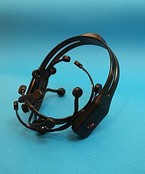
    2016 Emotiv

    Source: Wikicommons

    OK
    – I will go on record and say I do not like this product. It records
    the user’s brain waves when a certain action is requested (like open
    email) and then translates future instances of those brain waves as
    commands to repeat the learned action. Why don’t I like this? I cannot
    find many instances of telekinesis that have worked so far for humanity.
    Maybe in a future I can’t see, but for now, nope.  Just remember, there
    is no spoon.

    2016 Mobile World Congress – Facebook gets into the VR action. 

    It is interesting to note that when very large corporations make steps into a certain technology, all of our heads should be turning. 

    Facebook’s
    virtual world Horizon (once called Spaces) just opened in October 2019.
    Horizon so far doesn’t seem to be getting a warm reception. [Update: Horizons was set to shutdown and then quickly backtracked this decision in 2026.] 

    This
    invention represents an inflection point in technology where
    we double back on ourselves and create a conundrum. When asked if they
    would utilize a virtual world to ‘be’ (embodiment) with their friends, I
    see most regular users of Facebook shying away from the concept. These
    are the same users that lived totally without Facebook…uh…before
    Facebook. As such, they were synchronously and physically with
    people before. Being with people should not, by itself, weird out this
    population. So why the hesitation near this concept now? Are we
    ‘friends’ with people and do things within Facebook that we would not do
    when in-person with them? #Research needed here.

    2019 January – Apple patenting new gesture capture devices? 

    Maybe?
    As I’ve said though, no need for gloves or devices attached to people.
    Ditch that idea. New gestures to mean new things though?? [Edit: I’ve deleted and now downplayed Apple here, they did got for a high end “Pro” headset…that didn’t do so well.]

    2019 October – AWE conference in Munich #AWE2019

    The headset detects hands. At the time, cool.

    2019 – Magic Leap

    I don’t love this product. Why? See my Future of XR Headsets article. Magic Leap can be redeemed in my opinion though. I will wait this out. [Update: Magic Leap died in 2024 and been resuscitated in 2025.]

    2019 – Microsoft Hololens 2

    Excellent
    product. Why? Because the person looking at the user can see their
    eyes. Besides what I wrote about in my Future of XR Headsets article,
    Microsoft has taken a page from their own (MS Office) playbook for this
    launch. They are going directly to the business market. As such, there
    will be back-pressure into education to prepare learners for the
    workplace. This product has many of the characteristics of future
    success.

    2019 – example of room-based VR

    The plus here? Accessibility. Also, you could get more people into
    the same experience. So this is VR for more than one person.

    2019 – Microsoft demo of a hologram gives a partial keynote speech in Japanese, when the speaker does not speak Japanese at all. 

    Very much #thefutureistoday.

    2019 – Disney’s The Void – example of location-based VR. 

    Negatives:
    Must go to a location to experience this. Experience is not cheap.
    Positives: Increase in quality content (Star Wars!) and you can
    experience this in group (more than one at a time).
    [Update: The Void died in the pandemic due to financial problems.]

    So my predictions for the future of XR *based* on studying the past:

    • Text will be a continuing necessity. Put it everywhere and in everything you can. Text has over a 2000 year history
      in human interfaces; it is a winner. We need 3D fonts that can work
      “floating” and over the top of a variety of light and dark backgrounds
      and we need them yesterday.  #3DFonts
    • User-customized ways of interacting with large amounts of information. 
    • Tech not touching you that still works.
    • No need for gloves.
    • First forms of what works will likely be two technologies squished together. 
    • Seeing your user as a human will be more important than the tech itself.

    Interesting
    that phone and sound are almost non-existent in my XR research. I
    didn’t avoid it, but it also didn’t really show up as a necessary future
    player. I’ll keep cogitating on that.

    Keep an eye on science fiction. If you noticed, my sci fi sources dried up about 5 years ago and everything I shared was
    a technological innovation. What Sci Fi sources are predicting the near
    and far future? Battlestar Galactica? Handmaid’s Tale? The Marvel
    Universe? [Update: it was much more Handmaid’s Tale that I care to think about.]

    Amara’s Law: We tend to overestimate the effect of a technology in the short run and underestimate the effect in the long run.

    Going
    forward, I am very interested to trace the justice concept (remember
    Plato?) through this technology. It is significant that we can
    criticize much of the current XR environment as being made by young,
    white males in silicon valley. We need diversity and inclusion inside
    the workforce making XR.

    What comes next? I can’t wait to find out.

    Miss any of the prior history of XR and you are curious? Have at it!

    Part 1 380 B.C. to 1880 

    Part 2 1881 to 1909

    Part 3 1910 to 1965

    Part 4 1966 – 1998

    Part 5 1999 – 2013

    Part 6  2014 – Future

    Have any time points that you think I should include? Tell us as a comment!

    #Reality
    #CrossReality #MixedReality #VirtualReality #AugmentedReality
    #VirtualWorlds #Design #Transmedia #XR #VR #AR #ARVRinEdu #EdTech
    #Innovation #GoogleCardboard #Emotiv #FacebookVR #FacebookVW
    #FacebookHorizon #AppleGestures #iLRN #AWE #MagicLeap #MicrosoftHolens2
    #MicrosoftHologram #OmegaOphthalmics #DisneyTheVoid #Samsung2020
    #GooglePixel4 #AppleAR #Spectacles #SmellOVision #FutureTrends #3DText
    #YourUserIsHuman


    This article originally appeared on LinkedIn on December 2, 2019. Updated on March 31, 2026 with replaced images and I deleted some (now embarrassing) future predictions.

  • A History of XR Cross Reality Part 5 of 6

    A History of XR Cross Reality Part 5 of 6


    As a reminder, we are using science fiction as our time
    machine vehicle to examine how good we are at predicting the future and
    our intention is to predict the future of cross realities (XR).

    1999 – 2013

    1999 Tom Clancy’s Net Force

    I
    think I am probably one of the only writers that would put this in an
    XR history timeline. The namesake is a police force of a future internet
    where world citizens can relinquish country-based citizenship and
    become a citizen of the internet. But the prediction I liked was the
    description of how the internet could become an interface where the user
    could customize their interaction with it. It is hard to describe (read
    the book!). I find that prediction really tantalizing. The
    closest reality we have right now is the fact that everyone’s home
    screen on their smart phones is different, but this interaction with
    large data sets is still in front of us. More on this topic in 2007.

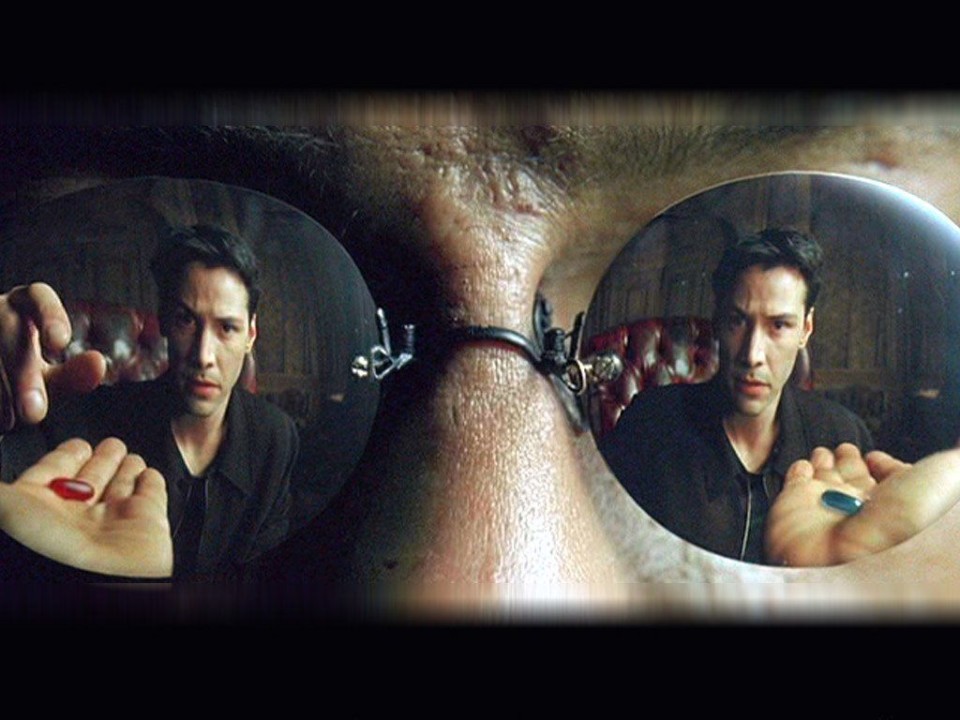
    1999 The Matrix – considered the first truly dark interpretation of the power of the internet. 

    Capture from The Matrix. Neo comes to grips with the figurative Matrix.
    Source: IMDB

    In this story, the internet is a place to escape from. Take
    one more look at that date: 1999. We’re really only about four years
    after the big 1995 America Online expansion of subscribers. Only four
    years and we’re already starting to suspect that this internet thing is
    something to be wary of.

    2002 Minority Report – Gloves used to manipulate screens and displays. 

    Source: IMDB

    I
    agree with the futurists that say that this vision of screens and
    displays will be accurate (floating in the air, perhaps only visible to
    the direct user). However, I predict: ditch the gloves.
    You won’t need them in the future. Radar will be able to detect your
    finger location in real time, so you don’t have to wear a device on or
    in your body for this functionality.

    2003 – Birth of Second Life – an immersive persistent world. 


    It’s still around. But multiple iterations of virtual worlds now exist.  

    2007 The Croquet Project.
    This is a now defunct project that basically embodied Tom Clancy’s
    customizable browser. I love the idea. I still think that versions of
    this idea will arrive in the future.  (Sorry the picture below does not
    come close to showing what it was. It’s hard to use images to describe
    this.)

    Source: Wikicommons

    2007
    – The first iPhone. Hard to believe we’ve been through all this history
    and only just now did we arrive at the first smartphone.

    Source: Wikicommons

    2010 – The first tablet, the iPad. 

    Source: Wikicommons

    I
    didn’t originally plan to take us directly from Apple launch of iPhone
    to launch of iPad, but I would like to show the likely user experience
    pathway between these two items. Let’s pretend we are in an Apple
    meeting room in 2008. We’re asked “What are our users experiencing?” The
    report is “Well, they like pulling up the internet and messaging from
    wherever, but still when they get on a (frequent) business flight, they
    lug along their full laptop (for work files), a book (for reading when
    they have a few hours ahead), some magazines (for light reading during
    short delays) and something that might play a few very small videos.” So
    Apple sees 3 different devices:

    A phone – that does what phones do, and a little more

    A laptop – that carries huge files and has a keyboard, but is otherwise clunky to carry

    Print media & some stored music – stored on a device that does ONLY that function

    So the iPad is the combination of those three needs. You might remember that the iPad was not launched as a phone replacement though.
    Need a phone for communication? Actually, not so much. We now know that
    smartphones are used for phone communication 5% of the time. That’s 95%
    of the time they are not used as phones. The iPad allowed all of those
    other needs to be met. Remember that Disney robot vacuuming, but the
    true future was the combination robot vacuum. The combination – put
    technologies together- wins again!

    2013 Microsoft Kinect – Defunct but considered a commercial success at 35 million units sold. 

    Source: Wikicommons

    Personally,
    I love this device for the accessibility. Nothing touches the body! You
    could be in a wheelchair and use this. You could not have hands and use
    this. Love this idea! I pin this as a VERY future workable idea: devices that do not need to touch you.

    2013 “Modern” smartwatches born.

    2013 Google Glass – another defunct innovation

    Source: Wikicommons

    Interesting
    to note the privacy backlash that happened in 2013. Everyone was
    concerned that the camera on the Glass (wore by the user) would be
    watching & recording them (not the user). Fast forward to
    2019 and people whip out their phone, camera, & filter in a second!
    My, how times change!

    [Update from 2026: The backlash against Meta’s AR glasses grows.]

    In case you missed the other articles in this timeline, here they are:

    Part 1 380 B.C. to 1880 

    Part 2 1881 to 1909

    Part 3 1910 to 1965

    Part 4 1966 – 1998

    Part 5 1999 – 2013

    Part 6  2014 – Future

    #Reality
    #CrossReality #MixedReality #VirtualReality #AugmentedReality
    #VirtualWorlds #Design #Transmedia #XR #VR #AR #ARVRinEdu #EdTech
    #Innovation #TomClancy #NetForce #Matrix #MinorityReport #ARGloves
    #SecondLife #CroquetProject #iPhone #iPad #MicrosoftKinect #GoogleGlass

    This article originally posted to LinkedIn on December 1, 2019. Updated font on March 31, 2026 with replaced images.

  • A History of XR Cross Reality Part 4 of 6

    A History of XR Cross Reality Part 4 of 6


    Decorative image of Earth from the Jetsons TV cartoon series.

    If you persevered through Parts 1, 2, and 3,
    well done! For me, the fun starts now as the timeline now includes my
    lifetime which means I can remember and attest to the impact that
    science fiction has had on our cross reality creations. We have color TV
    so let’s almost finish up the 20th century!

    1966 – 1998

    1966
    Star Trek and the communicator – a hand held device that could do
    several functions, all without cords, wires, or being at a
    panel/payphone.

    Photo of James Kirk character from Star Trek, holding a communicator device.

    1968 Heads-Up Display suggested for civilian, private use.

    1969
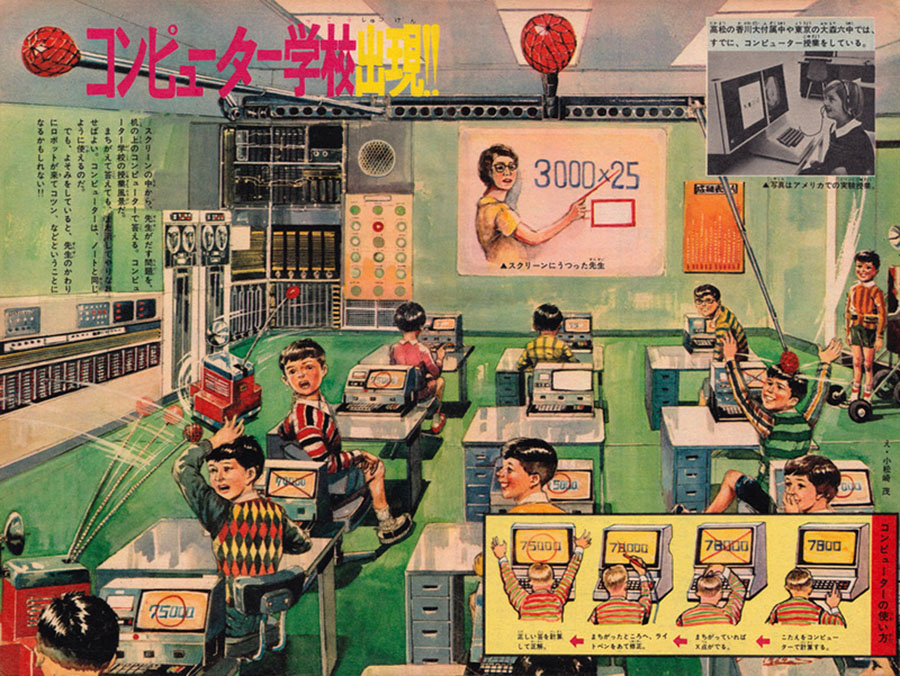
    Another paleo futuristic image, this one from Japan. This shows
    adaptive technology used for learning, no teacher in the room, and robot
    that doles out punishment.

    Futuristic art depiction of a classroom with a robot teacher.
    Source:  Shōnen Sunday, a Japanese Manga magazine, 1969.

    1972
    The first smartwatch, the Pulsar. I tried to find what definition
    ‘first smartwatch’ meant and I learned that it meant ‘you have to press a
    button in order for it to display the time’.

    Photo of The Pulsar, the original smart watch. Might not have been that smart, actually.
    The Pulsar, the first smart watch. Source: watchdepot.com.au

    1974 This
    video, One day, a computer will fit on a desk (1974) is excellent to watch. The world is predicted for
    2001.

    That’s
    Arthur C. Clarke. What is it about science fiction writers that have
    the ability to accurately predict the future? I think it’s first the
    broad spectrum of options that science fiction provides. Second, I think
    that they can also pick out design patterns that are viable. 

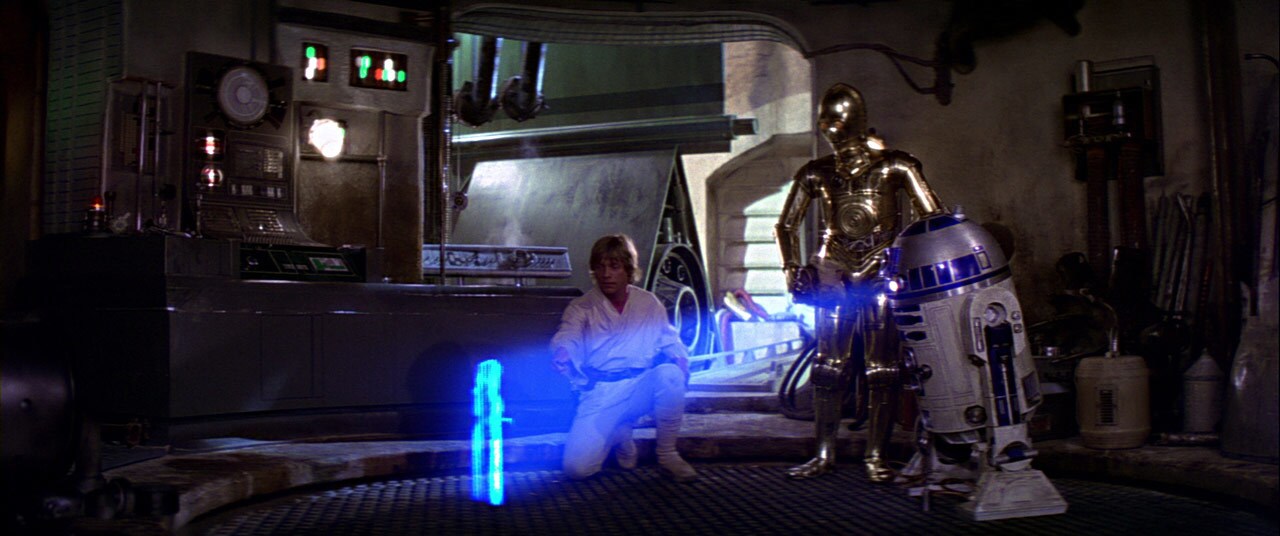
    1979 Star Wars – communication via recorded hologram.

    Capture of Star Wars scene where Princess Leia is relaying a message as a hologram.
    Star Wars, A New Hope, Leia as hologram scene.

    1982
    EPCOT opens. This is the now-closed Horizons pavilion which focused
    entirely on the future. I wanted to show this image because of the
    robots in the home. One robot in the kitchen is cooking and
    simultaneously cleaning. 

    Let’s zoom in on the “Butler” robot who is vacuuming.

    Photo of the Butler from the Horizons Epcot pavilion. He is vacuuming.
    The butler from the now-gone Horizons Epcot pavilion

    Notice
    how Disney has the Butler robot — who is capable of other
    duties–literally using a vacuum cleaner that would have been present in
    1960 or even 1982. So futurists often start by putting objects together to increase the functions. Need your floor vacuumed? No problem. Your robot will grab the vacuum and do it for you. One device will use another device.

    But
    today, we have Roomba vacuums. Disney was wrong. What happened? In the
    future that came to pass, the robot and the vacuum cleaner were put
    together into one device (and the butler’s duties are done by other
    robots in our homes, I’m looking at you Alexa). Take note of that
    pattern; what started as two devices actually became one.

    This is a fun image from 1982.

    Artwork by Alan Kay, Atari, depicting a future classroom with most students paying attention to their computer lessons. One is not paying attention.
    Credit: Alan Kay

    This
    was drawn by Alan Kay who was drafted to draw a vision of how Atari
    could be incorporated into the classroom. Bold moves for a game
    company– then.

    Note: “Here we see some of the earliest visions
    from Silicon Valley of the personal computer in the classroom. The
    future of education here is technological. It is branded. It is
    game-based. There are still desks in rows and clusters. And students
    still rebel.” (Watters, 2015)

    1992 Snow Crash novel by Neal Stephenson. 

    Snow Crash novel cover art with a man running down a blue digital hallway.
    Cover art for the Snow Crash novel by Neal Stephenson

    Stephenson
    writes of a virtual world, the impact of headsets, and a basic Sumerian
    language programming plot. Philip Rosedale credits his wife as handing
    him this novel to read that became the starting point for Linden Lab’s
    Second Life virtual world. 

    1995’s The Net with Sandra Bullock is a techno thriller of an isolated remote worker.

    Photo from The Net movie with Sandra Bullock. She is using a computer keyboard.
    Source: imdb.com

    Problems
    ensue when she discovers a tech problem and a large corporation goes
    after her via the only conduit in her life: everything digital. Without
    giving away the plot because I’ve heard some have never seen this movie (what?), there is a very interesting intersection with privacy, security, and medical records. Let’s just say that I’m very glad that this prediction of the future has not come true…yet.

    Part 1 380 B.C. to 1880 

    Part 2 1881 to 1909

    Part 3 1910 to 1965

    Part 4 1966 – 1998

    Part 5 1999 – 2013

    Part 6  2014 – Future

    #Reality
    #CrossReality #MixedReality #VirtualReality #AugmentedReality
    #VirtualWorlds #Design #Transmedia #XR #VR #AR #ARVRinEdu #EdTech
    #Innovation #StarTrek #Communicator #PaleoFuture #Pulsar #StarWars
    #Hologram #EPCOT #Horizons #Disney #Roomba #Atari #SnowCrash
    #NealStephenson #SecondLife #PhilipRosedale #LindenLab #TheNet
    #SandraBullock


    This article originally posted to LinkedIn on November 30, 2019. Updated on February 24, 2026 with better font and re-added images.

  • A History of XR Cross Reality Part 3 of 6

    A History of XR Cross Reality Part 3 of 6


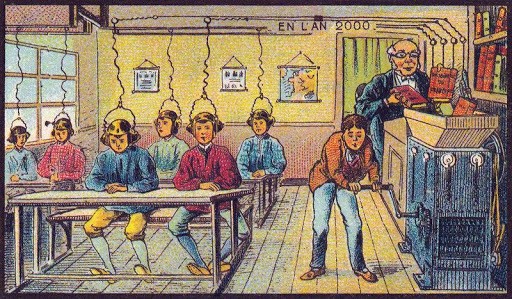
    Drawing by Villemard circa 1910 showing future schools where students learn via headphones as the teacher and assistant grind books into some kind of device connected to the headphones.
    France_in_XXI_Century._School.jpg: Jean Marc Cote (if 1901) or Villemard (if 1910)derivative work: TVJunkie, Public domain, via Wikimedia Commons

    1910 – 1965

    In 1910, the artist Jean
    Marc Cote, is commissioned to create artwork for cigar boxes showing
    humanity in the year 2000. Some of these predictions hit remarkably
    close the mark.

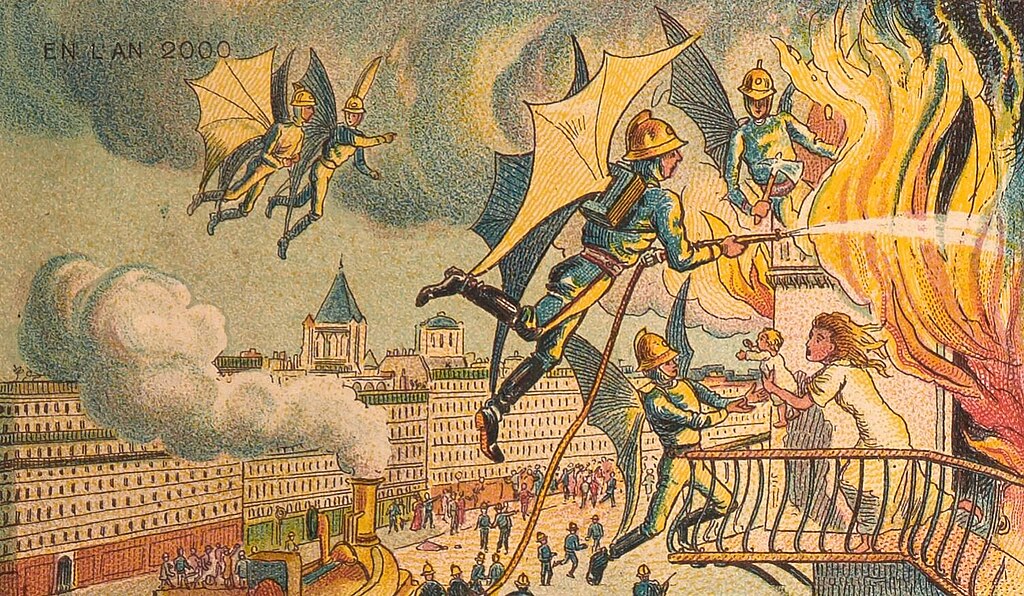
    Flying firefighters. No? You do know that departments are incorporating drones, right?

    Art drawing by Villemard circa 1910 showing fire fighters with wings fighting fires.
    Villemard, Public domain, via Wikimedia Commons

    Schools transformed by just listening-learning (blog banner image).

    Now educators and I can have a field day with just this image. I
    would ask a group of teachers-to-be to analyze what was correct in this
    prediction and what was incorrect. We could go on and on. The main idea
    here to get is that learning was going to transformed to occur only by listening. How ridiculous, right? And yet, three years later in real life…

    Photo of Thomas Edison examining a film strip.
    Thomas Edison examining some film. NPGallery, Public domain, via Wikimedia Commons

    “Thomas
    Edison famously predicted in 1913 that “Books will soon be obsolete in
    schools” – but not because books were to be ground up by a knowledge
    mill. Rather, Edison believed that one of the technological inventions
    he was involved with and invested in – the motion picture – would
    displace both textbooks and teachers alike.

    “I believe that the
    motion picture is destined to revolutionize our educational system and
    that in a few years it will supplant largely, if not entirely, the use
    of textbooks,” Edison asserted in 1922. “I should say that on the
    average we get about two percent efficiency out of schoolbooks as they
    are written today. The education of the future, as I see it, will be
    conducted through the medium of the motion picture… where it should be
    possible to obtain one hundred percent efficiency.” (Watters, 2015)

    From
    1913 to 1931, we have the age of radio. By 1931, television was
    demonstrated at the Iowa State Fair. Just two years after (so quick if
    you think about it) that the University of Iowa started to experiment
    with this medium. The first broadcasts were only video, no audio.
    Because televisions were scarcely available commercially and the signal
    was weak, users who could receive the signal tended to be with five
    miles of the campus and had built their own TVs from parts. If you
    wanted to hear sound along with the video, you had to tune in your radio
    at the same time. Descriptions of the image produced in these
    rudimentary TVs are actually scary (colors, shapes, very fuzzy). But it
    is a start!

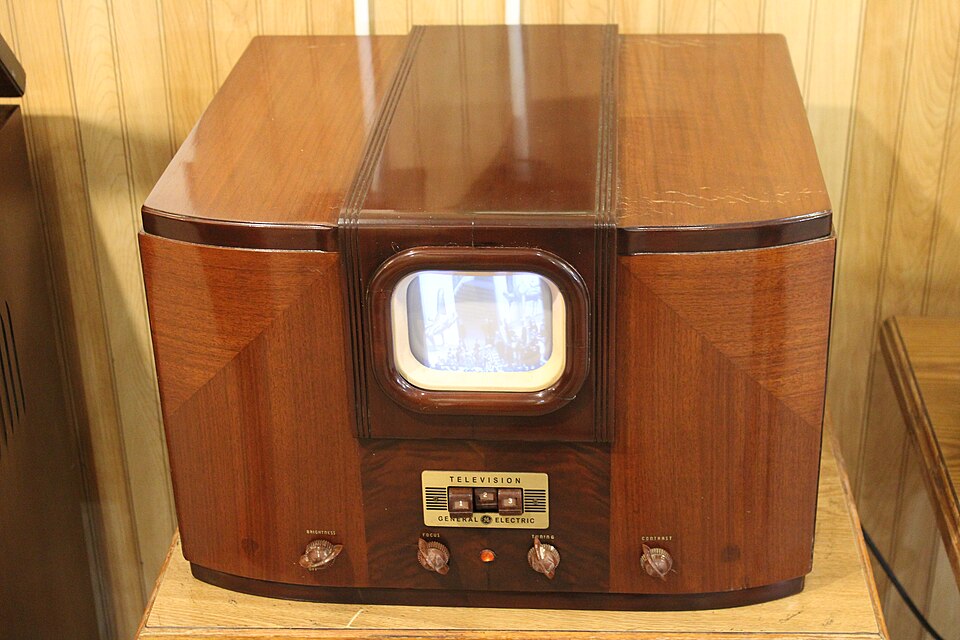
    Photo of early television set. Large wooden-type box has a small, curved black and white screen.
    General Electric early television set. DogsRNice, CC BY-SA 4.0 <https://creativecommons.org/licenses/by-sa/4.0>, via Wikimedia Commons

    Professors
    quickly figured out that they could broadcast radio from home and then
    did so. Students still had to travel to campus and sit in seats to
    listen. The next innovation was two way radio so students could ask
    questions of the professor.

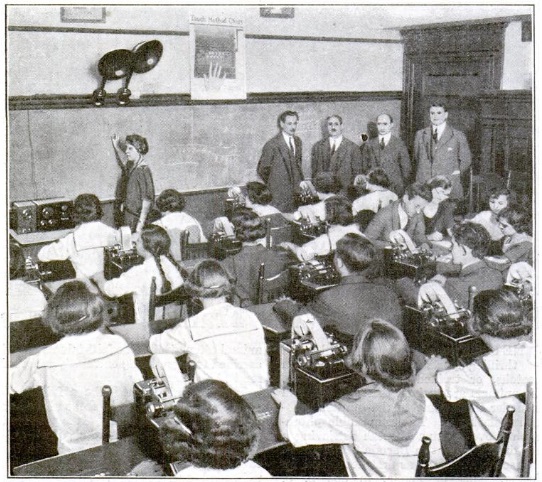
    Photo of Haaren High School's radio-based accounting class. Circa 1923.
    Haaren High School, New York, accounting class, by radio. Source: https://onetuberadio.com/2023/07/10/1923-distance-learning/

    1957
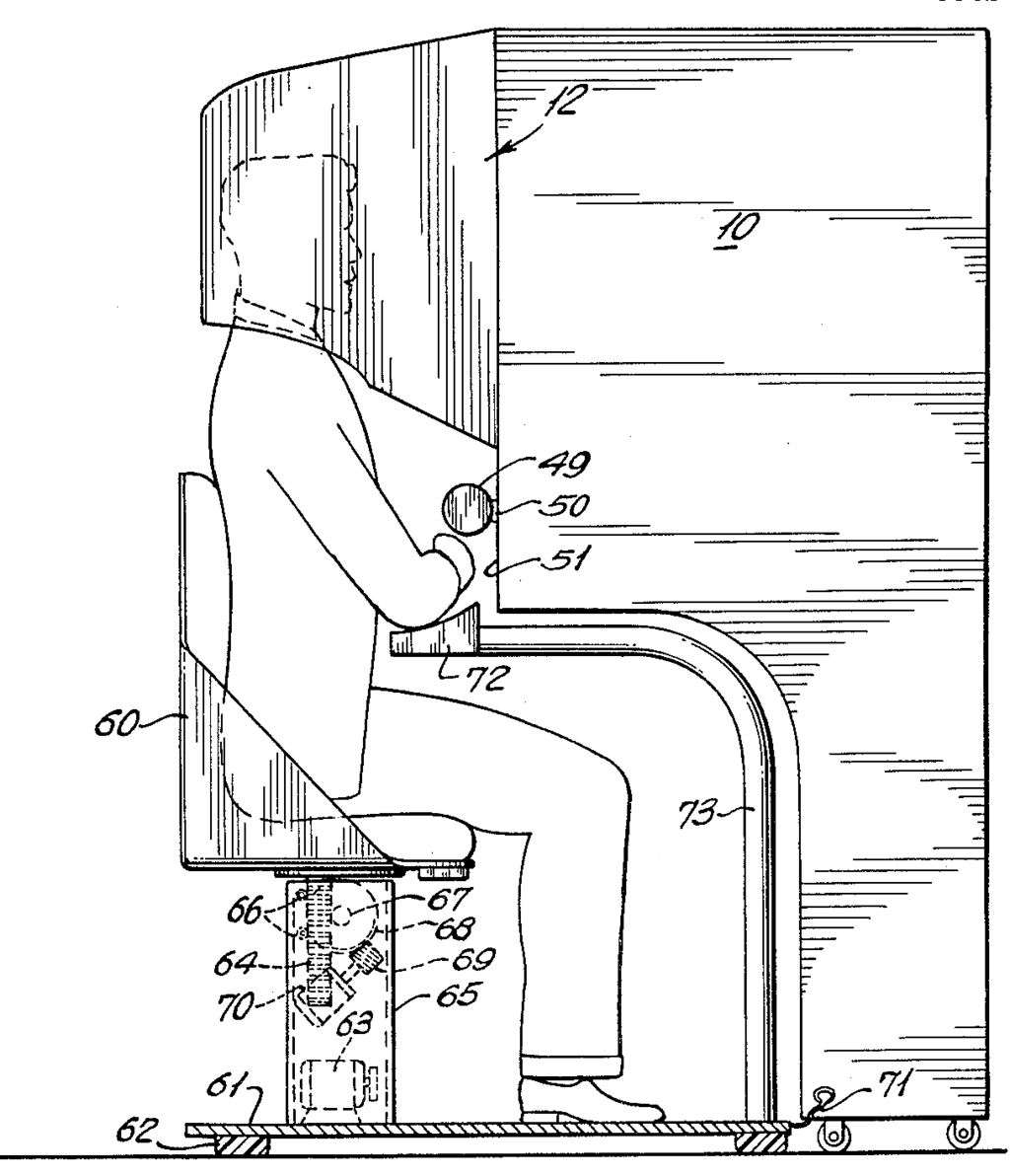
    The Sensorama by Morton Heilig is considered the first cross reality
    machine. It provided visuals, sounds, vibrations, and smells.

    Side view diagram of the Sensorama patent filing. Device surrounds the users head with images and sound.
    Sensorama patent filing diagram, side view.

    1958
    I cannot resist including this image of an electric typewriter because
    use of text is a common theme that carries through our history of XR and
    I do believe it will continue into the future. What is interesting is
    the boast that her grades will improve by 38% if you buy her an electric
    typewriter. Her grades will improve in what…typing class?

    Typewriter advertisement saying that a student's scores increase after using their typewriter.

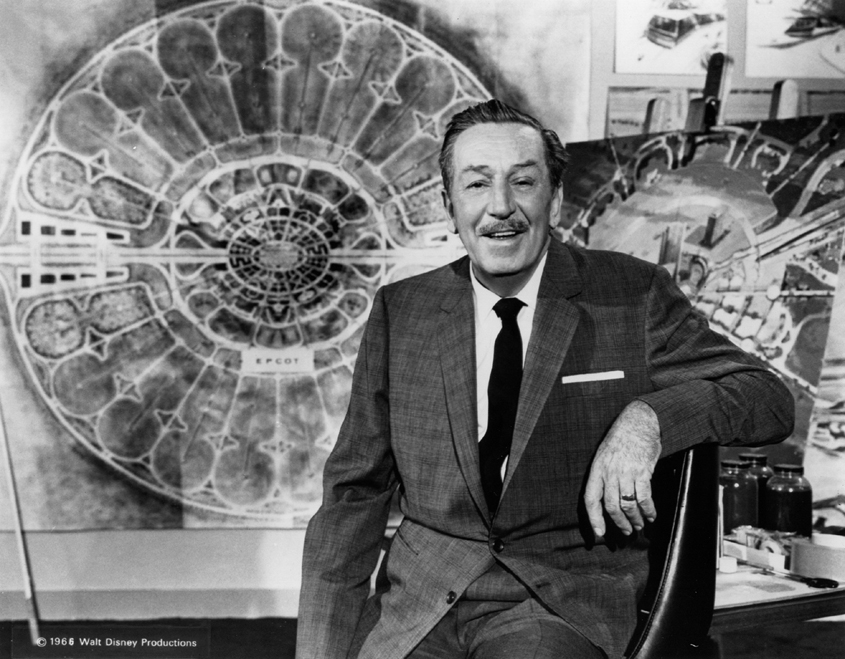
    1960 No history mentioning futurism would be complete without mentioning Walt Disney. 

    Photo of Walt Disney in front of a concept map for Epcot.
    Source: expolounge.blogspot.com

    In
    addition to his many other achievements, Walt Disney was a visionary
    futurist and he did not stop with just dreaming; he set in place plans
    to create the future. This particular image is associated with his plans
    for EPCOT, his Experimental Prototype Community Of Tomorrow. I’d like
    to point out that this image is from 1960 when Walt Disney was also
    planning his displays for the 1964 World’s Fair (what would become It’s A
    Small World and The Carousel of Progress). Walt never lived to see
    EPCOT open but his flair for looking into the future appeared in the
    rides as I will show in a future article. At this point, we note that he
    looked at the future with ideas about community, centralization of
    services, and the importance of neighborhoods.

    Also in 1960, the first videoconferencing was conducted. This gives us the sharing of live video and audio.

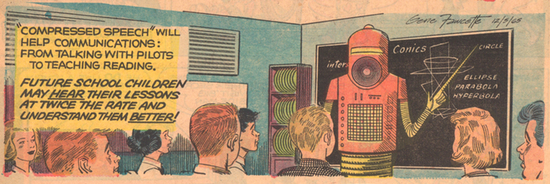
    1965 This paleo futuristic cartoon seems to predict a dire future of robots giving instruction. 

    Comic strip style art with a robot teacher in front of a class.
    “Robot teacher from the December 5, 1965 edition of the Sunday comic strip Our New Age” Source: Novak Archive.

    But
    look closely at the prediction: “Compressed speech will help
    communications. From talking with pilots, to teaching reading. Future
    school children may hear their lessons at twice the rate and understand
    them better!”

    Did they get that wrong? Ever noticed this choice at YouTube? [I’m not implying that learners can learn at a higher speed, I’m pointing to the availability of speeding up videos– a different thing altogether.]

    Capture of YouTube playback speed controls showing faster than 1.0 speed choices.
    YouTube playback speed choices

    1966 Have another cartoon prediction.

    Comic strip single panel with text
    Source: http://publicdomainreview.org/collections/france-in-the-year-2000-1899-1910/

    “By
    2016, man’s intelligence and intellect will be able to be increased by
    drugs and by linking human brains directly to computers.” 

    Well, my intellect is increased by coffee. I won’t speak for you.

    Part 1 380 B.C. to 1880 

    Part 2 1881 to 1909

    Part 3 1910 to 1965

    Part 4 1966 – 1998

    Part 5 1999 – 2013

    Part 6  2014 – Future

    #Reality
    #CrossReality #MixedReality #VirtualReality #AugmentedReality
    #VirtualWorlds #Design #Transmedia #XR #VR #AR #ARVRinEdu #EdTech
    #Innovation #Change #WaltDisney #Epcot #ProgressCity #JeanMarcCote
    #CigarBox #Year2000 #PaleoFuture #Sensorama #ThomasEdison


    This article originally posted on LinkedIn on November 29, 2021. Updated February 24, 2026 with a better font and re-added images.

  • A History of XR Cross Reality Part 2 of 6

    A History of XR Cross Reality Part 2 of 6


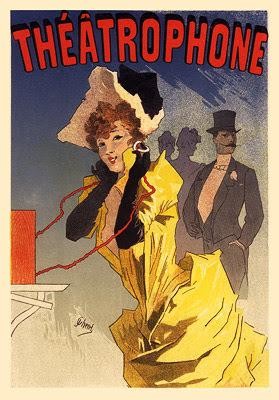
    Poster advertising the Theatrophone, a way to listen to a live theater show from another location.
    Jules Chéret, Public domain, via Wikimedia Commons

    As a reminder, we are using science fiction as our time
    machine vehicle to examine how good we are at predicting the future and
    our intention is to predict the future of cross realities (XR).

    1881 – 1909

    1881
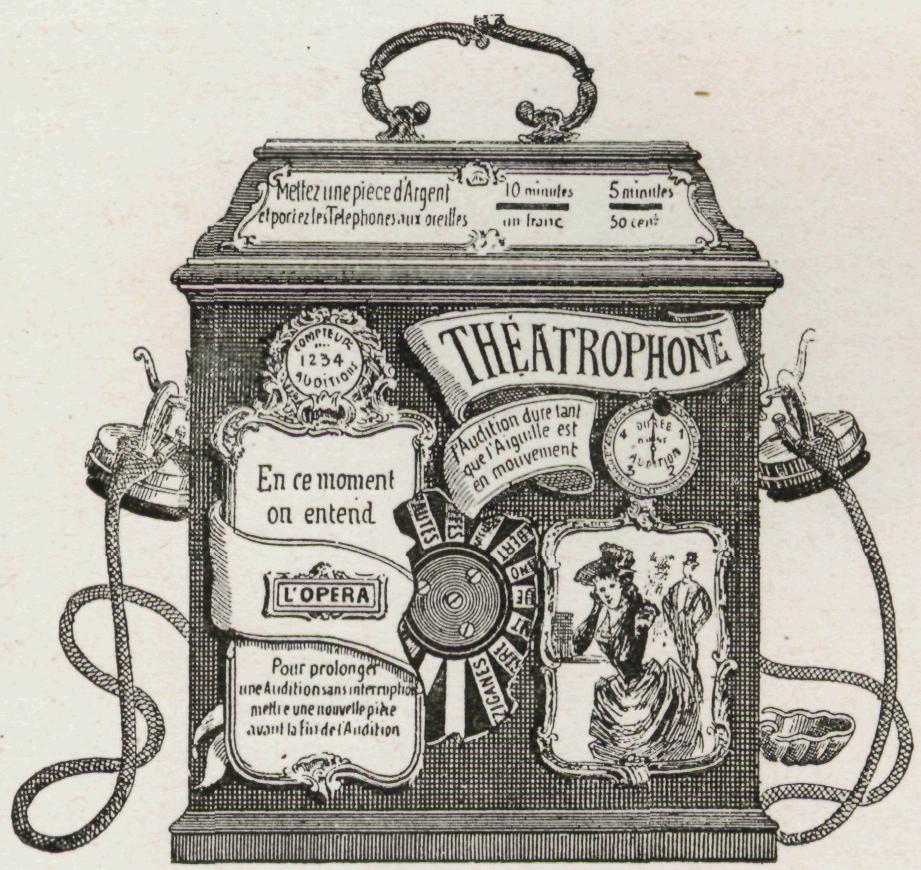
    – The invention of the theater phone (theatrophone) allowed users to
    listen to the live opera from a location up to 1 mile away from the
    theater. So you do not have to be there to be there.

    Artwork by an unknown artist showing a mini theater inside of a phone to advertise the theater-phone concept.
    Münzbetriebenes Empfangsgerät des de:Theatrophons. Circa 1892. Work is considered to be in the public domain in the US.

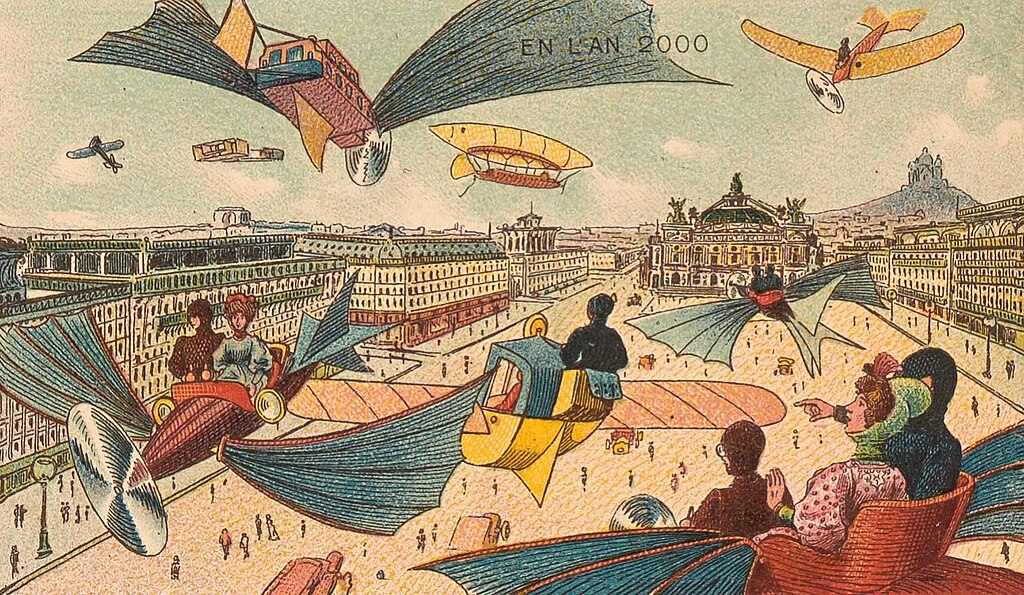
    1882 Paleo futuristic image showing opera attendees in the future year 2000.
    In case you are checking your watch, that’s 2 decades ago as of this
    writing. Did I miss fish cars? Lizard cars? Actually, never mind. I
    don’t think you’d find me going to the opera regardless of the kind of
    car.

    Art by Villemard, comissioned circa 1910 for cigar boxes, showing how people will attend the opera, in flying cars, in the year 2000.
    Villemard, Public domain, via Wikimedia Commons

    1895
    H.G. Wells published The Time Machine as a dystopian future view. Wells
    was living in rural England and was seeing the industrial revolution
    expand. He saw large factory cities swallow up young workers for long
    hours in dark conditions and producing to satisfy an seemingly
    insatiable consumer. He looked forward and saw a future where humanity
    would become split into two groups that would almost would never interact.

    Book cover for The Time Machine by HG Wells
    Author Herbert George WellsPublisher William Heinemann, Public domain, via Wikimedia Commons

    On
    the surface was a Greek god-like existence of Eloi. They all looked
    alike. (Shivers.) This group would be the consumers. They would benefit
    from this world order but simultaneously be oblivious to the price for
    their existence. They would be a small group, the 1%.

    The
    underground dwellers, the Morlocks, would run all of the machinery. They
    would be the producers, and the generations of being underground would
    allow for adaptations of evolution including large eyes, intolerance of
    sunlight, and flesh-eating.

    E.M. Forster read The Time Machine and rejected this future that H.G. Well foresaw.  

    However,
    before we get to Forster’s publication, we visit one other futurist. In
    1901, Frank Baum (of The Wizard of Oz) published The Master Key which
    contains the first known reference in writing to what we would recognize
    today as augmented reality:

    Book cover for The Wizard of Oz.
    William Wallace Denslow, Public domain, via Wikimedia Commons

     “On
    the other hand,” continued the Demon, “some people with fierce
    countenances are kindly by nature, and many who appear to be evil are in
    reality honorable and trustworthy. Therefore, that you may judge all
    your fellow-creatures truly, and know upon whom to depend, I give you
    the Character Marker. It consists of this pair of spectacles. While you
    wear them every one you meet will be marked upon the forehead with a
    letter indicating his or her character. The good will bear the letter
    ‘G,’ the evil the letter ‘E.’ The wise will be marked with a ‘W’ and the
    foolish with an ‘F.’ The kind will show a ‘K’ upon their foreheads and
    the cruel a letter ‘C.’ Thus you may determine by a single look the true
    natures of all those you encounter.”

    “And are these,
    also, electrical in their construction?” asked the boy, as he took the
    spectacles… All character sends out certain electrical vibrations, which
    these spectacles concentrate in their lenses and exhibit to the gaze of
    their wearer, as I have explained.”

    “It’s a fine idea,” said the boy; “who discovered it?”

    “It is a fact that has always existed, but is now utilized for the first time.”  [A wonderful Wizard of Oz-like sense of humor. Making fun of the fantastical, but obvious.]

    In December 1909, E.M. Forster publishes The Machine Stops. If
    you have a chance to read it, I encourage that. It is a remarkable
    story. If you substitute “the Internet” for “the Machine,” the story is
    eerily accurate in some predictions of humanity. There is also very
    interesting economy where humanity values the exchange of ideas above all other concepts (cough, Instagram, Twitter/X, Mastadon, Bluesky, etc.).

    Short summary:

    In
    the future, everyone lives underground in these large columns of cells
    because the surface is inhabitable. Each person lives in a cell that is
    of a small defined space, one person per cell. The collections of people
    are like bee hives. Everything a person needs to live is brought to
    them in their cell by the Machine. Food, air, water, and once a day the
    cell (and the person) are washed clean. The humans never meet or touch
    in any way. They listen to concerts, speeches, and read books.  

    The
    plot of the story unfolds with a son that yearns to escape to the
    surface world; he believes it might be inhabitable and as such, holds
    new promise for humanity. At first, he tells his mother about his desire
    to leave via the Machine (a progenitor to Skype?) but the Machine,
    intercepting the message, always fuzzes out when people express
    unhappiness with the current order of things (cough, Facebook experiment).
    Thus, the mother does not understand her son’s intent. She tries to
    dismiss her worries. The son becomes insistent and travels to visit his
    mother in person. When they meet, the mother is bothered by human touch.
    He insists that he’s been on an exploratory climb and that he knows
    other youth that are going to leave too. She will not leave the hive,
    she cannot understand why anyone would leave the Machine. He leaves and
    finds a livable world on the surface. The Machine, without humans to
    service it, eventually breaks down and everyone remaining underground
    dies; not because they are unable to leave, but because they lack the fortitude to do so

    Forster’s future vision does not have cannibalism but it highlights an amazing weakness; that the more humans depend on machines, the less human we will essentially become. Forster seems to argue that the human connection to the natural world is our salvation; a lesson not lost in 2019.

    You’ve
    finished a great deal of time travel but this was the slowest feeling
    part of our journey. We’ll start speeding up in Part 3 which will
    publish on November 29, 2019.

    Part 1 380 B.C. to 1880 

    Part 2 1881 to 1909

    Part 3 1910 to 1965

    Part 4 1966 – 1998

    Part 5 1999 – 2013

    Part 6  2014 – Future

    #Reality
    #CrossReality #MixedReality #VirtualReality #AugmentedReality
    #VirtualWorlds #Design #Transmedia #XR #VR #AR #ARVRinEdu #EdTech
    #Innovation #Change #HGWells #EMForster #TheMachineStops #TheTimeMachine
    #TheMasterKey #FrankBaum #TheaterPhone

    Originally posted in November 2019. Updated on February 24, 2026 with changed font and re-added images.