Category: XR

  • Here we go again…

    Here we go again…

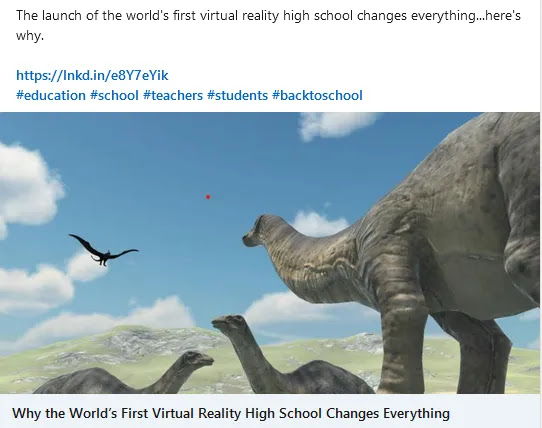
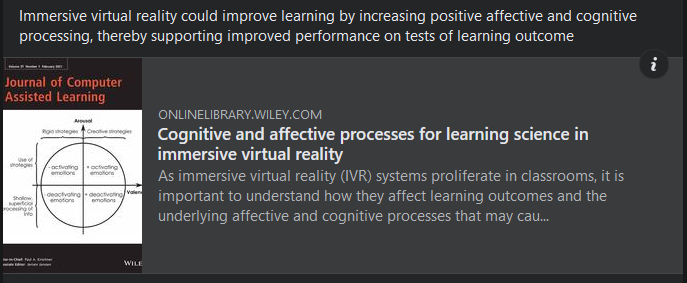
    Today’s entry in the XR and learning Hall of Shame isn’t an article, it’s literally what is being written as the summary of the article.  I can’t make this stuff up.  (And BoA was only last week, yo.)

    I did not capture the poster’s name on Facebook to protect privacy.  However, I’ll re-type their summary here:

    Immersive
    virtual reality could improve learning by increasing positive affective
    and cognitive processing, thereby supporting improved performance on
    tests of learning outcome”

    and here is the article Abstract:

    As immersive virtual reality (IVR) systems proliferate in classrooms, it is important to
    understand how they affect learning outcomes and the underlying affective and cog-
    nitive processes that may cause these outcomes. Proponents argue that IVR could
    improve learning by increasing positive affective and cognitive processing, thereby
    supporting improved performance on tests of learning outcome, whereas opponents
    of IVR contend that it could hurt learning by increasing distraction, thereby disrupting
    cognitive learning processes and leading to poorer learning outcomes. In a media
    comparison study, students viewed a biology lesson either as an interactive animated
    journey in IVR or as a slideshow on a desktop monitor. Those who viewed the IVR
    lesson performed significantly worse on transfer tests, reported higher emotional
    arousal
    , reported more extraneous cognitive load and showed less engagement based
    on EEG measures than those who viewed the slideshow lesson, with or without prac-
    tice questions added to the lessons. Mediational analyses showed that the lower
    retention scores for the IVR lesson were related to an increase in self-reported extra-
    neous cognitive load and emotional arousal
    . These results support the notion that
    immersive environments create high affective and cognitive distraction, which leads
    to poorer learning outcomes than desktop environments. [Highlights added for emphasis]


    The article is free to read here: https://onlinelibrary.wiley.com/doi/epdf/10.1111/jcal.12482 but as of November 9, 2021, you cannot download or print this article.


    Basically the exact opposite of the summary written IS what the article is saying.  I’ll rewrite:

    Immersive
    virtual reality could not improve learning by increasing positive affective
    and cognitive processing, thereby not supporting improved performance on
    tests of learning outcome.


    I’ve just got one image to relay how this mis-reading of research makes me feel:


  • The Future of XR Headsets

    The Future of XR Headsets


    Photo by Drew Graham on Unsplash


    I’ve been working on a project to predict the future of XR technology
    within a 5-10 year time frame. That means I’ve been reading research
    reports, digging through Twitter posts for conference photos, and
    reading thought pieces by some of the most valued opinions on XR in
    industry and education.  

    Simultaneous to this project, I’ve been brushing up my skills in User Experience (UX) and my most favorite, Design Thinking
    One of the most fun aspects of Design Thinking is that I’m allowed to
    let my inner empath run on full tilt. And it’s really great to let your
    emotions run through bunny-filled sunshine meadows and just see what
    she has to say about anything and everything.  Let me tell you: she has
    some real opinions on XR headsets. And almost ALL of those opinions
    come from the images being used to portray headsets. Come along on this
    mystical magical ride of the visuals of headsets.

    At the end of
    the journey, I will make a prediction about headsets.  And as with
    every project of mine, I’ve figured out how to work Disney into it (as much as possible).

    As our starting point, I’ll state something very strongly.   I’m sick of headsets where people are supposed to be wowed by XR.  To
    be realistic, 90% of XR headset images are these. I’ve gathered these
    images from across the internet and to preserve some degree of
    anonymity, I’m NOT providing the reference location.  I’m not trying to
    make fun of people. Please be clear on that. I’m commenting on *how we
    are portraying XR to others* to, supposedly, encourage others to join
    us in XR.

    Unknown person expressing surprise while wearing a VR headset and earphones. Her hands and fingers are spread wide, her mouth is agape.

    So
    we have the “Oh my I’m surprised!” look. I think that’s what this photo
    is trying to say. It’s possible she was frightened, but more on fear in
    a little bit.

    No alt text provided for this image

    Honorable
    mention in this category: hipster dude
    looking…uh…surprised. Actually, he looks ‘tired and being forced to
    look surprised’ but that could just be me overlaying college student
    thoughts onto this photo.

    The next one we have is the *very*
    ubiquitous “Hey, we’re trying out headsets…somewhere.”  I’ve got about
    10 of these photos collected.

    No alt text provided for this image

    So
    they are all smiling and facing the same direction.  We’re supposed to
    like that, right? Uh, remember that those headsets are designed to cut
    off all vision except that which the designer wants you to see and those
    are four women standing really close together in a public place.  Where
    is everyone’s hands? How did they know to stand that close together?
    They were probably prompted and stood close together and *then* put the
    headsets on. Yeah, that’s realistic. Is it any wonder that women, in
    particular, note less comfort with XR?

    Hey here’s a few more.  Do you want to try yet?

    No alt text provided for this image

    I’m
    solo and still comfortable standing here showing you this thing. 
    Wait…are you still there? Did walk away? Oo, a whole new way to
    indicate non-interest at vendor tables if every vendor wore one!  I
    might like this.

    No alt text provided for this image

    We are friends and happy even though we can’t see each other…and you!

    It’s a coincidence that those last two were Magic Leap.  I’ve got nothing against Magic Leap.

    Before we leave the emotional theme of happy, catch this image *from a real article*.

    Hello Clarice.

    I
    am so creeped out by this.  If you don’t see it, look closely at the
    mouth.  Where is the mouth???? Why is the mouth from someone else????
    Ah, the Hannibal Lecter of XR images.

    And finally, before things get better, just remember that your XR headset isn’t this.

    No alt text provided for this image

    I got nothing for this.  It’s so…nope…nothing.  Someone help her.

    So
    back to the topic of the future.  I’m asked occasionally which
    technologies to invest in over the 5-10 year time frame that are winning
    bets for XR.  I’ve got a multiple-part article series coming on how I
    arrived at my conclusions, so stay tuned for that. However, the more
    XR headset images I’ve seen (like all of those images above),
    the more I think we are doing a very poor job enticing new users into
    XR.  I feel like we are hitting all the wrong notes.

    The more and
    more I thought about what disturbs me about these headset images, the
    more I realized that I saw a theme to headsets where I’m like ‘Yes, I
    would try that,” and “Nope, I would not try that.”  And here is a hint
    to the theme:

    Graphic image of The Incredibles Family wearing masks over their eyes.

    Recall the custom that some fiction writers use to disguise some superheroes: they mask their eyes. 
    If the eyes are covered, we can’t completely know who it is. By day,
    it’s just mild mannered Clark Kent.  He can’t possibly be Superman.
    Think that premise is just in stories? We block off someone’s eyes when
    we want them to have anonymity in photos/video, etc.  It seems we humans use eyes as our ultimate identification card.

    While
    headsets in VR are designed to take the user to different places and
    times to experience the normal and phantasmagorical (<-love that
    word), they do so by cutting off all view of the current space the user
    is in.  That’s on purpose. I got no beef with that. We have data that
    these headsets *can* generate empathy. Great! I buy that too.

    My problem is what if empathy when involving headsets is a two-way street?
     What if I cannot believe that the user is truly impacted by an
    experience until I see their eyes?  Isn’t that the problem with all of
    the prior VR headset images? You cannot see the user’s eyes. Ooo, so I
    have hit on a real tech problem here.  If I want to see the user’s eyes
    and yet the user needs to see nothing of the real world in order to be
    immersed in virtuality, how do we solve that problem?  Right now,
    headsets cannot answer to both sets of demands. However, I have also
    never met a tech problem that hasn’t been able to be overcome.

    The short term solution is already at hand and I’ve been discussing it on LinkedIn:

    • The
      solution is that immersive headsets (mostly for VR, VW, and games) will
      do what they do best with full immersion.  Said another way, Magic Leap
      and Oculus Quest– if they pursue full immersion activities, will be
      fine. We hope that the users are in a safe space with assistance
      available in case they fall or need some body space security.
    • The
      solution is also that AR headsets (which are not designed for immersion
      but for information display) will focus on information display.  Since
      AR is not quite pulling on the emotions as VR, it’s not as important to
      see the user’s eyes but, bonus points, I can see them.

    My favorite headset therefore is…Microsoft Hololens
    It allows me to see the user’s eyes. It also has the body profile of
    safety glasses (a familiar pattern).  Also I believe that Microsoft is
    following their own playbook that worked for Office Suite and they are
    pumping the Hololens into the business market *first* and that will
    create back pressure through education. (i.e. we’ve got to get some
    Hololens headsets because our graduates will go out to work X job and
    will be expected to have experience in headsets as part of the job
    requirement.)

    Said another way, as of today, let AR headsets do AR and let VR headsets do VR.  Never the two shall meet. Until…

    The future can and will contain headsets that will do both.
     That’s my prediction.  A user wearing AR technology will find their
    way to their subway train, sit down, and switch over to a VR scene of
    the latest episode of the Mandalorian. 

    OK, I realize it won’t be
    *full* immersion but I think the tech is going to get better (refresh
    rates, etc.) and users will accept non-full immersion. What makes me
    predict that? I’ve been a glasses-wearer since kindergarten. Ask me if
    it bothers me that about 30% of my field of vision at any given moment
    is not in focus. Answer: Nope. Users will accommodate to non-immersive
    VR.

    Once at their destination, the headset will fade down the
    immersion and fade up to a map to a restaurant and some jazzy music (or
    what-have-you-AR-experience-on-demand).  

    How do I foresee that?  As a designer, I look for patterns in what has successfully worked in the past to predict what will successfully work in the future. 
    So what do we have in the past or present that predicts that AR/VR
    combined headsets will totally be a workable thing in the future?

    Two things:

    1. Sunglasses. 
      (Not just regular glasses as I mentioned earlier.)  I see a few
      commentators skeptical how comfortable users will be wearing glasses
      that they *don’t need to*, aka vanity glasses, aka AR glasses, just to
      get AR.  I think it will very much work! Because I don’t think of them
      like glasses…I think of them like sunglasses. Sunglasses are the
      harbinger of wearable tech because as we know, there are many examples
      of people wearing sunglasses for reasons that have nothing to do with
      sun protection.  If people are willing to wear sunglasses at night,
      wearing AR headsets whether or not one is using AR will be an easy idea
      (see: the wearable technology fashion industry).
    2. The ubiquity of
      the smartphone space-wise currently to users’ bodies. I don’t think I’m
      going out on a limb when I say that most users keep their smartphones
      with a meter’s radius of their bodies. As I’ve said on LinkedIn (and I
      should get this embroidered on a cushion), smartphones are the gateway drug for AR. 
      Users are getting very used to having customizable information at their
      fingertips (or voice, as it may be).  Switching from that smartphone
      interface to our vision or auditory range? Easy. Consider it done.

    Until we get to the future, a few recommendations:

    • The emotional nuance possible via XR is stunning.  Let’s stop using fear as our primary XR coinage. 
      (I’m looking at you, Plank.) Emotional reactions such as peace, wonder,
      laughter, curiosity, sadness, and honor all have a place in XR.  Those
      emotions are how you are going to get not just gamers into XR.
    • Stop it with the “I’ve put on a headset and I’m amazed” images. Just stop. I am looking for other
      emotions or events expressed with headsets…it’s just my hobby to
      collect these now. I’ve made my own “wearing a headset and barfing!”
      image. I’m not posting it here yet. You are welcome.
    • Debate
      me!  My opinion has been shaped and formed on this topic over years. 
      But I’m always open to new thoughts and different points of view!  

    What do you think?

    • Did I pick on Magic Leap too much? Maybe.
    • Am I paid to espouse Microsoft Hololens? I wish!
    • What comes after AR glasses? Implants? Already on the way. #omega opthamaltics

    I look forward to your comments.

    P.S.
    I totally held off picking on any LinkedIn personal account photos of
    people wearing headsets.  You are an interesting crowd. On one hand, I
    admire that you are *clearly* sending the message that you are pro-XR.
    Way to go!  On the other hand, you are going to regret that image in 20
    years. I’m just saying. And to the dude’s profile I saw last night
    where you are wearing 3 headsets at once: You, sir, are next level bananas. Carry on.

    #Transmedia
    #virtual reality #virtualworlds #crossreality #mixedreality
    #augmentedreality #design #AR #VR #XR #headsets #images #eyes #wearing
    #Immersion #Glasses #future #Users #Problem #Experience #Technology
    #Emotions #Empathy #Empath #UX #UXinXR #MicrosoftHololens #Disney
    #IllWearMySunglassesAtNight

    This article originally posted at LinkedIn on November 12, 2019

    https://www.linkedin.com/pulse/future-xr-headsets-heather-dodds


  • Designing With Transmedia: Watch This Space

    Designing With Transmedia: Watch This Space


    Source: Stockphoto

    I used to fly back and forth to Salt Lake City, a lot. I stopped
    counting after 26 trips. Statistically, it’s bound to happen on those
    flights. And it did.

    I sat next to Donny Osmond.

    I didn’t bug him, talk with him, or ask for a photograph with him. Because I was focused on something else, something much more important to me. I was focused on a book.

    To this day, the book sits within arm’s reach of my working space. What book is so important? The Cambridge Handbook of Multimedia Learning,
    edited by Richard E. Mayer, 2009 edition. What held my attention so
    strongly? The disciplined and codified research that says no matter how
    fancy you make the learning method, the learning is the same.

    How could this be? Bigger, better, faster, happier learning is my raison d’etre. What’s going on here?

    I
    started my doctoral program with one focused idea: that I believe in
    the power of transmedia. The entire field of virtual reality is still in
    the wild wild west stage, and here, anybody can do anything. Hence, I’m
    calling it all transmedia. But I don’t mind what it is called*. I’m
    just fascinated with what we can do virtually that fools the mind and
    brain into thinking an experience actually happened.

    (more…)

  • Videos on avatars

    Videos on avatars


    Our Digital Selves: My Avatar is Me by Draxtor

    https://youtu.be/GQw02-me0W4 1:13:56

    Heather’s review.

    A long film that dives deeply into multiple aspects of avatars in virtual worlds.  Touching story of how the disabled can use VWs to explore friendship and relationships.

    As of November 2021, Draxtor is still a resident of VWs and can be found communicating about them.

     Video description from YouTube:

    [ ***WINNER JURY AWARD & WINNER AUDIENCE AWARD BEST DOCUMENTARY @ Riverside International Film Festival, Riverside, CA, 2019 +++++WINNER JUDGES CHOICE AWARD @ Monarch Film Festival, Pacific Grove, CA, 2018+++++AWARD OF RECOGNITION @ IndieFEST Film Awards, La Jolla, CA, 2018++++SEMI FINALIST @ Hollywood International Independent Documentary Awards, Los Angeles, CA, 2018 ****]

    [**** blogs about this film:

    Virtual Ability = http://blog.virtualability.org/2018/0… + http://blog.virtualability.org/2018/0… + http://blog.virtualability.org/2018/0… + http://blog.virtualability.org/2018/0…

    Deanya’s guest blog = http://www.draxtor.com/blog/2018/5/17…

    Inara = https://modemworld.me/2018/05/18/empo…

    Strawberry = https://strawberrysingh.com/2018/05/1…

    Ryan = https://ryanschultz.com/2018/05/17/dr… **** ]

    “Our Digital Selves: My Avatar is me!” tells the story of 13 ability-diverse global citizens as they explore their identity through artistic expression and making a home for themselves in the VR Metaverse.

    Filmmaker Bernhard Drax travels from Los Angeles to rural South England to explore why people ranging from 24 to 92 years of age find solace and inspiration in a user-created digital wonderland that only exists inside their computers.

    Drax sends his documentarian avatar Draxtor Despres into the virtual universe of Second Life as well as next generation VR platforms like High Fidelity and Sansar where he meets a 40-something disabled Chicago native feels best represented by a colorful superhero gecko and Cody LaScala – confined to a wheelchair his entire life – who makes his avatar an exact replica of his physical self.

    The film follows researchers Tom Boellstorff and Donna Davis as well as leading technologists in Silicon Valley who intend to – as they say – “design the future of social VR with disability in mind”.

    As Boellstorff and Davis finish up their 3-year study on embodiment and place-making in VR, made possible by a grant from the National Science Foundation, the film comes as a compressed visual compendium to a seemingly unlimited array of possibilities for human interaction via the embodied symbolism of the avatar.

    Unique in its narrative approach, “Our Digital Selves” weaves together physical and virtual cinematography as the protagonists’ backstories are re-enacted via real time animation [Machinima].

    Contact drax at draxtor dot com for more information

    [copyright 2018 draxtor™…and media for all!]


    Strangers in Paradise, CBC Documentary

    https://www.escapistmagazine.com/cbc-documentary-looks-at-second-life-cheaters

    https://www.cbc.ca/fifth/2008-2009/strangers_in_paradise/video.html

    Heather’s review:

    This is a haunting documentary about 2 women who gave up their real lives in pursuit of virtual relationships. In both examples, the couples met in real life and the resulting relationship was either non-existent or weird.

    This video has been tagged by the CBC as showing examples of gaming addiction and provides links for the left-behind spouse as “widows”, i.e. World of Warcraft Widows, Everquest Widows, etc.

    It seems to want Flash to play now (since 2008/2009) and I won’t bother.  But it is a hugely disturbing video for me and very important.

  • Instructional Design Resources for XR

    Instructional Design Resources for XR


    Digital Library Federation

    #DLFteach Toolkit Volume 2: Lesson Plans on Immersive Pedagogy

    https://dlfteach.pubpub.org/dlfteach-toolkit-2


    PEAT

    Inclusive Resources for XR

    https://www.peatworks.org/futureofwork/xr/inclusiveworkplacexr/

    Microsoft

    How to approach inclusive design (a mindset): https://lnkd.in/dwcj_8-Z


    XRA Developers Guide

    12 pages. Easy read. General
    ideas related to ability and UX/UI. However, NOT necessarily advice
    about best uses of XR with reference to design (I’m referring to
    mission/purpose/value…not images, colors, themes.)

    https://xra.org/research/xra-developers-guide-accessibility-and-inclusive-design/

  • “What Happened When Student Brains — on VR — Were Scanned” is Analyzed.

    “What Happened When Student Brains — on VR — Were Scanned” is Analyzed.


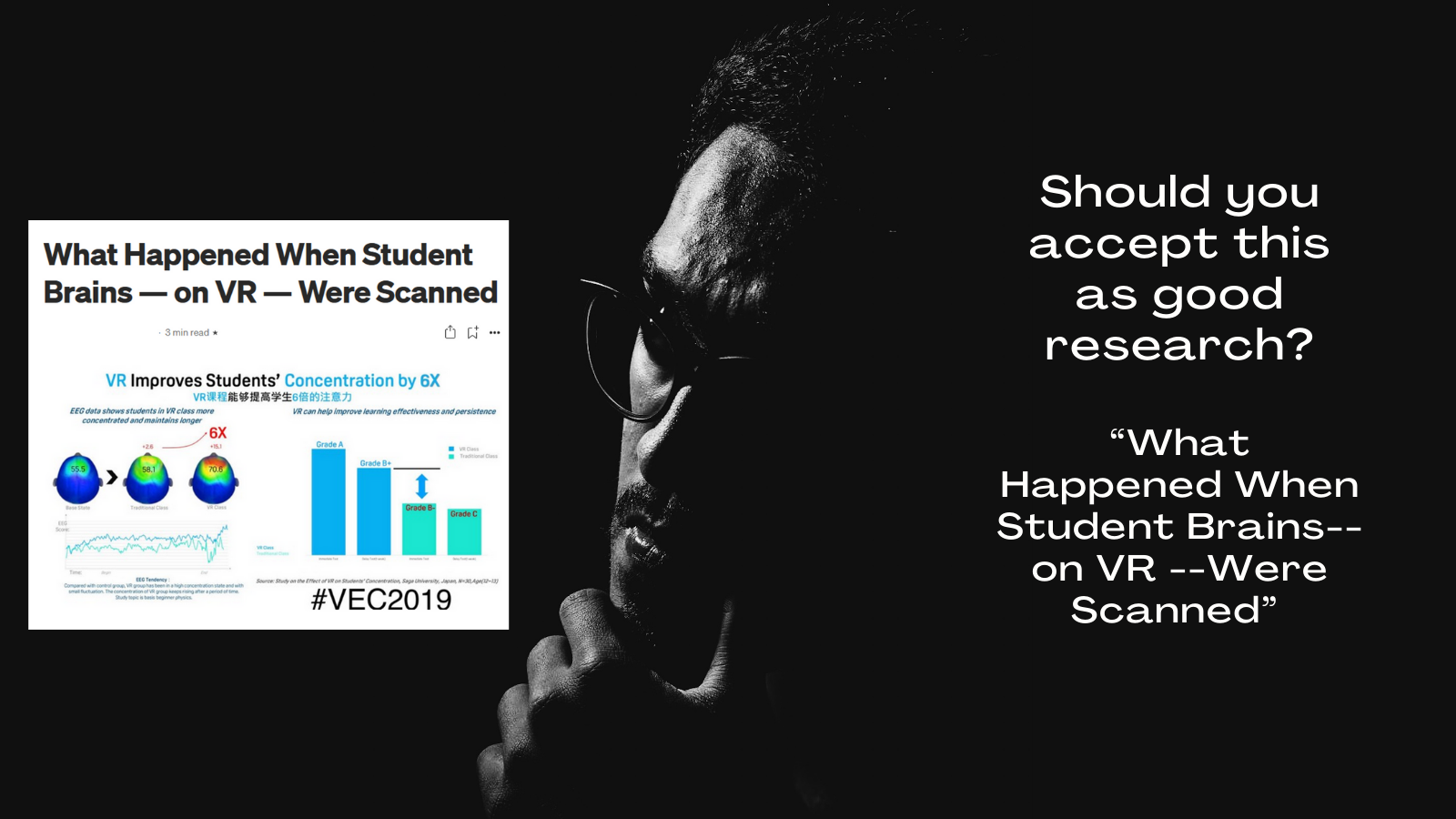
    Should you accept this, What Happened When Student Brains – on VR – Were Scanned, as good research?

    I believe that VR has a place in education.  We’ll get there and it will be awesome.

    However,
    along the way, I will analyze and call out poor virtual reality and
    learning research EVERY CHANCE I GET.  Poor research helps no one.

    I’ll be writing about several poor VR studies soon. I’m writing just like I did for my “Survey does NOT show that instructional designers drive better student outcomes.” 
    Even though poor research should be called out (yes!) I am NOT in the
    business of embarrassing or humiliating a person nor damaging or ending
    someone’s business.  Therefore, I will block out names as much as
    possible.  If the source blatantly has names within it though (for
    example, if someone names a company), I’ll keep that in the screen
    capture.  Note however, the minute time traveling teenagers arrive in my
    home office asking me to truly name names related to this, I AM SO
    TELLING THEM.

    Seat belt sign on.

    Image of airplane seatbelt on sign
    Seat belts on. It’s a bumpy ride ahead.

    On July 25, 2021, an author that I’ll call Author A posted this story to Medium: What Happened when student brains on VR were scanned
    Before you click on that link, remember that Medium is a site where
    authors are paid for article reads.  Now I post to Medium too (as a
    matter of fact, I’m posting this article there as a sort of rock’em
    sock’em method of seeing my article go head to head against his) but
    [EDIT: I no longer post to Medium] just bear in mind that the more you click, the more the author is paid.
    Author A appears to have posted 6 articles to Medium and 4 of them are
    about VR. (Update: during publication, this has increased, I’ll pick
    this point up again at the end of this article).

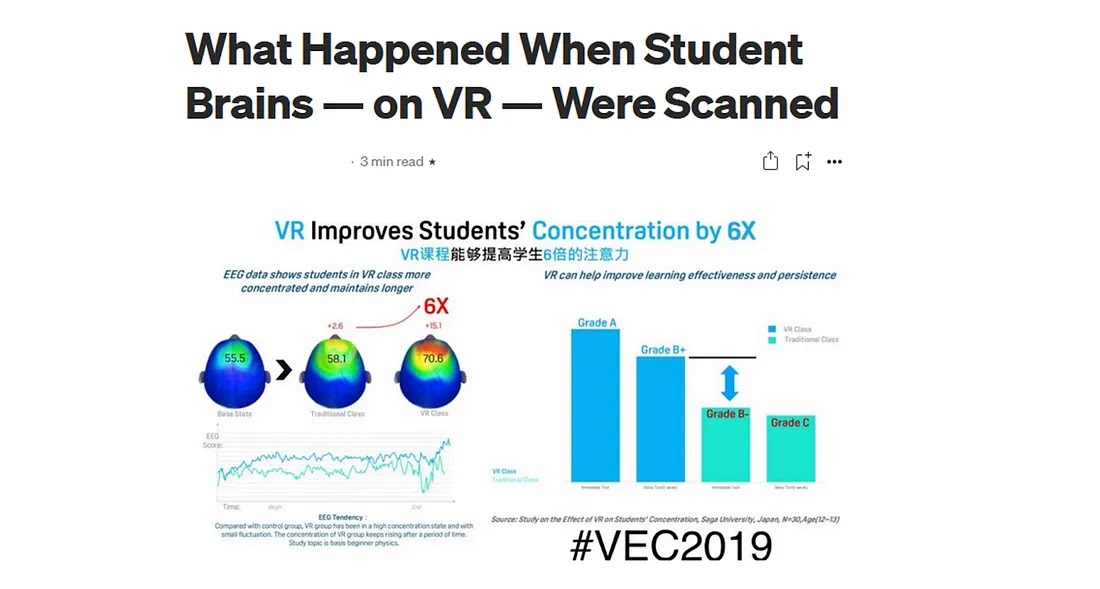
    Screen capture of Medium article from July 25, 2021 headline.  Article is titled "What Happened When Student Brains -- on VR -- Were Scanned"


    (July
    2021 version of this image, I’ve blocked the author’s account. Note the
    added #VEC2019.  I think it’s very obvious that the #VEC2019 was
    overlaid.

    VEC2019 is the VIVE Ecosystem Conference held in 2019.

    Inside the article, I did hope to find sources.

    Here is what I found (names blocked):


    Screen capture of a Medium article from  July 25, 2021

    In July 2021, Author A posted to their own LinkedIn account

    Partial capture of post here (blocked out the link and a name):

    Screen capture of a LinkedIn Post from July 30.

    While you are looking at this though, does anything stand out yet?

    Already for me:

    • The writing style feels like it’s pulling me along (FIRST, SECOND, THIRD) but I tend to like my separate points to be actually separate and new points
      If you look at what’s written for each item, the points are more
      chronological as if someone was talking than factual as if someone was
      listing.
    • I’m zinged by that “ [read the rest of the story here:  
      link    ]  That was actually written by the author, NOT hard coded in
      by LinkedIn. Bummer. I wish I had NOT clicked on the link but I
      sincerely thought that there was “the rest of the story” at the link. It
      was the Medium article link so by clicking on it, I “paid” this Author A
      some money.  This means something.  Stay tuned.
    • I do a quick
      mental check of the numbers in the post versus the image. As your math
      teachers always said “Stand back and look at the numbers. Do they make
      sense?”  The 4th bullet just further describes (aka says the same thing
      but with DIFFERENT numbers as the 3rd bullet so… is 15 roughly 6 times 
      2.5?  Yes. 
    • OK, the number “6X” checks out within the diagram
      (meaning that the data I’m provided with so far does align with the
      head/images).  However, your hackles should be going up because you
      should be asking yourself “Why was the image of the heads not enough? 
      Why do I need to be told– in red font with a drawn line– “six times”? 
      Answer: because the phrase “Six times” will stick in my head and slow
      down my reading and I will — as I’m sure MANY have done– quickly
      breeze over the “six times WHAT” part and read this to say:

    Six times more brain activity on VR

    Rather than what it says, which is

    The difference between the brain states is 6 times traditional.

    • See? 
      Didn’t you read this as “Wow, the brain is 6 times more active on VR,
      that’s got to be good!”  (VR and autism researchers right here are
      roiling; I can feel you. They are saying “An active brain isn’t
      necessarily a learning brain.”  Right on.  You get your chance coming up
      later.)
    • One further point I noticed later.  The “Traditional
      Class” is pulling a 58.1 (unitless) over a Base State of 55.5. That’s a
      2.6 difference. The image says 2.6, the writing says 2.5.  I’m willing
      to overlook this; that’s minor.  But think about it for a second. 
      Traditional class work is pulling nearly the same brain activity as
      “base state”.  So bad news teachers: your students in class are one tick over coma.  (I HOPE NOT!)
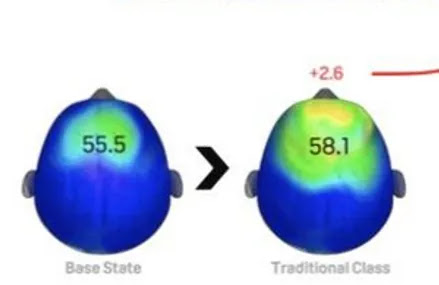


    In all my years of research, I NEVER found the original source of this image.

    I’m linked with Author A and that’s how I saw that this image was circulating again. 

    Author
    A linked to the Medium article within their post but they added this
    image to their LinkedIn post. Therefore, the image appears prominently
    like this:
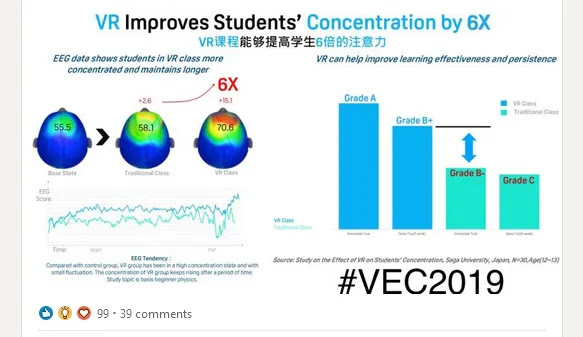
    LinkedIn post with image “VR Improves Students’ Concentration by 6X”. Image includes some Chinese characters and #VEC2019.

    Here is a version of the same image from 2020.
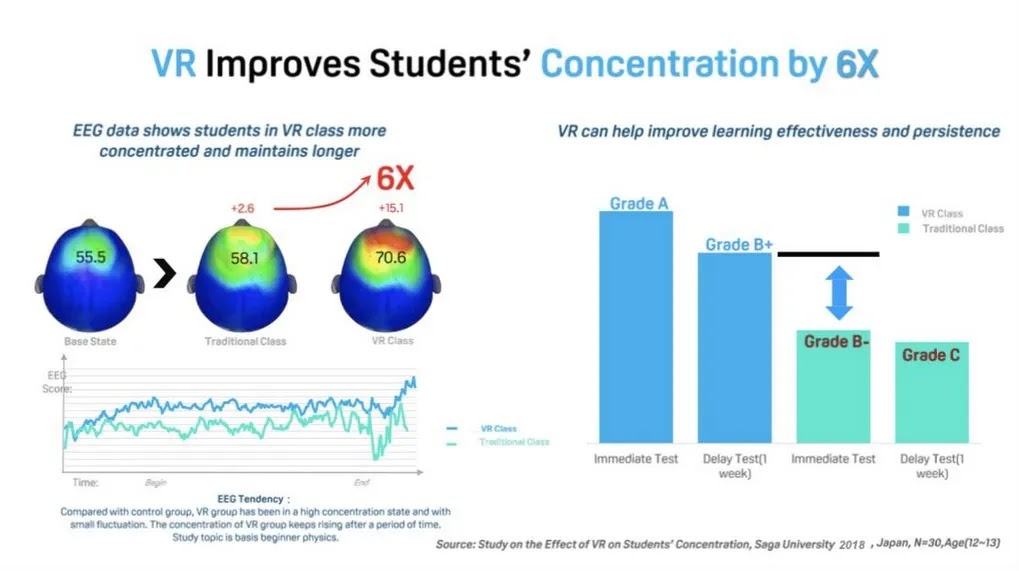
     

    LinkedIn post with image “VR Improves Students’ Concentration by 6X”. Image does not include some Chinese characters and #VEC2019.

    So
    the Chinese line under the title is present in the newer version but I
    don’t see any other changes. I did a Google image search and this
    appears often on LinkedIn, but it’s not coming up linked directly to
    another source (so far).

    The images seem to have a “source” credited in the lower right corner.

    Retyped here with kept capitalization but not formatting:

    Study on the Effect of VR on Students Concentration, Saga University, Japan, N = 30, Age (12~13).

    Capitalization
    matters because it can indicate how much the author is following a
    particular reference style (APA, MLA, IEEE, etc.) Also some statistical
    and mathematical symbols change meaning if they are capitalized or not.

    So six times the improvement of concentration on VR!  That is an attention grabbing number!

    I’m not the first person to report that FINDING that article by that name or some derivative appears to be impossible. However, looking at that citation, a few thoughts pop up:

    • There
      is a formatting change in the line that looks like text has been added
      or overlaid. In particular, the age information is odd.  Researchers
      don’t usually add the sample groups’ age in a citation particularly when
      everyone in the research study (supposedly) was of the same age.  Ages
      didn’t vary within the study.  The N info can be properly included in a
      figure caption, which is different from a citation. So this info looks
      like a blend of an attempt to give a citation and more information…for
      perhaps “people who were asking”? (I BET.)
    • It is entirely
      possible that this source was published in a language other than
      English. The title is academic-looking but academics are also sticklers
      for choosing the exact words to reflect what we mean and this title is
      actually a little wordy.  That tips me off that it might be a
      translation.  For example, tight academic English would have been “The
      effect of VR on students’ concentration.”  All through some of the
      sources I go through next, I have the feeling that I’m dealing with a
      good-hearted translation.  Good intentions, yes, but not the original
      author’s thoughts. Hmm.


    In 2020, a few other images and a link circulated associated with this research.

    Shared on Facebook as “slides” from a conference talk:
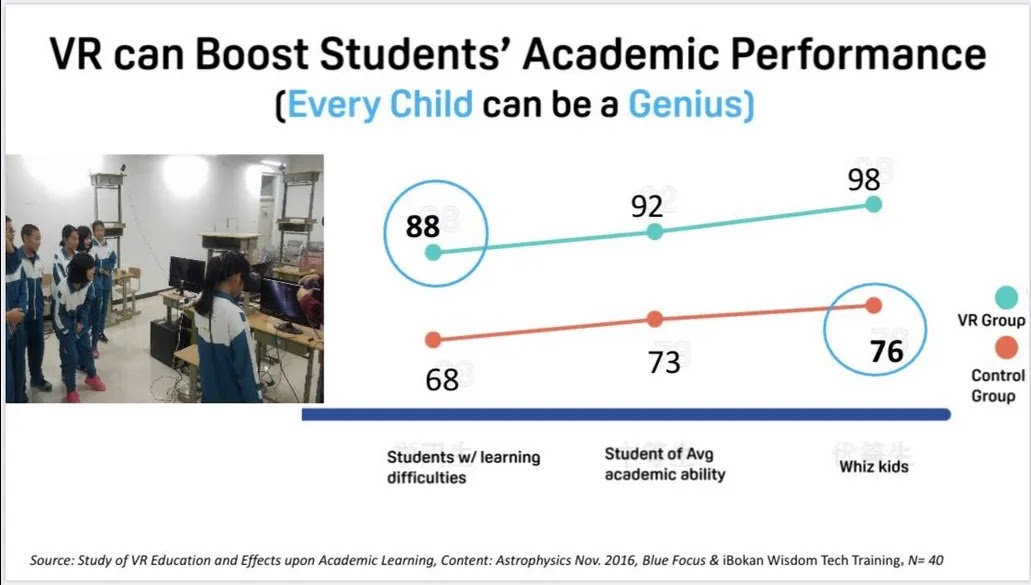
    Take note of the learner’s clothing and the Source.


    This version has the “6X” in big red font with an arrow.

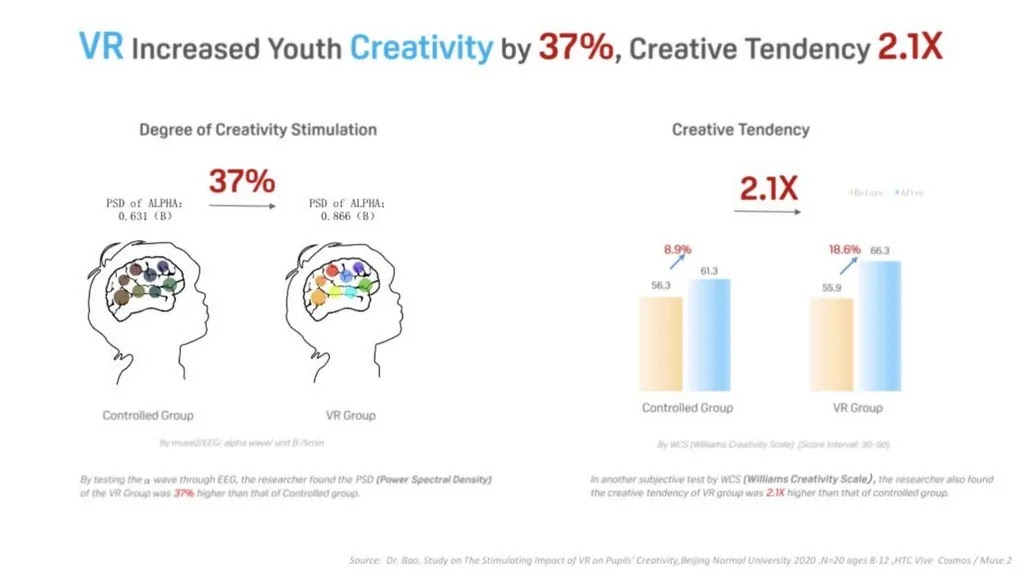
    “VR Increased Youth Creativity by 37%, Creative Tendency 2.1X”

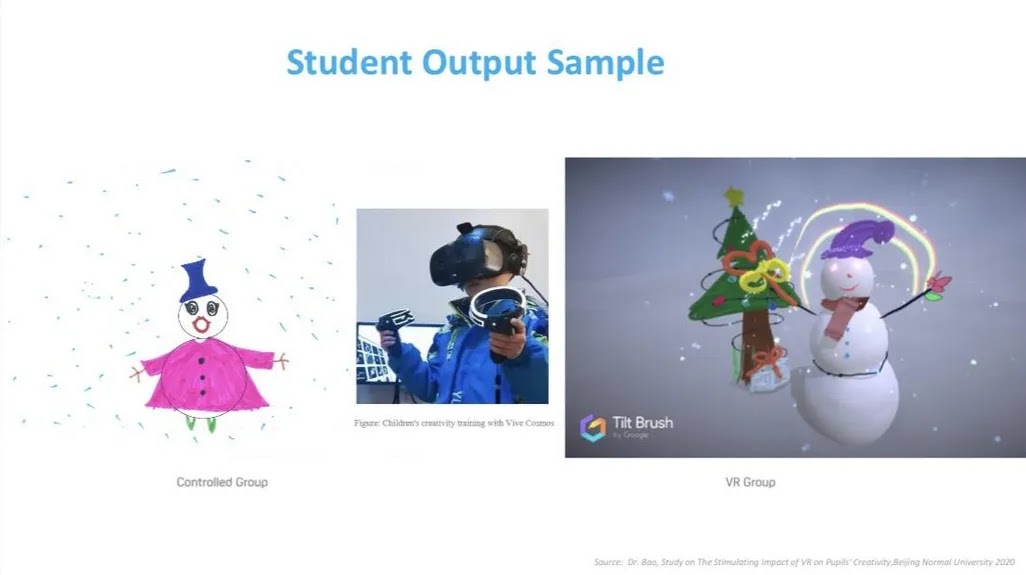
    “Student Output Sample” Personal comment: I find this comparison disgusting, laughable, and then disgusting again.

    There was a suggestion that THIS is the actual study here: A Case Study – The Impact of VR on Academic Performance

    https://mk0uploadvrcom4bcwhj.kinstacdn.com/wp-content/uploads/2016/11/A-Case-Study-The-Impact-of-VR-on-Academic-Performance_20161125.pdf

    For the next part of this article, I’m really getting in the weeds of the research.  Get a cup of coffee and keep up.

    As
    a summary of the research a teacher separated students into a control
    group and a VR group. Then each of those groups was measured for
    learning either in the same class period or two weeks later.  The VR
    group was compared to the control group.

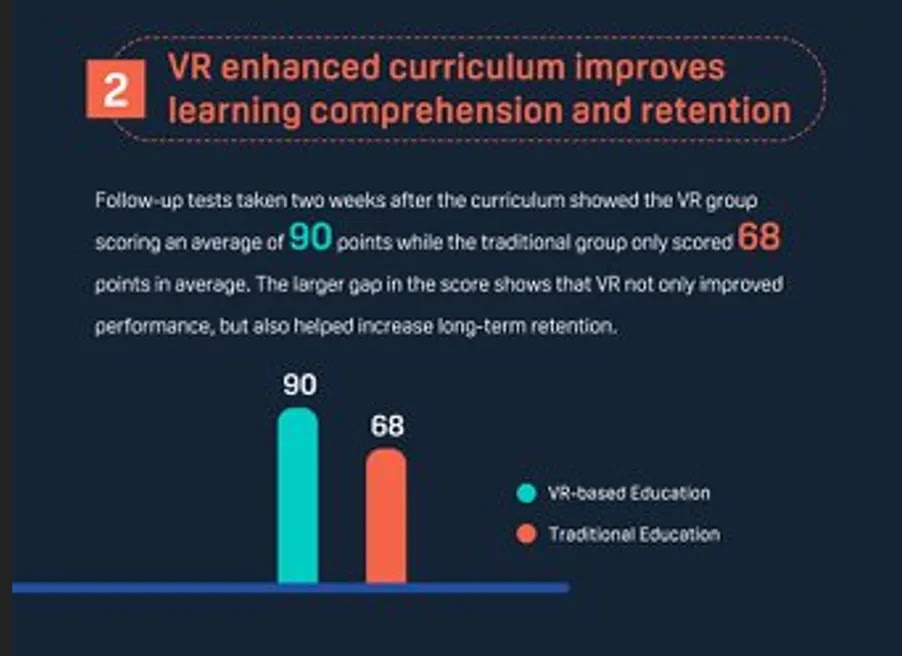
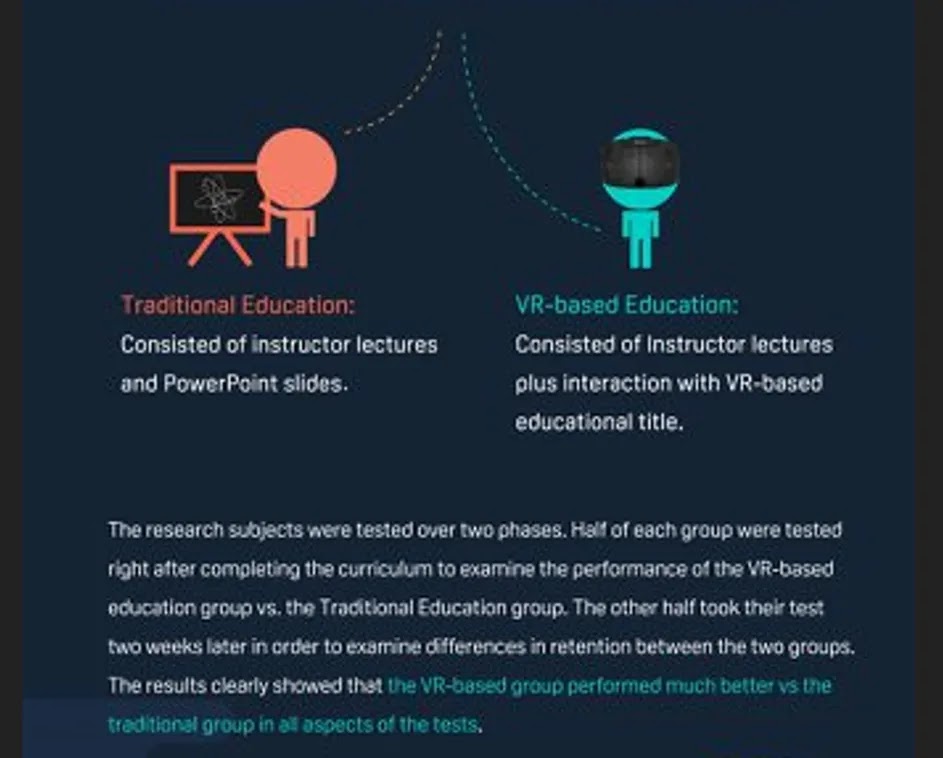
    Note that the control group is the “Traditional” is a teacher talking with a PowerPoint for 30 minutes.

    Remember that Intermediate refers to the ‘same day’ test and Retention refers to the test 2 weeks later.

    Before I get into some problems, I’d like to say a couple of items in this teacher’s defense:

    • First, it is clear that the teacher means well and is supportive about the use of VR in the classroom.  
    • Second, the teacher taught an astrophysics lesson. Physics content is an area of ideal use for VR because
      of the conceptual and sometimes “hard to see” type of content (hard to
      see atoms, hard to conceive of galaxies, etc.). There is always a direct
      relationship between “seeing” and understanding when trying to use VR.
    • Technically,
      self-publishing isn’t awful.  I do that myself. I think more publishing
      will be self-publishing in the future.  But I’m also NOT SELLING
      SOMETHING and not dangling the data behind paid links (cough, Medium) or
      concealing references to support eye-popping results.  Don’t forget, it
      said SIX TIMES.

    Inside this paper, there are some concerning misfires.

    The
    first would be the experiment design.  It is poor ground to stand on to
    compare not cognitively equivalent experiences.  PowerPoint versus VR
    is not a fair fight and just with that item, that research shouldn’t be
    published.

    Second, as I read through to get my bearings, the
    author seems to put some of the wrong data in the wrong places through
    the paper (they talk about the Intermediate data last and the Retention
    data first when those were administered in the opposite order) and then
    they attribute the averages backwards. It’s like the paper had a cut
    & paste festival run through it.

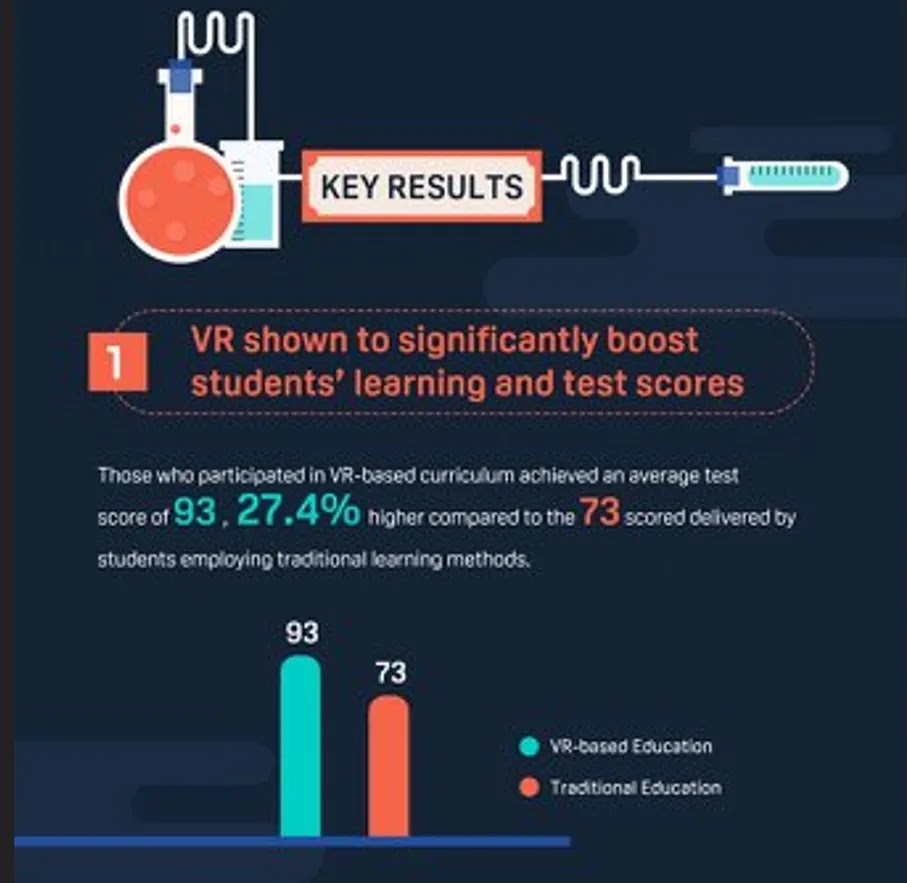
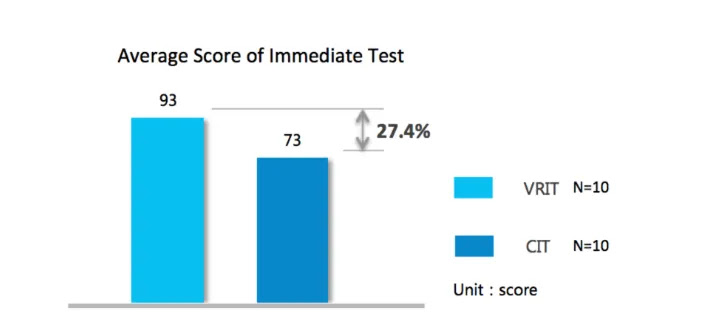
    Example page 9, in a section talking about the Intermediate test, subtitled “VR Improves Test Scores”

    “The
    average score of the VRIT group is 93, CIT, 73. On average, VRIT group
    has registered a 27.4% growth in terms of score, indicating the great
    advantage of VR in the teaching of astrophysics.”

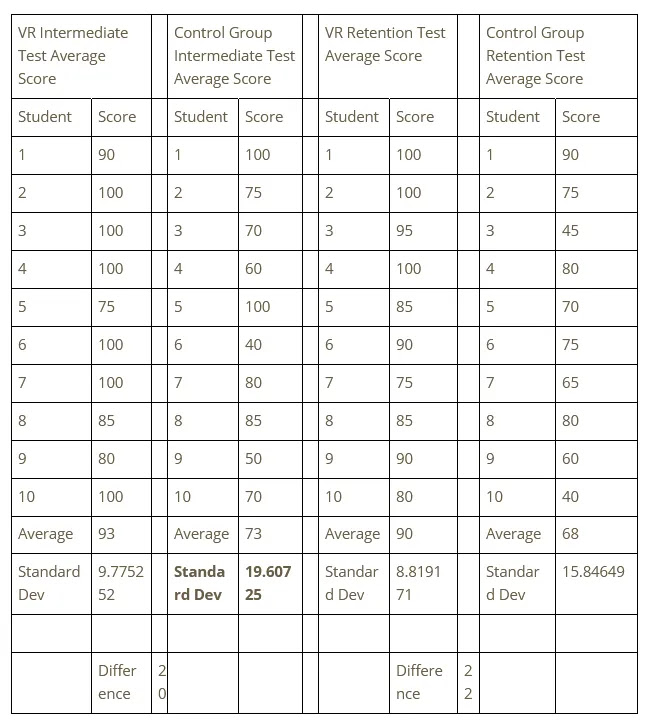
    OK, that first sentence is true.  Here’s my data check:

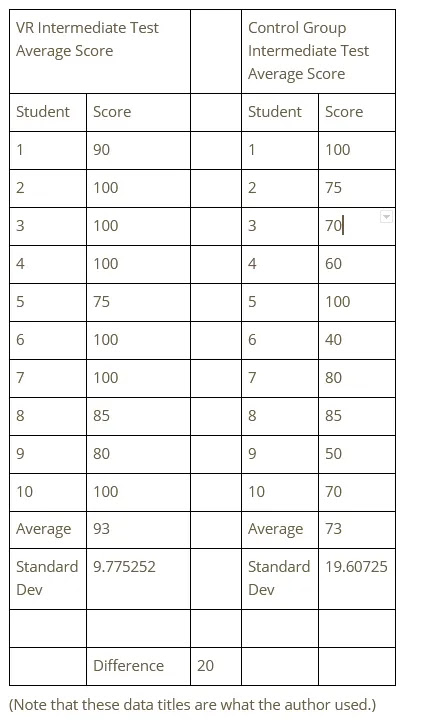
    I also get averages 93 and 73.  But the difference between 93 and 73 is 20, not 27.4.

    Then on page 10, there is a graph that immediately followed this text: 

    Both
    the text here and the graph indicated that the gap between 93 and 73 is
    27.4%.  It is not. It is 20.  But I’m trained to look for “accuracy”
    that suddenly arrives that wasn’t present before.  Where did that 0.4
    accuracy come from?. And how did the percent symbol sneak in? The
    percent symbol isn’t anywhere else in this image (red flag). Does that
    27.4% look pasted on?  Why? I’d cry “Significant Figures!” here but the
    27. 4% does show up on Page 14:


    “4.2.1. VR Improves knowledge Retention 

    In
    Retention Test, the average score of VR group is 90, while that of the
    traditional teaching group is 68. The gap between the two average scores
    is 32.4%, higher than that in the Immediate Test 27.4% (# 4.1.1-1),
    suggesting that knowledge taught in traditional mode is more inclined to
    be forgotten, while VR-based teaching could help students get a deeper
    impression and maintain long-term memory because it creates a quosi-real
    environment, interacts with students and make students more involved in
    the teaching.” [spelling in context

    OK, so now the text says that the difference between 90 and 68 , which is 22 points, is 32.4%!
    OK, so they are not trying to communicate the point difference (a
    number), they are communicating, on purpose, a percent difference. Ah! 
    OK. Points and percentages are different, and they know that. Now I feel
    better.

    But notice, why would you convert one set of numbers like this:

    • Hey the difference was 20 points!

    To another set of numbers like this:

    • Hey the difference was 27.4%!

    Answer:
    27.4 is interpreted as “bigger” than 20 even though, in this case, they
    are the same (percentage and points, respectively).  Sigh. It’ another
    instance of the SIX TIMES difference.  If I make the number appear more
    impressive, I have more of your attention.

    Folks, this is exactly
    what peeves me here.  Remember that I WANT this research to be positive
    and true.  But when you manipulate the numbers just to get me to go wow,
    I’m on to you. I get extra angry when you are making money off of this
    manipulation.

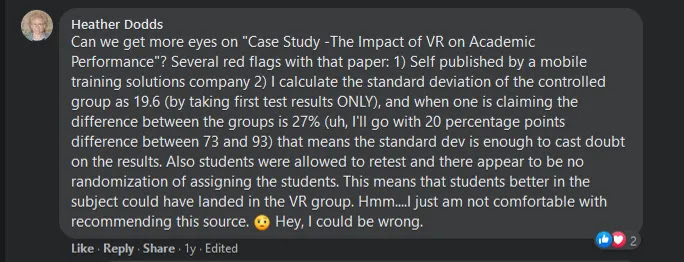
    In 2020, I commented:

    “Can we get more eyes on “Case Study – The Impact of VR on Academic Performance”  Several red flags with that paper:

    1) Self-published by a mobile training solutions company.

    2)
    I calculate the standard deviation of the controlled group as 19.6 (by
    taking the first test results ONLY) and when one is claiming the
    difference between the groups is 27% (uh, I’ll go with 20 percentage
    points difference between 73 and 93) that means the standard deviation
    is enough to cast doubt on the results. 

    Also students were
    allowed to retest and there appear to be no randomization of assigning
    the students. This means that students better in the subject could have
    landed in the VR group.  

    Hmm….I am just not comfortable with recommending this source. Hey, I could be wrong.”


    I
    want to spend just a little more time on the stats.  First, standard
    deviation.  Refresher!  Standard deviation is a descriptive number that
    describes how well the average describes the group.  Quick example:


    One
    class: 2 students. Students score 45 and 55 on an exam. The average is
    50. The standard deviation is 5.  That means that a random student, if I
    could mix all the students up and just pick one student out, differs
    from the average score by 5 points.  Said another way: most students are
    scoring with 5 points of 50. And this is true. In one case, if I picked
    out a student, they’d be scoring 45, which is 5 points off the average.
    In another case, the student would be scoring 55, which is 5 points off
    the average. Five points off and five points off. That’s good, that’s
    ‘tight”. Therefore the average of “50” is a nice tight description of
    how the class is scoring.

    One class: 2 students. Students score 0
    and 100 on an exam. The average is 50. The standard deviation is 50. 
    That means that a random student differs from the average by 50 points.  
    Said another way: most students are nowhere near the average score. 
    They are missing it hugely. Both students are off by 50 points.  The
    average of “50” does NOT describe this class scores very well at all. 
    It’s junk.

    So you generally want small standard deviation numbers if you want to believe that your average number is a good descriptor.

    Let’s go look at those standard deviations (I calculated) again.

    So
    I calculated the standard deviation in 2020 of the Control Group
    Intermediate Test Average Score to be 19.6. Same result by recalculating
    that in 2021 (so I’m using myself as my own data checker by inserting
    time between the 2 calculations).

    That is troublesome.  A standard
    dev of 19.6 when the difference between the 2 groups was 20 means that
    the control group could, reasonably, waver from ~53 to ~93 on their
    score and still be considered “OK” and reasonably near the group
    average.  But that means that the control **could have scored** near the
    VR group.  93 is quite near 93. (#fact)

    So, a statistical flag on
    that play.  When you have reason to think that your experimental group
    and control group **could have* scored the same, you do not have reason
    to think that cause and effect has happened in your experiment, you
    should doubt that your independent variable caused your dependent
    variable’s results.

    In plain language, VR could not be causing higher scores.  Higher scores could have happened by chance.

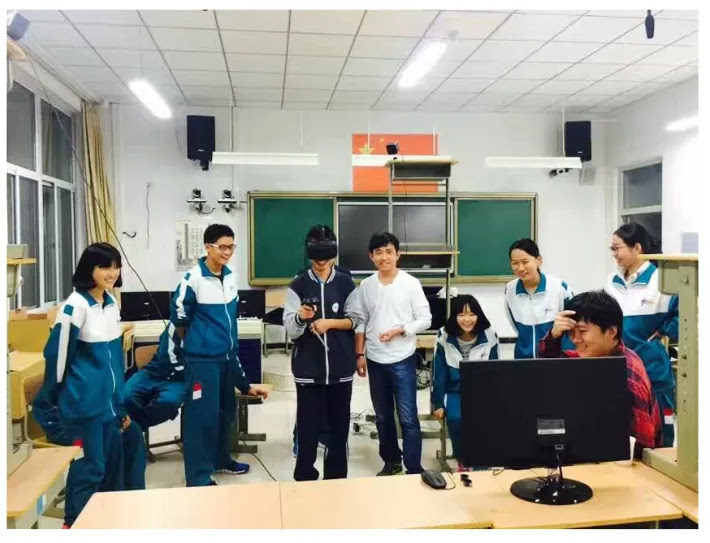
    This
    is what I meant when I said that this data does hint that “students
    good at VR” could have simply been sorted into the VR group
    unintentionally and thus, voila, do great at the content. (The photos of
    the students admittedly look like they are ‘having a good time.’)
    Statistics is meant to help us  know how much to believe in some numbers
    and doubt other numbers. (Remember the line: Lies, Damn Lies, and
    Statistics?) I know this is deep math for some, but it’s just saying
    that these numbers are not believable as they stand.

    Also, I want
    to point out that I’m NOT strong in “power” talk in stats, but this is
    the field of being able to know how many individual data points you need
    before you can trust a whole set of data points. Data points are known
    as “N”s.  An N of 10 is quite ridiculously low for a sample size.  10
    students are nice but no one should be spending thousands of dollars
    buying headsets or software because of data from 10 students.  And
    remember, when you are seeing these numbers, you are being convinced to
    buy.  You are NOT being convinced to research deeper. More on this is
    coming after some more scrolling down.

    Finally, one last big item that you might have forgotten down in these weeds:

    After all that searching, where is the EEG data?

    Where’s the EEG data?

    Well,
    not in this paper, that’s for sure.  But the image you are looking at
    has only ONLY half-hearted reference on it (lower right).  Where does
    the EEG data come from?  I tried to find it both by topic and image
    search.  Maybe that’s where “Saga University” comes in?  I don’t know.
    Word on the street is that that EEG data is made up.  I really don’t
    know. I can tell you that I’m suspicious because I’m not sure why one
    would research on VR with EEG (a reasonably expensive test), publish
    your results in color, find six times more activity and then bury your
    published paper about it?  Seems fishy to me.  Again, though, this could
    have happened all in another language and me and Google are failing to
    find it.

    There’s possible other stats problems in the paper but I’ll let it rest.

    Also
    circulating from 2020 was this one long infographic that I screen
    captured into slices.  The images are grainy, I know. (sad face)
    Presentation slide: “VR-based Education Shown to Enhance Academic Performance, November 2016”

    Slide from presentation.

    Slide from presentation with text “VR shown to significantly boost students’ learning and test scores”
    Slide from presentation with text: VR enhanced curriculum improves learning comprehension and retention

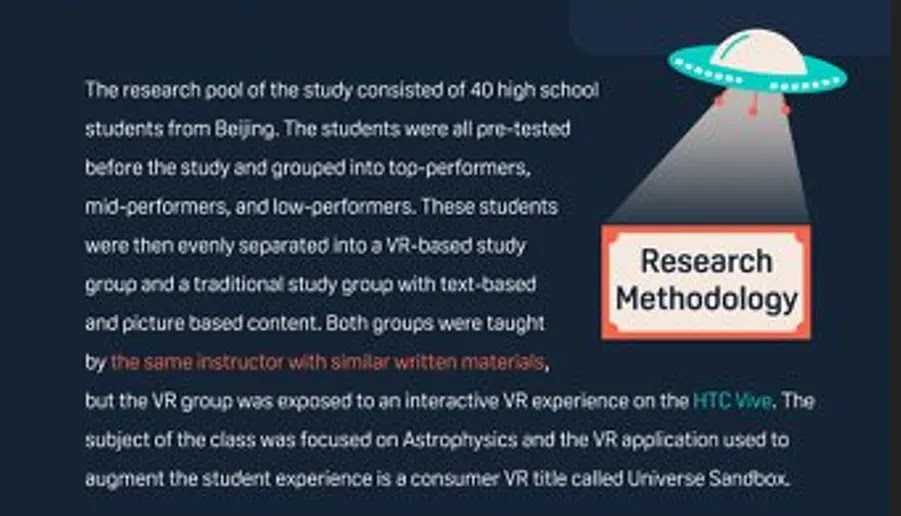
    Slide from presentation emphasizing that the control and experimental groups had the same instructor

    Slide from presentation emphasizing that the VR was additional to the traditional instruction.

    Slide from presentation with QR code. Note prominent VIVE logo.

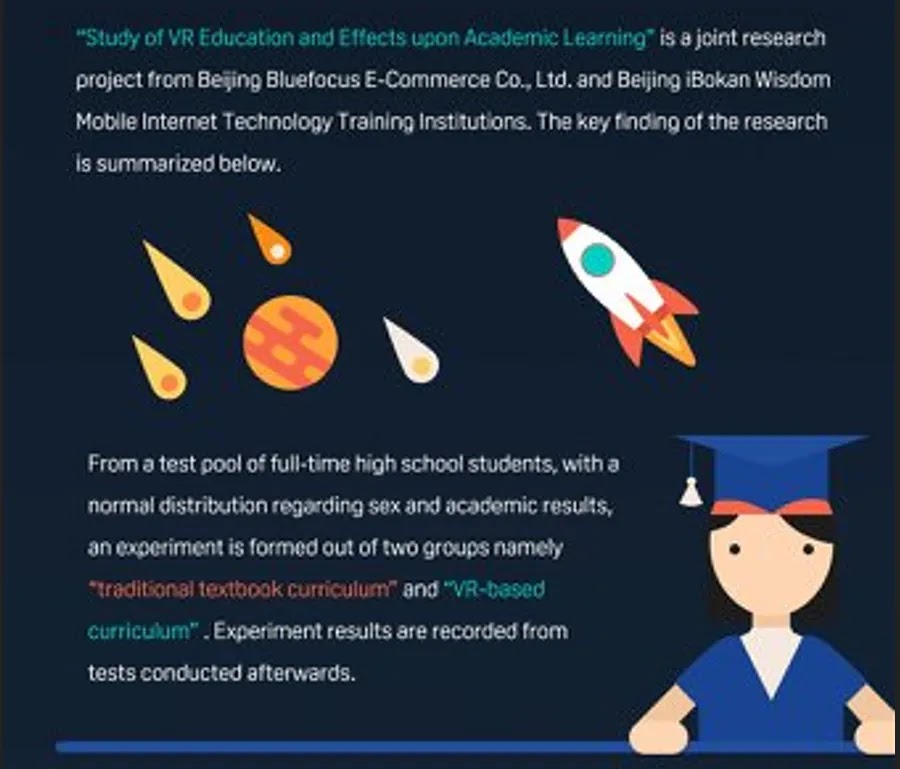
    This
    infographic appears to be supporting this image. The “Every child can
    be a genius” phrase and the numbers appear to be the same.  I have only
    one item to say about these slides: cute UFO theme.

    Note that the student clothes looks similar:


    I tried to find “Study of VR Education and Effects upon Academic Learning”  Google Scholar and Google can’t seem to find it.

    Searching on iBokan Wisdom Tech Training instead, it seems to be used as a reference from here: https://www.degruyter.com/document/doi/10.1515/phys-2017-0114/html

    To: here:

    [5]
    Beijing Bluefocus E-Commerce Co., Ltd. and Beijing iBokan Wisdom Mobile
    Internet Technology Training Institutions, A Case Study – The Impact of
    VR on Academic Performance, 2016. Search in Google Scholar

    That is a dead end, as in, dead link:


    Back
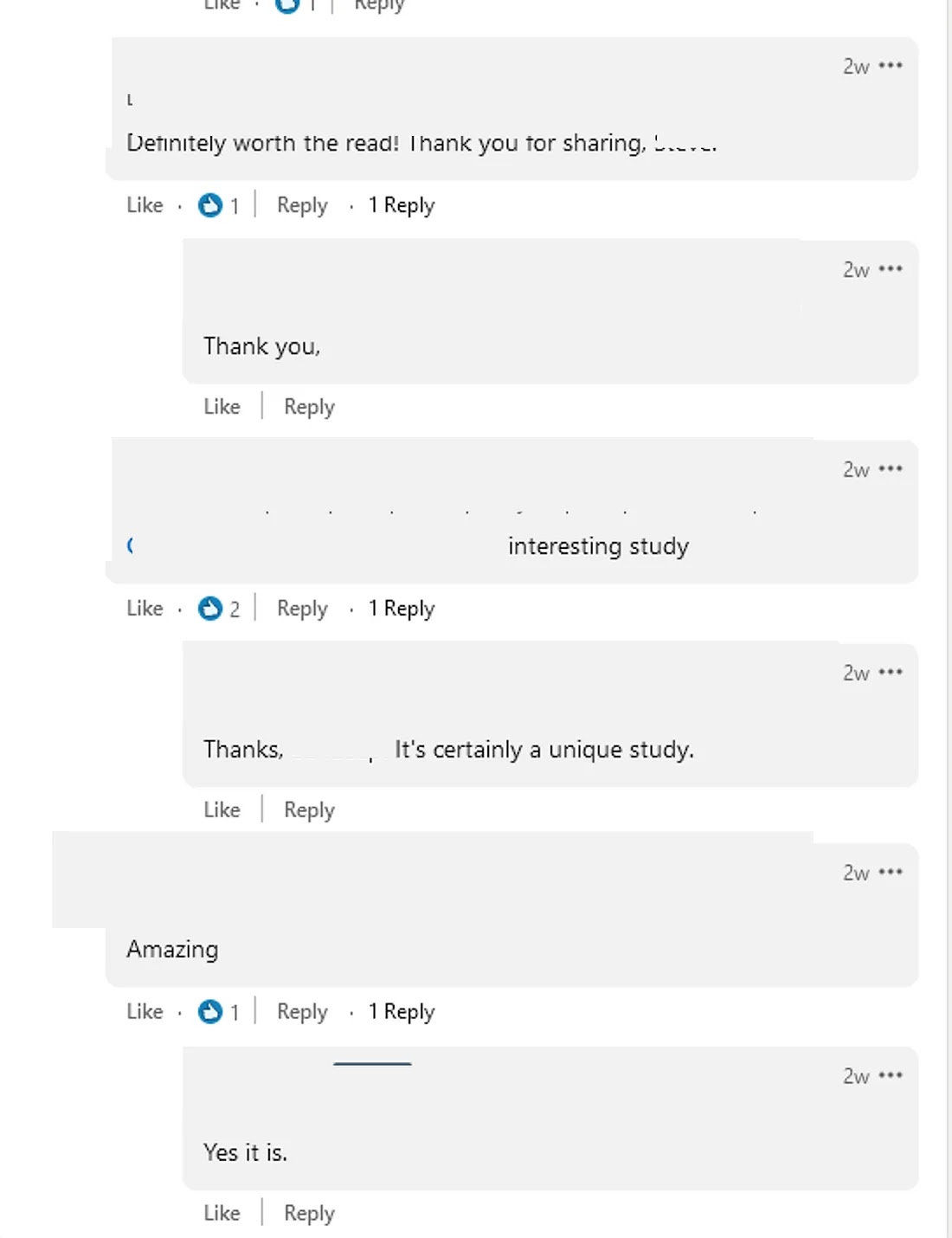
    to the August 2021 comments.  Notice how even if this data cannot be
    substantiated, folks are still eating it up! 99 reactions last I
    checked:

    Who needs sources?


    (Blocking all these names is making me crazy!)

    Or at least, they are eating it up if they work at that same company as Author A.


    But there are a few of us VR Research Jedi’s prowling that send up warnings.  


    My
    colleague is much more even in tone than I am but they do strike the
    right balance with saying that we ARE hoping to find positive learning
    research as it relates to VR.  

    But this isn’t it.

    P.S. I don’t know why Author A posted twice.  Zealous much?

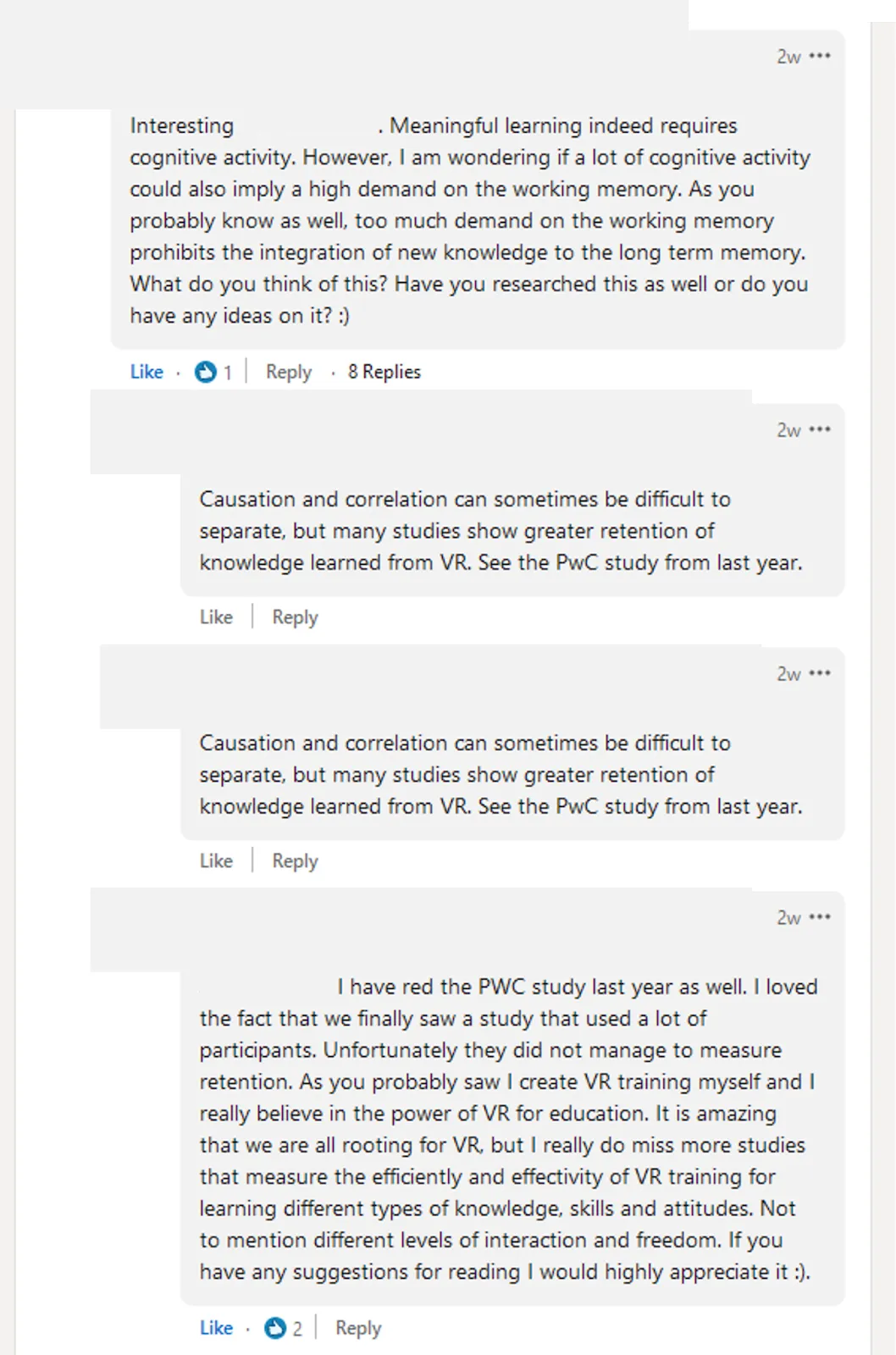
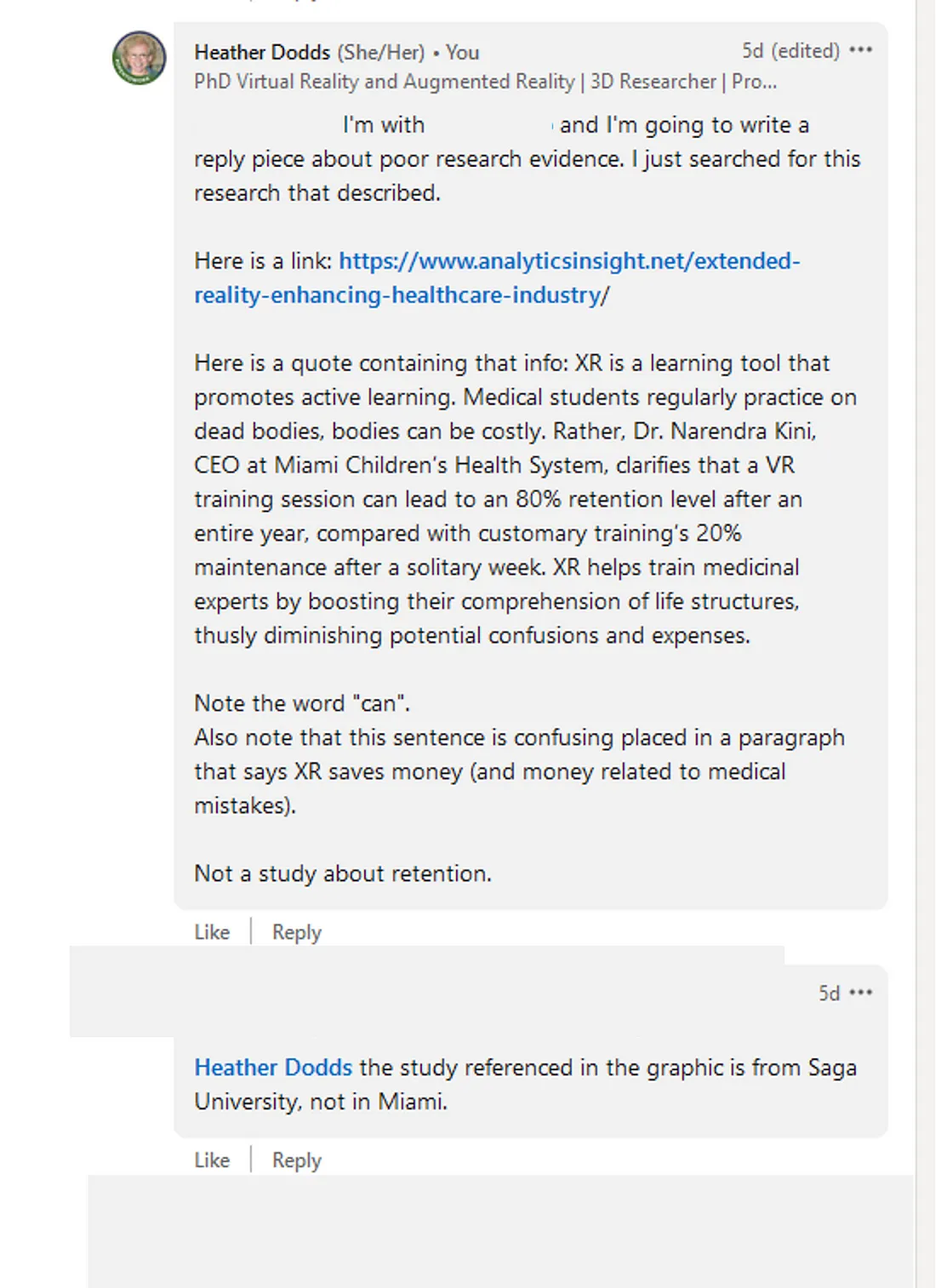
    I’m coming in here.  This is the link I share: https://www.analyticsinsight.net/extended-reality-enhancing-healthcare-industry/


    Uh. 
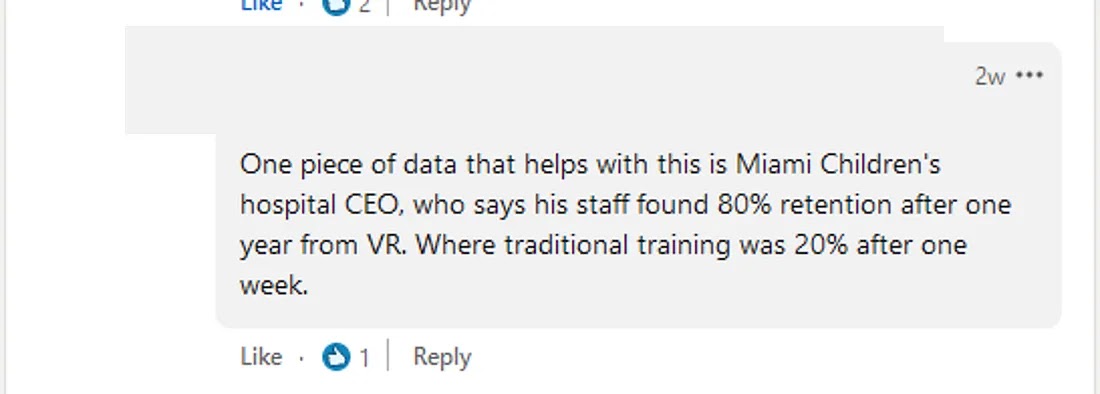
    I didn’t respond after this.  Author A apparently didn’t realize that I
    was questioning the research in HIS OWN reply immediately above about
    the “Miami Children’s Hospital CEO”.  Perhaps he thought I was so
    excited about his first graphic.

    If you cannot properly mansplain to me, I just don’t know what else to say.


    Note:
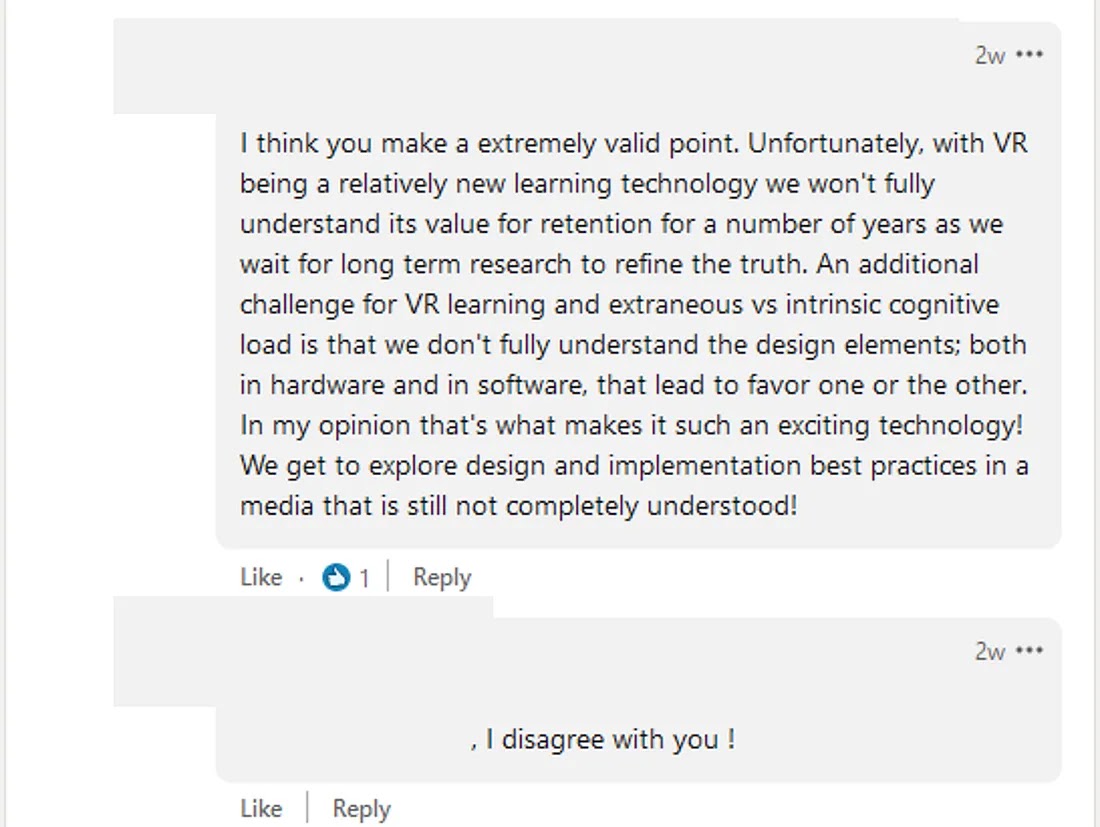
    side fight broke out! Although, I’m not sure what they are fighting
    about…  I suspect autocorrect did it because that’s one perky
    disagreement.  Tee hee hee…


    There
    is one honorable mention of a person that asked for “we need a
    concerted effort to also communicate the methodology and external
    validity for such research. For industry adoption, particularly
    healthcare, the core elements of research must be extracted and
    communicated alongside the highlights”

    Hey, nice try buddy!


    Note that all of the positive supportive comments came from people working in the VR industry.  That’s not bad, it should just be noted.

    If you are selling me something, don’t I have a right to doubt the research you hand me?


    FYI,
    during the writing of this article, this same Author A continues with
    the “I’ll tell you something tantalizing about VR!” and then makes you
    click on a link where:

    He makes money.

    He doesn’t have to give you more information or sources.


    That LinkedIn link right there? Goes to Medium, for a “2 minute” article. I didn’t click on this.

    Why does all of this matter?

    Because
    media will never influence learning.  Yup. I’m a Clarkist.  Studies
    that say that VR makes eye-popping differences in learning is not
    supported by every media study we’ve ever done as humanity since the beginning of time.  

    If
    we go around telling everyone that all students will be geniuses and
    that VR will cause six fold increase in grades, those of us that DO
    support VR for education are going to be out of jobs pretty quickly as
    that bubble will pop.

    ~~

    I recently watched Exodus: Gods and
    Kings and I love this exchange between Moses and Malak (who is the
    messenger of God).  Moses is fed up with Egypt/slavery and is being told
    to cool his jets by God.

    Moses: So what do I do, nothing?

    Malak/God: For now, you can watch.

    ~~

    You can watch. 

    You can watch as I tear this research up.


    Clark, R.E. Media will never influence learning. ETR&D 42, 21–29 (1994). https://doi.org/10.1007/BF02299088

    #edtech #research #VR #VReducation #VRResearch #TooGoodToBeTrue #MediaWillNeverInfluenceLearning #InstructionalDesign


    This is a copy of the article I published on Linked In on August 17, 2021

    This post was edited on April 11, 2026. The font was improved and the images re-placed. Slight editing of content.
  • Virtual Reality for Soft Skills…Maybe

    Virtual Reality for Soft Skills…Maybe


    There you are, eating your morning bowl of cereal. You glance at your social media feed. Up pops these images:


    Screen captures of infographics and images made from the 2020 PwC VR for Soft Skills Training Report. In the lower right hand corner, a person is wearing a headset and looking amazed.

    Wow. Even the infographic people seem amazed.

    But
    if it is too good to be true, it probably is, at least where research
    and marketing intersect. Not to worry! I’m here to tear apart this and
    see what’s inside. Can virtual reality (VR) teach soft skills training?
    Verdict: Maybe.

    My Executive Summary:


    Heather's summary of the PwC analysis:  2 results are garbage (confidence and focus) 1 result is just okay (faster), 1 result in good (more effective) and 1 result was buried, than the learning had no significant difference.

    Let’s start with the nuts and bolts.

    Citation & Report

    Mower,
    Andrea. “The effectiveness of virtual reality soft skills training in
    the enterprise: a study”. [Place of publication not identified]:
    PricewaterhouseCoopers, 2020. Online. Internet. 21 Aug 2021. .
    Available: https://www.pwc.com/us/vlearning.

    Despite that
    academic-y looking citation, the writing does profess itself to be a
    report, not research. That’s good because reports are not held to the
    same standards of rigor as research.

    What you find at that web
    link, however, is NOT the full report. You are looking at the corporate
    summary. Remember that technically, PwC is not in the VR business (a
    plus) so they are not selling you something about VR. They are only telling about how some VR training went at their company.

    Something
    quoted the report as “73 pages” but the website is not 73 pages long,
    so I had to find the actual report. That took a little more digging but I
    found it here: https://www.5discovery.com/wp-content/uploads/2020/09/pwc-understanding-the-effectiveness-of-soft-skills-training-in-the-enterprise-a-study.pdf

    Experimental Design

    Disclosure is right up front (first sentence!) that:

    “supported by Oculus for Business and Talespin,”

    Good
    disclosure; it’s good practice. While I’m not loving that it is
    sponsored by a VR headset manufacturer and training creator, knowing
    this lets me view this with the appropriate amount of critical thinking.

    Their study started in 2019 and ended in February 2020, so they indicated when it was run.

    Note:
    Every piece of research that touches 2020 and forward into the near
    pandemic future, should clearly mention WHEN the study was run, because
    the COVID pandemic is impacting every part of our lives.  COVID does impact “reports” and we need to know if these are ‘at-home-stressed-but-sent-a-headset’ users.

    They had a hypothesis: Our
    hypothesis was that training using VR is more effective in achieving
    learning outcomes than traditional training methods (classroom or non-VR
    digital experiences).

    Remember that a
    hypothesis in experiments is good. Hypotheses guide us to our data and
    results. Bias in experiments is bad. Bias makes us ignore our data and
    results.

    And PwC defined “more effective”  with:

    • Employee satisfaction
    • Learner flexibility
    • Comfortable learning environment
    • Improved attention
    • Higher information retention
    • Confidence building

    That definition of “more effective” is a little murky. Usually time plays a very definitive role in “effective” measurements. For example: widgets produced over time. Here, time is not actually mentioned and yet time is prominent in the infographic stats later. Hmm..

    In their experimental design, PwC appears to think that they have made comparable training: 

    • classroom,
    • e-learn,
    • v-learn (VR).

    Oo, bust here.  While I hat tip to the innovative thought process expressed here, to take advantage of what VR can offer…

    “The
    classroom and e-learn course experiences were linear: A video was
    shown, the learners asked some questions, then the next scenario was
    presented.”

    “However, we determined this linear approach would not
    leverage any advantages of the VR modality. We hypothesized that
    placing the learner directly in the scenarios covered in the curriculum
    and giving them the ability to act as they might in real life would be
    more rewarding for them.” (p. 16)

    … but, owch, non-comparable methods!!  If you literally taught the information differently, you cannot compare the methods and thus, you cannot compare the results
    The key to making a good design that includes VR (and I’m giving you
    the $64,000 answer here for anyone designing “compare” research with VR)
    is to put it up against something very, very cognitively similar. 
    Right now, that technology is 360 video where you put in branching
    decisions. And add haptic bodysuits & controllers. But that convo
    is for another day.

    Now to parse out the difference between 360
    video and VR, you’ll need thousands of users. Not many investors right
    now have the willingness to spend thousands of dollars in equipment and
    time to collect that much data.  And even when you get there, you
    probably won’t find much a of difference. Why? Well, take a look at what
    you designed.  If you make a cognitively similar experience and run
    humans through it, it actually makes sense that no significant difference in the data will arise. 
    Remember at this point, I’m talking about learning outcomes ONLY, no
    other characteristic. Also, go back and look at the hypothesis. They
    already thought that the ‘learning outcomes’ would be the same (READ:
    same scores on tests) but that they could achieve those learning
    outcomes “more effectively”. That’s interesting. I wonder how much of
    this report was written from hindsight and how much was written before
    the study started. (This is why you write your hypothesis first–before
    your study.) That hypothesis is now possibly showing a bias…did they
    *think* it was going to turn out…the way it did?

    Number of participants: 1600 possible. Good. But they never disclose how many learners they actually had in each group (their Ns).
    Therefore, I’m going to call this a strong negative because they could
    have included that number (I don’t see a business reason to conceal
    it).

    Experiences: 5-7 minutes long

    Did use Oculus Quest (ahem)

    Did use Oculus for Business for remote device management

    Honorable
    mention in the report: Using the phrase “not the most gratifying” when
    talking about tagging and inventorying what must have been more than 300
    pieces of equipment.
    One more small note: The report does a nice
    job explaining how they decided to buy 100 headsets and what the cost
    and time of developing the v-learning training was. It is outside of my
    scope to analyze that but I will recommend it as good to read. Remember
    that if the cost of v-learn is dropping, it becomes a better and better
    choice over time. They do those calculations and find that it becomes
    the better choice at 3,000 users/learners.

    Let’s see what the data shows:

    Screen capture of the 4 key metrics that were made into the infographic, claiming that VR is: 4x faster to train than the classroom, 275% more confident than the classroom learners,  3.75x more emotionally connected than classroom learners, and 4x more focused than their peers.

    4x faster to train than in the classroom

    I
    might have to cede this one right off the bat because VR does provide a
    1:1 experience that most classrooms cannot beat. How many classrooms
    can provide– minute for minute– the same 1:1 attention of the teacher
    to the student? Erps. Few.

    Fly in ointment? VR can cost a great deal of money for development and for the equipment. READ: the set up.
    Counter to that?
    VR can be done for very little money and because training can be
    replicated a billion times when a 1:1 teacher cannot be replicated, VR
    wins the day on this claim.  READ: it CAN save time but after
    development is done.

    I still don’t like comparing “classroom” to VR, such a not-fair comparison.

     “What
    took two hours to learn in the classroom could possibly be learned in
    only 30 minutes using VR. When you account for extra time needed for
    first-time learners to review, be fitted for and be taught to use the VR
    headset, V-learners still complete training three times faster than
    classroom learners. And that figure only accounts for the time actually
    spent in the classroom, not the additional time required to travel to
    the classroom itself.”  

    In the report, they shared numbers in minutes. 

    Classroom:
    2 hours (Watch that crossfire, boys! They didn’t express this as 120
    minutes. Heather gives PwC a strong look for that. Don’t be mean. Or
    get a better editor.)

    E-learn: 45 minutes

    V-learn: 29 minutes

    29 * 4 = 116

    116 is close to 120. Therefore, saying V-learn is 4 times faster is accurate. [Edit: In future writing, I clarify that stating “4 times” or “4x” is not a data lie, but it expressing a truth in a deceptive way. Learners didn’t learn four times faster, the literal training session was 1/4 as long in time. So they sat through LESS training time. That doesn’t mean that they learned faster.}

    275% more confident to apply skills learned after training

    This is a poor item to measure when we are focusing on learning outcomes.  The Dunning-Kruger effect says that those least able to accurately self-measure something are actually the worst at that thing.

    They
    make an argument that particularly with soft skills, confidence AFTER
    training would help implement the soft skills in the workplace. I liked
    their design inside the V-learn module. Learners had to say their lines in the simulation. Nice touch!

    But alas, this is all future prognostication and not actual data. We can hope for something but that doesn’t mean that our hope leads to actual results.

    Screen capture of graph from report showing all numbers higher than 100% for confidence, but we can't tell what the percentages are exactly higher than.


    166% and 275% of what?  Where is the 100% in this diagram? Said another way, what is the baseline? Zero?

    I still can’t find this in the report.

    3.75 x more emotionally connected to the content than classroom learners 

    I’m
    not going to pick this one apart much because the errors should be
    apparent.  Often VR presents training as first person– meaning the user
    looking through the headset is often the protagonist of the adventure.
    Therefore, a story happening personally to the user creates more emotional connection than the same story in a classroom. This comes from the bucket labelled obvious
    and is frivolous data.  It also blatantly shows what’s wrong with using
    non-comparable instructional designs.  This is an apples to oranges
    comparison.

    FURTHER, newer data is showing that types of empathy count…not just general empathy or emotional connection.

    4x more focused than their e-learning peers

    There
    are some great accessibility studies and autism spectrum studies coming
    out that are showing us some very interesting research (really, it’s a watch this space
    stuff) that VR can be more cognitively overwhelming for some learners
    and hence every measurement that says learners have more brain
    engagement could actually be learners overwhelmed (yeah, obvious bucket
    again).  

    But let’s look at what was actually said here:


    Screen capture of table from report: Focus is on the questions:  How many times were you multitasking or distracted during this experience? and How many minutes do you estimate it took to get back on task?

    “With
    VR learning, users are significantly less distracted. In a VR headset,
    simulations and immersive experiences command the individual’s vision
    and attention. There are no interruptions and no options to multitask.
    In our study, VR-trained employees were up to four times more focused
    during training than their e-learning peers and 1.5 times more focused
    than their classroom colleagues. When learners are immersed in a VR
    experience, they tend to get more out of the training and have better
    outcomes.”

    It doesn’t say how the “more focused” was measured? I
    wonder?  Remember the clue to look closer is when the presentation tends
    to do a ‘hand wave’ approach on something.  It’s equivalent to
    misdirection by a magician.  If you look over here, you are not looking
    over there.  The text says “There are no interruptions and no options to
    multitask”.  Yes, the Oculus Quest headset design doesn’t allow a user
    to look around or to (reasonably) be interrupted by messages from outside of
    the experience.  But did that mean interruptions didn’t happen?  What
    about a “this is pulling my hair” message?  Or “it’s fuzzy” or even “I’m
    gonna puke.”   Those are interruptions caused from the inside out. 
    Were those counted?

    In the report, it looks like self-disclosure:

    Screen capture of Improved attention section of report: 45The Effectiveness of Virtual Reality Soft Skills Training in the EnterpriseAs identified in our key findings, VR-trained learners were up to four times less distracted during training than their e-learning peers and 1.5 times less distracted than their classroom peers. This was self-reported, and the team did not use any passive technology to observe this attribute. Based on experience and months of observation, the team actually felt the self-reported statistic was lower than what we observed. However, the statistic was significant and should result in higher learner comprehension and retention.

    At
    this point in the paper (p. 45), my hackles are going up because you
    cannot see data (self-reported), acknowledge it (we thought it was
    higher), then throw it out (“the statistic was significant and should
    result”??).  What? PwC?  My doubt meter is red-lining at this stage.
    Insert Mr. Potato angry eyes.

    5. VR learning can be more cost-effective at scale

    Interestingly,
    this didn’t make an infographic!! What?? What a shame because right
    here I AGREE with this paper!!!!!!!!!!!! ARGH!~!

    YES, YES, YES. VR
    is more expensive to make once (but that cost is dropping) and it can
    be replicated (which is where you win) but it is also showing
    impressive  results in FLEXIBILITY (meaning, you can change up the
    conditions quickly). VR can be made cheaply, which also means basically,
    but that might not be a bad thing.  Get over the hump of the novelty
    effect and design a basic experience which is accessible to many
    learners and you are in an effective horse race with other forms of
    learning.  What I’m trying to say is that basic and/or cheap isn’t
    necessarily bad in VR.  It should not be thrown out. Because this is
    where VR is going to eventually win.

    They are using their own
    costs and admittedly, the fact that it’s a large study now hurts them
    because that means more money was outlaid to get the training started.  

    Revisiting how many actual participants???
    They said 1600 eligible but they never said how many it was AND then
    they said that they “offered” v-learn to the classroom and e-learn
    participants as an option (and those went on to answer a smilie sheet on
    how much they liked it).

    One Result Buried

    OMG look at this that they tucked into the back of the paper, I didn’t even know it was there!!!!! Page 44.

    Screen capture from Higher Information Retention section of paper: We quickly discovered retention scores were inconclusive, as the delta between pre- and post-assessments in each modality was not significant. Indeed, the assessment team underestimated the previous knowledge experience our test population had on the diversity and inclusion topic. In hindsight, we should have selected a topic that was not already in our curriculum or selected a different test group that had not already been immersed in similar training.
    PwC study conclusion: No significant difference in retention

    No SIGNIFICANT DIFFERENCE in RETENTION!!!!!!!!!!!!!!!!!!!!!!!!!!!!!!!!!!!!!!!!

    I’m
    currently on the floor laughing because that is what research data has
    lead us to predict all along.  No difference.  They’re blaming the
    content in this case. OK, picking myself up off the floor and dusting
    myself off. Insert droll look here. It’s not the content, yo.

    What PwC is missing right here is this: No significant difference results eventually means that the cheaper option to learn the same material will be market dominant. Translation: make VR easier to MAKE and VR will be bought. Cha-ching.

    Final verdict: Mixed Bag

    •2 metrics (confidence, focus) = garbage

    •1 metric (faster) = just okay

    •1 metric (cost effective) = good

    •1 result (no significant difference) = buried

    Conclusions

    • Enough doubt to worry about other PwC infographics

    • Overall, not bad for a “report”

    Not research.

    Can
    VR teach soft skills? It appears so, yes, at least as well as
    classroom and elearn options. (No comment on the quality of the
    instruction or the assessment.) Right now, v-learn is an expensive
    choice. But the price for development IS dropping. I have high hopes.

    Title image for article: Analysis of PwC Virtual Reality (VR) Soft Skills Training Study 2020. Verdict: Mixed Bag. Image of shopping cart with various brown boxes.

    This was my 3rd planned article on analyzing research.

    1st article Study Does NOT Show That Instructional Designers Drive Better Student Outcomes.

    2nd article “What Happened When Student Brains — On VR — Were Scanned” Is Analyzed

    This is my 2nd article of three specifically about VR research.

    1st article “What Happened When Student Brains — On VR — Were Scanned” Is Analyzed

    More
    to come in the next few days because the next article is already
    written. That will end, hopefully (!), my series on poor VR &
    learning research. [Edit from the future: The bad research as kept on coming. My “Seeking Integrity” Series refreshes this topic.]

    #Research #VRResearch #VRReport #PwC
    #SoftSkills #Faster #Confidence #Emotion #Focus #NoSignificantDifference
    #OculusQuest #elearn #vlearn #Talespin #NotResearch


    This is a copy of the same article that I posted to LinkedIn on August 25, 2021. This post was slightly edited on April 11, 2026 with an improved font, re-placed banner image, and added link to further writing on this PwC study.

  • XR Platforms

    XR Platforms


    Just a list of the XR Platforms that I have visited and analyzed for use:

    1. 3rd Rock Grid ~2010
    2. AltspaceVR  – 2020 and 2021
    3. Anyland – 2020
    4. Cryptovoxels – 2020
    5. Engage – 2020
    6. FrameVR – 2020 and 2021
    7. Heritage Key (defunct)  ~2009
    8. High Fidelity – 2020
    9. Mozilla Hubs – 2020 and 2021
    10. iSeeVR- 2020
    11. NeosVR – 2020
    12. JanusXR – 2020
    13. rumii – 2020
    14. Sansar 2020 and 2021
    15. Second Life 2008 – 2021
    16. Sinespace – 2020
    17. Somnium – 2020 and 2021
    18. Somnium WebXR – 2021
    19. RecRoom – 2020 and 2021
    20. OpenSim (Hypergriding) ~2010
    21. Vesta JanusXR – 2020
    22. Virbela – 2020 – 2021
    23. YouTube (live events overlaid with XR components) – 2020
  • Best Avatars in XR

    Best Avatars in XR


    At a recent conference, I asked a panel for their opinion of best clothing/avatars in VR right now. To my surprise, one panelist answered “RecRoom”.

    I thought about her answer afterwards and realized that she was probably referring to the creativity that the avatars can wear many different add-ons in that platform. Users can each be very unique with what they purchase and wear in RecRoom.

    But also interesting in RecRoom is the fact that the base avatar is not gendered.  An avatar is made male, female, or other completely by the choice of clothing or add-ons. The base shape is exactly the same size (no difference for child or adult, same head, torso, and hands).

    Interesting choice…but I disagree for different reasons. I pick a different platform for a different reason altogether.  To me, it’s not about how the avatars look, it’s how the avatars move.

    NeosVR

    First place in my judgment of best avatars in XR in 2020 is NeosVR. (By November 2021, it appears to be now named just Neos.)

    NeosVR is a download and I found that I really needed help to set up an avatar.  So the entry point is really high on the difficulty scale.


    Spaces in NeosVR in 2020 could hold a maximum of about 40 users (somewhat low, now in 2021 compared to the competitors). Neos has a nice Discord Community and I recommend it.

    However, NeosVR has one feature in April 2020 that was ahead of the pack:

    Avatars could – in live time – impact OTHER avatars.  That feature barely exists as I write in November 2021.  I saw one avatar reach up and wiggle the ear of another avatar.  That’s not a script, program, animation, or pose ball—it was spontaneous and live.  Neither avatar user (as best as I can determine) was wearing a haptic suit (over the ears?) so that point is irrelevant.

    But the closest I’ve seen to this in other platforms so far is the fictional moment from Ready Player One when Art3mis touches Wade Watson on the chest and he’s wearing a haptic vest and “felt” it.  Of course, that’s all staged…touching a vest that is designed to be touched isn’t really news.

    If you’d like to dive down that rabbit hole, go ahead and read Ready Player One fully as the book because it goes “all the way” and I think provides a good commentary on body touching in VR.

    Spoiler alert: people reject it.

    There is another close item to this but…now I can’t find it (very typical for me). It is the grabbing and moving of fabric in real time in VR.  Again, NOT a program, not planned, not preset. It is spontaneous. So we are getting very close to this being in EVERY avatar…very close now.  We’ll barely remember the days when we could not do this.


    2nd place is a love/hate time with Sansar and their avatars.

    First, the hate. I hate that, in 2020, of the dozen or so default free avatars you could pick, the ONLY female avatar was scantily clad and her boobs deserved their own zip code.  Really.


    But now the love. Once I figured out how to change my avatar AND dress the clothes to fit her body, the avatar’s thighs jiggled!  Since we tend to see our avatars from behind as the default camera view, I was delighted to see my avatar run, dance, and jump with some real junk in the trunk.  It was awesome. Well done, Sansar.

    P.S. Worst avatars in XR?  Oy. I gotta say that the limited choices in both Engage and Virbela are tough to look at. 😕

  • Best Starting Place for Complete Novices to XR

    Best Starting Place for Complete Novices to XR


    When I’m introducing folks to XR as a designer, I often list the pros and cons of each platform, game, event, etc.  But those words are things I mention and then are lost.  My “Best Of…” post here will be an attempt to document and capture those points.  Mind you, the Best Of [Whatever] does change over time!


    Best first starting place for complete novices in XR

    WebXR, Mozilla Hubs, Apart Gallery by Paradowski Creative. 


    What is it? A art gallergy of 2D and 3D art related to the concept of social distancing during a pandemic. Art focuses on posters hanging on walls throughout multiple rooms (walls, floor, doors, ceiling), art is “propoganda” style related to public health.

    Where? https://apartposters.com/, Select “Visit Virtual Gallery”

    Pros:

    WebXR 

    • you can get there via a browser windo
    • 2D reduces the possibility of vertigo
    • No need to download an app
    • Can get their via mobile, web, or headset (aka no special equipment needed)

    Ease of entry

    • Users are handed a url or link and usually know to single click on that
    • Entering the first time is relatively fast (I think I counted 5 clicks for Hubs)
    • No need to necessarily know in advance who is attending
    • Avatar choices have always included non-binary and non-humanoid choices

    Ease of use

    • Can navigate by keyboard and mouse
    • Teleporting and flying are possible
    • Spaces can be realistic and simplistic
    • Sound works well (few errors)
    • Controls within spaces are intuitive 
    • Spaces can be saved or discarded.

    Best aspects overall

    • Preserves privacy – I would bring ages 5 -105 into these spaces
    • Entry requirements are really low.  Basically need electricity, web browser.
    • Can easily import from Sketchfab repository of 3D objects.