Tag: VR

  • Seeking Integrity In VR Educational Research 2: PwC VR for Soft Skills

    Seeking Integrity In VR Educational Research 2: PwC VR for Soft Skills

    Decorative image of a cloaked woman going through paper archives

     Credit: Me and Midjourney

    My first article in this series garnered so much attention! But many folks tried to pass me Mirjam Neelen & Paul A. Kirschner’s Truth or Truthiness? Analysing a VR Study Using Gorard’s Sieve article on the PwC report entitled “The effectiveness of virtual reality soft skills training in the enterprise: a study” and all of its associated webpages like this one. I was like, I know! Mirjam & Paul wrote their article 2020 and I wrote about it in 2021. What’s cool is that separately, we both came to the same conclusions. That’s a good sign for our conclusions!

    Short version: we both cast strong doubt on any conclusions.

    Still, I realize the world does not revolve around me (sigh!). Some folks might have missed my long stream-of-consciousnesses article about the PwC report. I decided that the second article in this series should be an abbreviated and updated critique. Bear in mind that to reach the LinkedIn audience, I have to leave much nuance by the side of the road. If you have questions, just ask!

    As Mario says “Here we go!”

    What is Said About The Report

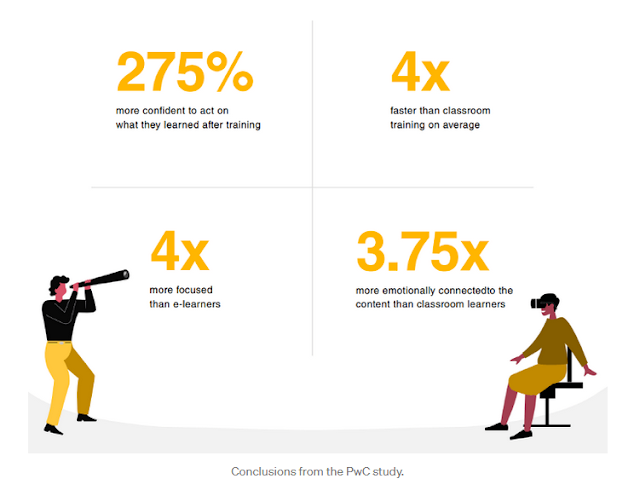
    This infographic summarizes the dominant conclusions:

    • 275% more confident to act on what they learned after training
    • 4x faster than classroom training on average
    • 4x more focused than e-learners
    • 3.75x more emotionally connected to the content than classroom learners.

    nfographic: 275% more confident, 4x faster, 4x more focused and 3.75x more emotionally connected to the content.


    LinkedIn post that mentions 4 times twice and nearly four times once.

    Capture of how the PwC report is being talked about on LinkedIn.
     
    A few more quotes, thanks to Google and a search on “VR 4x faster.” What seems to be a pattern about all of these results?


    What do these Google results have in common?

    They are all companies that sell some sort of VR product or service.

    Because I was curious, I checked out that vrowl dot io link (“Virtual Reality training is not effective”) just to see if it was presenting an alternate opinion. It’s a strawman argument; it puts up “not really real” protests against VR for learning and then explains them away. I’m telling ya, Beware the VR Strawman.

    What the Report Says

    Eckert, D., & Mower, A. (2020). The effectiveness of virtual reality soft skills training in the enterprise: a study. https://www.pwc.com/us/en/services/consulting/technology/emerging-technology/assets/pwc-understanding-the-effectiveness-of-soft-skills-training-in-the-enterprise-a-study.pdf

    Let’s ask Google Scholar what it thinks. It’s coming up with 11 cites. That’s not much at all. But as I showed above, the money shot is on the Internet, not in academic articles.

    Truly, the 4x faster learning quote is the runaway train of this report. 

    (more…)

  • Seeking Integrity in VR Educational Research

    Seeking Integrity in VR Educational Research


    Banner image of a woman in a hooded cloak looks out from a dark scene
    Credit: Midjourney and me

    I’m starting a new article series today, calling out ‘bad research’ or research that is quoted badly in virtual reality for educational use. I thought I would start with a whopper – a really egregious example to start this series with a bang. Then I checked my notes and realized that this example is from LAST MONTH, June 2023. I’m not even going into the vault for this. I’m barely picking myself up off the ground from the shock wave.

    So, like Mario says “Here we go!”

    What Is Said About The Research Versus What The Research Says

    June 2023, LinkedIn Post:

    “According to a study from the University of Maryland in 2018, learners remember an astounding 90% of what they experience in VR compared to merely 10% of what they read and 20% of what they hear.”

    LinkedIn post with quote and photo. Details blurred.

    I believe this is the research referred to:

    Krokos, E., Plaisant, C., & Varshney, A. (2019). Virtual memory palaces: immersion aids recall. Virtual reality, 23, 1-15. https://obj.umiacs.umd.edu/virtual_reality_study/10.1007-s10055-018-0346-3.pdf

    Hey, I’ll give you the abstract because I know you don’t like to read long papers:

    “Virtual reality displays, such as head-mounted displays (HMD), affords us a superior spatial awareness by leveraging our vestibular and proprioceptive senses, as compared to traditional desktop displays. Since classical times, people have used memory palaces as a spatial mnemonic to help remember information by organizing it spatially and associating it with sali�ent features in that environment. In this paper, we explore whether using virtual memory palaces in a head-mounted display with head-tracking (HMD condition) would allow a user to better recall information than when using a traditional desktop display with a mouse-based interaction (desktop condition). [OK skip to here because this is the interesting part:] We found that virtual memory palaces in HMD condition provide a superior memory recall ability compared to the desktop condition. We believe this is a frst step in using virtual environments for creating more memorable experiences that enhance productivity through better recall of large amounts of information organized using the idea of virtual memory palaces.”

    Google Scholar tells me this study has been cited 461 times. That’s a low-medium citation number. Not bad, and remember that’s in ~3 years of time.

    Believe it or not, I’m walking RIGHT PAST that 90%, 10%, and 20% because it has already be debunked here and here. Also, to be fair to the research paper, it never quotes those 10 and 20% numbers.

    My Take on the Research

    Research found 90.48% recall in the headset condition, with a 78.57% score from the desktop display control group. So that’s ~10% higher with the headset. 

    From Section 4.1 “Using a paired t test with Bonferroni–Holm correction, we calculated p = 0.0017 < 0.05 which shows that our result was statistically significant.”

    Interesting. I’m not familiar with Bonferroni-Holm correction. Just looking at it, it appears to be a method of discarding some data. I wonder if NOT using it showed a not statistically significant difference between the 90 and 78. Their n was 40. Smaller group sizes means it can be harder to justify the data as fitting a normal bell curve.

    Figure 5 shows the data and just looking at it, you can see that the numbers landed in similar scores. The boxes overlap, so whatever the effect of VR is, it’s not that substantial in this study. Students were learning, regardless.

    But here comes the whopper. Check out this little detail in the Materials section:

    “For this study, we used a traditional desktop with a 30 inch (76.2) cm—diagonal monitor and an Oculus DK2 HMD. The rendering for the desktop was configured to match that of the Oculus with a resolution of 1920 × 1080 pixels (across the two eyes) with a rendering field of view (FOV) of 100◦. In order to give the desktop display the same field of view as the HMD, the participants were positioned with their heads 10 inches (25.4 cm) away from the monitor.”

    10 inches away

    The “control group” sat 10 inches from their desktop monitor to use the desktop condition.

    WHO DOES THAT?

    You know, I was curious. I grabbed my ruler. 

    How far away are you sitting from YOUR monitor?

    I’m currently sitting 24 inches from my monitor. I leaned in to feel what 10 inches is like.

    At that point, it became no wonder to me that the control group scored about 10 points lower. It was maddening. Remember, the learners had to look all around themselves so completing learning at 10″ from the monitor would be…uh…weird?

    This is a great example of not seeing the forest for the trees in VR in education design. In order to match the field of view, they forced learners to unusually use their desktop monitors.

    There is too much. Let me sum up.

    The quote is from a keynote speaker at a research conference. I can’t believe anyone in the audience did not flag the play on the quote, the percentages, or the design setup of the U. of Maryland study. At the industry.

    • The difference between 90 and 78 *might* be too close to call a difference caused by VR.
    • Setting up learners to use a monitor from 10 inches away is unusual, to say the least.
    • When research sets up unfair comparison conditions, the results should be questioned.

    As Hill Street Blues would say, “Let’s be careful out there.”


    What do you think?

    #VirtualReality #VR #XR #VRForLearning #Technology #Future #edtech #learning #education #UserExperience #InstructionalDesign #research #ComparisonResearch #Media #MediaForLearning #BonferroniHolm #ImmersiveExperience #Desktop #Design #MemoryPalace #ResearchIntegrity


    This article is co-published to my LinkedIn account here: https://www.linkedin.com/pulse/seeking-integrity-vr-educational-research-heather-dodds-ph-d-


    Attribution-NonCommercial-ShareAlike

    CC BY-NC-SA

  • I’ve worked in an XR office: No matter what you’re imagining it’s like, you probably got it wrong.

    I’ve worked in an XR office: No matter what you’re imagining it’s like, you probably got it wrong.


    Graphic with text Working in an XR Office

    I’m late getting this post out. This accompanies a video. The initial hubbub about virtual offices from Meta Connect 2022 is over.

    However, I like to live out the phrase: The early bird gets the worm but the second mouse gets cheese.

    I like to stand back and watch the first wave, like a Twitter trending word, pass over. It’s really often people rejecting something without having tried it.
    Then I watch for the next, slower wave of reactions. Those people that
    really gave something a try and then have something to say about it.

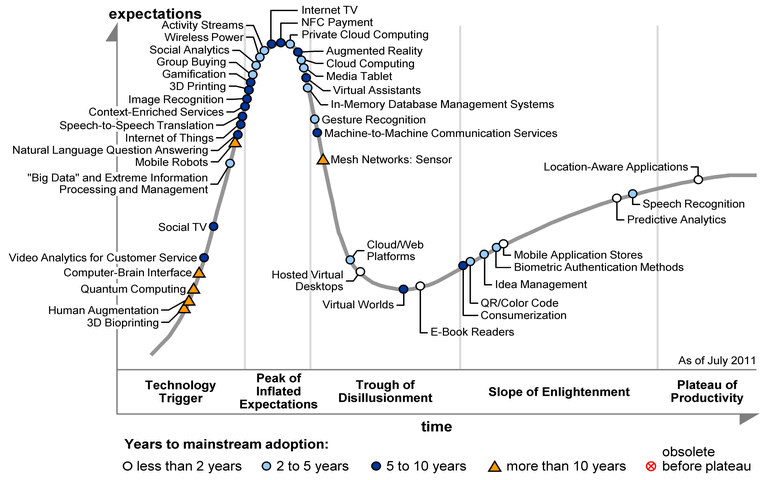
    It’s like watching a Gartner Hype cycle wash over.


    Source: https://www.wolfsheadonline.com/gartner-hype-cycle-virtual-worlds-in-the-trough-of-disillusionment/

    I think that we are now going up the Slope of Enlightenment. It is not easy going and the Gartner Hype cycle has many problems.

    This video is not about working in an XR office in game design or evaluation

    or spending inordinate amounts of time in VR,

    and it is not about working in a VR headset for a week.

    It is about working remotely and having an XR office component to your life. 

    (Video credits to Meta Connect 2020, Shapes XR, and Immersed, Ben Fern at Variant )Professor Sylvia Pan crediting Brad Lynch)

    In other words, adding XR to your life like you’ve added Zoom.

    Yeah, I can hear you. You’ve added Zoom but you don’t like it. Join the crowd.  I didn’t say work was something you liked either. Buckle up buttercup,
    this post is not about what you will like. It’s about what you will normalize. If the Queen could get into Zoom, you can get into XR.

    Remote Work

    I’m going to dwell on “remote” for a moment because I like to draw analogies and I think the remote work phenomenon
    is in such recent human memory that I can use it as a good example (and
    indeed, just like XR, I’ve worked remotely for YEARS before others
    warmed to it so I have a good view of the good and bad points of
    adopting remote work.)

    Before 2020, remote work had a poor reputation.

    COVID changed that. Suddenly everyone had to work remote, if they could.  And a new element was discovered: remote work does produce results. It’s not a cheat. It’s not worth less.

    Capture of Reuters article Remote Work is Just the Start

    This stymied those so in love with working in the office. What? I can’t actually WATCH my workers work?

    You
    know, I’ll just sit over here and eat popcorn while you–in the
    office–shot the shit for what adds up to HOURS EACH WEEK and you
    claimed that was not only work, you claimed that got you ahead at work.
    Yeah, that “if you talk with the boss at the water cooler, you get
    ahead” thing. I’ve got news for you. If your boss promoted based on
    that, your boss understands zero about diversity.

    Many
    feel so differently about remote work that it is no longer a negative
    stigma attached to WANTING to work remote full time.  That’s a huge,
    huge change from even 2 years ago.

    Capture of Nasdaq article Especially now, employers should embrace remote work model


    I
    noted at a conference just 2 weeks ago that we don’t even use the word
    “Skyping” anymore. It’s “Zooming”.  Did you notice that? I’m going to
    bring up Zoom again later. Pin that.

    Decorative image of Skype logo with a Do Not Circle over it.

    60% of workers now want remote options.

    Capture of article with heading Over 60% of Job Seekers Want to Find Remote Opportunities

    Meta Connect 2022 Grabs Attention 

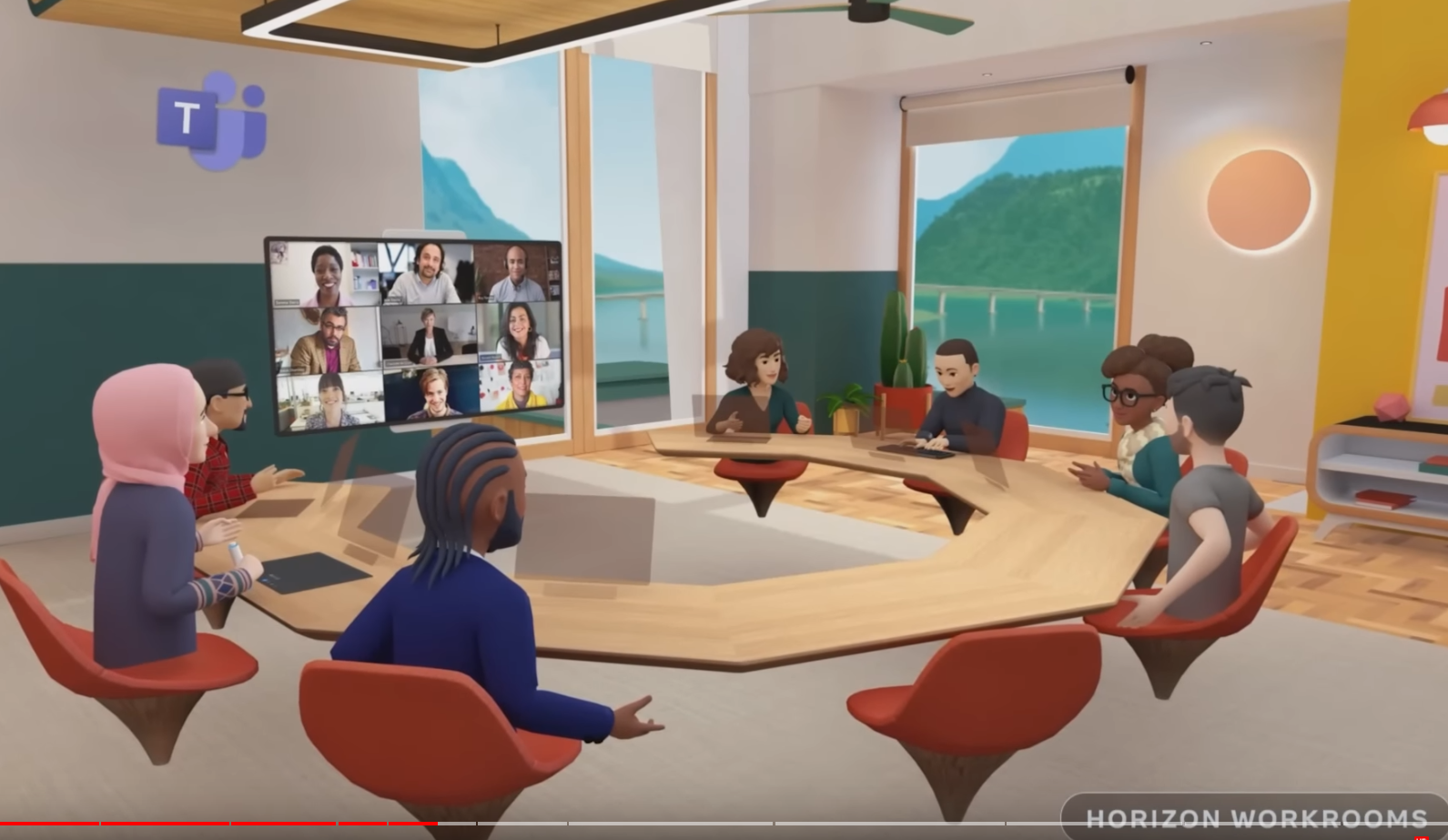
    THIS scene showing a mix of avatars and Zoom caused quite a stir.

    Capture of Meta Workrooms with both avatars and people in a Zoom meeting.

    So Meta Connect 2022 raised the specter again of working in an XR-enabled office. 

    It isn’t just Meta talking about virtual offices in 2022 and new interfaces

    Apple’s forray is yet to come. 

    (I
    am struggling to find the right keywords to describe ‘working in an XR
    office’. Society please help and come up with something quippy.)

    To get ready for a business conference where I was speaking
    as an expert in the metaverse, I decided to study the enemy- those on
    social that have disdain the coming metaverse.

    People try to make
    it all or nothing. They are eager to throw out the baby with the
    bathwater. They say things like can’t wear the headset all day,
    expensive, wrong bets from a company with a bad rep, etc. Only a few are
    saying “maybe”

    This AR Post article is has very
    cool data. Spoiler alert: Boomers are not against XR.

    I
    predict that they will come around and come around to XR meetings SO
    MUCH that they will be embarrassed someday to think that they didn’t want
    it.

    For real, as in, working every day in XR.

    So I realized the time has come to share how I worked in XR.  I bet it is NOT like what you are imagining

    Here we go!

    Capture of Virbela Open Campus 2021

    For 8 months last year, I was the Chief Operating Officer of an international research organization.

    We hosted and rented XR real estate to educational organizations.

    My job was to keep the organization moving forward and to put dreams into action.

    “I’m a dreamer, I build worlds”- James Halliday, Ready Player One

    I had a small office that could seat 6 avatars.

    Capture of a team suite office in Virbela.

    I had 3 Internet boards where I could display any image or web page.

    I averaged 4 hours a day in-world.

    For 2 hours I worked in my office and held 1:1 meetings.

    Capture of a multiple office team suite in Virbela

    The other 2 hours would be in larger meetings,

    Capture of a Meeting Room in Virbela in 2020.

    giving tours,

    Capture of Expo Hall in Virbela, 2020.

    or checking on designs & creations.

    It was all 2D XR so eye strain was less of a problem. 

    There
    were times that I locked my VR office door and went heads down on
    projects and could see other avatars outside my door. 

    Typing in world
    is, right now, frustrating and I wouldn’t seriously attempt it (I’d go
    for speech to text instead.) But my
    stronger point is why would you improve on an interface that is already
    working pretty well right now, which is a keyboard? 

    If you’d like to moan about it not being immersive enough, you belong in the finite game mindset.

    Benefits of Working in an XR Office

    1. No Zoom Fatigue. 

    You do not have to be seen on camera.

    2. Choice of How To Work 

    Work part of your day in XR and part out of XR.

    Attend meetings in cool spaces. Need focus time away from others? Easy.

    3. The impossible experience becomes possible. 

    I regularly hosted global meetings.

    Because you can move through spaces in XR, there is space to move closer to those you do want to talk about and further from the topics that you don’t care for.

    4. Embrace inclusive workers 

    How and what we work on is about the people we work with.

    It is not about the technology; it is about the people.

    I beg you, if you think the metaverse is even only 1% cool, you should be bringing in other people to discover it, yes! But that’s the point. It says that after all, how and what we work on is about the people we
    work with. It’s not about the technology.  Think about that for a
    moment:

    It’s about the people, not about the technology.

    You should be fighting to bring everyone in. That’s fighting for accessibility.

    • Employees who are blind and vision-impaired can work in XR.
    • Employees who deaf or hard of hearing can work in XR.
    • Employees with mobility disabilities can work in XR.
    • Neurodivergent employees can work in XR.
    • All of your employees can work in XR.

    The metaverse IS coming. You either will join or you won’t.

    The metaverse is not just for the privileged if I have anything to say about it.

    It will be part of all of our lives and the lives of our children. We have WAY more fun that you think. I would always end tours of our Virbela island with boat rides starting
    at the beach (and to make it really fun, I would have my guest take the
    driver’s seat and then I would not tell them how to drive.)  Mind you,
    I’d usually just spent 1 hour literally directing them verbally on every
    action in VR so they knew they could trust me and that I wasn’t trying
    to embarrass them with not giving them instructions.

    I’m saying that the metaverse will be PART of your life, not your whole life.

    The metaverse is just a new player in the infinite game. Your invitation is waiting.

    Why don’t you come on in?

  • XR Will Not Cause Lasting Improvements In Education

    XR Will Not Cause Lasting Improvements In Education


    This post accompanies my XR will not cause lasting improvement in education video and contains a few more details. I wrote this blog post first, then made and remade the video and I’ve come back to finish the blog post with the final script and my notes.

    XR will not cause lasting improvement in education.

    That’s an interesting statement to start a video

    when I’m known for being pro-XR.

    That’s right, I am pro-XR in education.

    But I have expectations that learners will not perform higher.

    With respect: Rephrased
    from the Cambridge Handbook of Multimedia, (2005, pp. 7-9) and Cuban’s
    1986 book: Teachers and machines: The classroom use of technology since
    1920 (pp. 9-26) and Mayer, R. (2020). Multimedia Learning (3rd ed.).
    Cambridge: Cambridge University Press. doi:10.1017/9781316941355.

    Generally, educators are on the lookout for what causes learning and we want to encourage more of it. We realize that content is hard to learn and we want as many learners as possible to successfully learn it. This is given– a belief in the general positive well-being of the learning process, the educators and not least, the learners. It IS important to say that because somewhere along the way, one of the counter arguments against that fact that we don’t find learning gains is “the technology was poorly implemented” or “the leaders don’t care for change” and I wanted to cut both of those excuses off right at the beginning. Nope! Educators IN GENERAL are implementing the technology well and leadership IN GENERAL is pro-change.

    Next we need to visit the scientific experimental model as it is the basis for the experimental models used in education. That means that we observe an effect, some data, some phenomena, and we ask “What caused this?”

    Remember, we are looking for cause and effect.

    This is the scientific experimental model.

    Controlled variables – things hold them constant so that they don’t change.

    Independent variable – what we purposely change to test cause and effect.

    Dependent variable – what we measure as the result.

    There are other models to gain information from; naturalistic…meaning anything outside of a lab

    Or cultural ways of knowing. This could be indigenous or religious knowledge.

    Regardless, the Experimental Model is one of our strongest logic systems and it comes through more times than not at finding cause and effect.

    We can isolate variables down to determining the cause (a deductive reasoning approach, a la Sherlock Holmes), or we can simply start with as few variables as possible to find the cause.

    This is the same experimental model as it appears in educational research.

    We have our learners, we add a technology, and we measure the results.

    And it’s not like we just started this research.

    For the purposes of this video, I’ll go back just over 100 years and use the word technology to mean anything powered by electricity.

    For example, Radio

    And here are the results: no lasting improvement.

    Projectors – no lasting improvement

    Television – no lasting improvement

    Computers – no lasting improvement

    Internet – no lasting improvement

    and in the future, cloud-based learning by robots or whatever.

    But in all seriousness, this video is about XR, extended reality, cross-reality, mixed reality or whatever you want to call it.

    Graphic of learners plus XR equals results.

    Now RIGHT HERE, some will become upset. They say:

    But this is different!

    This is learning in 3D!

    No, you don’t understand, this is a computer stuck to your face!

    We need to implement it correctly and THEN we’ll see the results!

    I have a study right here that shows it better when putting VR up against a textbook or a human teacher!

    OK for that last one, I toss that right out as non-comparable methods, but that’s a topic for another day.

    So let’s look at the results, shall we?

    No improvement.

    Now for those that are hearing me right now having a really hard time taking this in, I understand that this is not fitting into your schema. What you are feeling is bias. You want the results to be a certain way, and even when the results are not turning out the way you want them to, you want to reject all of the previous results as not predicting what will happen next. Remember that bias, in research, is a bad thing. We don’t want it. So I need to ask you to check your bias and leave it behind.

    I’ll give you an example that should be in the recent memory of XR enthusiasts. I’ll use 2022 words to explain a 2022 real world example.

    How many studies do we hear of right now that show a spectacular increase in learning with a smartphone (mobile)?

    How many times do we hear from learners that they love learning on their smartphone? “Oh it’s so cool!” “Oh it’s the best!” Oh I love that I can learn from a computer in my pocket! Oh, I love that I can learn on this tiny screen!”
    ~ Oh I love that I’m
    being forced to do my workplace learning on my own device (that I paid
    for, pay for the internet subscription for, and pay the insurance on, to
    say nothing of being tracked by my workplace VIA my own phone!

    What’s that?

    No one says this?

    You’re right.

    Why?

    Said another way, smartphones are ubiquitous. Actually if you listen closely, there is a STRONG amount of conversation about how learning on the smartphone is boring, forced, poorly designed and/or at least equivalent to learning in the classroom—thanks to COVID and 2020.

    So learning on a smartphone is ubiquitous. The learning results have flat-lined.

    I’ve made my case that history predicts that XR will also flat-line after it has become ubiquitous.

    But….why?

    We still didn’t answer that.

    I have 2 reasons. One I’ll share, the other, not yet.

    Let’s go back and look at that experiment model again.

    We said that every technological improvement has proved to produce zero overall learning gains. Learners are simply NOT DOING BETTER.

    We can slip in and out all of these technologies and we keep getting goose egg results, nothing. But…look closely at the model. What other variables are there?

    We said that technology was a variable and our proposed independent variable– we are purposely changing it).

    The results are the dependent variable – they are the output, the effect, or the result of what we are changing and frustratingly, they are NOT CHANGING.

    So what else is there?

    Look. One more variable is present…

    The learners!

    Matching my technology examples: 1920s learners

    1940s learners

    1960s learners

    1980s learners

    Learners from the year 2000

    2010 learners

    I mean, everyone knows that 1920s learners were dumb, right? I mean…

    Oh, you mean the time when Einstein discovered his E = mc(squared) hypothesis? We were dumb?

    1940s? The start of the discovery of the polio vaccine? Saving thousands if not millions of future lives?

    We were dumb then?

    1960s? Early computers being built? Remember…going to the moon?

    1980s? Well no comment from me, I’m from there.

    Many smart well-respected people that I acknowledge, say it is a mistake to assume that older generations were not, at least, as smart as us, and in some ways, we can find evidence that they excelled (for example, try learning entirely by oral tradition, no shared writing, READ: no books).

    So we can’t say that those learners, educators, and leaders were dumb. They were trying to implement the latest, greatest technology in the best way and certainly there’s been plenty of time to try MANY iterations of the technology. For example, radio for adult learning, radio for kids,

    radio for cows. Heh heh, just kidding about the cows, let’s leave them out of this.

    ~I included cows because there is some research already about there about putting VR headsets on cows and I’m totally befuddled by that. I’m like “Why? Just stop it.”

    But the humans are there.

    The humans are the same.

    I’ll repeat that for emphasis.

    The humans are the same.

    So we have experiment after experiment; we change out the technology thinking THAT will cause changes in the learning. But the results come out the same.

    Could it be the OTHER variable– the humans – causing the non-increase in learning?

    I posit, yes it is.

    Brain-based learning science (OK, use the word neuroscience if that makes you more comfortable) gives this as it’s prediction.

    The humans are the cause of why the learning results are always turning out the same, flat-lining, goose egg in improvements. Humans seem to have a “speed limit” when it comes to learning. We all have it. We can’t break past it. (Why? that’s my second shhhhhhh reason.)

    So that’s why I’m so confident that XR will not cause lasting improvements in education.

    As long as we are using humans as our test subjects, the results will peg even.

    To be clear, I’m all for the improvements in AFFORDANCES that VR will bring; for example, safely learning inside a VR volcano, or added safety information with XR glasses. But those will not cause an overall lasting improvement because eventually everyone should be able to learn inside of a VR volcano or with XR glasses at work. Eventually, VR will be ubiquitous and not…

    not the domain of the rich kids.

    (more…)

  • Dr. Ellie Sattler, Jurassic Park, and Narrative Plot. Or It Wasn’t About Dinosaurs.

    Dr. Ellie Sattler, Jurassic Park, and Narrative Plot. Or It Wasn’t About Dinosaurs.


    It’s a rare moment when I can bring 3 themes into 1 post:
    leadership, XR, and design. Also, I’m going to be personal. Believe it
    or not, I’m not really personal on LinkedIn. Enthusiastic, yes. Personal, hardly.

    Over the weekend, I wrote a gushing sentence to a friend that I
    realized I’d never written down before: I became a Biology major in
    college because of Dr. Ellie Sattler.

    A mentor of mine once said writing is thinking. Writing that
    sentence lead me to do a lot of thinking and reading about her character
    and on the impact of the Jurassic Park (JP) movie.  I’m not alone as a
    woman in deciding to go further in STEM because of the Dr. Ellie Sattler
    character.  So huzzah all the Paleobotanists out there!

    We have to time travel to talk about JP. In 1993, we’ve just BARELY
    broken out of the 1980s. For the first time in STEM history, scientific
    breakthroughs are being accomplished by teams instead of white men.  Think: AIDS breakthroughs & the Human Genome Project. Teams means women included. Prior to this point, women were the “also rans” in science.  Sisters. Mentioned on the side. Or worse, they had their research stolen.
    Strong women depicted in media? Disney’s top film of the 80s was The
    Little Mermaid and Aladdin was just released in 1992. Strong women, not
    so much. Video tapes existed; the Internet did not. If you wanted to see
    a movie, you bought a movie theater ticket.

    We arrive when the music was rises in cool, dark, air conditioned theaters.  And then you see this: 

    "Screen capture from Jurassic Park of Dr. Ellie Sattler looking pensive. Remarkably, this depiction of a woman scientist was also not sexualized nor concerned about sex in any way."


    Caption: A character who does not care what you think because she’s solving a problem.

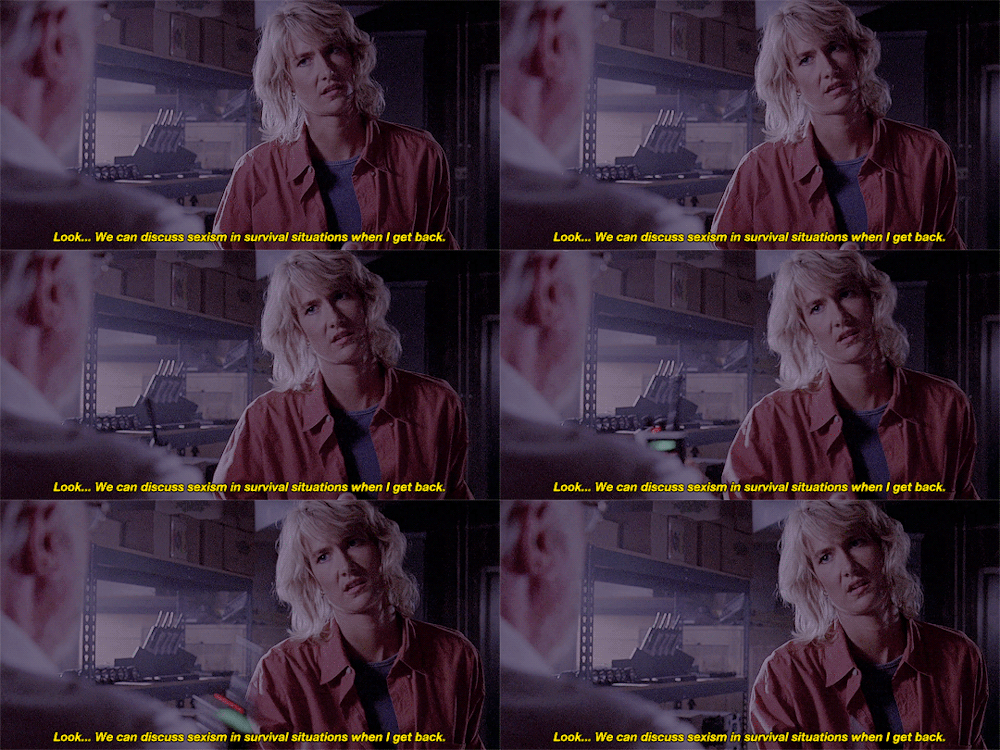
    A character who lays out this line while she holds a stare on the richest daddy around:

    “Look…we can discuss sexism in survival situations when I get back” 

    "Gif from Jurassic Park. Dr. Ellie Sattler responds to John Hammond's weak sexist protest that he should be resetting the electrical circuit. She says "Look...We can discuss sexism in survival situations when I get back" while looking at him straight in the eye and placing a walkie talkie in his hand."


    I took that to mean that women are better in survival situations (not equal, as others took it.) and my life was shaped for the better.

    I bought a $5 ticket 3 times over the course of that 1993 summer. Now that’s saying something.
    To this day, it’s the only movie I’ve bought multiple theater seats
    for. But realize, I have older brothers that saw Star Wars, what, a
    bazillion times?

    Jurassic Park became the first movie to gross US$1billion.

    Reading some commentaries and watching some videos over the past few
    days, I picked up some tidbits below. Some I agree with, some not.

    1. To this day, the scene of the T-Rex crossing the paddock fence
    HAS NOT YET BEEN BEAT in movie history & you don’t need to try. 
    True disclosure: the raptor jumping up to the ceiling shot? I still
    can’t *barely* watch that. I wince too hard.

    2. There’s been some 2022 commentary on the age difference between
    the Dr. Ellie Sattler (Laura Dern) and Dr. Alan Grant (Sam Neill)
    characters.  It’s been confusing and I’ve decided to weigh in.

    In the book, Dr. Ellie Sattler was written as a grad student (Age
    23, no advanced degree) but also no relationship. It was apparently
    Laura Dern’s own idea to give the character a full doctoral degree and
    in the movie the character holds her own against dinosaurs. In real
    life, I’m disappointed to say, Laura treats Sam Neill patronizingly
    and actually “left the party” of JP with Jeff Goldblum, which I find to
    be a big mistake. (I said this article would be personal, yo.)


    "Screenshot of ending helicopter scene from Jurassic Park. Dr. Alan Grant holds Lex and Tim in his arms while looking at Dr. Ellie Sattler."

    Caption: The look of faithfulness.

    Don’t be like this guy and not see the sexual tension in JP: https://youtu.be/jSPxu3WprSs 
    As far as the age difference? The problem came in when, in the book,
    the “relationship” was not there but in the movie it was. Laura was in her late 20s playing early 20s. Sam (then early 40s)
    continues to feel the (physical) burden of the age difference. If you
    need help to see what was happening, Deshi Basara has collected these gifs. Notice in gifs 2, 3, and 7 how his body immediately reacts to hers when she touches him. This is chemistry, folks.

    I had to wade into all that because the point was that regardless of
    an age difference (which, arguably could be *less* than 23 years),
    there was a *quality difference* between Dr. Ian Malcolm and Dr. Alan
    Grant.

    I will concede this one point (I disagreed with so much here
    that I couldn’t read more than 2 pages of this commentary) that Ellie
    holds her ground just fine (and doesn’t move despite Alan’s come here
    gesture) with a metamessage at the Raptor pit: 

    "Screenshot from a commentary that points out a gesture from Alan to Ellie at the Raptor pit. He says come here. She does not move. It is clear, she holds her own space."

     Vogue got an interview with Laura Dern
    where she points out that the Dr. Ellie Sattler character went on to be
    an activist and whistleblower. Interesting!! I’ll just leave that right there.

    "Photo from Getty Images of Sam Neill, Laura Dern, and Steven Speilberg on the set of Jurassic Park."

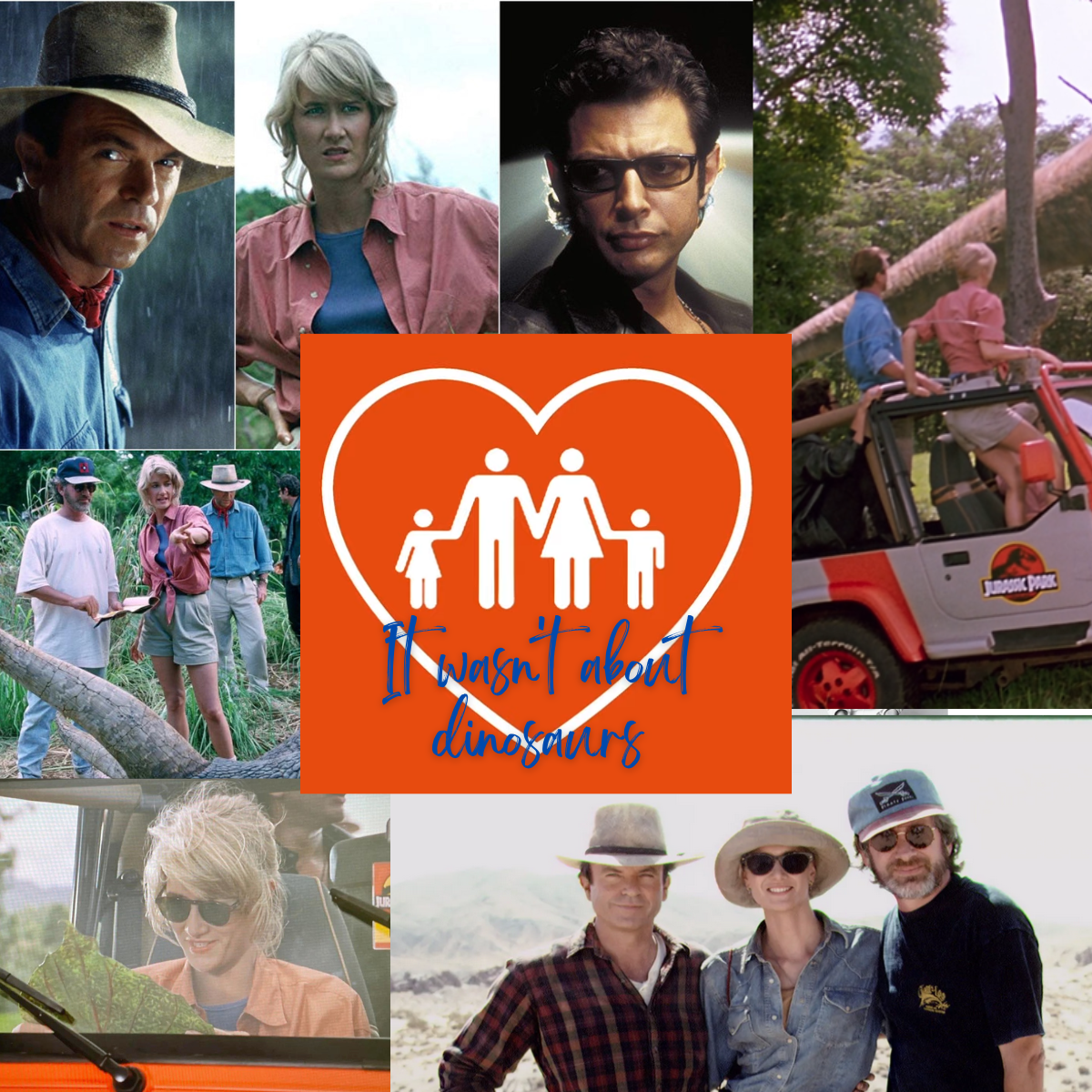
    But most I really enjoyed watching these video analyses of the plot of Jurassic Park here and especially by Mike Hill here and why the movie worked when all subsequent versions of JP have not worked. The key was that Steven Spielberg worked in narrative plot. He carried a story all the way through that was human, basic, and emotional. Dinosaurs just happened to be there.

    "Graphic image of a human family inside a heart surrounded by dinosaurs. Image from Mike Hill's YouTube video speech about Narrative Plot in Jurassic Park."


    But that shows up in my VR/XR consulting work to this day.

    The famous quote about rushing into things by the Choatician character Dr. Ian Malcolm:

    Ian Malcolm: Don’t you see the danger, John, uh,
    inherent in what you’re doing here? Genetic power’s the most awesome
    force this planet’s ever seen, but you wield it like a kid who’s found
    his dad’s gun.

    Donald Gennaro: It’s hardly appropriate to start hurling accusations–

    Ian Malcolm: If I may, if I may. Uh, I’ll tell you
    the problem with the scientific power that you’re, that you’re using
    here. It didn’t require any discipline to attain it. You know, you read
    what others had done, and you, and you took the next step. You didn’t
    earn the knowledge for yourselves, so you don’t take any
    responsibility… for it. You stood on the shoulders of geniuses, uh, to
    accomplish something as fast as you could, and before you even knew it,
    you had, you’ve patented it, and packaged it, and slapped it on a
    plastic lunch box, and now (bangs the table) you’re selling it, you
    wanna sell it, well.

    John Hammond: I don’t think you’re giving us our due credit. Our scientists have done things which nobody has ever done before.

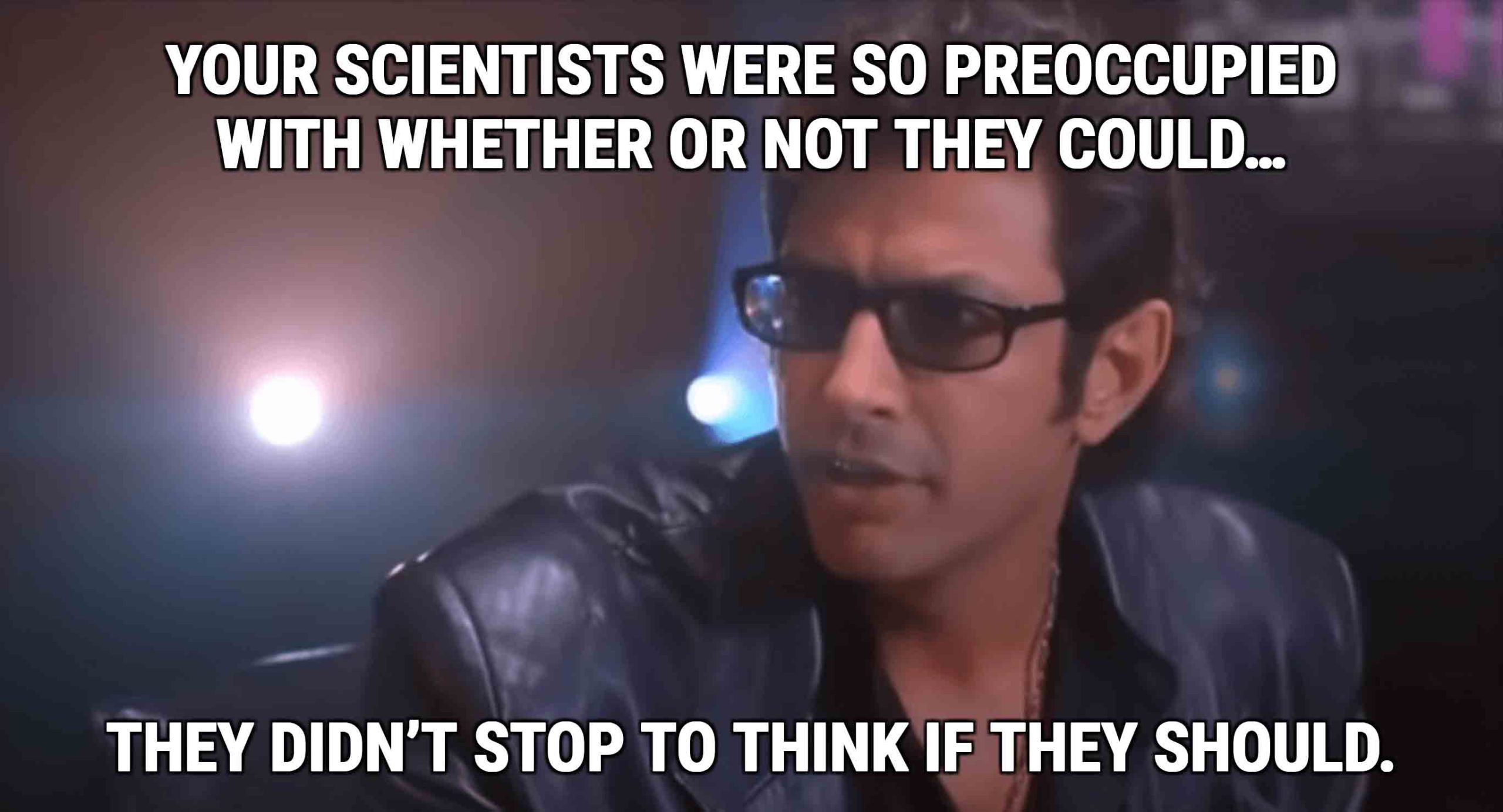
    Ian Malcolm: Yeah, yeah, but your scientists were so preoccupied over whether or not they could, they didn’t stop to think if they should.

    "Meme from Jurassic Park scene: Ian Malcolm: Yeah, yeah, but your scientists were so preoccupied over whether or not they could, they didn't stop to think if they should."


    I fight this battle every day.

    Industry and indeed some in academia want to use XR liberally in
    education. Yet, the power of XR is still unknown. Our early research is
    pointing to one thing that seems firm:

    The mind believes what the eye sees.

    That means that the XR experiences we put our children into will be real for them.

    What power are we wielding in the classroom? Everywhere?

    There are those that say “XR is the Empathy Machine! We can create empathy, soft skills in the workplace!” 

    Oh yeah?

    The most recent research I saw (from 2018) says that empathy coming from XR is a 50/50 gambit. That does not mean that it causes empathy for whatever you want half the time.

    It means it causes empathy half of the time and causes the opposite of empathy the other half of the time!  

    So, would you like your employees to don a headset to be more
    empathetic towards race, age, body size? Oh really? How would you like
    results that say that half of the time, those employees are going to
    take off the headsets and quietly say to themselves “Thank God I’m not
    black” 50% of the time? That’s one hell of a bet you are willing to take
    with XR.

    XR is dangerous.

    People say “Look at how you can look all around you! 360 degrees! A
    sphere! Isn’t this cool? Isn’t this new? Just think how this will reach new learners!”

    I can take a learner into a new real physical space (for example on a field trip) and have them be overwhelmed. We’re all on the spectrum, remember? Was that cool? Were they reached
    in a new way when they cried? Would you like for me to even mention
    harassment events in VR that have already happened? We haven’t yet
    arrived into market saturation of haptic bodysuits, but it’s coming.

    XR is dangerous.

    I’d rather have a low, slow, plodding walk into an XR for education
    experience than every bell and whistle thrown at them the first day. The
    line “spared no expense” gives me chills.

    XR is dangerous and if we aren’t careful, we will damage learners
    along the way. Jurassic Park should not have been built or opened. Dr.
    Alan Grant refused to give his endorsement. That was the lesson of the
    movie.

    • I’m proud that I don’t endorse some forms of XR (Dr. Alan Grant)
    • I’m proud that I throw water on some XR ideas (Dr. Ian Malcolm)
    • I’m proud that I tackle problems that no one else can survive. (Dr. Ellie Sattler)

    But the parallel lesson of JP was “Build for story. Because the dinosaurs are not real.

    When I encourage XR design, I build for narrative plot. 

    I build for emotions, 

    because those are real.


    "Graphic image of a family inside of a heart. Image credit to Mike Hill."

    #XR #Design #JurassicPark #NarrativePlot #InstructionalDesign #DrEllieSattler #DrAlanGrant #DrIanMalcolm #Dinosaurs #VR #VirtualReality #EmpathyMachine #Leadership #WomenInMedia #FemTech #Sexism #BestMovieSceneEver #Whistleblower #Scientist #PreoccupiedWithCould #SparedNoExpense #Emotion #DesignForXR 

    Article originally posted same day to LinkedIn here: https://www.linkedin.com/pulse/dr-ellie-sattler-jurassic-park-narrative-plot-wasnt-dodds-ph-d-

  • 2021 Bests and Worsts

    2021 Bests and Worsts


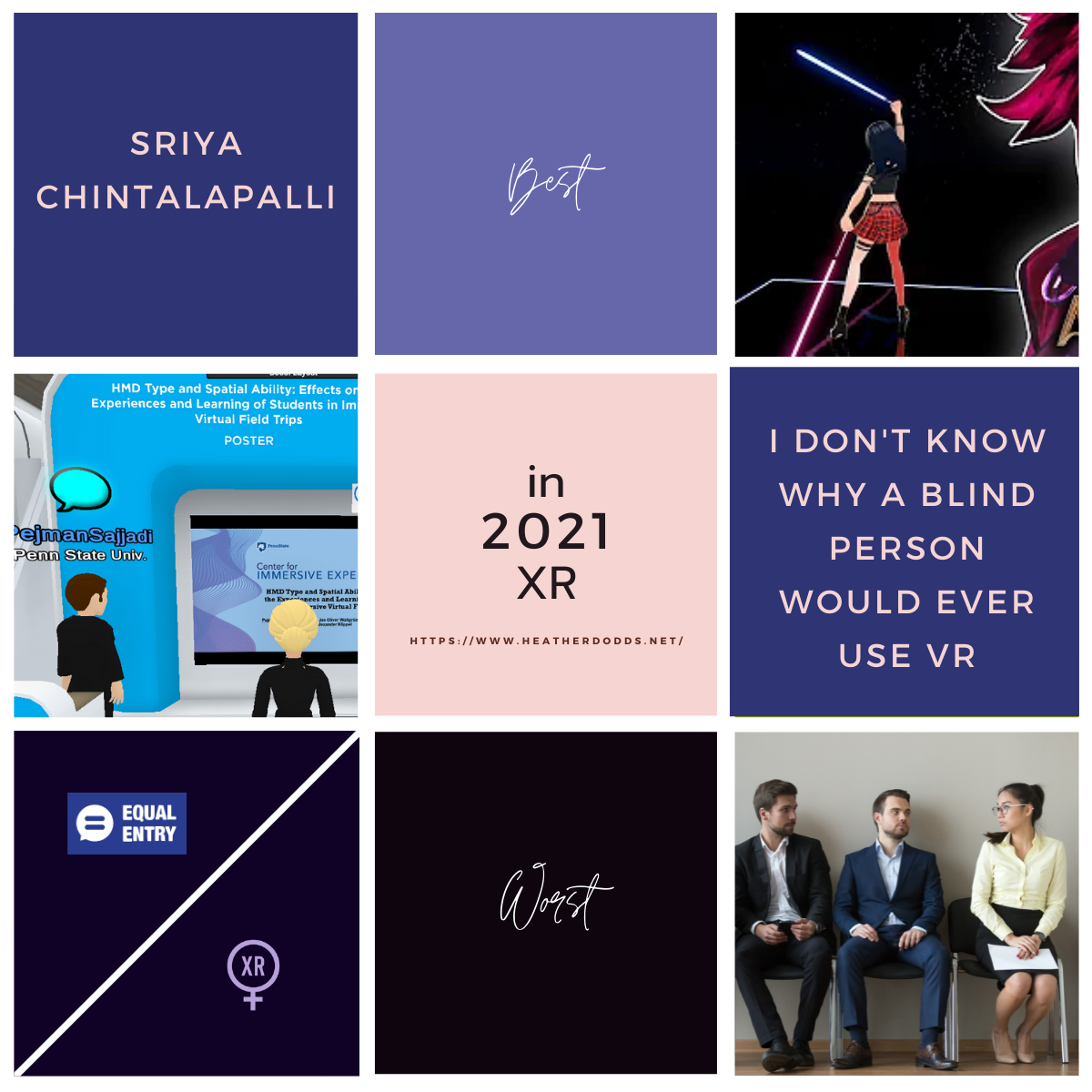
    I drew up my list of Best and Worst for 2021 and to make it balanced, it has 3 on each side. Here we go:

    Best

    1. Meeting Sriya Chintalapalli.

    I count meeting Sriya as a golden moment of 2021.  I actually haven’t had long chats with her. But I was given a small heads-up for a student XR conference that I was supporting that a speaker was coming that was going to be amazing. I think the ‘knock socks off‘ phrase might have been used. I was under FERPA regulations to know that she needed extra protection at the conference and I volunteered to give it. That means I stood on the virtual stage with her, playing the role of direct tech support but also crowd control if necessary.

    But what did happen meant something much more to me.

    Sriya gave her presentation. It was a great topic and very forward looking. Then, she took questions from the audience. Because the topic was on brain-computer interfaces (BCI), it didn’t take long before questions of invasion of privacy questions came from what were obviously professors in the audience.  

    I’ve seen these verbal examinations before. I’ve seen them break college seniors and Master’s Degree students. It’s just enough questioning to find where the student does not know the answer. That’s the push point. Several men in the audience were going right for her, directly and academically.

    Standing on stage with her, without her knowing it, I would have thrown up a shield if she needed it and blocked those men from getting to her/embarrass her/humiliate her by making some excuse that we’d run out of time, audio wasn’t working, etc.

    But, she held the stage. She held her ground. More than once she said “The data doesn’t say.”  

    Good line! Don’t let them pin you where you have not staked a claim.  She’d been trained well to enter an academic fight.

    When she was done, I let out my breath.

    Were those men plants in the audience? Not sure. Maybe. Either way, my hackles were real.

    And the lesson for me that day was: if I can do anything to help women like Sriya…even if it is only shouting “Make a path!“, I will.  It’s very hard to be a woman in the technological sciences. The road ahead will shape her in ways I’m sorry to contemplate. May she always find a woman like me standing by, ready to help.  

    Please follow her. Great things are ahead.

    2. A small unheralded research paper, HMD Type and Spatial Ability: Effects on the Experiences and Learning
    of Students in Immersive Virtual Field Trips.

    I was able to meet the first author, Pejman Sajjadi, at the IEEE VR conference in March/April 2021 in avatar form here. This small piece of research stayed in my mind all year as a great example of the piecemeal way that scientific research works its way slowly towards practitioners and teachers.
     

    The write up of this study is pay walled behind IEEE, I believe, and Pejman would be the first to point out the small sample size. Therefore, there was no fanfare and no social media on this paper. If you look at his research background, what you see is this paper is just one of several papers generated from one research event, so it’s pretty generic par-for-the-course research.
     
    Taking into account all those discount factors, this tiny study investigated something that teachers do really want to know:   
     
    Are expensive VR headsets worth it?
     
    The answer is no.
     
    There is much more to the no, of course, related to content, learning objectives, scalability, etc. But more so than ever in 2021, educators turned to VR as a more realistic mainstream learning choice. The price drop of the Oculus Quest 2 to $299 and further, the Facebook push for the work use of Workrooms to bring VR use directly into the workplace show that we are going to have to get more and more comfortable with VR headsets and quality will be a question.
     

     (Image source: https://about.fb.com/news/2021/08/introducing-horizon-workrooms-remote-collaboration-reimagined/)

    Quietly researched, small sample size, no social media presence.  
     
    But bit by bit, researchers are answering these questions. I hope teachers are listening to the work of Pejman.

    P. Sajjadi, J. Zhao, J. O. Wallgrün, P. C. La Femina and A. Klippel,
    “HMD Type and Spatial Ability: Effects on the Experiences and Learning
    of Students in Immersive Virtual Field Trips,” 2021 IEEE Conference on Virtual Reality and 3D User Interfaces Abstracts and Workshops (VRW), 2021, pp. 546-547, doi: 10.1109/VRW52623.2021.00155. https://ieeexplore.ieee.org/abstract/document/9419337


    3. Equal Entry and XR Women 

    It’s a tie! Both organizations work for similar goals: 
    • Equal Entry has a strong drive for accessibility and has a section of work dedicated just for VR, AR, and XR.
    • XR Women‘s mission is dedicated to getting women’s voices up on stage as part of the narrative about the ongoing and future directions of XR.  
    • Both organizations stay focused on their task and welcome listeners, newcomers, and allies.
    Both groups alike are working on accessibility into the coming metaverse for all.  I applaud their efforts.
    Now time for the worsts.  Is worsts a word?  You will notice a theme from the Bests that carries through.  Here it comes…

    Worst

    1. Not necessarily restricted to 2021 sadly, say the phrase “Women in XR” and you will likely get this image:

    Or this one.  That’s not even a woman on the right. #dehumanizing means you treat women like animals.

    Actually, as I prepped for this article, I went to find one screen capture of a woman in a short skirt playing Beat Saber so that I could use it as a example of a poor behavior.  I thought finding one image of a woman in a skirt would be hard. I had remembered seeing one.  
     
    Much to my shock and horror, it turns out….it was drop dead easy.  So easy, nearly EVERY image on YouTube for playing Beat Saber is of a young female scantily dressed.  Check it out:

    I counted ~9 images of women playing with either bare legs, bare midriffs, sports bras, etcs, for every 1 man.
    Think that’s a coincidence?  Oh no. It’s BY REQUEST.  Look video info at the bottom of this image I just posted above again.
     
     
    It says:
     
    “Song + Outfit per George T’s request! To request songs & outfits/costumes become a Patron at…”

    This woman is taking money to have herself videoed/green screened playing Beat Saber in a short skirt.  Don’t tell me that the Patron isn’t begging for that skirt to fly up at some point. I know what you can see through that black skirt by outline.  In these videos, women have not only lost body space control, they are selling it.

     
    It’s disgusting. And this is ALL OVER YouTube.  There’s a research project in there to count the views of Beat Saber videos without skirts versus those with.
    Remember that the Quest 2 was a major Christmas gift for 2021 and your daughters are now –January 2022– watching YouTube videos to learn how to get better at Beat Saber.  Is getting better at the game the only thing they are learning?
    Think that this is just about fun, though?  Really? Did you read what happened at late 2021 a technical conference ad?  Reminder: Major “Game” conference, no women speakers on the ad, and a sexbot prominently featured. This is what women in tech are facing when we “go to work.”

    Women have been getting groped at tech conferences during large standing-room only keynotes. It’s real that women feel less comfortable in HMDs because they give up body space control. 
     
    At any conference right now, by putting on a headset, women take a risk that men do not.

    2. Major immersive learning researcher responds to an accessibility question with “I don’t know why a blind person would ever use VR.”

    I was running tech support. I was on mute. I sputtered.  But the researcher’s mic was hot. The video caught that…I think. It’s out there.  
     
    But what does that matter if it’s on video or not, if the researcher truly thought that?
     
    I don’t even know what to do with that.
     
    Major. US. Immersive Learning Researcher.  
     
    😔
     
    By the way, for you, reader,  in answer to the question, contemplate this:

    Screenreader Experience of a Virtual Reality Conference by Rhea Althea Guntalili

    and  

    Virtual Reality in the Dark: VR Development for People Who Are Blind | Accessibility VR Meetup Recap by Aaron Gluck (YouTube link and transcript available at this link)

    3.  Microaggressions against women in the XR industry
     

    I left 3 organizations in 2021 and am no longer associated with them. It’s apparent now that I could not stand up for the rights of women and for accessibility in XR without being targeted myself.
     
    “A microaggression is a subtle behavior – verbal or non-verbal, conscious
    or unconscious – directed at a member of a marginalized group that has a
    derogatory, harmful effect. Chester Pierce, a psychiatrist at Harvard
    University, first introduced the term microaggression in the 1970s. ” https://www.thoughtco.com/microaggression-definition-examples-4171853
     

    The last organization I left questioned if I was a dues-paying member, so they used an institutional rule to execute an exclusionary move.

    We’ve heard about headset straps that do not adjust for varying hair styles. Women and people with disabilities that are not recruited into research studies so that research results are invalidated when applied to major populations, conferences that not only host but advertise manels with sexbots, and the list keeps going already 7 days in 2022…
    😔
     
  • A Tribute to Second Life. Yes, it’s still around.

    A Tribute to Second Life. Yes, it’s still around.


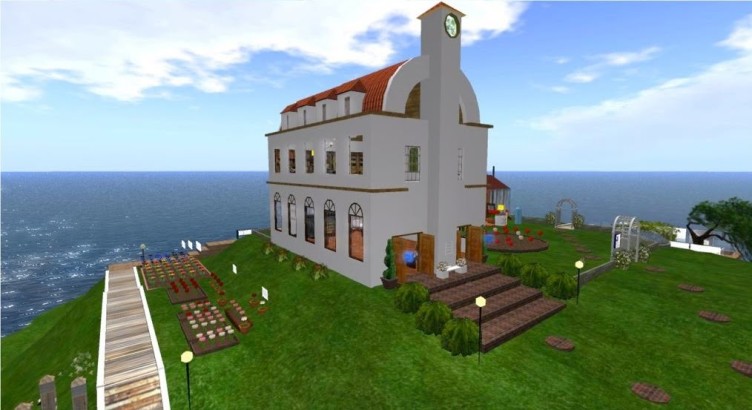
    I purposely start articles with “A” when I mean to not be definitive but exemplary. In this case, I would like to pick out a few of the early education influencers and memories that I knew from Second Life (SL) (and Heritage Key, 3rd Rock Grid, OpenSim, and other early virtual worlds).

    One of the observations that brings on this article (besides the true desire to give credit where credit is due) is that educators are starting to stream into the metaverse or cross reality (XR) – especially with the $299 Oculus headset cost and the pandemic forcing isolation – and I find that in education & XR development – there is a disturbing lack of knowledge of the foundation of virtual reality studies. That is, people that know about the role Second Life played in XR for learning research are not writing enough about it now so that what it did in the past is captured for the future.

    Remember the ‘we stand on the shoulders of giants’ thing?

    The giant is, in part, Second Life.

    I would suggest that what is lacking in this background research is the fact that the vocabulary (and somewhat, the meaning) of words has changed so even a well-meant Google Scholar search might not pick up valid research from 10+ years ago because search terms were simply different words.

    So, first – Search on virtual world (VW) as your primary term. Virtual world was a more dominant phrase than virtual reality. Other words to use: immersive, MUVE, multi-player online, persistent, HIVE (highly interactive virtual environments), online games, simulations, visualizations, online reenactments, distributed classrooms, and hypergrids. Indeed, find one good metastudy from ~2009 and you’ll probably hit the vocabulary jackpot. In researching this article, I found the term Sloodle which I had forgotten but that was an incorporation of SL into the Moodle course management system. You will find a great of research on identity, presence, and immersion with avatars (not so much with locations or “doing stuff” in VWs because object physics was/is very primitive and you can’t “do” too much there. There are pose balls, but really that’s a subject I’m not going to get into here). Bear in mind that headsets only existed in research so this was all what we would know in 2021 as 2D virtual reality or 2DVR (VR on flat screens, monitors, and tablets). Because there were few consumer headsets, there was no “us versus them” that you find now between 2D and Head Mounted Device-based (HMD) 3DVR.

    Next, I very well realize that in some circles, Second Life causes giggling, either in derision (see the hype cycle image below) or in acknowledgement that SL did primarily serve the adult content market more than the education market. Sorry, but someone needs to write the obvious. Just recently, when the metaverse conversation popped up with some SL users on Twitter, they were adamant that they would never move to a platform that didn’t allow “adult content.” Second Life was never a place that you wanted to wander into the dark alleys as an educator. At least, if you did, you would learn some stuff you’d rather not know. The sexualization of Second Life is still prominent. Just do a google image search on second life. NSFW. Second Life was always a place for college and university educators (READ: Over 18 years of age). 


    Gartners Hype Cycle for Social Virtual Worlds showing a start at 1987 and going to 2012.
    Source: http://www.muvedesign.com/the-virtual-worlds-hype-cycle-for-2009/


    Thus, educators tended to stick together. You heard about SL from another educator and you went in with them. I went in with a professional development group and had my first “meeting” in a hot tub at the Burning Life festival in SL in 2008.

    There were some GREAT educator groups and some of them are still going! I mention my favorites:

    1. Virtual Worlds Educators Roundtable (VWER) – my home base and it is still going! I volunteered on the organizing committee and hosted a “Reading Meeting” where we invited the author of an article in for a presentation and Q&A (I was able to talk with the Whyville Pox article researcher, which is still a GREAT study). At its heyday, VWER had 2 grids: 1 for meetings and we had a Quidditch pitch/outdoor ice skating rink and 1 for parcels for educators as a sandbox and I had a virtual office.
    2. Virtual Worlds Best Practices in Education (VWBPE) Conference – still going as of 2025!
    3. Real Life Educators in Second Life is an in-world group (READ: notification list) you can join. Users post different events to that group.
    4. ISTE  https://www.iste.org/…/explore-these-virtual-worlds
    5. VSTE: VA Soc. for Tech in Education https://vste.org/
    6. Second Life Community Convention (SLCC) – a larger group but education was a subset. Now defunct.
    7. The SLED group – an email list serv that had the first collection of educators as subscribers. Now defunct.

    Other groups still going but not necessarily education-focused nor restricted to Second Life:

    Virtual Ability http://blog.virtualability.org/2021/08/by-gentle-heron-you-can-teleport-to-any.html

    Non-profit Commons Community https://nonprofitcommons.avacon.org/

    OpenSimulator Community Conference https://blog.inf.ed.ac.uk/atate/2021/10/31/oscc21/

    Special shout out to independent journalists that still cover Second Life:

    Ryan Schultz https://ryanschultz.com/

    Daniel Voyager on Twitter @danielvoyager

    Great “places to visit” included NASA, NOAA locations. Rockcliffe University Consortium, Glascow University Online, California State University, Chico (defunct? I think?). Then there were one-off builds that were also great like the Edgar Allen Poe House and the walk-through heart and colon.

    During this same time, other virtual worlds were coming up and visiting them was fair game. My favorite was the short lived Heritage Key that needs to come back! That place was so cool and educational, you could visit Stonehenge over 5 different time periods and help build it

    You could travel to both Egypt and Stonehendge in Heritage Key.  Avatars received costumes and had roles to play at each site.
    What happens when 2 Egyptians, 2 Adventurers, 1 Druid and 1 Zombie all go to Ancient Thebes?

    So…what happened?

    There are many commentaries now. All of them have a piece of the truth. Probably the biggest factor was money. Hosting a grid literally cost money and universities had to pay for it. Over time, it just didn’t make sense to keep paying monthly for a place rarely visited.

    College and university builds represented a huge investment of time. You should have heard how much the word “Primmy” was used back then. Primmy is short for primitive which meant the building blocks of virtual realities which are primitive shapes (spheres, cubes, columns, pyramids, etc.) Some clever instructors had their students do the builds and then called that assessment (I’m not calling that wrong, I’m just saying…clever.)

    The locations, indeed, themselves brought on their own demise. Many builds became ghost towns because avatars would visit a “virtual campus” (OFTEN a replica of their real campus buildings (cough, mistake, cough) but walk inside the buildings that may or may not have had enough “prims” to put separate rooms inside those buildings, and so visitors found the building completely empty during off hours, wonder what the big deal was, and then leave.

    This was one positive result of those early days. Many educators realized that “replicating reality” should NOT be the goal because for now, you’ll never get there. The human eye is too good at discrimination. But what you do want to do is the phantasmagorical.

    Do the impossible. Virtual reality is very good at the impossible.

    Remember this was before VR was called Social VR, so the ‘social’ part was truly touch and go. In SL, you either found groups of people or you didn’t. Most positive SL stories going around right now will involve relationships and groups. Truly today, I only go into SL for events. I hardly ever go in to just explore. It’s not built for that. What was it built for? Well, it had some characteristics that were interesting and unique. (Alt opinion here.)

    Born creator

    First and foremost to me, every avatar is endowed as a creator. An educational psychologist I know immediately deemed this a “God complex” program. Indeed, every bell and whistle of creation (object creation and space manipulation) was available in the overwhelming UI. I’ve been a SL citizen for more than 10 years and still I don’t know what half of the UI choices are for. Even though I’ve done it a lot, I’m still not sure what rebaking does.

    Screen capture of the original Ruth avatar from Second Life.
    The original Second Life Ruth avatar


    The default avatar was “Ruth”. She made new users learn how to change appearances. Impressive abs though. She must have never eaten a potato chip.

    Avatar customization

    The avatar customization is in Second Life (still) is top notch.

    Seriously, OpenSim and Second Life have the best clothes’ animations! I once saw someone who wore a top hat to a Christmas party and the around the rim of the hat was a tiny puffing train! (If you are reading this and that was you, please reach out to me, I LOVED your hat!! I want a video of it!) But, I find Sandsar and sinespace is coming up fast on good clothes and avatars.

    You can get married and divorced in Second Life. There are also active furry communities. I’ve got no comment on all of that. I would just remind everyone that what is in a virtual world is what you bring with you. It is definitely not all innocent and it is definitely not all healthy.

    Even though you have creator controls, you cannot build just anywhere. Land is owned (permissioned) and you have to essentially pay to have land. Early objects were NOT copyright protected. So copying, stealing, and replicating was rampant. (Hat tip to Somnium Space, who addressed this problem from the very start by tying assets to NFTs.) I suspect a lot of artists hiked out of SL because their work didn’t stay under their control for long. For educators, there was an active “free sharing” market and I still wear my first set of “professional educators clothes” I picked up free from some place.

    Hat tip to the word rezzing. I still use it. When I arrive somewhere, I rez in. The spot is the rez in spot. The current term in 2021 is “spawn point”. Yuck. I think this term, rez, should NOT be lost. Rez means resolving, which is what your avatar would do when it was still “coming into” the VR space. It’s the ghostly cloud you see here:

    We would lost without our Path…finder

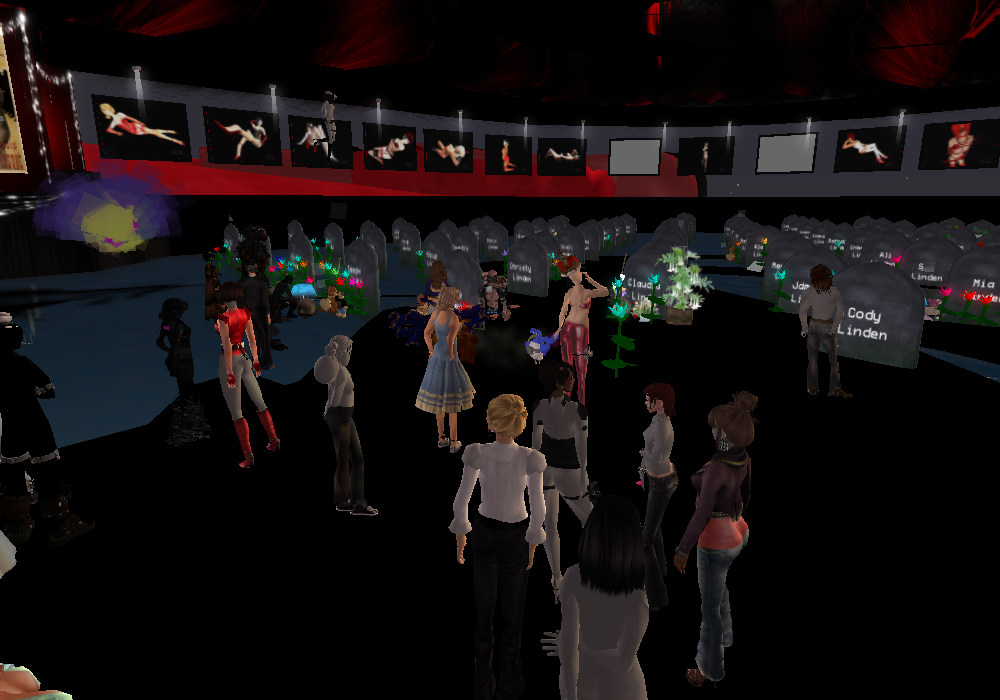
    But I’d like to get to the tribute part of this tribute article. I would like especially point out the impact that John “Pathfinder” Lester had in Second Life. Everyone who was on staff for Linden Labs officially had a Linden last named avatar. John was Pathfinder Linden and all educators knew he was the one to talk to about ideas and problems. He “led the development of the education and healthcare markets while evangelizing the innovative use of virtual worlds in research, art and immersive learning.” Truly John cared and helped. I remember the day I sat next to his avatar at a meeting. I was so, so, so thrilled. But I never figured out why his avatar looked like a boot to me. It must be the eyelets and the shoestring. Apparently this is a bit of British culture I don’t know…that’s a character?

    Early John:


    Pathfinder Linden


    Many of us observed in stunned silence as Linden Labs pared down staff infamously. I watched in foreshadowing because I knew that it was like to work for a company that would drop you easily. I followed John’s blog “Be Cunning and Full of Tricks” closely during that time and noticed how he rebuilt his professional life.

    The Linden Graveyard. This image specifically shows the named gravestones as many Linden Lab employees were let go over time. Note this space is NSFW.


    The Linden Graveyard. The fact that this place was made still haunts me. 

    John is doing well and every time I hear that he’s back near virtual worlds, I’m so pleased (and I’m still part of his fan club).

    My last call of affection goes to the VWER Planning Committee of 2012. I’m still in touch with Evelyn. 🙂

    • AJ Kelton, Montclair State University (SL: AJ Brooks)
    • Joe Essid, University of Richmond (SL: Ignatius Onomatopoeia)
    • Ann Steckel, California State University, Chico (SL: Olivia Hotshot)
    • Evelyn McElhinney, Glasgow Caledonian University (SL: Kali Pizarro)
    • Margaret Czart, University of Illinois at Chicago (SL: Margaret Michalski)
    • Charlotte Burch, retired middle school principal/Pres. Friends of Humboldt Bay NWR (SL: Mimi Muircastle)

    So in response to the question: Is Second Life still around? Yes.

    She has her children now, Sansar, sinespace, and High Fidelity.

    See you in world!

    #SecondLife #Metaverse #XR #VR #VirtualWorld #Avatar #Sansar #sinespace #HighFidelity #VWER #VWBPE #VirtualAbility #immersive #MUVE #multi-player online #persistent #HIVE #highlyinteractivevirtualenvironments #onlinegames #simulations #visualizations #onlinereenactments #distributedclassrooms #hypergrid #cyberspace


    This article was posted simultaneously to my LinkedIn account on 11/23/2021. https://www.linkedin.com/pulse/tribute-second-life-yes-its-still-around-heather-dodds

  • Next stop: Bad VR Implementation

    Next stop: Bad VR Implementation

    In my published writing of August 2021:

    “Especially with decreased technology prices and increased access to XR,
    campus administrators might want to buy the technology first and think
    about use second. Instructional designers are obligated to advise on the
    best use of the technology even if that advice is sought after the
    purchase.”

    Immersive Learning Environments: Designing XR into Higher Education. 

    It feels like the ink is still drying…and this pops up. An instruction designer asks how to best use VR headsets, after the boss has committed to buying some.

    That set off my “bedonkers” filter 😜, so I replied:

    After I posted the phrase “@ss backwards” that thread stopped for almost a day.  Then one more post has arrived talking about a suggested resource.

    But here we are folks.

    Bad Implementation is our next stop on this train.  Other stops on this train include:

    • Overspending
    • Results the same as other forms of learning
    • Bosses disappointed in results
    • Bosses reluctant to invest in the next big thing
    • VR learning becomes laughable but slowly adopted.

    Does all this seem familiar? If you are over 30 years old, it should be. It’s the e-learning adoption story.  Go further back and it is the Internet-in-all-schools adoption story. And DVD-adoption story. And TVs in classrooms…

    And film strips…

    And radio…

    And “moving pictures”

    And individual textbooks

    And chalkboards.

    Think I’m kidding? I wish I was.

  • Designing XR into Higher Education

    Designing XR into Higher Education


    With the dramatic shift to online learning with the arrival of the
    COVID-19 pandemic, faculty, staff, and students within higher education
    worldwide have made the sudden but necessary initial steps to
    incorporate technology into the learning environment in ways never
    imagined. However, forward-thinking administrators are wondering, “what
    comes next?” Immersive learning and XR answer this call. 

    Created with care in Canva. 


    Sources: 

    Definitions come from my own writing here: 

    Ziker C., Truman B., Dodds H. (2021) Cross Reality (XR): Challenges and
    Opportunities Across the Spectrum. In: Ryoo J., Winkelmann K. (eds)
    Innovative Learning Environments in STEM Higher Education.
    SpringerBriefs in Statistics. Springer, Cham. https://doi.org/10.1007/978-3-030-58948-6_4 

    Dodds, H. (2021). Immersive Learning Environments: Designing XR into
    Higher Education. In J. E. Stefaniak, S. Conklin, B. Oyarzun, &
    R. M. Reese (Eds.), A Practitioner’s Guide to Instructional Design in
    Higher Education. EdTech Books. https://edtechbooks.org/id_highered/immersive_learning_e

    Slide 6: 

    Mordor Intelligence. (2021). Extended Reality (XR) Market –
    Growth, Trends, COVID-19 Impact, and Forecasts (2021 – 2026) https://www.mordorintelligence.com/industry-reports/extended-reality-xr-market 

    Slide 8 does not have one source but over 20 years research (including
    my dissertation study) with technology-facilitated immersive learning
    has yet to show a significant improvement other any other learning
    media. This aligns with this important article in the history of
    instructional design: Clark, R. E. (1994). Media will never influence
    learning. Educational technology research and development, 42(2), 21-29. 

    Slides 9, 10, 11 “XR reduces Time, Money, Danger” (similarly expressed
    in my dissertation). There are parallel comments made by Jeremy
    Bailenson documented here as his “DICE” advice. https://stanfordvr.com/video/2019/transformative-experiences-vr-for-good/
    It should be noted that the DICE advice are the 4 occasions for which
    to NOT use VR (against) where my 3 are 3 occasions TO use VR (for). 

    The combination of 4 different models is my own published creation:
    ADDIE (traditional ID model), Design Thinking (from UX), 3DLED (from
    Karl Kapp), and narrative plot (loosely credited to Pixar). They are
    displayed here to show the remarkable similarity of steps/pathway across
    each model, thus supporting the validity of the proposed path.