Tag: Virbela

  • XR for education propaganda – EDUMetaverse

    XR for education propaganda – EDUMetaverse


    Decorative image of an analog bullshit meter

    propaganda: 

    1 – ideas, facts, or allegations spread deliberately to further one’s cause or to damage an opposing cause

    also

    : a public action having such an effect

    2: the spreading of ideas, information, or rumors for the purpose of helping or injuring an institution, a cause, or a person

    Merriam-Webster Dictionary entry


    I was so tempted to make a reaction video to this video within Andrew Wright’s LinkedIn post.  But no. Instead, I’ll just point out the XR for education problems therein.

    Post:

    If you’re wondering what #immersivelearning looks like. Watch the clip of today’s onsite session till the end. Innovate, Engage, Inspire
    This is not a ‘flash over substance’ experience, at EDUmetaverse, this is the real deal!

    Consider that this is one lesson of ten, from one world out of a hundred, you’ll then get some idea of what we’ve spent five years creating.

    Designed by teachers, for teachers. Available now as part of our education bundle for 2026.
    All you need is a browser..

    ✅ Immersive Worlds
    ✅ Engaging PBL
    ✅ Relevant Content
    ✅ Curriculum aligned
    ✅ A.I Literacy embedded
    ✅ STEM based
    ✅ Teacher Created

    What are you waiting for? Get in touch today.
    www.edumetaverse.com.au

    #educationevolved #ai #vr #mixedreality #3ddesign #stem #webxr #pbl #generativeai Frame MeshyAI Lauren Main Andrew Google Flow Apple

    Strong Words

    Wondering what immersive learning looks like?
    Not ‘flash over substance’?
    The real deal!
    1 of 10, 1 of 100!
    Spent 5 years creating

    Designed by teachers, for teachers (ouch. I apologize to teachers on EDUMetaverse’s behalf, cause EDUMetaverse has a tendency to throw y’all under the bus, regularly.)


    Then a bunch of key phrases: STEM, relevant, immersive! Probably written by AI. 🙄
     
    I did not find the same video posted to any other EDUMetaverse social media (huh? 🙄) . I’m going to show screen captures with my written descriptions.

    Opening scene, upbeat music: It’s Avatar Andrew inside of a FrameVR/Virbela world that looks like a stadium during winter. Avatar Andrew is standing on a blue running track looking towards empty wooden spectator seats where a real world ski jumping video clip plays and 2D picture of a 3D model of a ski jump is displayed.

    Students are watching a flat screen monitor 🙄, where an EDUMetaverse world is shown and inside that world there is what looks like an EDUMetaverse produced video and some Olympics mascots. (I searched for matching clip or 3D model, didn’t easily find anything but it isn’t hard to guess that they could have been made by AI.)

    Capture of students looking into EDUMetaverse world

    An interface shows a 3D ski jump model. I’ve never used EDUMetaverse, so I’m guessing this is a compose or build-type of interface. Interestingly, we can see that AI is doing the building because there is text: “Prompt: An olympic ski jumper in jump mode leaning forward over skis…” and “Generating 70%”.  In my experience with VirBELA, this looks like a VirBELA-like interface. Note: this supposed result doesn’t appear anywhere in the video. (cough, AI fail? 🙄 cough)

    Capture of program interface. Unsure if this is EDUMetaverse generative AI for 3D object creation.


    A little more video of Avatar Andrew watching real world ski jumping video in world. 🙄

    Then what must be a post-production edited still shot (NOT video) because an innocent student appears to be pointing to something that doesn’t exist but a ski jump has been placed into the shot. This is AR-like. In my opinion, this is a faked video shot and it is poorly done. 🙄  For fun, I noticed the colored bracelet. Can we see it elsewhere in the video OR was the student’s hand a new creation from somewhere else? (Spoiler: yup, the bracelet is on a student later).

     
    Capture of video moment when a fake ski jump is placed into a real classroom
    Nomination for worst AR faked video shot


    Then a slick EDUMetaverse video clip of a ski jumper.

     
    Capture of a ski jumper with a stunning view of mountains


    I asked Google Image to find this image as I thought it might have been a clip produced by the Olympic organizers or broadcasters. Result: “No exact matches found. This could mean the image is unique or has not been widely shared yet.”  Technically, that is one hell of a ski jumping video clip if it was based on ANY form of real reality cause the top of that ski jump is literally as tall as mountains. 🙄

    Capture of Google image search results that do not show any 'exact matches'

    Then back to videos of students sketching a ski jump. At this point, I don’t know why since I thought this was a pro-VR video. But I have had a great deal of fun with The Sum of All Thrills where one designs a roller coaster so I’m aware that working on design is a fun step.

    Capture of students drawing ski jumps on paper.


    Students are creating a ski jump from a cardboard box. Imagine my surprise. Is this a middle design–like between the drawn designs and the 3D one? Looks fun…but…why are they doing this? 🙄

    Capture of students forming ski jumps from pieces of card board boxes


    Quick shot of a student navigating inside of the VR world that is simultaneously displayed on a bigger screen. I don’t know why the student is doing this. 🙄 Displaying it on a bigger screen is intriguing, though.

    Final scenes with students show them letting a marble roll down and off their cardboard ski jump models. At this point, I’m like “OK, let’s take these skills into VR somehow or…what?”  No joy. 🙄 It doesn’t have to go back into VR, I know that. But this is a VR company so I’m looking for them to clinch the promo.  

    Lesson had a claim to be related to STEM (overall EDUMetaverse website claims that their lessons have ‘PBL packs’, problem-based learning) but I’m not sure I ever saw any math, anything measured or calculated. 🙄

    Capture of cardboard ski jump with marble rolling down


    But the piece de resistance that threw me over the edge was the post-production video edit of a ski jumping going the wrong direction on to/ off of the cardboard ski jump.
     

    Capture from video of ski jumper beginning to land on the bottom of the ski jump

    Yup, ski jump is definitely going UP the jump, left to right across the screen. 

    Capture of ski jumper going up a ski jump and sailing into the air
    Dear Jumper, that is not the correct way to use our ski jump.


    Executing a truly miraculous pivot 90° to the right at the height of the jump. Impressive for a ski jumper, that is. To be fair, less impressive for a freestyle skier. 😒


    Capture of a ski jumper turning right in mid air 
     
     
    Really nailed the landing well. On the desk. Which wasn’t really part of any of the students’ designs. This is one prescient ski jumper. 
     
    Capture of a ski jumper landing perfectly on a student desk


    Who is Veo anyway? I just noticed their watermark in the corner.
     
    Capture of a ski jumper sliding during a landing on a student desk


    I won’t link to Veo here because when I surfed there, it took over my browser dominantly. I would steer clear. 
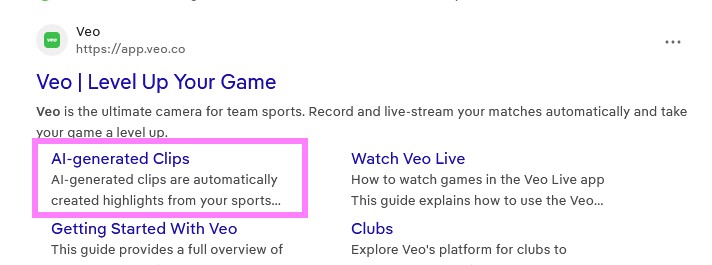
    Search results for what is veo
    Veo makes AI-generated Clips.


    Educational value

    So…how does this product (which provides no prices upfront, you need to ask for a quote and hope for your educational discount…from a company with EDU in their name 🙄) actually add to the educational experience where students made ski jumps and rolled marbles off of them?
    Gif for the concept of lost or nothing from Pulp Fiction


    • The students watched a video about ski jumping inside a virtual world.
    • Then they did something with generative AI about making a ski jumper?
    • Then they made their own ski jump models out of cardboard and rolled marbles off of them.

    I didn’t see any measurement of angles or distance.

    I even think the students’ faces look a little disappointed as their marble doesn’t sail up into the air much like a ski jumper does.


    before and after


    So where’s the learning added? Where is the advantage of using the product? 

    where’s the beef?


    Students could have watched that 2D ski jumper video outside of the Olympic world.  Technically, everything I saw happening in world was unnecessary.  
     
    Yeah, it would be a tad more boring but when the immersive Olympic world doesn’t add anything, it is a distraction. Unnecessary information should be removed (Mayer’s Principle of Coherence).

    BTW, who’s going to tell them that PBL is falling out of fashion?

     
    Gif of Kristoff from Frozen saying Somebodys got to tell him


    So let’s score them against their words

    Wondering what immersive learning looks like?

    No, but that’s because I’m a specialist in immersive learning. What you’ve shown ain’t it.


    Not ‘flash over substance’?

    The video and supposed learning has no real substance. You might want to re-think using the phrase ‘not flash’.

    The real deal!

    😆

    1 of 10, 1 of 100!

    When in doubt, dazzle them with statistics!

    Spent 5 years creating

    what. a. waste.

    BTW, your YouTube says you went AI crazy 6 months ago. Sure you want to stick with 5 years?

    EDUMetaverse reputation

    Interestingly, EDUMetavere’s YouTube account is empty! What?
    Capture of EDUMetaverse YouTube account which is completely empty of videos
    This channel doesn’t have any content. You’re telling me.

    And Andrew’s YouTube account is full! huh?  (No comment on this Jess Jones AI agent…but…let’s just say there is a LOT of content with her.)

     
    Did you know that you can spin up ‘blank’ avatars, basically avatar bots, in VirBELA based products? 
     
    Advertised image from EDUMetaverse for a global topic world. Avatars are seen in a UN-like room.
    I got $5  💸saying this image contains bots


    Summary

    I don’t begrudge the students. Poor souls having to be dragged into this. They remind me of the poor HTC Vive students.  I’m glad the students made their cardboard ski jumps IRL.  But somebody get them a tape measure. Get a physics teacher in there!

    But for the love of God, please have your fake AI video have the ski jumper going down and then up OFF OF THE SKI JUMP, not the opposite. That is, if you are going to highly produce your propaganda about how your VR helps learning, have the ski jumper go from right to left, not left to right.  

    Here’s how to goes:

    Gif of an actual real ski jumper
    Notice how the ski jumper slides down and jumps up off the ramp?


    What’s my main problem with the video/post? 

    It does a terrible job of portraying a possible way to use XR for education. Even if one looked past the faked video shots (and I don’t have a direct beef against using AI for video clips, even though I mourn for the proper actors put out of jobs with this), teaching this way with XR is awful.  I see no educational benefit at all.

    All in all, posts like this (and Andrew posts like this very often) do more harm than good to the XR for education industry. 

    Over and out.

    Post script


    I usually add more to my blog posts after publication; don’t be weirded out. But this one is quite the eyebrow raiser. 

    The blogger records show that I published this blog post on Saturday February 7, 2026 at 11:27 A.M. EST.

    On ~Sunday February 8, 2026, Andrew Wright published on LinkedIn that he was leaving EDUMetaverse, a company by his own LinkedIn tagline he “created” saying that “the project is now in safe, capable hands.”

    I’m not implying that Andrew lost his job with EDUMetaverse because of my blog post. Far from it. My read stats of this blog post immediately upon posting/sharing it and all up to this very moment of writing this post script on February 14, 2026 show that there have been at best ~2 views.  I highly doubt that Andrew was one and EDUMetaverse (whomever that is) was the other.

    But the coincidence is A-MAZ-ING.

    And if you followed my inference in my blog post, I immediately wondered if Jess was taking over at EDUMetaverse. 😖

    An interesting idea: build AI…and it takes your…job? 😕
  • FrameVR: Showing their cards

    FrameVR: Showing their cards


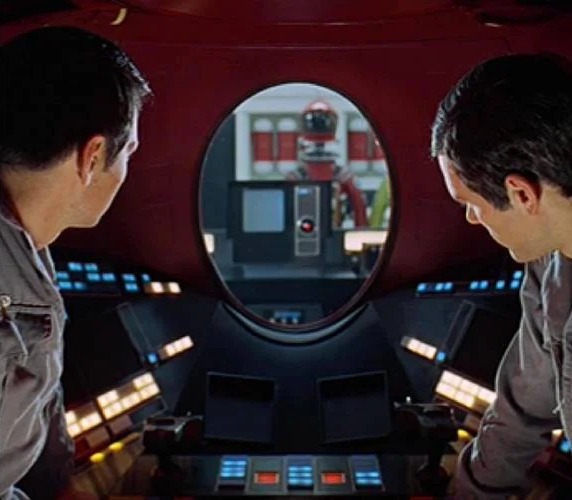
    Capture from movie 2001 A Space Odessey showing HAL reading lips in a crucial scene
    LANDMARK MEDIA / Alamy Stock Photo

    For quite some tie, I’ve been wondering what cards FrameVR.io (hereafter called Frame) had to play in the AI-in-XR space. They were flirting with the concept right around the time of the Mozilla Hubs announced shutdown, but despite witnessing the entire XR industry contract around them, they kept claiming “We’re all in on AI”.  They seemed to mean more than just AI characters in XR space. I just didn’t know how.

    With Gabe Baker’s “AI In Meetings: Treading on Sacred Human Space” LinkedIn article of January 23, 2025, I got a much clearer vision.  And I’m disturbed.

    This post, therefore, is a response. I write it with a pang of regret, but here goes.

    A Brief History of FrameVR, from Heather’s perspective

    I have the date when Frame arrived on my radar: March 27, 2020. I was exploring easy-to-access XR platforms and spent some time exploring Frame with the great Scot Daniel Livingstone.

    Capture of a fun photosphere of Star Wars Lego toys in Daniel Livinstone's living room.
    Exploring Daniel’s 360 photosphere in Frame

    Frames are essentially web rooms in 3D. As Frame’s website says, “Frame is a beta product from Virbela. Frame makes it easy to communicate and collaborate in 3D environments, right from the web browser.”  Frame was one of several no-download required (hence WebXR) platforms that included Mozilla Hubs, Janus, rumii, and Cryptovoxels. Similar competitors had native apps that needed to be downloaded including ENGAGE, Second Life, and Somnium Space.

    Awkwardly, the landing page for Frame used to drop a visitor directly INTO a Frame, which while demonstrating what it was immediately, was unnerving for the unready.  I’m glad to see now that they redirect into a more traditional webpage now that has a bit more of “who we are, what you get, and how much this costs” layout.

    After that first exploration, I’d go back into Frame on and off for years, mostly for events, meetings, and conferences. To give Frame some credit, they were and still are marketed towards business or professional use, that is meetings and events. From the default spaces available to the business attire avatars, they bend to the professional market.

    As of today, Frame’s top 6 use cases listed on their website are professional: team meetings, recruitment, vendor showcase, meetings, campus twins, and networking.  This is not to say that they didn’t cater to the education market – they did! It’s just that most education uses were from the same list: meetings, recruitment, campus classrooms, etc. I see one “soccer strategy” use in the use cases– that’s interesting. But most the education uses are just the same as business uses. I’m going to guess that if there’s an educational use that is completely unique (Hmm…underwater basket weaving?), that’s either proprietary and therefore NOT shared by Frame or those Frames relay entirely on clients bringing their own 3D builds with them and not having Frame provide them.  Either way, it looks like overall “creative” use is limited to creatively using what they already offer.

    Disclosure


    It’s time to veer off and talk a bit about Virbela and I have to throw out TONS of disclosures now.
    I owned a Virbela Virtual Campus (VC) in my role as Chief Operating Officer of the Immersive Learning Resource Network (iLRN).  iLRN’s deal with Virbela was:

    iLRN had unlimited capacity campus for free for spin-ups. We could generate new rooms, new building floors, new buildings, and entire new islands at our demand. (That was actually wicked fun.) In return, we paid Virbela 50% of the rent we collected on contracts that we signed into our Campus. So iLRN was a subletter.

    My COO responsibility was that Campus, account management, and finances. I also conducted tours, did training, and provided tech support. We hosted some lovely events, but meetings were basically all we did.  There were a few random boat rides as well.

    However, as anyone that knows me could guess, I tangled horns with Virbela.

     
    Here are two specific times:

    Sales


    When I came on board as COO, I was soon contacted by a Virbela employee to set up a daily meeting to ‘talk about my pipeline’.  She wanted to talk about sales leads. Virbela could always see a Google doc where I kept all leads. She spent her time encouraging me to frame (haha) my conversations with future clients with Virbela essentially answering their (whatever) needed use case. Said another way, sales; I was being treated like I was a salesperson, learning the ropes.

    Bear in mind that Virbela had a right to see the future as grand and rosy. 🤩🌹 I had heard informally that the home Virbela Virtual Campus had leaped from a paltry 30 visitors a day to over 300 visitors a day during the pandemic. So much traffic had increased that they staffed a concierge desk with 1 or 2 salespersons standing by for many hours each day, ready to break off, give tours, and assist in collecting specs for contracts.  They saw no end to the possible companies and schools that would want to walk in and book a contract for fully made and ready to go VR space.

    This request to meet everyday to discuss sales struck me very badly.  

    1. My job was not pushy sales. I’ve never loved sales. Yuck.
    2. My ethics as a instructional designer forbids me from recommending an educational product that does NOT meet a clients’ needs. If it doesn’t fit, you don’t recommend it. 
      Screen capture from inside of a Virtual Campus meeting room showing blurred faces.
      Capture from a meeting inside of the VC with a client where the VC did not fit their needs; they had users mostly with smartphone technology.  VC was a native app that needs a computer. I voted against offering a contract. Fortunately, the client didn’t take one either.

    3. We were a non-profit, so beating the bushes for money was not our style. Later, iLRN would get chided by Virbela for offering rental prices 5x lower that other Virbela campuses, to which we were stymied and replied with “You, Virbela, told us our prices.”  Talk about greedy.


    So one day I had a chance to fill in a “how are we doing?” Virbela survey which I thought was large and somewhat anonymous. I said “I don’t need daily watching over my sales lead pipeline.”  Virbela sat me down in a following meeting and said “Sorry, I guess you don’t need daily meetings.”  To which, I was more perplexed that my feedback had been directly identified with me.  Oops. Either way, sales lady backed off.

    Avatars

    iLRN had booked in a major speaker into an event, but we also knew that this speaker would prefer to wear a hijab.  We had no hijabs in our avatar collection. We checked. We checked because we knew it was important to be as ready as possible in advance for a speaker. I think we also asked Virbela if we could have hijabs on our VC. I don’t remember a response.

    Our speaker arrived, worked on their avatar, and settled on a hat/hair combo that was the same color, which visually was close to a hijab.  But as we thought they might, they blasted Virbela on social media, pointing out that hijabs were not available.

    Before you could say spit spot, Virbela socials responded right back, “Oh but we do have hijabs! You must have missed them!”

    I call bullshit. OUR VERSION of Virbela did not have them. We checked, in advance, remember? My conspiracy theory is that Virbela loaded them into our version just after the speaker complained publicly.

    Total freaking bullshit, to claim that we had them. I really didn’t like the way Virbela treated the speaker OR us as their subletters.

    ~~

    After I left iLRN, I’ve used FrameVR as a contractor to host a fun student trivia game; the ability to turn audio zones on and off was fun.

    In all of my dealings with Gabe up to this point, I found him to be a kind, dedicated, upbeat, and friendly ‘would do anything to help you’ person in the WebXR world. It’s funny that I had a friend that also knew Gabe but confusingly (to me), he did NOT get along with Gabe at all. I eventually broke off that friendship but I joked that “In the divorce, I got Gabe.” 😁

    The horizon darkens

    When Mozilla announced that they were no longer be supporting their Hubs WebXR product, Gabe wrote a lovely tribute initially on LinkedIn.  I thought it was a classy move, given that FrameVR and Hubs had been up to that point been direct competitors.  I was hoping that Gabe would hold Frame above the fray that was about to happen over at Hubs…but alas, in reply to one comment on his post, he pitched Frame to a listless Hubs user. 

    Oh. Those warm fuzzies were nice while they lasted. 🤦 But, abrupt end.

    Seeing XR companies contracting and closing (AltspaceVR closed in March 2023, Mozilla Hubs closed in May 2024), I wondered how Gabe was seeing Frame go forward. He kept sending out the “Frame’s going all in for AI”-type message.


    Capture of Gabe Baker's AI in Meetings: Treading on Sacred Human Space LinkedIn article header.

    From the title of Gabe’s January 23, 2025 article AI In Meetings Treading on Sacred Human Space, I was a bit hopeful thinking, “OK, an acknowledgement that humans have such a thing as sacred space…and it means something.”  Initially, Gabe does a good job acknowledging the tasks that AI does well and not well in meeting space (because remember Virbela/Frame is all about meetings). It really sounds like Gabe has had a year+ of AI attending meetings and he’s got his finger on the pulse of what works and what does not. Still, most of his examples are stale & predictable.

    He seems to claim that when teams are talking about something, “seeing it” in 3D is the next and better step to take:

    “When people come together to meet, I think there should be as little friction as possible when this question comes up: “I wonder what that would look like?”
     
    Yet many meetings don’t need 3D or a visualization at all (i.e. working on accounting on a spreadsheet or writing for a webpage).

    Red flag

    In as much as I want to give Gabe all kinds of doubt, with this, my spidey-sense meter went to 100:


    “As someone who has seen how helpful AI can be across many domains,
    I desperately want AI to be present and accessible during meetings.
    When people see the results of our vision, they will want it too. In
    fact, I think it will seem silly not to have it!

    Those who don’t want
    it will be the people who really want to seem like the smartest person
    in the room at all times.
    But those who are interested in results and
    not ego will be happy to have AI-powered teammates at their meetings.”

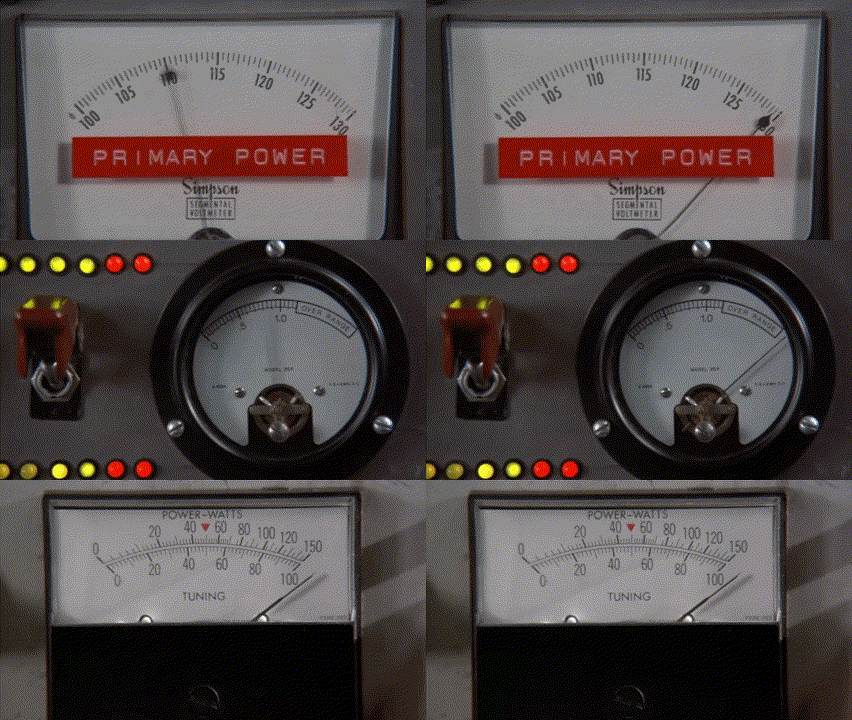
    Gif of the amp maxing out analog dials from Back To the Future movie


    Wait, what?

    People who don’t want AI in a meeting room ‘want to seem like the smartest person in the room’? 

    What about people who don’t want AI in the room stealing the peoples’ creativity and sharing it to who knows who or selling it to who knows who? Or what if AI just plain summarizes it wrong? Or AI gets it wrong? It’s been known to happen. (Schools Using AI Emulation of Anne Frank That Urges Kids Not to Blame Anyone for Holocaust)


    Gabe made it seem as through if you are anti-AI, you are anti-Google, anti-learning, and much worse, egotistical!  I guess privacy got checked at the door? For the record, I’m very pro-Google and pro-internet use during meetings or classes.

    This specific statement is a red flag because it is an emotionally laden argument popping right out of the middle of this discussion. It is as if Gabe ran out of patience and burst out “If you don’t want AI, you’re an ego monster!” 😠

    When a calm reasonable discussion suddenly goes emotional, something is wrong. Gabe lost his shit for a moment there. As Spock would say “Reverting to name-calling suggests that you are defensive and therefore find my opinion valid.”  So, he’s probably getting pushback on this AI thing.

    I hoped he didn’t really mean it so I read on.

    Nope, he doubled down…I mean tripled down. He wants AI agents in every meeting, in the name of eliminating duplicated work across companies. (So much for visualization?) He wants AI inserting itself fully into conversations, setting up follow up meetings etc.

    Is anyone else getting a creepy feeling here?  This is way beyond “all meetings will be recorded” –which would make me make tracks outta there anyways. The invasion of freedom of speech (because some folks will NOT say things if they knew they were going to be hyper-on-the-record) during work meetings will be staggering.  Stymied talk equals failing organizations and failing people. This is going to end badly.

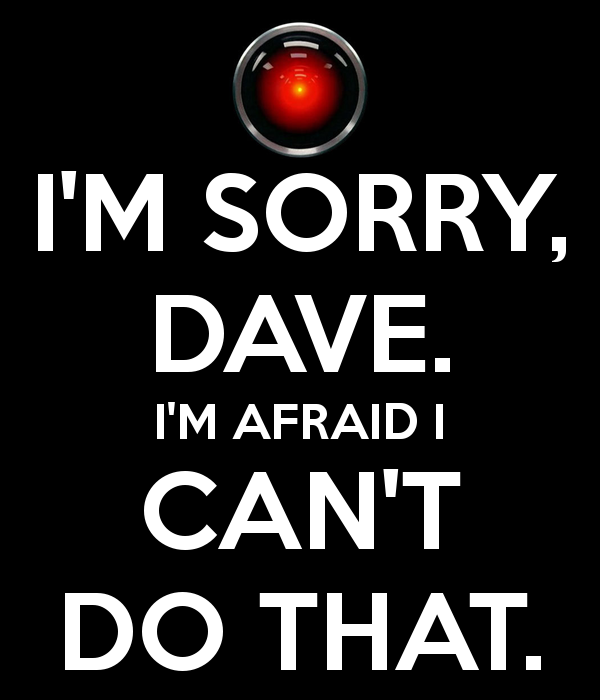
    Meme showing HAL and the text: I'm sorry Dave I can't do that line from 2001 A Space Odessey

    OK, so here’s the $64,000 question: Would I, as a consultant, recommend Frame for educational contexts in the future?

    My answer: I’ve agonized over this, but I probably could not recommend it.  I cannot in good faith recommend using a platform that might record children or learners without their expressed consent and use those recordings, summaries, or derivatives for a future plethora of uses not being disclosed now.  It’s not worth it to “visualize” a solution or have an AI set a future meeting. I can do those on my own, thanks.

    For the moment, I find that sacred human space IS being treaded upon. I can’t in good faith say that’s a direction that education needs to go.

    ~~

    #InstructionalDesign #edtech #XR #VR #AIInXR #AI #Frame #Virbela

  • The first step into the Metaverse isn’t the hardest. It’s the nth step that you do for the nth time.

    The first step into the Metaverse isn’t the hardest. It’s the nth step that you do for the nth time.


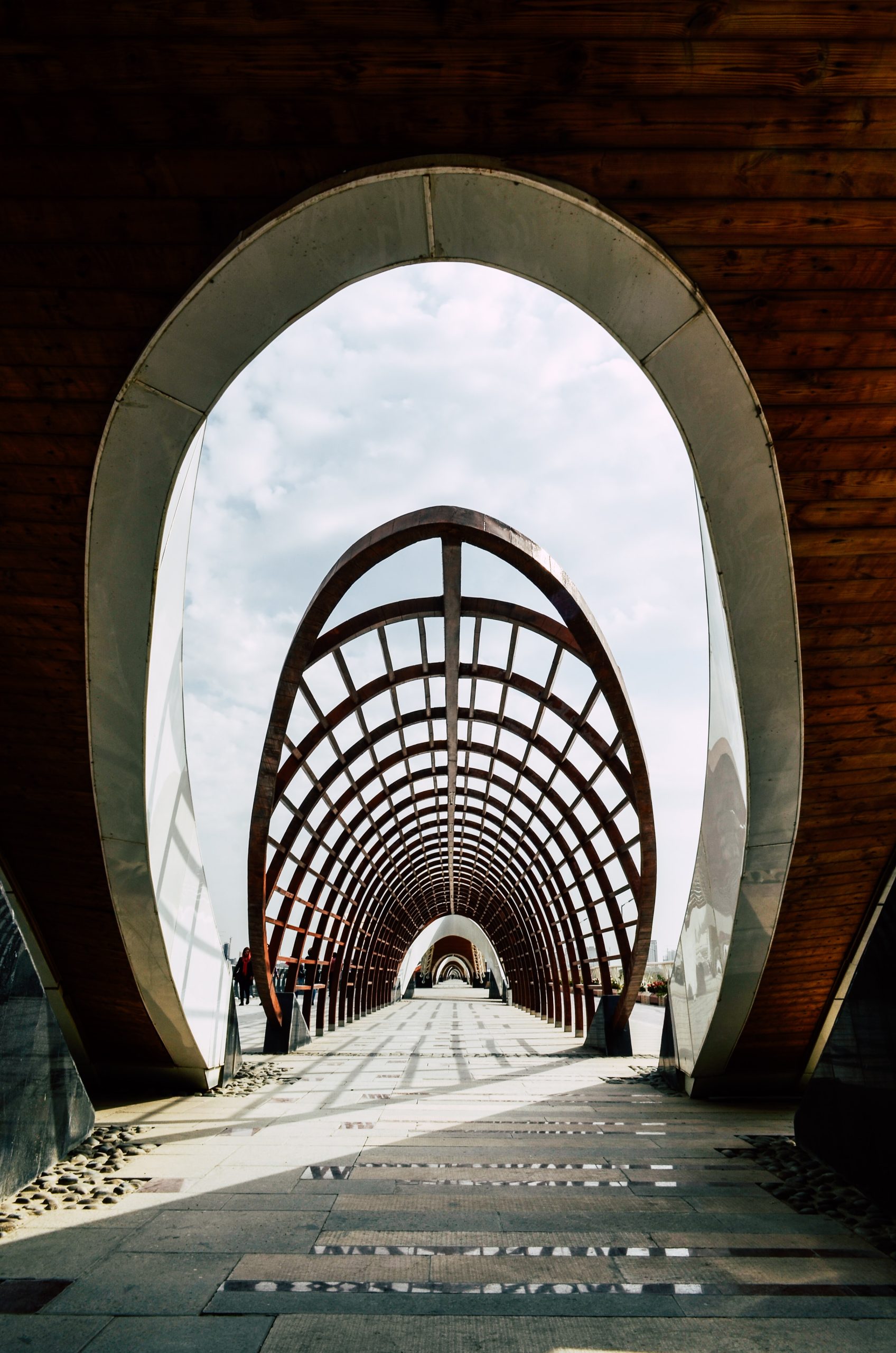
    Photo of architecture in Iran

    Response post to: The Forgotten Stage of Human Progress


    I’m knee deep in an XR implementation project. It’s going forward by
    inches; each step aches with how small it is. If I measured it, it feels
    like it would barely tick one mark on a stick. However, like a gardener
    that makes one small snip here, one pull of a weed there, there is no
    overnight transformation. But still– in the messy work of
    IMPLEMENTATION, I’m making a garden that turns heads and makes people
    think “I want to be there.”

    Seriously, here is the garden:


    Today is one of those days where it feels like we are going 2 steps backwards with no step forward. When you hear it mentioned quietly, but over and over and over, that one of the biggest implementation problems we have in XR for education is “sound” — WE ARE NOT KIDDING.

    We have more problems with sound that with any other aspect of an experience. It is the TOP problem source.

    Virbela had this problem in buckets. My hosts cringed every time I estimated that 20% of incoming users had sound problems. 20%!  If YouTube had a 20% failure rate that they presented to users, they would far, far out of business by now.

    I watched this video dated November 5, 2021 put out by Stanford University touting the first course taught in XR with Jeremy Bailenson where he claims it will be “an incredible journey for about half of this class”


    Here is the video promo text: 

     “263 students, all with their own VR headsets, across 20 weeks and two courses, spent over 200,000 shared minutes together in the Metaverse. They engaged in large group field trips, small group discussions, performed live music and skits, and worked both alone and together to build their own virtual worlds.”

    First: posed shot OR photoshopped image. Notice: no Zoom markings at all. It’s not “live”, people are not moving.


    For someone like me with enough live event logistics and tech support experience, watching this video shows me that I suspected the course was riddled with sound problems.  

    The background music starts at 0:18, so “hearing” the students will be hard.

    Watch for how much students were cordoned off into small groups (that’s not just a teaching method, that’s to put them soundwise AWAY from each other and minimize disruption) and then just listen to what you CAN hear of the sound provided in the video, you will get snippets and what you will hear will be blurbs of users acting more awkward and users waiting around on another user.

    The “you made it” comment is somewhat telling. It is HARD to get users into XR. Admittedly, it might easier if you are at Stanford and everyone has an Oculus Quest 2 (Meta Quest). (smirk)

    Privilege much?

    At 1:14 there is a LOT of talk over and by 1:18 the video has been sped up to just overwhelm with ADDING models or processing to VR on the ENGAGE platform.

    I’m not trying to douse flames of innovation here. But I’m trying to point out that implementation, as the Atlantic article points out, is a much messier, day-by-day process than the glitz and glamour of a moment.

    The video shows THIS as what appears to be a class highlight moment.


    The sound is a man speaking saying “Nice work everyone!”

    Just let that sink in while looking at that image.

    2021. Stanford University. That is one of our very best learning instituations, folks.

    Ironically, all of the avatars with awkward arms ARE the users actually using headsets. That one avatar in the middle in the gray shirt with this hands at his sides? He is the one user in 2D, not a headset.

    Snicker now, because he is the only one looking normal in this bunch.

    Implementation is HARD!

  • IEEE VR 2021 Production Design

    IEEE VR 2021 Production Design


    I was recently asked if I have service design experience and I realized that I have more service design
    experience than product design experience in VR. Truly, my focus has
    been on bringing new clients into VR experiences, explaining the
    benefits and challenges, and customizing a solution for their own needs.
    I love doing this work!

    So here is an example of service design experience that I did for the IEEE VR Conference in 2021.

    First, as I stated my remarks at the Opening Ceremony
    (held at 3:30 a.m. my time, 8:30 a.m. Lisbon, Portugal time), the
    institution that I worked for pursued getting this particular client
    because they were an ideal fit with similar mission and demographics.
    Additionally, both organizations had switched on online conferences in
    2020 (IEEE VR to Mozilla Hubs and iLRN to Virbela)
    and so we shared the common ground of bringing large amounts of users
    into new virtual spaces. We won the contract to host their posters,
    doctoral consortium, demo, 3DUI contest, and video presentations on the iLRN Virtual Campus
    powered by Virbela. (The rest of their program was handled on Zoom,
    YouTube, and Twitch.) We had approximately 2 months prep time and worked
    directly with organizers from Portugal, New Zealand, and the US –
    drawing together meetings, tours, and set up times across multiple time
    zones.

    My support was being online to help with registrations,
    account access with translation to virtual access, technical support
    inside the virtual reality spaces, and providing options when the
    organizers wanted to dream up something new on the spot.

    And did they dream! Out of this one 7 day event, 3 brand new in-VR conference events started and I was part of all of them.

    All
    of these events had a theme to them: they used the basic affordances of
    the platform and put those pieces together in a new way.

    Said another way, these events were not pushing the VR boundary. They used the VR platform in ways it could perfectly perform and thus the execution was great! Think: using basic legos, not a kit, to build something like the Millennium Falcon.

    Treasure Hunt Ready Player 21

    Just
    a few weeks before the conference opened, our island gained the ability
    to passcode spaces. This meant that users needed to enter a code into a
    pop-up box in order to teleport or arrive in a specific space (usually a
    meeting room). One of the conference organizers, Rob Lindeman,
    listened as we described the basic features of the passcode system and
    he realized that he could create a treasure hunt game. He called it Ready Player 21.

    http://www.lindeman.com/vr2021/live.shtml
    (This landing page has 1,211 hits as of October 13, 2021. Rob documents
    that it had over 900 hits just during the treasure hunt game.)

    “If you are seeing or reading this, it means I am dead…I mean I am an avatar, and so are you. My name is James HOLIDAY.

    I
    have created a set of puzzles for you to solve. Each puzzle results in a
    key that you can use to unlock a secret room within the campus, where
    you will find clues to finding the next key. There are four keys in all,
    and the first person to find all four of them and reach the final room
    will receive an extra special prize.

    Half a billion…No, wait…I mean an NVIDIA GeForce RTX 3090 graphics card!

    There
    are leader boards displayed around the campus, and each time someone
    finds a key, their name will be added to the leaderboard, along with the
    time of earning the key.

    If you would like to take part in this adventure, please use the QR code that you find below.

    Good luck!*”

    As
    I was part of the support crew, I could not participate to win the
    prize but I had fun visiting the first 2 rooms to check out their
    function and I actually solved the puzzles! (I’m good at lateral
    thinking.)

    When the treasure hunt game opened, there were QR
    codes placed around the Campus inside of images and participants ran
    around collecting them– mistakenly thinking that just collecting QR
    codes would win the game. The QR codes, however, were only the START of
    the game. The actual puzzles were inside the passcoded rooms.

    The hunt ran about 4 days.

    I was proud to witness that a woman, Xioadan Hu,
    won the game and this screenshot shows us in the winning puzzle room as
    we were taking her celebrating photo, with a research colleague. I
    asked her how she completed all of the puzzles and she said “you just
    have to be very detail-oriented!” I’m sure she’s going on to great
    things. There was great envy for the graphics card that she won because the COVID-19 pandemic had curtailed graphic card production.


    Speed Networking

    The next experience was dreamed up and put into action in just a few hours. One of the organizers, Francisco Simoes,
    had realized that we could make for them a large office space of 36
    offices that each had private sound (sound restricted to inside that
    space). So with some added Portugal theming and a few ground rules, we
    instituted “Scientific Speed Dating” when networkers could just show up
    and meet new people every few minutes. Everyone at the conference was
    invited so this was a great time for students to meet potential
    colleagues or new research contacts!


    The VR affordances that we used were:

    • Sound isolated rooms connected by open office spaces.
    • “Flat sound” or sound all of the same volume transmitted through the entire space
    • The ability to send a “room notification” to every avatar in the space notifying them of time remaining or time to switch rooms.

    So remember those spaces:

    An office is a sound isolated space with walls, ceiling, floors, and a door. You could see into the office from outside.

    A
    team suite is a group of offices bound together by a common floor.
    Sound is NOT spatial or isolated, sound is flat so therefore “traffic
    control” could be done by voice by being in one spot and describing or
    saying a number and you could be heard a hallway away.

    The ground rules were very easy and I was drafted to be the Master of Ceremonies so I kept repeating these rules all through the hour.

    Rule 1: Find an office.

    Rule 2:

    • If there is no one in it, go in it!
    • If there is one person in it, go in it!
    • If there are 2 people in, don’t go in it! (Find another office.)

    Networking was for 5 total minutes: 4 minutes to meet/greet, then a 1 minute warning to exchange contact info.

    At
    the 5 minute point, the person who was first into that office stayed
    and the person who arrived 2nd stood up and walked to a new office.

    Given that this was an international conference, instructions had to be as simple as possible.

    We had “Hall Monitors” of sorts, really just roving volunteers, who would call out
    if an office had only one person waiting to network. We discovered that
    numbered offices, therefore, were better than named offices because
    folks could navigate by looking for a increasing or decreasing number.

    In all, the event was a great success!
    We actually ran it twice with 36 available offices. That meant capacity
    of 72 attendees and we pulled in ~50 for the first session and ~35 for
    the second (including some repeat attendees!)

    Kent Bye commented that it was “One of the best virtual conf activities I’ve seen”

    Flash Mob

    The
    final event took advantage of the VR affordance that Virbela empowers
    every avatar to dance. From the F7 dance command to longer robot
    dancing, it didn’t take long for the IEEE VR organizers to realize that
    if everyone synchronized their dancing, it would look like a flash mob.

    We put a flash mob on the agenda and LOTS of folks showed up! I took a video and Kent Bye led the instructions.

    https://twitter.com/kentbye/status/1377718061231349760?s=20


    Conclusion

    Working
    with the volunteers and conference committee was great! We often worked
    simultaneously in multiple systems: Discord, Virbela, etc. In a classy
    maneuver, the conference chair, Joaquim Jorge, also made sure that he treated his volunteers with the utmost respect, dancing with them,
    inviting them to virtual drinks at the rooftop bar, and trusting them
    completely with projects like organizing volunteer coverage.

    The combined effort led to the LARGEST IEEE VR conference ever!

    In
    summary, the design experience used the basic affordances of the
    platform, passcoded rooms, sound-isolated rooms, and dancing avatars,
    and created unique and successful VR events. It was not the case that we
    imported unique objects or transported the users to phantasmagorical
    locations. The entire Virbela platform is a software download that looks
    very traditionally like conference and meeting rooms. But it was taking
    the basic building blocks and imagining them in new ways that was the
    key to this success.

    A good design lesson for me and I hope, for you!

    Check out IEEE VR 2022 set for Christchurch, New Zealand!

    #ServiceDesign
    #ExperienceDesign #VRExperienceDesign #VirtualEvents #VR #IEEE #IEEEVR
    #virbela  #ResearchConference #OnlineConferences #TreasureHunt #FlashMob
    #SpeedNetworking #VREvents #Lisbon #Virtual #2021#VRheadset #VRglove
    #PosterSession #SocialVR #Engaging #MarketGrowth #Meetups #SurgeInDemand
    #edtech #technology #StudentVolunteers #2DVR


    This article originally posted to LinkedIn on October 15, 2021

    https://www.linkedin.com/pulse/ieee-vr-2021-experience-design-heather-dodds