Tag: UX

  • IEEE VR 2021 Production Design

    IEEE VR 2021 Production Design


    I was recently asked if I have service design experience and I realized that I have more service design
    experience than product design experience in VR. Truly, my focus has
    been on bringing new clients into VR experiences, explaining the
    benefits and challenges, and customizing a solution for their own needs.
    I love doing this work!

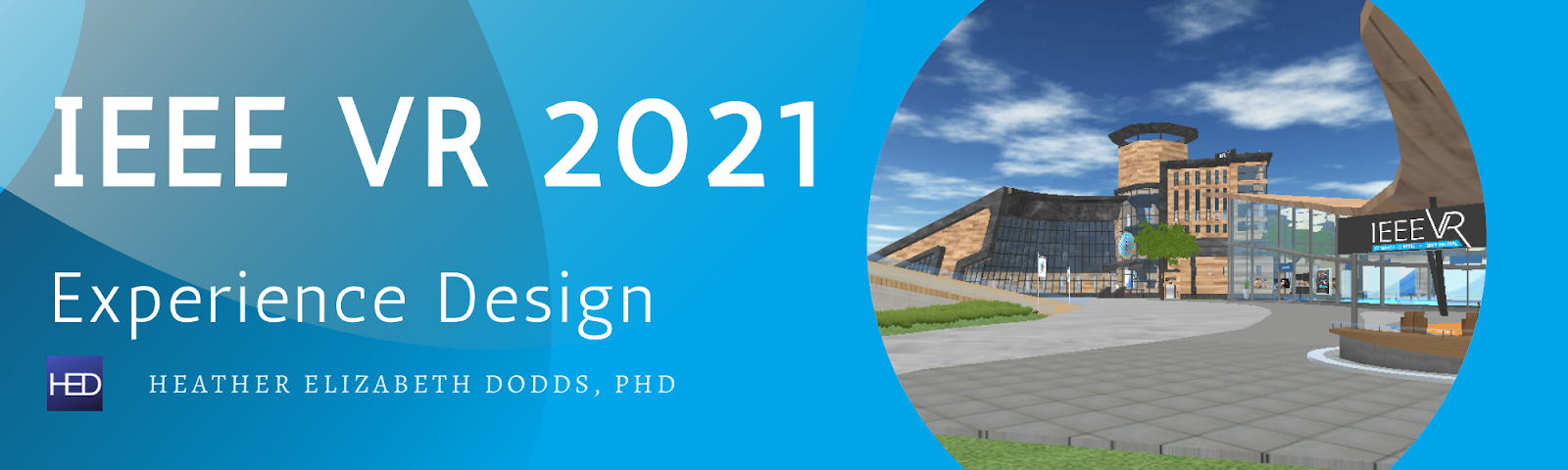
    So here is an example of service design experience that I did for the IEEE VR Conference in 2021.

    First, as I stated my remarks at the Opening Ceremony
    (held at 3:30 a.m. my time, 8:30 a.m. Lisbon, Portugal time), the
    institution that I worked for pursued getting this particular client
    because they were an ideal fit with similar mission and demographics.
    Additionally, both organizations had switched on online conferences in
    2020 (IEEE VR to Mozilla Hubs and iLRN to Virbela)
    and so we shared the common ground of bringing large amounts of users
    into new virtual spaces. We won the contract to host their posters,
    doctoral consortium, demo, 3DUI contest, and video presentations on the iLRN Virtual Campus
    powered by Virbela. (The rest of their program was handled on Zoom,
    YouTube, and Twitch.) We had approximately 2 months prep time and worked
    directly with organizers from Portugal, New Zealand, and the US –
    drawing together meetings, tours, and set up times across multiple time
    zones.

    My support was being online to help with registrations,
    account access with translation to virtual access, technical support
    inside the virtual reality spaces, and providing options when the
    organizers wanted to dream up something new on the spot.

    And did they dream! Out of this one 7 day event, 3 brand new in-VR conference events started and I was part of all of them.

    All
    of these events had a theme to them: they used the basic affordances of
    the platform and put those pieces together in a new way.

    Said another way, these events were not pushing the VR boundary. They used the VR platform in ways it could perfectly perform and thus the execution was great! Think: using basic legos, not a kit, to build something like the Millennium Falcon.

    Treasure Hunt Ready Player 21

    Just
    a few weeks before the conference opened, our island gained the ability
    to passcode spaces. This meant that users needed to enter a code into a
    pop-up box in order to teleport or arrive in a specific space (usually a
    meeting room). One of the conference organizers, Rob Lindeman,
    listened as we described the basic features of the passcode system and
    he realized that he could create a treasure hunt game. He called it Ready Player 21.

    http://www.lindeman.com/vr2021/live.shtml
    (This landing page has 1,211 hits as of October 13, 2021. Rob documents
    that it had over 900 hits just during the treasure hunt game.)

    “If you are seeing or reading this, it means I am dead…I mean I am an avatar, and so are you. My name is James HOLIDAY.

    I
    have created a set of puzzles for you to solve. Each puzzle results in a
    key that you can use to unlock a secret room within the campus, where
    you will find clues to finding the next key. There are four keys in all,
    and the first person to find all four of them and reach the final room
    will receive an extra special prize.

    Half a billion…No, wait…I mean an NVIDIA GeForce RTX 3090 graphics card!

    There
    are leader boards displayed around the campus, and each time someone
    finds a key, their name will be added to the leaderboard, along with the
    time of earning the key.

    If you would like to take part in this adventure, please use the QR code that you find below.

    Good luck!*”

    As
    I was part of the support crew, I could not participate to win the
    prize but I had fun visiting the first 2 rooms to check out their
    function and I actually solved the puzzles! (I’m good at lateral
    thinking.)

    When the treasure hunt game opened, there were QR
    codes placed around the Campus inside of images and participants ran
    around collecting them– mistakenly thinking that just collecting QR
    codes would win the game. The QR codes, however, were only the START of
    the game. The actual puzzles were inside the passcoded rooms.

    The hunt ran about 4 days.

    I was proud to witness that a woman, Xioadan Hu,
    won the game and this screenshot shows us in the winning puzzle room as
    we were taking her celebrating photo, with a research colleague. I
    asked her how she completed all of the puzzles and she said “you just
    have to be very detail-oriented!” I’m sure she’s going on to great
    things. There was great envy for the graphics card that she won because the COVID-19 pandemic had curtailed graphic card production.


    Speed Networking

    The next experience was dreamed up and put into action in just a few hours. One of the organizers, Francisco Simoes,
    had realized that we could make for them a large office space of 36
    offices that each had private sound (sound restricted to inside that
    space). So with some added Portugal theming and a few ground rules, we
    instituted “Scientific Speed Dating” when networkers could just show up
    and meet new people every few minutes. Everyone at the conference was
    invited so this was a great time for students to meet potential
    colleagues or new research contacts!


    The VR affordances that we used were:

    • Sound isolated rooms connected by open office spaces.
    • “Flat sound” or sound all of the same volume transmitted through the entire space
    • The ability to send a “room notification” to every avatar in the space notifying them of time remaining or time to switch rooms.

    So remember those spaces:

    An office is a sound isolated space with walls, ceiling, floors, and a door. You could see into the office from outside.

    A
    team suite is a group of offices bound together by a common floor.
    Sound is NOT spatial or isolated, sound is flat so therefore “traffic
    control” could be done by voice by being in one spot and describing or
    saying a number and you could be heard a hallway away.

    The ground rules were very easy and I was drafted to be the Master of Ceremonies so I kept repeating these rules all through the hour.

    Rule 1: Find an office.

    Rule 2:

    • If there is no one in it, go in it!
    • If there is one person in it, go in it!
    • If there are 2 people in, don’t go in it! (Find another office.)

    Networking was for 5 total minutes: 4 minutes to meet/greet, then a 1 minute warning to exchange contact info.

    At
    the 5 minute point, the person who was first into that office stayed
    and the person who arrived 2nd stood up and walked to a new office.

    Given that this was an international conference, instructions had to be as simple as possible.

    We had “Hall Monitors” of sorts, really just roving volunteers, who would call out
    if an office had only one person waiting to network. We discovered that
    numbered offices, therefore, were better than named offices because
    folks could navigate by looking for a increasing or decreasing number.

    In all, the event was a great success!
    We actually ran it twice with 36 available offices. That meant capacity
    of 72 attendees and we pulled in ~50 for the first session and ~35 for
    the second (including some repeat attendees!)

    Kent Bye commented that it was “One of the best virtual conf activities I’ve seen”

    Flash Mob

    The
    final event took advantage of the VR affordance that Virbela empowers
    every avatar to dance. From the F7 dance command to longer robot
    dancing, it didn’t take long for the IEEE VR organizers to realize that
    if everyone synchronized their dancing, it would look like a flash mob.

    We put a flash mob on the agenda and LOTS of folks showed up! I took a video and Kent Bye led the instructions.

    https://twitter.com/kentbye/status/1377718061231349760?s=20


    Conclusion

    Working
    with the volunteers and conference committee was great! We often worked
    simultaneously in multiple systems: Discord, Virbela, etc. In a classy
    maneuver, the conference chair, Joaquim Jorge, also made sure that he treated his volunteers with the utmost respect, dancing with them,
    inviting them to virtual drinks at the rooftop bar, and trusting them
    completely with projects like organizing volunteer coverage.

    The combined effort led to the LARGEST IEEE VR conference ever!

    In
    summary, the design experience used the basic affordances of the
    platform, passcoded rooms, sound-isolated rooms, and dancing avatars,
    and created unique and successful VR events. It was not the case that we
    imported unique objects or transported the users to phantasmagorical
    locations. The entire Virbela platform is a software download that looks
    very traditionally like conference and meeting rooms. But it was taking
    the basic building blocks and imagining them in new ways that was the
    key to this success.

    A good design lesson for me and I hope, for you!

    Check out IEEE VR 2022 set for Christchurch, New Zealand!

    #ServiceDesign
    #ExperienceDesign #VRExperienceDesign #VirtualEvents #VR #IEEE #IEEEVR
    #virbela  #ResearchConference #OnlineConferences #TreasureHunt #FlashMob
    #SpeedNetworking #VREvents #Lisbon #Virtual #2021#VRheadset #VRglove
    #PosterSession #SocialVR #Engaging #MarketGrowth #Meetups #SurgeInDemand
    #edtech #technology #StudentVolunteers #2DVR


    This article originally posted to LinkedIn on October 15, 2021

    https://www.linkedin.com/pulse/ieee-vr-2021-experience-design-heather-dodds
  • The Future of XR Headsets

    The Future of XR Headsets


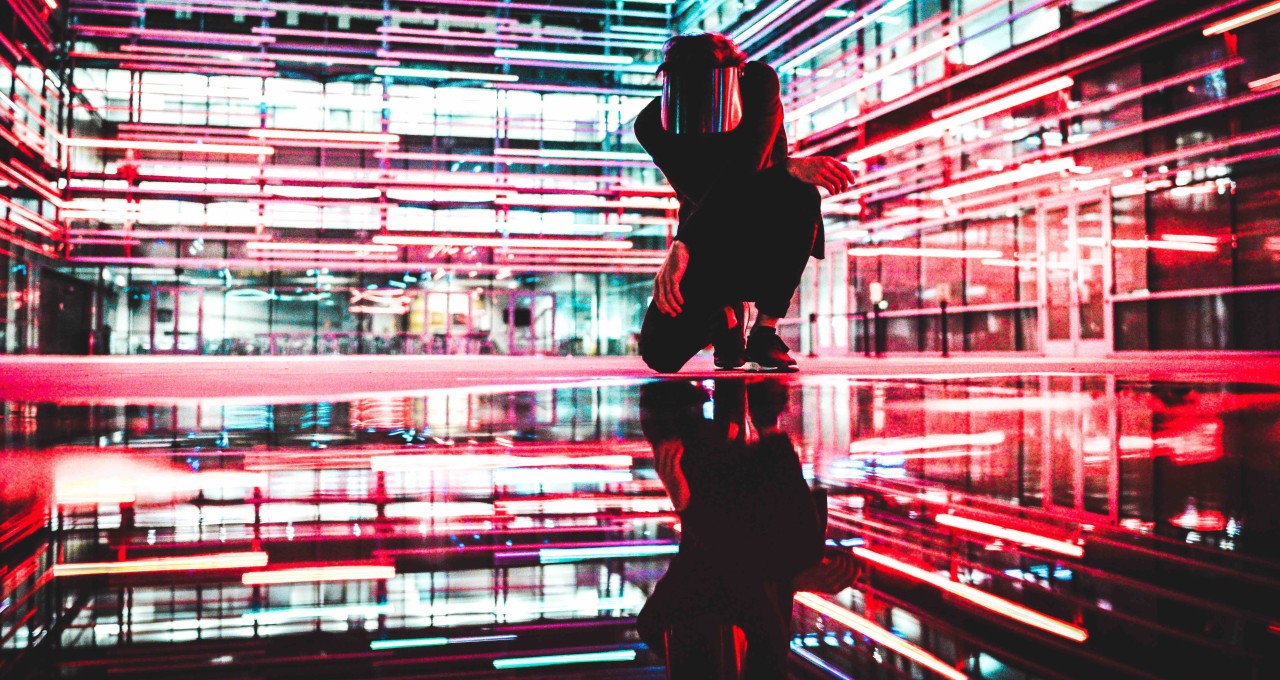
    Photo by Drew Graham on Unsplash


    I’ve been working on a project to predict the future of XR technology
    within a 5-10 year time frame. That means I’ve been reading research
    reports, digging through Twitter posts for conference photos, and
    reading thought pieces by some of the most valued opinions on XR in
    industry and education.  

    Simultaneous to this project, I’ve been brushing up my skills in User Experience (UX) and my most favorite, Design Thinking
    One of the most fun aspects of Design Thinking is that I’m allowed to
    let my inner empath run on full tilt. And it’s really great to let your
    emotions run through bunny-filled sunshine meadows and just see what
    she has to say about anything and everything.  Let me tell you: she has
    some real opinions on XR headsets. And almost ALL of those opinions
    come from the images being used to portray headsets. Come along on this
    mystical magical ride of the visuals of headsets.

    At the end of
    the journey, I will make a prediction about headsets.  And as with
    every project of mine, I’ve figured out how to work Disney into it (as much as possible).

    As our starting point, I’ll state something very strongly.   I’m sick of headsets where people are supposed to be wowed by XR.  To
    be realistic, 90% of XR headset images are these. I’ve gathered these
    images from across the internet and to preserve some degree of
    anonymity, I’m NOT providing the reference location.  I’m not trying to
    make fun of people. Please be clear on that. I’m commenting on *how we
    are portraying XR to others* to, supposedly, encourage others to join
    us in XR.

    Unknown person expressing surprise while wearing a VR headset and earphones. Her hands and fingers are spread wide, her mouth is agape.

    So
    we have the “Oh my I’m surprised!” look. I think that’s what this photo
    is trying to say. It’s possible she was frightened, but more on fear in
    a little bit.

    No alt text provided for this image

    Honorable
    mention in this category: hipster dude
    looking…uh…surprised. Actually, he looks ‘tired and being forced to
    look surprised’ but that could just be me overlaying college student
    thoughts onto this photo.

    The next one we have is the *very*
    ubiquitous “Hey, we’re trying out headsets…somewhere.”  I’ve got about
    10 of these photos collected.

    No alt text provided for this image

    So
    they are all smiling and facing the same direction.  We’re supposed to
    like that, right? Uh, remember that those headsets are designed to cut
    off all vision except that which the designer wants you to see and those
    are four women standing really close together in a public place.  Where
    is everyone’s hands? How did they know to stand that close together?
    They were probably prompted and stood close together and *then* put the
    headsets on. Yeah, that’s realistic. Is it any wonder that women, in
    particular, note less comfort with XR?

    Hey here’s a few more.  Do you want to try yet?

    No alt text provided for this image

    I’m
    solo and still comfortable standing here showing you this thing. 
    Wait…are you still there? Did walk away? Oo, a whole new way to
    indicate non-interest at vendor tables if every vendor wore one!  I
    might like this.

    No alt text provided for this image

    We are friends and happy even though we can’t see each other…and you!

    It’s a coincidence that those last two were Magic Leap.  I’ve got nothing against Magic Leap.

    Before we leave the emotional theme of happy, catch this image *from a real article*.

    Hello Clarice.

    I
    am so creeped out by this.  If you don’t see it, look closely at the
    mouth.  Where is the mouth???? Why is the mouth from someone else????
    Ah, the Hannibal Lecter of XR images.

    And finally, before things get better, just remember that your XR headset isn’t this.

    No alt text provided for this image

    I got nothing for this.  It’s so…nope…nothing.  Someone help her.

    So
    back to the topic of the future.  I’m asked occasionally which
    technologies to invest in over the 5-10 year time frame that are winning
    bets for XR.  I’ve got a multiple-part article series coming on how I
    arrived at my conclusions, so stay tuned for that. However, the more
    XR headset images I’ve seen (like all of those images above),
    the more I think we are doing a very poor job enticing new users into
    XR.  I feel like we are hitting all the wrong notes.

    The more and
    more I thought about what disturbs me about these headset images, the
    more I realized that I saw a theme to headsets where I’m like ‘Yes, I
    would try that,” and “Nope, I would not try that.”  And here is a hint
    to the theme:

    Graphic image of The Incredibles Family wearing masks over their eyes.

    Recall the custom that some fiction writers use to disguise some superheroes: they mask their eyes. 
    If the eyes are covered, we can’t completely know who it is. By day,
    it’s just mild mannered Clark Kent.  He can’t possibly be Superman.
    Think that premise is just in stories? We block off someone’s eyes when
    we want them to have anonymity in photos/video, etc.  It seems we humans use eyes as our ultimate identification card.

    While
    headsets in VR are designed to take the user to different places and
    times to experience the normal and phantasmagorical (<-love that
    word), they do so by cutting off all view of the current space the user
    is in.  That’s on purpose. I got no beef with that. We have data that
    these headsets *can* generate empathy. Great! I buy that too.

    My problem is what if empathy when involving headsets is a two-way street?
     What if I cannot believe that the user is truly impacted by an
    experience until I see their eyes?  Isn’t that the problem with all of
    the prior VR headset images? You cannot see the user’s eyes. Ooo, so I
    have hit on a real tech problem here.  If I want to see the user’s eyes
    and yet the user needs to see nothing of the real world in order to be
    immersed in virtuality, how do we solve that problem?  Right now,
    headsets cannot answer to both sets of demands. However, I have also
    never met a tech problem that hasn’t been able to be overcome.

    The short term solution is already at hand and I’ve been discussing it on LinkedIn:

    • The
      solution is that immersive headsets (mostly for VR, VW, and games) will
      do what they do best with full immersion.  Said another way, Magic Leap
      and Oculus Quest– if they pursue full immersion activities, will be
      fine. We hope that the users are in a safe space with assistance
      available in case they fall or need some body space security.
    • The
      solution is also that AR headsets (which are not designed for immersion
      but for information display) will focus on information display.  Since
      AR is not quite pulling on the emotions as VR, it’s not as important to
      see the user’s eyes but, bonus points, I can see them.

    My favorite headset therefore is…Microsoft Hololens
    It allows me to see the user’s eyes. It also has the body profile of
    safety glasses (a familiar pattern).  Also I believe that Microsoft is
    following their own playbook that worked for Office Suite and they are
    pumping the Hololens into the business market *first* and that will
    create back pressure through education. (i.e. we’ve got to get some
    Hololens headsets because our graduates will go out to work X job and
    will be expected to have experience in headsets as part of the job
    requirement.)

    Said another way, as of today, let AR headsets do AR and let VR headsets do VR.  Never the two shall meet. Until…

    The future can and will contain headsets that will do both.
     That’s my prediction.  A user wearing AR technology will find their
    way to their subway train, sit down, and switch over to a VR scene of
    the latest episode of the Mandalorian. 

    OK, I realize it won’t be
    *full* immersion but I think the tech is going to get better (refresh
    rates, etc.) and users will accept non-full immersion. What makes me
    predict that? I’ve been a glasses-wearer since kindergarten. Ask me if
    it bothers me that about 30% of my field of vision at any given moment
    is not in focus. Answer: Nope. Users will accommodate to non-immersive
    VR.

    Once at their destination, the headset will fade down the
    immersion and fade up to a map to a restaurant and some jazzy music (or
    what-have-you-AR-experience-on-demand).  

    How do I foresee that?  As a designer, I look for patterns in what has successfully worked in the past to predict what will successfully work in the future. 
    So what do we have in the past or present that predicts that AR/VR
    combined headsets will totally be a workable thing in the future?

    Two things:

    1. Sunglasses. 
      (Not just regular glasses as I mentioned earlier.)  I see a few
      commentators skeptical how comfortable users will be wearing glasses
      that they *don’t need to*, aka vanity glasses, aka AR glasses, just to
      get AR.  I think it will very much work! Because I don’t think of them
      like glasses…I think of them like sunglasses. Sunglasses are the
      harbinger of wearable tech because as we know, there are many examples
      of people wearing sunglasses for reasons that have nothing to do with
      sun protection.  If people are willing to wear sunglasses at night,
      wearing AR headsets whether or not one is using AR will be an easy idea
      (see: the wearable technology fashion industry).
    2. The ubiquity of
      the smartphone space-wise currently to users’ bodies. I don’t think I’m
      going out on a limb when I say that most users keep their smartphones
      with a meter’s radius of their bodies. As I’ve said on LinkedIn (and I
      should get this embroidered on a cushion), smartphones are the gateway drug for AR. 
      Users are getting very used to having customizable information at their
      fingertips (or voice, as it may be).  Switching from that smartphone
      interface to our vision or auditory range? Easy. Consider it done.

    Until we get to the future, a few recommendations:

    • The emotional nuance possible via XR is stunning.  Let’s stop using fear as our primary XR coinage. 
      (I’m looking at you, Plank.) Emotional reactions such as peace, wonder,
      laughter, curiosity, sadness, and honor all have a place in XR.  Those
      emotions are how you are going to get not just gamers into XR.
    • Stop it with the “I’ve put on a headset and I’m amazed” images. Just stop. I am looking for other
      emotions or events expressed with headsets…it’s just my hobby to
      collect these now. I’ve made my own “wearing a headset and barfing!”
      image. I’m not posting it here yet. You are welcome.
    • Debate
      me!  My opinion has been shaped and formed on this topic over years. 
      But I’m always open to new thoughts and different points of view!  

    What do you think?

    • Did I pick on Magic Leap too much? Maybe.
    • Am I paid to espouse Microsoft Hololens? I wish!
    • What comes after AR glasses? Implants? Already on the way. #omega opthamaltics

    I look forward to your comments.

    P.S.
    I totally held off picking on any LinkedIn personal account photos of
    people wearing headsets.  You are an interesting crowd. On one hand, I
    admire that you are *clearly* sending the message that you are pro-XR.
    Way to go!  On the other hand, you are going to regret that image in 20
    years. I’m just saying. And to the dude’s profile I saw last night
    where you are wearing 3 headsets at once: You, sir, are next level bananas. Carry on.

    #Transmedia
    #virtual reality #virtualworlds #crossreality #mixedreality
    #augmentedreality #design #AR #VR #XR #headsets #images #eyes #wearing
    #Immersion #Glasses #future #Users #Problem #Experience #Technology
    #Emotions #Empathy #Empath #UX #UXinXR #MicrosoftHololens #Disney
    #IllWearMySunglassesAtNight

    This article originally posted at LinkedIn on November 12, 2019

    https://www.linkedin.com/pulse/future-xr-headsets-heather-dodds