Tag: Team

  • The Best Project Solution

    The Best Project Solution

    Photo of a varied group of people siloetted on a mountain top with colored clouds

    Photo by Javier Allegue Barros on Unsplash

    In the seven years when I was a boss of a remote team, I can pick out what was the best project solution that happened. 

    I’m referring to those instances when the university assigned Program Managers (mid-level management but truly low-level management, one drop kick above the bottom) to tow a particular project with our teams. We were assigned MANY of these. As a university fascinated with its own navel, we had to engage in constant projects with the goal to improve student completion rates (also similarly known as Satisfactory Academic Progress, SAP).

    Many, many, MAAAAAANNNNNNYYYYY of these. At least one a month (minimum) was assigned to us Managers. I’d think of them as the MBA word-of-the-week projects or I’d call them Joe Babies (snicker, named after one of my bosses).

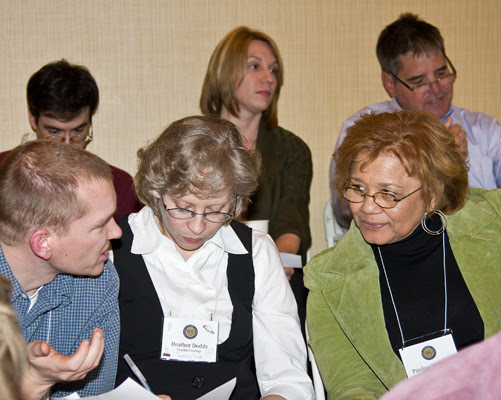
    Oh the number of times I’d have to stand in front of my team with one of those large white note pads, pose a quandry, and then gather responses– SOO many. Rifs on the theme: Post-it ideas, round circles, etc.

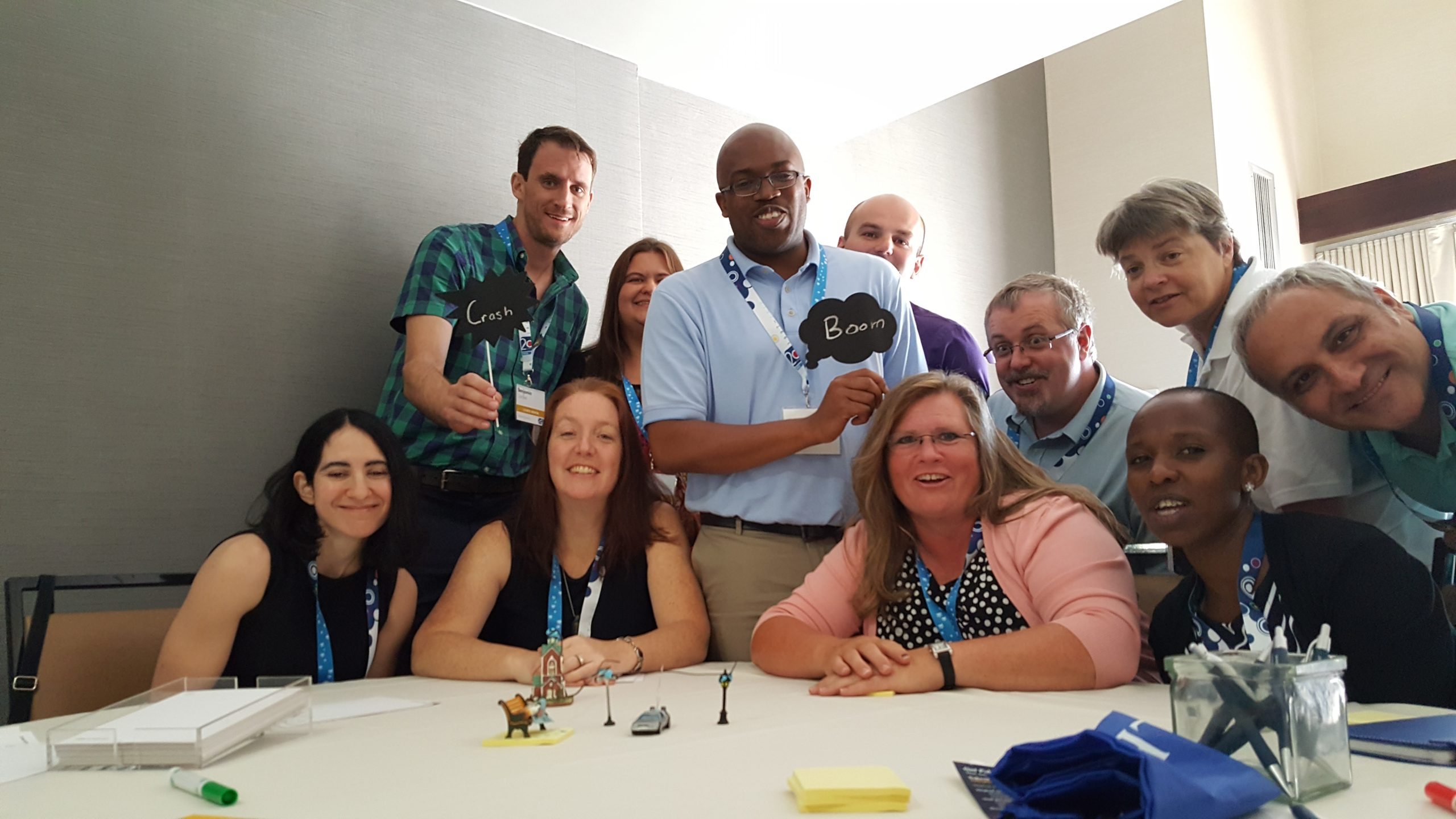
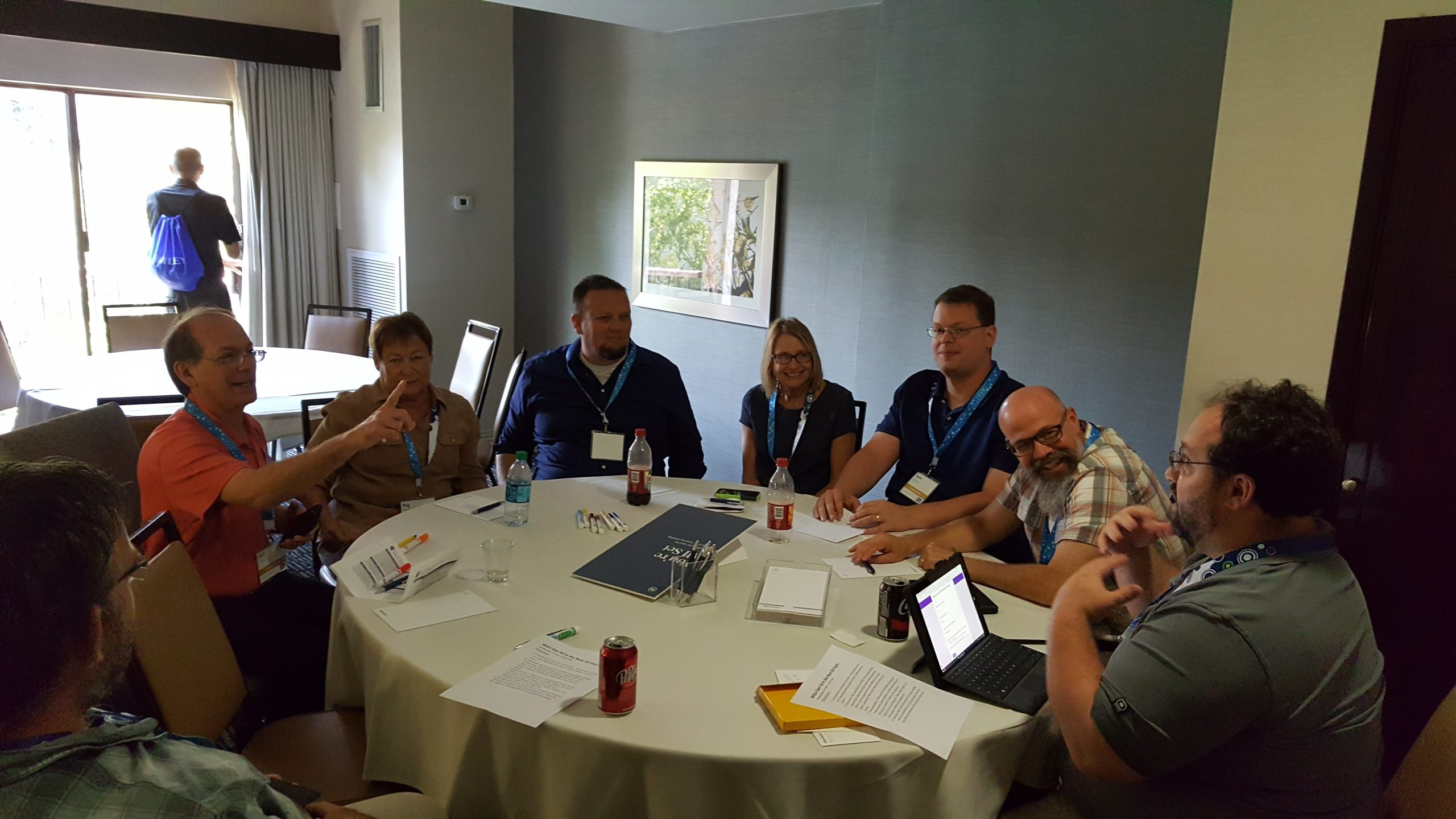
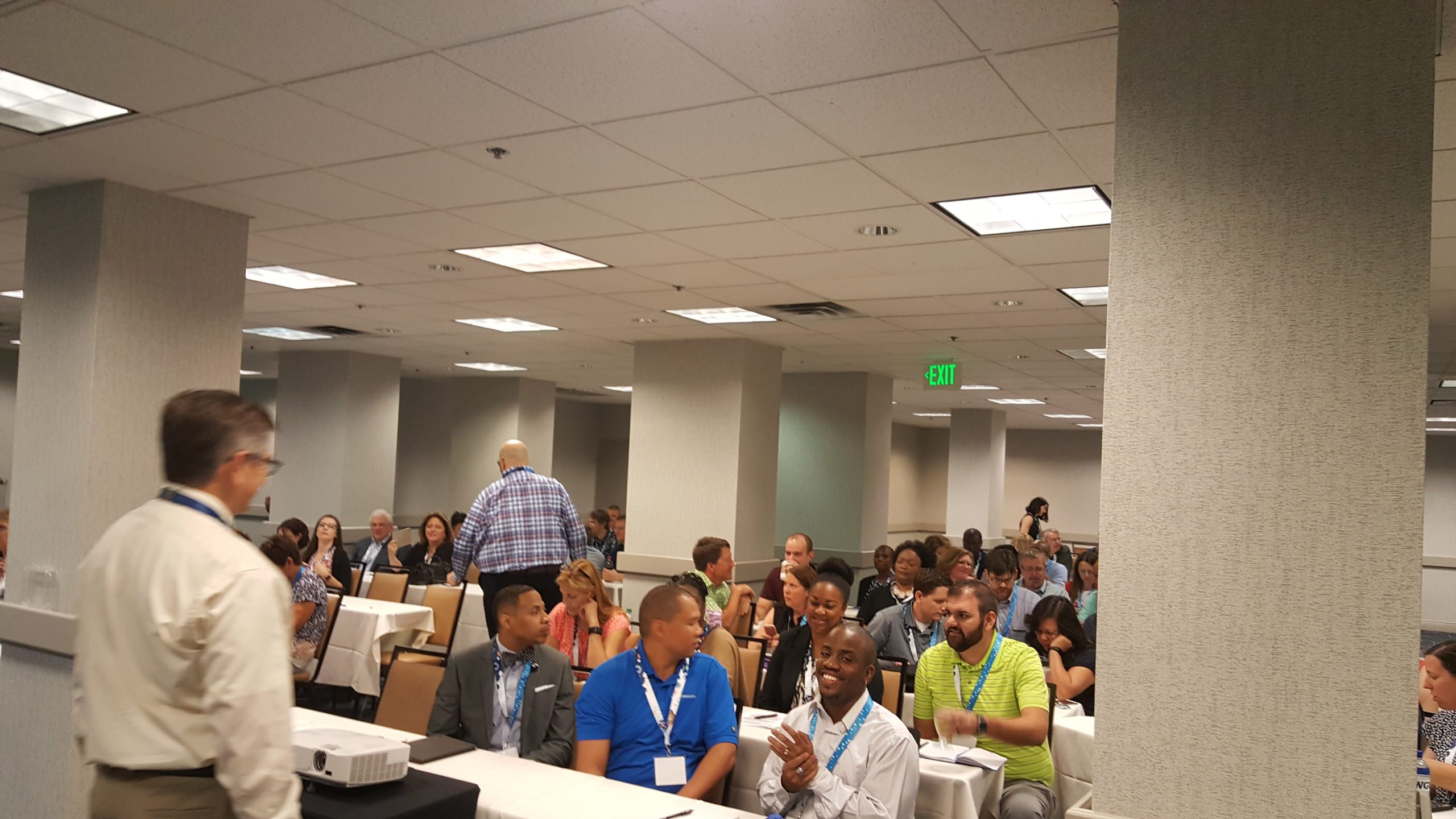
    Photographic examples:

    But BY FAR, when I think about the BEST solution that arrived [note my
    wording] during my tenure as a boss, I point to this one solution:

    The project was: On our every 18 months Great Places To Work survey, Teams scored higher employee satisfaction than the University overall.  The University thought that was BS….if employees are happy with their Team, they should be MADE TO BE just as happy with the overall University.

    Translation: employees had the tendency to think that their immediate boss was trying their best under the working conditions, but the university frequently launched bonkers ideas that everyone was forced to comply with. (this data came from one of my 360 performance evaluations)

    So I posed the question to my team (I was towing the line): 

    What would make this place an even better place to work?

    My team came back with the answer. It was brilliant. I take no credit.

    They said:

    Taking leave of any kind (sick, vacation, even an afternoon off) is very difficult. Can we make taking leave better?

    They were right! When I moved from Teachers College to General Education, asking about taking leave was my first question…because it was nearly impossible over in the TC.

    This place would be better if we could support each other when we take leave. That includes all aspects of taking leave: asking, receiving, notifying, allocating of work load, and recovery time (climbing Mount Outlook).

    OK, I said. Let’s put this into action.

    And my job was to do just that: make leave easier to take. I showed consistency in establishing and applying rules for leave. I took work upon myself if I could.

    But the solution itself was my team’s idea. And I loved them for it.

  • The Battle of Chrysler Farm (not about the Battle of Chrysler Farm)

    The Battle of Chrysler Farm (not about the Battle of Chrysler Farm)

     
    See this place above? That’s the Visitor Center at the Battle of Chrysler Farm Historic Site at 13740 County Road 2, Morrisburg, Ontario, Canada and have I got a small story for you!

    This story happened 10 years ago, today! I took a day trip over to Morrisburg but I knew I didn’t want to pay the full admission price to Upper Canada Village, especially since I set out mid-afternoon. That’s OK since the gift shop is technically outside of the admission area, and they sell their famous fresh bread in the shop. That’s 2 bonuses! Plus I was intending on visiting the garden and historical site area that is free just next door. I think Upper Canada Village had just installed paid parking so parking for the historical site was free and literally right in the same field.
     

    I did have a nice stroll up to the gardens, which is just in front of the tree line, in the center of this photo above.

    Photo from the Rose Garden area at the Upper Canada Village and Battle of Chrysler Farm Historical Site. 2012.

    (The view back to the historical site from the Rose Garden.)

    I wandered back and around the hill a bit but there were (as ALWAYS) aggressive Canadian geese around, so I had to give them a wide berth or they would honk and chase me.

    So going up to the visitor center, I thought it was curious that the front door was open.

    (This is the view from inside of the Visitor’s Center back out the front door.)

    The door was sort of stuck open, or maybe propped. I thought it was big enough to get a goose through so whoever is inside must be living dangerously.  But it was also open enough for me to slip inside without touching it. So I did.

    There was the entry desk, a computer, an open water bottle, and not seen in this photo, some keys. But no person.

    I’ve been here before so I know that the visitor center is basically 2 rooms. This anteroom that is long and narrow with artifacts in cases and then a larger room with a rudimentary fiber-optic display that re-enacts the battle.

    But I could not hear anything. I walked down the room, looking at the cases; old guns, uniforms, that sort of thing. I remember seeing significant cob webs at the far end. Still, no one.

    At the end, I turned on my heel to enter the other room. Immediately I saw a few dressed up mannequins (British solders), and the display area and wooden benches. It was closed in.

    Photo of the reenactment area at the Visitor Center.

    Then I saw her.

    She was laying on her back one of the wooden benches– out of sight in my photo above– and she was sleeping; totally out. She didn’t stir.

    It was one of those moments where you calculate all of the possible excuses you could make in under 2 seconds for how I got into the visitor’s center without her hearing (uhm, open goose door? I’m alone so not talking? I’m a creep?) I opted for Plan Z: I was never here and I’m outta here; just to get out without waking her now.

    But first, I had one other emotion wash over me.

    I was mad.

    I was mad that she was obviously sleeping on the job.

    I justified that she had a computer, and I guess from the photo I took, cookies and water. Since I worked at an online university, I thought “You could be going to college right now, not sleeping away your summer job!”

    I managed to walk out doing that kind of walk when you want to be silent, letting your foot roll on to and off of the floor evenly.

    I slipped back out the goose hatch and eventually left the site to go home. I thought about writing something up and posting it on Facebook, but I knew if I said anything, she’d be fired. The risk to the visitor’s center and to herself personally was way too high; her employment would not survive. It’s clear to me that she was a summer worker, just pulling a paycheck.

    It’s 10 years since that happened and I was thinking about that story.  It dawned on me. 

    I have no right to be angry. I’m ashamed to say that I had a job once that was so lax that I could snooze while I was on the clock. The situation was that the work was normally significant and constant. But we had changed a procedure and my workload dropped off. My boss didn’t notice and still expected me to be just as busy. Part of my job required me to go offsite for a full morning 3x a week. I simply didn’t need to be gone for that long— but, instead of doing my work and coming back, I stayed out and snoozed in my car in parking spot.

    It was medium-quality hooky; not top notch hooky because doing it was stupid. Top notch would be not working for a GD good reason, like I did when I sneaked away for my final dissertation residency and didn’t tell anyone at my online job for a day. I just kept my head really low and checked email constantly.

    So I’ve been where she was. She was bored– I can see that now. And what she decided to do with her time was her business. I get that the Visitor’s Center could only be interesting so much and then it was boring.

    Still, I wish she had made better choices.  And that poor place, it looks closed now…I don’t see any listing of the Visitor Center being open.

    Photo of Visitor's Center at the Chrysler Farm Historic site, Morrisburg, Canada.
    The Visitor Center, current time (2022).

    Oh, it’s a shame, but…the place was in decay.

    The entire site is ripe for a nice AR history overlay…Standing on the site and looking around, one can think of the battle happening here and the strategic movement of troops to different places.

    For the record, as a boss, I would advise the folks working for me that they were welcome to try playing hooky, but the key is to NOT GET CAUGHT.  If I catch them, it’s not hooky anymore.

    I hope that young lady has gone off to fantastical great things in her life. I change my anger now to a blessing for her. I hope she’s off somewhere chomping on some yummy bread, remembering that summer 10 years ago when she worked in a run-down Visitor’s Center, but at least she could get in a snooze on those hard wooden benches. You needed a nap before out running the geese.

    Photo of the memorial at the Chrysler Farm Historic Site in Morrisburg, Ontario.

  • Leadership should be simple and confident

    Leadership should be simple and confident


    Photos of motorcycle rider leaning confidently against motorcycle, arms crossed.

    “For a large organization to be effective, it must be
    simple. For a large organization to be simple, its people must have
    self-confidence and intellectual self-assurance. Insecure managers
    create complexity. Frightened, nervous managers use thick, convoluted
    planning books and busy slides filled with everything they’ve known
    since childhood.

    Real leaders don’t need clutter. 

    People must have the
    self-confidence to be clear, precise, to be sure that every person in
    their organization—highest to lowest—understands what the business is
    trying to achieve. But it’s not easy. 

    You can’t believe how hard it is
    for people to be simple, how much they fear being simple. They worry
    that if they’re simple, people will think they’re simpleminded. 

    In
    reality, of course, it’s just the reverse. 

    Clear, tough-minded people
    are the most simple.” ~ Jack Welch


  • Passive Aggressive Behavior in Online Meetings

    Passive Aggressive Behavior in Online Meetings


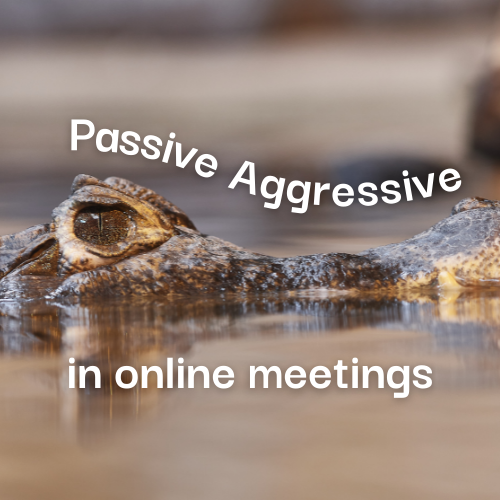
    Photo of aligator floating on surface of water with text: passive aggressive in online meetings

    To assist those continuing to adjust to full time remote work, I share one story from my archives about a passive aggressive employee that used online meetings to derail projects and get his own way. To be clear, I considered this employee a friend and in-person, they never pulled the passive aggressive behavior I’m describing.This was unique to group phone calls or web conferencing.

    So this story is about the passive aggressive behavior and the day I’d had enough and decided to prank him back. It is NOT a “do as I do” story.

    This person’s go-to passive aggressive technique in online meetings was to wait until near the end of a discussion on a topic and then quietly in a voice that purposely trailed off, say something like:

    • I only wanted to add that…
    • There is the extra point that…
    • I wanted to point out that…

    The key to this technique was to start out VERY quiet and get QUIETER. So the voice has to truly “trail off”. It has to sound as if the person either stopped having the will to talk or the line itself faded away or some sense of “I’ve given up hope” has to come through the auditory line. That is key. One cannot be bold and pull this off. Think Eeyore but 20x more and quieter.

    I had observed this employee do this behavior for years. In this story, I’d like to point out– he didn’t work for me; he was not on my team. So on the day I decided to take him on for this, I was truly poking the bear, I wasn’t actually ‘taking the mick’ out on a team member of my own, which I would not do.  But I knew this person loved to get his own flavor or mission added to projects or to hard steer projects into his own ‘my way is best’ direction. Here is how he’d try to use this technique on a work project:

    1. He’d use this trailing off voice line.

    2. Immediately the person running the meeting would say “Oh, I’m sorry, what did you say?”

    3. He would repeat it a little louder but not much. The point was to draw attention to himself and he had to draw you in. Until he knew he had you, he kept pulling you closer and closer by keeping his voice quiet. Folks would literally lean IN on their cameras.

    4. Even if you as the project leader felt like his idea had not merit whatsoever, because he would present it in this “humble servant who can barely speak above the quietest mumble mode.” Socially, the proper response he was banking on would be something like “Oh, you have a point there, I didn’t think of that” or “We might be able to consider that” because he was being so meek and mild.

    5. THAT was the foot in the door he needed because YOU just acknowledged HIS idea as valid in front of the entire team (this technique was always done before a crowd). In case of any backsliding or NON-implementing of his idea now, he would constantly remind you that you had approved (notice the wording change) of his idea and you’d failed (as a leader) to put it into play. Said another way, he had you. He had his way. All from a mumble.

    *The foil to his technique, by the way, was to simply listen, lean back in your chair, consider and then deny it forthrightly.

    *Another technique (that I was bold enough to use) was to stop him right as he started mumbling and override his talking with your own and say something like “I realize you are trying to interject but we don’t have time for more comments. Moving on to the next agenda item.”


    (more…)

  • The Moses and Aaron Trick

    The Moses and Aaron Trick


    This is written for remote mid-level managers (those that have both bosses and direct reports, so they are in the middle) that face problems where the bosses want problems solved but they do not want to involve your direct reports in the problem-solving.

    Said another way, the bosses do not want to be honest that they are human, don’t know all the answers, and struggle like all of us with image, reputation, and honesty.

    So here are the characters in our trick. Pay attention to who is who.

    Your bosses will be the people seeking enlightenment. They need to solve a problem and look amazing doing it. They need the heavens to open and for the solution (so obvious!) to come beaming down to them. They will receive all of the sunshine and glory in this model. Thus bosses = ancient people of Israel, they seek direction or answers.

    You are mid-level management. I only define that as someone who has a boss or bosses of your own that you answer to AND you have people who answer to you. There can be many middle levels–it doesn’t matter how many levels for this trick to work.

    You are Aaron, you are the speaker, you talk.

    The direct reports or the hoi polli are your front-line workers that have direct hands-on with the problem. They report to you. Because they are front-line, they know the problem the best and thus, they are Moses.

    Your direct reports are Moses, they hold the knowledge or enlightenment.

    Got that? It’s a bit inverted in terms of “power” but it’s correct in terms of “enlightenment” or “who knows what.”

    So, pre-pandemic, web conferencing or conference calls were not very common as they are post-pandemic with Zoom being now a noun and verb in addition to a brand name. In my situation we primarily used phone-in conference calls but at the end of this article, I’ll give some suggestions on how to do the Moses and Aaron Trick with Zoom.

    Here is the scenario: your institution faces a problem. The front line workers know the most about it, but the bosses have been tasked with finding a solution. The bosses, however, do not want the hoi polloi in meetings with them, so front line direct reports are excluded from problem-solving meetings. Thus, only mid-level managers will be there to represent the front line. So that is a key characteristic cluing you into this situation. You have to be the lowest ranking person in the remote room to successfully use the Moses and Aaron trick.

    We used a phone conference calling system for meetings (a 1-800 number plus a passcode). If you were invited to the meeting, you received the passcode in the meeting invitation. What I knew about this system is that attendance WAS tracked and could be traced (this is an example of the tech back doors that I often detect at my workplaces). But I also knew that almost no one ever looked at attendance logs of internal-only meetings. There were “beeps” on the line when someone entered or left the line but again, few presenters were nimble enough to remember what codes to press on a keypad to get the number of current attendees.

    So, you could sneak someone in.

    I sneak in my Moses.

    When the meeting conditions were just right, I prepared my Moses to join the call. We staged it so that they would dial in just at the same time I would and in case there was any question as to “who just joined us” I would make some excuse about hanging up accidentally instead of hitting mute and that I had entered twice. In truth, the second beep was my Moses entering and staying on mute. I also had my Moses especially situate themselves in a quiet situation just in case the mute broke (yes, mutes can break.) Final set up item: Moses would be on instant messenger with me.

    Ha! You really need to pick up these remote tips, people!

    In my cases, I was not on camera but you can be (I’ll explain how later). So I could tip-tap away on my keyboard during the meeting and even if the sound of the keyboard came through the call, typing during calls was very normal for my bosses.

    They were somewhat famous for instant messaging back and forth all day to each other to the point of obvious distraction during our supposed 1:1 phone call check-ins, but whatever. My point is that typing was not considered rude or out of bounds. I generally observe now that it is even MORE true now.

    I knew I was going to be asked detailed questions about the problem during this problem-solving meeting (how many? Did we try…? What shade of blue was it?) so my Moses would IM me the answers that I would then talk (I’m the Aaron, the talker.)

    This trick worked brilliantly!

    When it came time to leave, I would just do a “pretend fumble” again so that they would not notice 2 departing beeps (if they noticed at all).

    Before I tell you the next story, you might be thinking “Oh but, this seems dishonest!” You are right! It is! I’m using a tech loophole–they are not checking that 6 people are on a 5 person call. But I would like to point out that the solution is for the bosses to be OK with hoi polloi being in the room helping problem solve in the first place!

    It is about bosses not wanting those direct reports to see or hear them that represents the true problem here. I’d point out that some organizations don’t have this problem. Disney is famous for asking their front line employees for proposed solutions when they face a problem. It is possible to ask for help and NOT lose face as organizational leaders.

    And my next story starts right there. My workplace was facing a problem and the problem-solving meetings were being drawn up. My direct reports knew that they were not being invited and they wondered–why? What’s the big deal? What is discussed in these secret meetings that they cannot be witness to?

    It was about to be revealed to them.

    Now, I have to take you on a very short side story where karma comes to visit:

    One day, my boss was unhappy with a team metric and instructed me word-for-word to bring the hammer down on my team. I did so. One of the team members went to HR and said “Our boss is creating a climate of fear.” HR called my boss and said “We have complaints about your underling creating a climate of fear.” In an evil genius move, my boss said “I’ll handle this.” He raked me over the coals. I reminded him that this ‘climate of fear’ was instigated and approved of by him. He kicked that away, saying it was all my fault. He then returned to my team and reassured them “I’ve warned her. You can trust me.”
    Meanwhile, I went to HR and explained my side of the story. When I said “Yes, I created a climate of fear–because my boss told me to.” HR said “Oh well, he must have been having a bad day that day.” I said “Yes, but he has the power to target my bonuses and pay raise with his bad day– that would be highly unfair.” (Not to mention the damage done to my team by said fear climate). HR was unconcerned. And my boss did use this as an excuse to target my pay. I received no manager bonus and no pay raise that year. Boss 1, me 0.


    But what ho! Here arrived a need to do the Moses & Aaron Trick with this exact team and with the team leader who went to HR about me. Even though my team was wrong about me, I knew they had been misled, so I harbored no ill will towards them.

    So here we go: I prep for Moses and Aaron Trick because I needed it for a separate work problem.

    I prepped this new specific Moses to join the call. The call was cantankerous. Multiple departments were casting blame. It’s your fault! No, it’s your fault! At one point, a different department lobbed a particularly tough accusation at me and my Moses/team “They are lazy. They are not doing their work! They should all be written up for not doing their jobs!”

    My Moses heard this. It was about HER.

    And my boss heard it too. Before I could get a word out, he immediately kow-towed to the accusation “You know, you could be right. Maybe they are not doing their jobs. Maybe I should have them written up. Hmm.”

    My Moses had a FIT on instant messenger with me.

    “How dare he? We are working 60 hour work weeks on this problem!…” and further protests.

    I sat there aghast and covered my mouth to stop my giggling. I had just seen the boss that had so happily driven the bus over me a few months prior now drive the bus over my Moses.

    Karma, Fate, Call It What You Will.

    My Moses was devastated. I still laugh about the entire incident with tears in my eyes (it was ridiculous and terrible) because I snuck her in. I could have witnessed my boss drive the bus over her on my own, but instead, she heard it directly from him. He never knew that she heard.

    After the meeting ended, I kept working on the problem and life continued but I have not forgotten that my Moses really got an earful that day.

    How would you do a Moses and Aaron trick now with Zoom and cameras? If the meeting is in a non-Zoom platform, there are still plenty of ways to be anonymous or conceal your identity online.

    If you are at a workplace, of course, you MUST assume that all keyboards have keyloggers (they probably do) and all internet traffic is watched (it probably is) and use a different internet connection but I hope you are wise enough to figure that out.

    Just yesterday, video dropped of the Better.com Zoom call layoffs. From the video, it’s clear it was captured from a phone that was watching a laptop. Basically, a well-backed up smartphone is a good alternative access system for meetings.

    What about typing your IMs during the call? I recently observed that it seems to be acceptable now, without question, that people will be typing during meetings. I’m happy to see this– as kinesthetic actions during meetings can really help some of us that need to move to stay mentally active. It might be assumed that you are typing notes. Just be nimble with explaining your typing. 🙂

    If you made it to the end of this, bravo! Remember that the Moses and Aaron Trick is about problem-solving for mid-level managers. Sometimes you are stuck between the folks that know the answers (but can’t enact the power) and the power holders (who don’t have a clue what to do). It has been done and I encourage you to use this trick if you need to.

    I hope, truly, that you never do.

    (more…)

  • The Trip and Fall


    “Trip And Fall” is used here in my case to mean accidental or unforeseen happenstance. Other similar phrases might be “clumsy” “bumbling” or “fat fingering it” implying that someone has made a mistake with no harmful intent and yet, they’ve arrived at that place or set of circumstances. In remote team environments, this would be dialing someone’s phone number by accident or messaging the wrong person. I would use this remote team leadership method in a very specific set of circumstances.

    There are times as a leader when you know something is going on with a direct report that is pulling down their productivity but you are not at liberty to share the information nor it is really not at the threshold point of some sort of company intervention. You might know your employee needs help, but your options are limited because in this set of circumstances, stepping in would be highly inappropriate. Here are some examples of situations to use a Trip and Fall:

    Employee Adam’s uncle has died. Adam has disclosed this to you, his boss, and says that while he was not raised by his uncle, he’s taking the loss hard and it’s hard for him to concentrate on his work at hand. By this disclosure, you know you cannot grant bereavement leave to Adam, but this also seems like information that you’ll leave up to Adam to disclose to his workmates; it is not your information to share.You are detecting that Adam is struggling at work.
    Employee Betty recently sat in a company-wide meeting and heard an announcement that she took very hard; she yelled in the hallway outside the meeting afterwards, stating how badly this was going to go for everyone. Betty seems frustrated and disillusioned. You depend on Betty for some of your toughest work problems and you start to detect that if Betty doesn’t find a way through her frustration, she will contemplate leaving this job.

    In both of these scenarios, I’ve shown that you have detected an impact on the employee’s performance and a heartless boss would simply calculate the productivity has dropped. A thoughtful boss would realize that the situation has impacted the employee BUT it has not reached the level– at all- of a negative mark on a performance evaluation. Said another way, the employee has done nothing wrong. The employee is just having a bad moment.

    So there are things you can do as a boss covertly that will not bring attention to this employee, like shuffle easier duties in their direction, give them an afternoon off with no pull on their vacation hours (I phrase that as “Take the afternoon off. Go get a cup of coffee…2 hours away.” Hence, I’m showing that I want them REALLY out of the office, not thinking about work under the guise of being off) or stop any really bad work situations from rolling their way for a little while.

    But the key characteristic of the situation where you would use a Trip And Fall is that it is a situation where it would be INAPPROPRIATE for a boss to step in and directly try to fix something. Said another way, the boss is not the fix.

    Here is an example of that:

    Let’s say there is a terrible boss. He’s demanding, micromanaging, and threatening. Friday at the end of work, a small group of employees walk out and the boss overhears the Happy Hour at Smokies Bar phrase. So the terrible boss decides that in order to do some back slapping, joke-telling, ha-yuck type of encouragement of his team, he’ll drop at the Bar. He does. What happens next? The employees are immediately uncomfortable– they went there to vent–in this case, specifically about him– and their privacy is invaded. It’s weird. So they try their best to finish their drinks and get out of there. Happy Hour was ruined and the boss was way out of line.

    So let’s go back to Employee Adam and his grieving. You know it is impacting Adam and you are doing what you can for a few days to shuffle hard work away from him. But to do a Trip And Fall, you find someone at Adam’s same power level. You do not want Adam’s Best Friend At Work, but you still want a Friend.

    Same power level is very important. A Trip And Fall won’t work if there is any power discrepancy. Remember that power level does not necessarily mean the same team or same job title. It just means someone who has NO direct power tie to Adam, it is a true co-worker (or equal worker) to Adam.

    So you call Dave. You need to make this request BRIEF and NON-Qualifying. That means, don’t “infect” Dave with what you specifically want to happen, just set up the conditions.

    “Hi Dave, I need a Trip and Fall with Adam. A family member passed away 2 days ago and Adam’s having a hard time. Could you call him and just be his friend for a few minutes? Yes? OK. Thanks. Oh, and no need to tell me how it goes. Thank you.”

    See that was VERY quick and I already preloaded this much– to “be his friend.” But the point is that Adam needs to —at least initially— think that Dave has honestly just tripped and fell into contacting Adam so while he’s there…they might as well chat.

    Now, now. I can hear you accusers saying right here “I knew it! This is a method of deception! You are asking your employees to lie! You are asking them to “pretend” to reach out to Adam by a “pretend mistake” and then “buddy up” with them. You are doing this to get more information or worse, to simply increase productivity!!”

    OK, yup, I am doing this to increase productivity. But it’s Adam’s welfare that I’m worried about and his productivity WILL increase when he feels better at work. And much larger than that, these little problems can stack up and become bigger problems–that lead to things like Adam not having a job and Adam not working on my team. These are “bigger” than the problem of how I got Dave to call Adam.

    Besides, my team started to learn that I would call for “Trip And Falls” so much that they knew I did it. I never hid the fact that engineered interactions around my team. So it’s not deception if it’s wide open to see.

    What happens next is that a same-power-level employee like Dave can give Adam the space he needs to talk about whatever he wants–indeed, they might not talk about the uncle at all and that’s fine. The point is that Adam needs a friend and Dave is there for him with NO STRINGS ATTACHED. Nothing is on the line.

    It’s the digital equivalent of taking a coworker out for a beer. It’s a safe space where they can talk, free of judgment from someone who has the power of a job or no-job over them. That’s why bosses cannot do this. They have too much power. And all the time, bosses use employee weak spots to manipulate employees into joblessness.

    So when you want to keep your team and when you want to help them recover, try a Trip And Fall.

  • Measuring Remote Team Productivity or When It All Goes Wrong Part 5 of 5 Keeping work in its place

    Measuring Remote Team Productivity or When It All Goes Wrong Part 5 of 5 Keeping work in its place


    This is the fifth and final article in a series about keeping work in its place.
    As a reminder: emails are equivalent to messaging and I’m specifically
    referring to work situations involving remote teachers and students in
    educational contexts.

    This last article is a grab bag of smaller stories to wrap up my topic of Keeping Work In Its Place. I’ll prime you where we are going so that you can keep up.

    Measuring Remote Team Productivity is about using spreadsheets to discover the chilling truth that remote workers tend to over work, not under work.

    Take a Chill Pill is about directing students to be responsible unto themselves. It’s not a sin.

    Slow Down Responding To Students
    is about supporting and backing up remote teachers so that if they do
    not answer a message, there is a support system filling in the whys and
    hows.

    What Happens When It All Goes Wrong is
    Heather’s own story of checking email during a vacation, that lead to
    the direst of consequences. What was lost was more important than a job.

    Education Is An Insatiable Monster
    I’ve been tagging these articles with this phrase all along. It’s the
    unpleasant underbelly of the education profession. I’ll explain what the
    problem is. Spoiler alert: I don’t have a tidy solution.

    Measuring Remote Team Productivity

    For this story, I have to go backwards in time quite a bit and then forward in time.

    Many
    years ago, when I was within my first few years of working full time
    remotely, the university I worked for started a data collection effort. 
    We had to fill in spreadsheets of every work activity we did down to
    the 5-minute increment.  To which, smarmy Heather asked her boss if she
    could create a category for her time called Filling in the Damn
    Spreadsheet. My good-hearted boss said yes.

    What predicated this
    census of remote activity was a long-standing belief (that has NEVER
    GONE AWAY) that remote workers are lazy and don’t actually work if they
    can help it.  Human Resources had reported that remote workers were not
    taking time off. Bosses put their suspicions and the HR data together
    and said “Ah ha!  Everyone is out there relaxing. They are not working
    at all! They are eating bon-bons, sitting in the sunshine and answering
    an email or two once in a while! That explains why our success rate
    never rises!”

    So we filled out the spreadsheets for weeks and sent them in.

    The results chilled our bosses to their bones. It didn’t surprise us remote workers at all.

    Folks were actually overworking.

    Anyone who was scheduled for an 8 hour day was actually working 10 hours.

    Anyone who was scheduled for a 10 hour day was actually working closer to 12 hours.

    The reason no one was taking leave was because we felt like we could not take leave
    The punishment, in terms of catching up on or worse, student loss, was
    too devastating to risk.  So folks worked all the time; we worked
    through holidays, sicknesses, everything.  There were many times when
    folks were ON WORK TRIPS doing work right in front of the university and
    folks would have their laptop open, typing away on emails during
    training sessions. When asked why, the answer was “If I don’t answer
    these emails now, I’ll never catch up.”

    Take a chill pill

    One
    time when I was on one of these work trips, I was caught by one of my
    colleagues walking down the street, literally with my hands in my
    pockets looking like the embodiment of relaxation. She said “Why do you
    look so different to everyone else here, who is basically panicking?” I
    said “Because I told my students to shut up.”

    Now…I actually did
    say that to her, my colleague, because that language was acceptable with
    her. But I didn’t say “shut up” to my students. I professionally
    informed them that I would be traveling for work and that for a few
    days, they would have to make do on their own. Translation: Find your
    own ISBN number for the Chemistry textbook!

    And I lived.

    Did I mention I earned a 100% satisfaction rating from my students?

    The
    end of that story is that 3 hours a day of emails was, in my experience
    for that job, normal. I was not going to budge on that. And I was NOT
    going to suspect my faculty, once I became a manager, of being lazy.

    Slow Down Responding to Students

    We
    had an expectation to answer student emails within 4 working hours of
    receiving the email. Most of the time, we hit that metric ‘with bells
    on’ but I never cracked down on my team on that metric. I would hold
    them back when an email was from an –ahem– upset (that’s a very kind
    word) student. I told them, “If anyone asks, I’m taking responsibility
    for you not answering that email today. I’m specifically asking you to
    NOT answer that email today.”

    Why?

    I have learned from personal experience that

    the email you write tomorrow will always be better than the email you write today.

    Why is that?

    Forgiveness.
    I had learned that with time (an overnight, often) I could be much
    kinder and forgiving of my students. I could answer better.  I might
    have thought of more solutions.

    So as a boss, I’d ask my faculty
    to put on forgiveness “like a shirt.” I said “You don’t have to mean it,
    but I want you to truly try this. You have to be authentically looking
    at this problem from the student’s perspective” (aka remember the days
    YOU struggled in college).  Many times, a student was simply being
    difficult because they felt that they were hurt by us first. It was a tit-for-tat war breaking out. But we could stop it.

    Even
    if a student was wrong in every possible way, we could find forgiveness
    for them. My favorite line was “No one wanted this to happen to you”
    because it was true! We didn’t want our students to have difficulties!
    Starting with that acknowledgement and pouring forgiveness on the
    student solved many problems. (To be clear, you can forgive a student
    even if the student is totally in the wrong. This isn’t about being
    dumb, it’s about being hyper-aware of their perspective. This is active
    listening, in other words, in action. You listen, but you don’t necessarily agree.)

    The
    most common response after we had composed a kind, understanding email
    was “Oh thank you! I was so upset! I’m sorry. It’s just been so hard to
    go to college with…” and you’d get the backstory.  I was amazed at the
    backstories that had nothing to do with the problem at hand but you’d
    learn that the student was facing some unimaginable obstacles.

    Adding
    in time and forgiveness meant that a great deal of student issues never
    had to go past me and go to my bosses. Problem solved.

    (P.S. If
    you’d like more tips on what to say to slow down to responding to
    students or how to craft off-hours email coverage – ask me!)

    What Happens When It All Goes Wrong

    OK,
    what happens when Heather doesn’t follow her own advice?  What happens
    when she checks email on her day off, in the middle of a vacation? She
    worked when she should not have been working.

    Oh, it got ugly fast.

    I
    can’t remember the impetus but I checked my email on a Monday in the
    middle of my annual birthday week off. I must have been thinking “Oh, I
    need to check on this other issue something-or-other.”

    To my
    horror, there in my inbox was notification that a major accreditor of
    our coursework was pulling accreditation because they didn’t find one of
    my courses to be rigorous enough.  If we lost that accreditation, I’d
    lose faculty immediately because about ¼ of the university would close. I
    sat there, tears welling in my eyes thinking “Oh my God, what are we
    going to do?” I saw others on the email thread. So somehow, I shut down
    my computer, gulped back my tears, and hoped that if it was necessary
    for me to come into work from vacation, my boss would let me know. But
    it was Monday and I would not be back at work for 8 more days. There was
    plenty of time for the worst to happen. With me out, around 4 of my
    faculty could be unceremoniously fired before I came back.

    I worried every minute of the next 8 days.  Vacation destroyed.

    When
    I came back into work and started reading through my emails, I found
    out what happened. One person on the thread had replied, “Hey, I know
    the chief accreditor. I’ll give them a call.”  So the accreditor was
    called.  The rigor of my course was explained. A little back room “Hey,
    it’s all good, whatcha gettin worked up about” conversation and problem
    solved.

    No one was fired.

    No one was dumped.

    But I lost my vacation. All because I checked my email when I wasn’t supposed to.

    So
    I share this story because I know plenty of folks are going to counter
    this Keep Work In Its Place series with comments like “It’s all fine and
    good to say, but in real life…..[dire situation/consequences]”  or
    “These actions put people’s jobs on the line!” or “You will be accused
    of not helping students!” I wanted to show you that I’ve walked the line
    of ‘everything being on the table’….everything… my job, others’ jobs,
    students’ success and students’ failures. Through it all, the better
    decision was to preserve myself to fight another day. Work when you are
    at work. Don’t work when you are not at work.

    It can be considered
    a numbers game and I hope you’ve seen that through my stories. When one
    teacher or instructor or faculty member is saved from burnout or
    overworking, they go on to help 10, 100, or thousands of students in
    their teaching lifetime. But when I lose one student, I have thousands
    to replace that one.  Sorry!! I know that’s REALLY hard to read,
    really.  But you have to know where to invest if you have limited
    resources and unlimited demand, which is what online education is.

    Education is an Insatiable Monster

    I
    used to subscribe to the idea that I had joined a noble profession,
    education.  Education is ‘the gift that cannot be ungiven’.  Oo, that
    was my favorite.

    But then one day I read that Education is an Insatiable Monster
    and I paused to really think. The article is about building buildings
    and then recruiting students. Then building buildings and recruiting
    more students. It’s a geographical, place-based problem that puts
    universities in a cycle that never stops eating; it is insatiable. No
    one stops it.

    Philosophically,
    education is a field in humanity where we never argue that one has had
    ‘enough.’  When does one have enough?  I’ve heard medical suicide
    patients claim on their last day of life that they learned something
    new! When do you reach ‘enough’ learning??  No one ever argues AGAINST
    learning. 

    Translated to online learning, how can teachers, then, argue against:

    • answering that parent’s text question?
    • answering that student email before the assignment deadline?
    • being offline for a few hours or a few days? (ahem, we called those weeknights and weekends but teachers don’t get them)

    When
    can teachers disconnect? As I think of some major problems I know of in
    education (e.g. grade inflation, rising tuition, unfair & cruel
    teachers, institutionalized racism), they point back to this central
    force; education never gets enough. Even today, people on both sides of
    the COVID-19 vaccination debate think that the other side simply has not learned enough!

    That
    is not to say that Education is wrong and we need to stop it. It just
    means that we need to be vigilant and watch out for problems. Overworking –now, in this remote teaching world– is one of those significant problems.

    Keep work in its place.

    This was the article that started this series: Defending a Teacher’s Right To Disconnect.

    Article 1 I am the woman who did not check her email and lived.

    Article 2: You replied too quickly!

    Article 3: I’m going camping!

    Article 4: 6 Days A Week

    Now turn off LinkedIn for awhile. Go look at some nature. We’ll be here when you get back.

    Man holding camera looks over a sunset and mountains.

    #KeepWorkInItsPlace #RemoteWork #TimeManagement #SelfControl #EducationIsAnInsatiableMonster

    This article was originally posted to LinkedIn on October 7, 2021.

    https://www.linkedin.com/pulse/measuring-remote-team-productivity-when-all-goes-wrong-heather-dodds/

  • 6 Days A Week – Part 4 of 5 Keeping work in its place

    6 Days A Week – Part 4 of 5 Keeping work in its place


    This is the fourth article in a series about keeping work in its place.
    As a reminder: emails are equivalent to messaging and I’m specifically
    referring to work situations involving remote teachers and students in
    educational contexts.

    I wish this story had a happy ending. But it
    doesn’t. This was a direct report of mine that did spectacular work.
    She was a gem of an instructor; I’ll call her Gem for this story. She
    gave me great feedback that I implemented with other hires.

    But I lost her. I lost her to burnout.

    Very
    early on in the hiring process, I made sure that I emphasized that I
    was hiring for 5-days-a-week schedules. I would say specifically “5
    days, not 6, not 7.”  Sometimes I’d meet a traditional faculty candidate
    transitioning to online who would tell me that they provided their
    mobile phone number to their students because —and they would always say this like they were a saint
    that way they could help the student anytime. I didn’t advance them in
    the hiring process. What they thought was excellent customer service
    actually told me that they didn’t have self control. Further,
    they couldn’t see themselves as part of team, relinquishing control to
    others, trusting others, and the environment that they were applying to
    was about to go so fast and so intense, that it would eat them up.

    (True
    story: Once I sat in a focus group of new online faculty hires and they
    reported how surprised they were with how much they felt tied to their laptops
    “Tied” was the actual word they used.  The Vice President running that
    focus group knew I was sitting in the group.  He turned to me and asked
    “Have you ever felt tied to your laptop?” “Never” I said a bit
    breathlessly because I was wondering what the new hires were doing so
    wrong to be “tied.”  But that was because I knew how to keep work in its
    place.)

    So this faculty member Gem was leaving a few clues
    around.  First, I had hired her for a 5 days a week Monday – Friday
    schedule (within those 5 days, we also asked faculty to work 10 hours that were “student-facing”
    which meant that they had to be hours where students could reasonably
    meet with the faculty member…this usually meant 2 evenings per week.
    The other 30 hours could be at more faculty convenient times.) I saw
    emails from her to her others with time stamps of Saturday or Sunday. 
    Later on, I became famous for my checking of time stamps…my direct
    reports actually learned to use “delayed send” if they didn’t want to
    get caught overworking.

    I asked her about those time stamps. “Why did you feel the need to answer So-And-So on Saturday?”

    “Oh, I have my laptop open on the kitchen table. So I saw the email come in and I wanted to help her.”

    ‘Laptop on the kitchen table’ told me that:

    • She
      wasn’t always working from a space that encouraged professional
      behavior.  We firmly asked employees to provide “dedicated home office
      space” that reflected a professional atmosphere with our students.
      #NoBedsInTheBackgroundPlease Even though she obviously was not on
      camera to answer an email, she didn’t separate work from home.
    • Working
      from a non-ergonomically planned space could bring on problems like
      carpal tunnel syndrome or back pain. When you don’t work at a desk, I
      worry about a compensation claim.

    I was already worried.

    “I’d
    prefer if you don’t check email when you are not at work. While I
    appreciate your dedication to our students, this probably could have
    waited.”

    A few more months went by. I see the timestamp problem
    again and it is discussed around the team.  I had another private
    conversation with her.

    “I need you to work when you are supposed to be working. I need you to not work when you are not supposed to be working.
    It’s very important that you get rest and get away from work because
    then, when you come back to work, you are happier, more productive, and
    can help more students.”

    Her response– a peel of laughter–the ‘mad scientist’ kind.  She said:

    “You don’t understand! 

    I like helping students!”

    Uh-oh. I was up against the “what could ever be wrong with helping a student?” argument.  It was the #EducationIsAnInsatiableMonster rearing its head.

    I
    said “I’m very serious. When you work on your days off, I get very
    concerned. The next stop on this train is burnout. At burnout, you help no students.”

    She
    ignored me and kept going. I started trying to figure out how to word
    this problem for her written performance review. I’d given her two
    verbal warnings so it was time to up my rhetoric.

    It ends up, I didn’t have to.

    She called me one day.  She said “I’m resigning.”

    Stunned, I said “Why?”

    She answered, “Because I want to spend more time with my daughters.”

    I screamed into the phone, “That’s funny, because I wanted you to spend more time with your daughters too.  Only, I wanted to PAY you to do that. And I wanted you to be able to tell your daughters that Mommy is a Full Professor. Now you won’t!”

    No, I didn’t scream that into the phone.

    I
    accepted her resignation and wished her well. But ever since that day,
    I’ve known…she never learned the lesson I was trying to teach. She
    burned herself out. She’ll do it to herself again in other jobs.

    If you like my article series, you might want to check this out: You are not your job: Writer Arthur Brooks on why careers shouldn’t dictate your identity

    This was the article that started this series: Defending a Teacher’s Right To Disconnect.

    Article 1 I am the woman who did not check her email and lived.

    Article 2: You replied too quickly!

    Article 3: I’m going camping!

    Article 5 will be: Measuring Remote Team Productivity or What Happens When It All Goes Wrong

    #KeepWorkInItsPlace
    #RemoteWork #TimeManagement #SelfControl
    #EducationIsAnInsatiableMonster #Working6DaysAWeek #Leadership #Success
    #Failure #Management #Email #Burnout

    This article originally posted to LinkedIn on October 7, 2021

  • I’m going camping! Part 3 of 5 Keeping work in its place

    I’m going camping! Part 3 of 5 Keeping work in its place


    This is the third article in a series about keeping work in its place. As a reminder: emails are equivalent to messaging and I’m specifically referring to work situations involving remote teachers and students in educational contexts.

    My first story about overworking starts with a colleague; she was not a direct report of mine when this story started.  She was a brand new employee and loved the idea of remote full time work! I was tasked with talking with her about her planned schedule.  What was she going to be her work schedule?

    “I’m going camping!” she said excitedly.  She proceeded to tell me her planned schedule.

    She was going to work Monday through Friday but leave by noon on Fridays.  It was going to be great because she loved to go camping with her husband. She was going to stop work at 12 p.m. (noon) on Friday, pack up the gear, and head out to the wilderness ahead of the Friday rush-hour traffic and be sitting at the campsite sipping a cold beer when the rest of the world was stuck in bumper to bumper traffic.

    “Oh, that does sound fun” I said.

    Then she’s going to relax and probably hike on Saturdays, have another great big camping dinner. On Sunday morning, it will be a sleep-in and then slowly break camp for the afternoon drive back home, throw a load of laundry in the washing machine, and she’ll boot up her work laptop that evening “Just to clear some emails.”

    Uh-oh. I could see it coming.

    I can do the math.  That was 6 days a week of work.  Well, 6 days of the week containing work. I knew that would not be enough time off.

    I tried to talk her out of the Sunday evening email check.  “Just plan to spent an extra hour on Monday or Tuesday catching up…don’t open that laptop on Sunday.” I advised as her teammate.

    “No,” she said, “I’ll be fine, this will be great!”

    She lasted 3 weeks.

    Then she burnt out.

    Tearfully, she told me she could not keep that schedule anymore.

    I asked her, “What happened?”

    Well, it ended up that she’d work on Friday morning–all morning.  Then noon would come…and go…and she’s still be working because emails she was sending out or work she was getting done was coming back in to her in the form of counter-questions or just…more emails. It wouldn’t stop! She felt bad for not helping the next email…and the next…and the next. 1 p.m. would come and go. Then 2 p.m. Then at 3 p.m. her husband who had managed to get out of work early for a Friday walked in the door to her home office and said “Why isn’t the packing done?  We need to leave now or there will be traffic!” and they wouldn’t leave because it was hard for her to shut that laptop down. Finally, in a fit, she’d slam the laptop lid shut and they’d get the campsite late, after having been stuck in traffic, have an unhappy dinner and try to “relax.”

    So much for leaving work early.

    By Sunday morning, she’d start thinking about those emails again. They were at home, waiting for her on that laptop. Even though the morning was supposed to be leisurely, she’d have that work in the back of her mind.  Gotta get home. Gotta get on the Internet. Gotta answer emails.


      She’d get home, open the laptop and sure enough, there was a bunch of emails and she’d work at them. 2 planned hours might creep up to 3 or 4 hours but finally at some point, her Inbox would grow quiet, she’d caught up on everything and she’d go to bed knowing that, at least, there would not be a mountain of emails on Monday morning.

      But then Monday morning would come.  And she was wrong.  This was the part of the story that I can personally attest to. Because, while she was working in Pacific time zone as my colleague, I was working in Eastern time zone and no matter how much she “worked ahead” on Sunday night, I had a 3 hour head start on her on Monday and I’d start going through my emails –which meant I was pumping emails into her Inbox for 3 hours before she even booted up. That meant, she’d open her laptop at 8 a.m. Pacific and there would be more emails…piled up…demanding her attention. These emails didn’t exist until the east coast came online. But now they do.

      No such thing as “clear her emails.”

      Three straight weeks of this had pummeled her mental attention. She couldn’t keep up. She was getting no true rest and the work just kept coming.

      True story: I measured my own Inbox in this job. It averaged over 1 email per hour for every hour. EVERY HOUR. EVERY HOUR EVER.  So a weekend that is 64 hours of not working between 4 p.m. Friday and 8 a.m. Monday meant a normal inbox after a weekend of 100+ unread emails (adding in occasional replies, newsletters, and automated receipt emails).

      I became her boss later after this story.  I remembered her struggles. And as her boss, I worked on 3 things to help her:

      1) Turn on the Out of Office (OOO) Message the night before leaving work.  This made her planned 4 hours of work on Friday morning much easier on her because she knew that anyone emailing her after she went offline on Thursday evening was getting warned that she might not respond. So this trick looks like it helped her students, but truly, it helped her mindset. She had a backup plan now.  

      Later on, this would become a standing rule on my team: 

      • Turn on your Out of Office Message 4 working hours BEFORE you go out of the office.  
      • Vacation or Holiday Reminders (blurbs at the bottom of emails) go up as early as 2 weeks before the event.

      Let’s be real folks. Readers don’t read or necessarily follow these OOOs. These are tricks that help the sender, not the reader.

      2) I asked her to bundle up any remaining emails that she could not address by 11:45 a.m. on Friday morning and send them to me. I would answer them or re-allocate them. Period.  Said another way, I’d do her work to help get her out of the office.  Now this is not a “I’ll fall on the sword for you!” behavior. I was literally working LONGER on Friday than her with my Eastern US hours. If she had any, I was getting them at 2:45 p.m. Eastern. Easy peasy to incorporate into my remaining day. I could pick up the slack. I had the ability so it was easy for me to step in and take this.

      3) I begged her to NOT check those emails on Sunday night. I showed her my stats: the emails come in whether you read them or not. So don’t read them. Make all of Sunday a day off.  (It’s really hard for people to understand that true rest brings on GREATER productivity when at work. She could literally answer more emails and answer better on Monday if she didn’t read any emails on Sunday.) This took work for her to implement and I was never quite sure she engaged this tip. Later on, the team built a robust weekend coverage system and she shuttled her clients to the weekend coverage team rather than just pop in to check email.

      One more time for those in the back:

      You do better work at 40 hours per week than at 45, 50, 60, or 80 hours per week.

      Got a problem with that? Talk with your boss. They are responsible for you hitting 40 hours. If you can’t hit that, the boss needs to change things. If they can’t change things for you (and you’ve tried yourself), find another job.

      Lessons of this story:

      If you do work on a day, it’s a work day.

      Yes, I feel like this is a line from a children’s book. Why do I have to go back to children’s book language to make my point? Because we have bastardized work to the point that doing work from your smartphone is not only considered OK, it’s cool.

      I’m telling you, it’s not. To me, you look like a person with low self-control.

      Just yesterday, I heard an interviewee on a radio show encourage listeners to Keep the Sabbath, regardless of your faith or day of the week. The idea was take a day off. Even better take 2, they’re small.

      Email and messaging for work is work.

      Remote working blurs the lines between what and where messaging is “for work.” But just like drunk Facebooking is a thing that we discourage friends from doing, so is emailing or messaging for work purposes from a non-work-as-defined location/device/time.

      Remember that work messages sent via your smartphone gives your workplace the rights to examine, load apps on, and monitor your phone.

      Doubt me? Read your university’s tech policy. I used to edit these policies. I guarantee it has fine print that says that any device “accessing” educational systems is reached out and encompassed by the educational technology security policy.

      That means your smartphone.

      Load on a keylogger without your permission? Yup.

      Screen capture what you see? Yup.

      Search through your photos and files. Yup.

      Value your privacy? Don’t do work outside of work devices/locations/times. (P.S. Not to weird you out more, but the same policy exists at libraries and commercial locations that loan out “free wi-fi!”)

      Humans are not robots.

      We are not allocated a certain number of work hours and life and then we deserve retirement. Some of the most successful, happily retired CEOs report that they ‘figured out’ work once they knew how to hit 40 hours a week. That’s successful people. They don’t say “Hey, I worked 60 hours a week for a couple of decades and then I earned early retirement, wahoo!” Nope. They arrived at happiness when they knew how to keep work in its place.

      Keep work in its place.

      Since OOOs are for you and not for them, write one you like.

      This is Heather’s top favorite:

      I meant to do my work today—
         But a brown bird sang in the apple tree,
      And a butterfly flitted across the field,
         And all the leaves were calling me. 

      And the wind went sighing over the land,
         Tossing the grasses to and fro,
      And a rainbow held out its shining hand—
         So what could I do but laugh and go?


      ~
      Richard Le Gallienne

      Needs some creative OOOs? Try 18 Funny Out-of-Office Messages to Inspire Your Own [+ Templates] I like this one.

      This was the article that started this series: Defending a Teacher’s Right To Disconnect.

      Article 1 I am the woman who did not check her email and lived.

      Article 2: You replied too quickly!

      Article 4: 6 Days A Week

      Article 5: Measuring Remote Team Productivity or When It All Goes Wrong

      #KeepWorkInItsPlace #RemoteWork #TimeManagement #SelfControl #EducationIsAnInsatiableMonster #Working6DaysAWeek #Leadership #Success #Failure #Management #Email #OutOfOffice #LeavingWorkEarly


      This article originally posted on LinkedIn on October 6, 2021.

      https://www.linkedin.com/pulse/im-going-camping-heather-dodds/
    • You replied too quickly! Part 2 of 5 Keeping work in its place

      You replied too quickly! Part 2 of 5 Keeping work in its place


      This is the second article in a series about keeping work in its place.

      I
      distinctly remember crossing the point in my life where a boss answered
      an email of mine in less than 5 minutes. I had sent a difficult
      question.

      I stepped back from my computer.

      Uh-oh. Hallmark of a bad decision. 

      I’ve
      seen them before; bosses who give you the quick, flippant answer and
      act annoyed that you asked such a simple question. I’ve found myself 6
      months later with that same flippant boss, after massive problems, with
      him looking at me and pleadingly “Why did we decide to do it that way?”  

      Heather learned that day to note why a boss decided what they did.

      Difficult
      decisions made quickly is the recipe for a bad decision. When I had my
      uh-oh moment, I was mid-level management. So that means that I had
      individual contributors/direct reports that worked on my team and then I
      worked on a team of managers with my boss. As such, I was a filter. I passed communication both ways but not all of the communication.

      How communication and mid-level management is supposed to work. Mid-level managers communicate both directions up and down.  But in all cases they engage filters, not passing along everything.

      I
      stop problems that do not need to be escalated. The system is designed
      that each level stops 90% of the problems and only the toughest 10% of
      problems that are escalated to the next higher level.

      For example,
      my Individual Contributors were faculty (READ: teachers) and they
      stopped 90% of the problems with students (unfair grading, exams too
      difficult, extension of deadlines). But the toughest 10% of their
      problems should be passed to me as their boss. I go to work on those
      problems. The toughest 10% of my problems go to my boss. As such, the
      upper echelons of an organization should be tasked with working on the
      very toughest of problems. They should not be “in the weeds” with
      trivial problems. If leadership is too caught up with small issues,
      something is wrong with their focus.

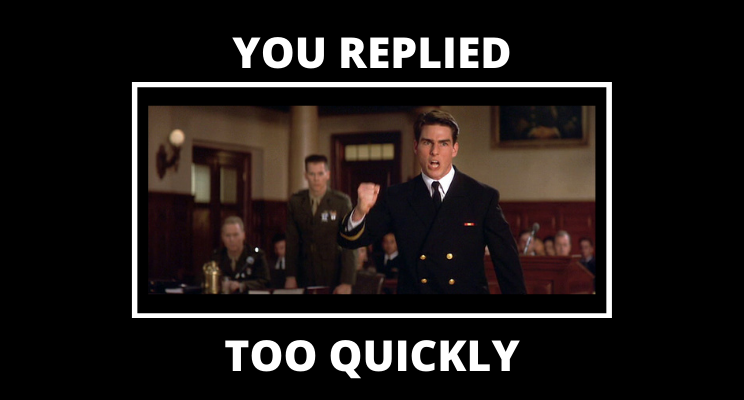
      OK, back to the story. I actually wrote him back.  “How dare you answer me so quickly?  You haven’t thought about this long enough. You can’t handle the truth!”* 

      (*Not my actual email, but for sure my thoughts.)

      It
      sounds trite but I don’t ask my bosses easy questions. If it was easy,
      I’d have figured it out myself. I send my bosses hard questions. They
      need to take time to think about it, to consider, to weigh the pros and
      cons to the decision. If I’m going to put their decision into play, I
      need to defend it. I need to know that the strengths and weaknesses
      have been acknowledged and a decision was still made. (Side note: FYI:
      that’s the hallmark of a good judicial decision. There needs to be
      evidence of a consideration of multiple opposing viewpoints. There is a
      reason that we listen to “dissenting opinions”. Judges WILL TOSS OUT
      decisions that appear frivolous and flippant.)

      I would go on to
      use email response time to judge every boss I’ve had since.  Too fast
      equals bad.  If you are slow with communication, I could be impressed. But I’m not done observing.

      I have 1,000 unread emails in my inbox

      What
      if you are a boss that takes so long to reply that you have 1,000
      unread emails in your inbox? You might want to stop reading now because
      I’m about to get rough. But if you are a leader-wannabe, read on.

      First,
      if you have any email inbox with 1,000 unread messages, you should be
      immediately removed from any position of leadership and demoted
      to Individual Contributor.

      WHOA!

      Why?

      Because when we see people hurting others, we first isolate them to stop the damage.

      If there are that many unread emails and people depend on you, you are hurting them.

      You are hurting your direct reports/individual contributors who have emails in that pile that:

      • update you on projects,
      • ask for you opinion on what to do in a situation,
      • ask for you to escalate some feedback.

      You probably have emails from your bosses that:

      • Point to the organizational vision,
      • Ask for your response by a (now past) deadline,
      • Update you on an expected project.

      Here is the problem, though. It’s not the content inside those 1,000 emails now that bothers me. It is that you didn’t care to manage your email better.

      At work, we use a nice term, time management. But time management is, essentially, self-control.

      Get some. Use it.

      Role up your sleeves and make some hard decisions. Every time I have found someone with this many unread messages, there is a self-control problem. Yes, even you Miss But I’m So Important That I Must Read Every Email.

      Newsletters/Auto senders

      Unsubscribe.

      Oh, but Heather, I route those into a junk email, so it’s OK.

      No it’s not. Because…on whose time are you checking your junk email?

      Work time? Nope. I will not support that. I’ve looked at the content and that newsletter is not that important.

      On
      your time? No. Not a good idea. You are seriously going to peel off
      some dedicated down time to do “quasi-work”. That indicates a problem
      with priorities. You cannot figure out the difference between work and
      non-work. You cannot decide what is important so you are making all of
      it all important. It is not all important. What is important is so
      narrow, you should be relieved to find it.

      No one ever states that reading their own junk email account is satisfying. Stop it. Unsubscribe.

      But I found that one piece so information, so I can’t read/sort/delete!

      Wrong.

      Treating your email inbox like buried treasure is wrong.

      Emails
      and messengers are communication devices, not libraries or vaults.
      Communication is meant to eventually cause action within a brief period
      of time. So each incoming email is asking you to do something. When you
      haven’t read or deleted the email, you have not done any action.

      Those actions can be:

      1. Think about it and give them an answer.
      2. Delete.
      3. Re-route information to another location (calendar, files, etc.)

      Email
      & messaging software is cluing into this and starting to link your
      email’s information to its proper place. For example: Notice how your
      flight itinerary becomes a calendar item within the Google ecosystem?
      That’s good. It should go there. The moral of the story here is that the
      correct data goes into the correct channel.

      Still
      think that email newsletter is “too precious” because some little
      nugget comes along once in a great while? Go to the source. If that
      information is so precious, the source should be archiving it in a
      searchable way. If the information is not archived, the information is
      not so precious. Get it OUT of your email.

      But wait, I really do get 1,000 emails a day

      What
      if you are a boss that has an email account publicly advertised (like a
      company president) and you get TONS of legitimate emails so there
      actually are this many unread emails in your inbox?

      Please. Hire
      someone to read and answer emails for you. No company president worth
      their salt thinks that ignoring their internal and external clients is
      good business.

      I don’t trust someone else to be in my work email inbox

      Puh-lease.
      It’s work email. Don’t you know every boss and IT person is in there?
      Sit up straight with your work messaging. Don’t want me to see it?
      Don’t do it. Easy peasy.

      Leaders: What you say and how fast you
      say it reflects on you as a leader. Take more time to answer an email.
      More time = allowing wisdom to kick in.

      It is always OK to respond initially with:

      • I need to think about this some more.
      • I’m asking someone else for advice what to do.
      • I have to search the Jedi Archives.

      Managing your messaging is part of your self-control.

      Next article will be: I’m Going Camping!

      Article 1 was I am the woman who did not check her email and lived.

      Article 3: I’m Going Camping

      Article 4: 6 Days A Week

      Article 5: Measuring Remote Team Productivity or When It All Goes Wrong

      And this was the article that started this series: Defending a Teacher’s Right To Disconnect.

      #KeepWorkInItsPlace #RemoteWork #TimeManagement #SelfControl #EducationIsAnInsatiableMonster


      This article originally posted to LinkedIn on September 30, 2021.

      https://www.linkedin.com/pulse/you-replied-too-quickly-heather-dodds