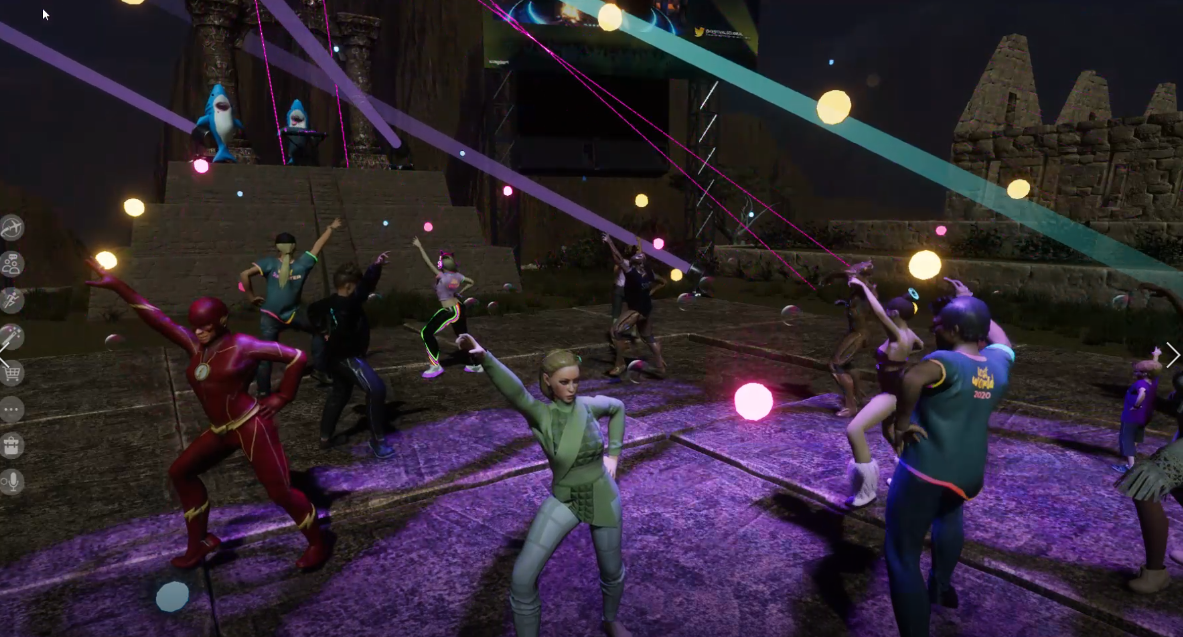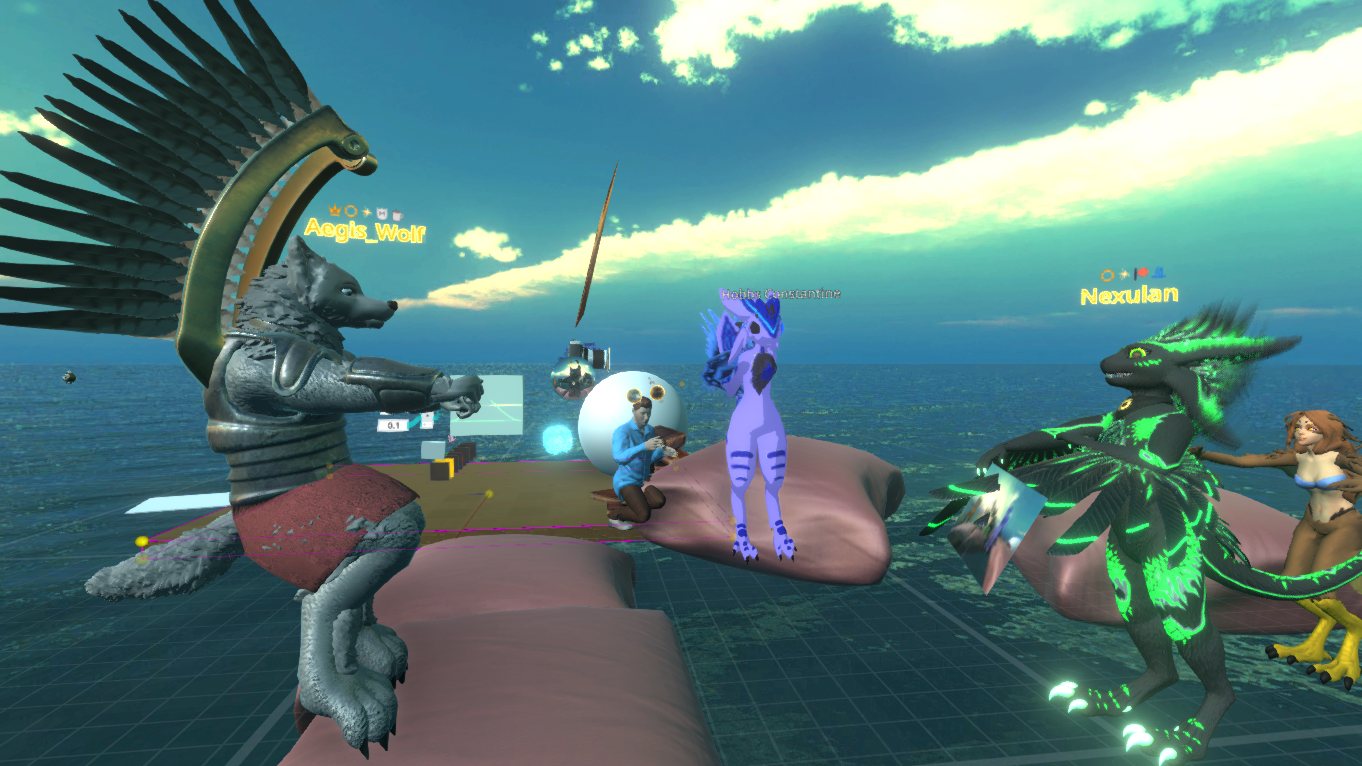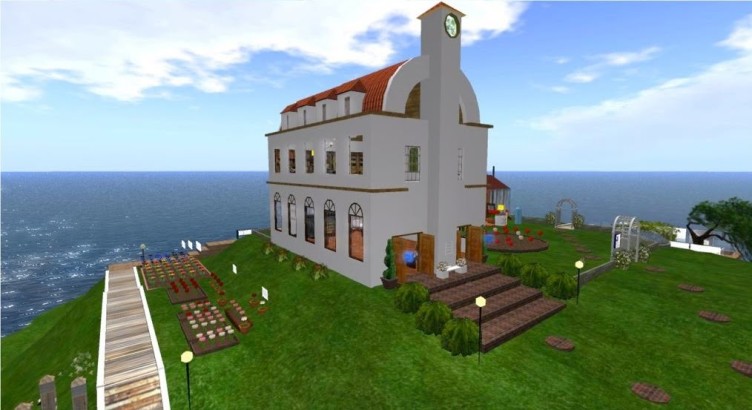

I purposely start articles with “A” when I mean to not be definitive but exemplary. In this case, I would like to pick out a few of the early education influencers and memories that I knew from Second Life (SL) (and Heritage Key, 3rd Rock Grid, OpenSim, and other early virtual worlds).
One of the observations that brings on this article (besides the true desire to give credit where credit is due) is that educators are starting to stream into the metaverse or cross reality (XR) – especially with the $299 Oculus headset cost and the pandemic forcing isolation – and I find that in education & XR development – there is a disturbing lack of knowledge of the foundation of virtual reality studies. That is, people that know about the role Second Life played in XR for learning research are not writing enough about it now so that what it did in the past is captured for the future.
Remember the ‘we stand on the shoulders of giants’ thing?
The giant is, in part, Second Life.
I would suggest that what is lacking in this background research is the fact that the vocabulary (and somewhat, the meaning) of words has changed so even a well-meant Google Scholar search might not pick up valid research from 10+ years ago because search terms were simply different words.
So, first – Search on virtual world (VW) as your primary term. Virtual world was a more dominant phrase than virtual reality. Other words to use: immersive, MUVE, multi-player online, persistent, HIVE (highly interactive virtual environments), online games, simulations, visualizations, online reenactments, distributed classrooms, and hypergrids. Indeed, find one good metastudy from ~2009 and you’ll probably hit the vocabulary jackpot. In researching this article, I found the term Sloodle which I had forgotten but that was an incorporation of SL into the Moodle course management system. You will find a great of research on identity, presence, and immersion with avatars (not so much with locations or “doing stuff” in VWs because object physics was/is very primitive and you can’t “do” too much there. There are pose balls, but really that’s a subject I’m not going to get into here). Bear in mind that headsets only existed in research so this was all what we would know in 2021 as 2D virtual reality or 2DVR (VR on flat screens, monitors, and tablets). Because there were few consumer headsets, there was no “us versus them” that you find now between 2D and Head Mounted Device-based (HMD) 3DVR.
Next, I very well realize that in some circles, Second Life causes giggling, either in derision (see the hype cycle image below) or in acknowledgement that SL did primarily serve the adult content market more than the education market. Sorry, but someone needs to write the obvious. Just recently, when the metaverse conversation popped up with some SL users on Twitter, they were adamant that they would never move to a platform that didn’t allow “adult content.” Second Life was never a place that you wanted to wander into the dark alleys as an educator. At least, if you did, you would learn some stuff you’d rather not know. The sexualization of Second Life is still prominent. Just do a google image search on second life. NSFW. Second Life was always a place for college and university educators (READ: Over 18 years of age).
 |
| Source: http://www.muvedesign.com/the-virtual-worlds-hype-cycle-for-2009/ |
Thus, educators tended to stick together. You heard about SL from another educator and you went in with them. I went in with a professional development group and had my first “meeting” in a hot tub at the Burning Life festival in SL in 2008.
There were some GREAT educator groups and some of them are still going! I mention my favorites:
- Virtual Worlds Educators Roundtable (VWER) – my home base and it is still going! I volunteered on the organizing committee and hosted a “Reading Meeting” where we invited the author of an article in for a presentation and Q&A (I was able to talk with the Whyville Pox article researcher, which is still a GREAT study). At its heyday, VWER had 2 grids: 1 for meetings and we had a Quidditch pitch/outdoor ice skating rink and 1 for parcels for educators as a sandbox and I had a virtual office.
- Virtual Worlds Best Practices in Education (VWBPE) Conference – still going as of 2025!
- Real Life Educators in Second Life is an in-world group (READ: notification list) you can join. Users post different events to that group.
- ISTE https://www.iste.org/…/explore-these-virtual-worlds
- VSTE: VA Soc. for Tech in Education https://vste.org/
- Second Life Community Convention (SLCC) – a larger group but education was a subset. Now defunct.
- The SLED group – an email list serv that had the first collection of educators as subscribers. Now defunct.
Other groups still going but not necessarily education-focused nor restricted to Second Life:
Virtual Ability http://blog.virtualability.org/2021/08/by-gentle-heron-you-can-teleport-to-any.html
Non-profit Commons Community https://nonprofitcommons.avacon.org/
OpenSimulator Community Conference https://blog.inf.ed.ac.uk/atate/2021/10/31/oscc21/
Special shout out to independent journalists that still cover Second Life:
Ryan Schultz https://ryanschultz.com/
Daniel Voyager on Twitter @danielvoyager
Great “places to visit” included NASA, NOAA locations. Rockcliffe University Consortium, Glascow University Online, California State University, Chico (defunct? I think?). Then there were one-off builds that were also great like the Edgar Allen Poe House and the walk-through heart and colon.
During this same time, other virtual worlds were coming up and visiting them was fair game. My favorite was the short lived Heritage Key that needs to come back! That place was so cool and educational, you could visit Stonehenge over 5 different time periods and help build it
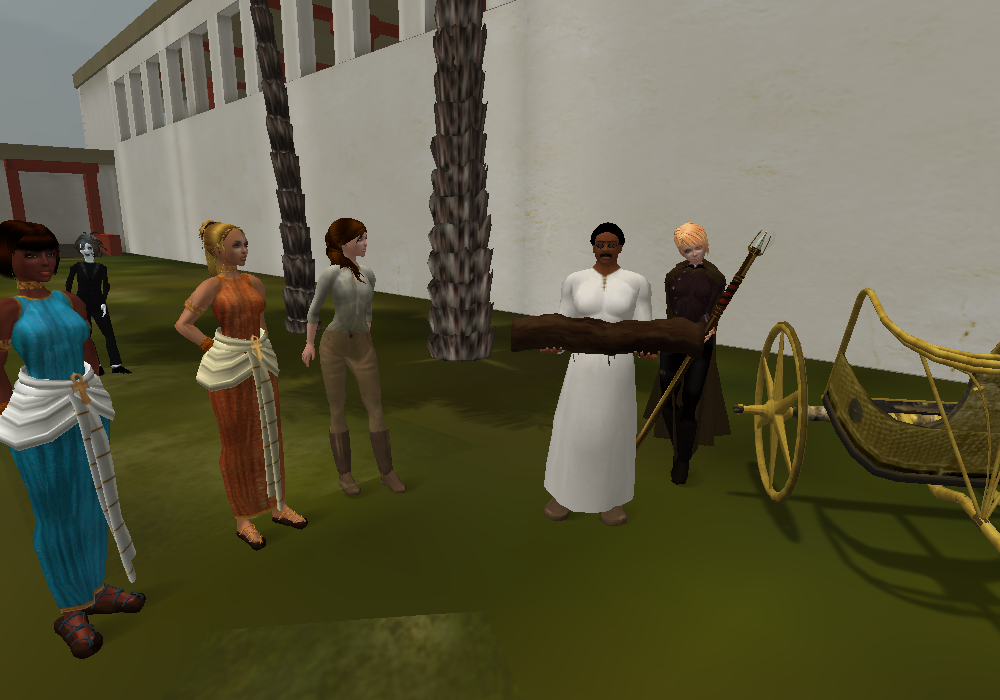 |
| What happens when 2 Egyptians, 2 Adventurers, 1 Druid and 1 Zombie all go to Ancient Thebes? |
So…what happened?
There are many commentaries now. All of them have a piece of the truth. Probably the biggest factor was money. Hosting a grid literally cost money and universities had to pay for it. Over time, it just didn’t make sense to keep paying monthly for a place rarely visited.
College and university builds represented a huge investment of time. You should have heard how much the word “Primmy” was used back then. Primmy is short for primitive which meant the building blocks of virtual realities which are primitive shapes (spheres, cubes, columns, pyramids, etc.) Some clever instructors had their students do the builds and then called that assessment (I’m not calling that wrong, I’m just saying…clever.)
The locations, indeed, themselves brought on their own demise. Many builds became ghost towns because avatars would visit a “virtual campus” (OFTEN a replica of their real campus buildings (cough, mistake, cough) but walk inside the buildings that may or may not have had enough “prims” to put separate rooms inside those buildings, and so visitors found the building completely empty during off hours, wonder what the big deal was, and then leave.
This was one positive result of those early days. Many educators realized that “replicating reality” should NOT be the goal because for now, you’ll never get there. The human eye is too good at discrimination. But what you do want to do is the phantasmagorical.
Do the impossible. Virtual reality is very good at the impossible.
Remember this was before VR was called Social VR, so the ‘social’ part was truly touch and go. In SL, you either found groups of people or you didn’t. Most positive SL stories going around right now will involve relationships and groups. Truly today, I only go into SL for events. I hardly ever go in to just explore. It’s not built for that. What was it built for? Well, it had some characteristics that were interesting and unique. (Alt opinion here.)
Born creator
First and foremost to me, every avatar is endowed as a creator. An educational psychologist I know immediately deemed this a “God complex” program. Indeed, every bell and whistle of creation (object creation and space manipulation) was available in the overwhelming UI. I’ve been a SL citizen for more than 10 years and still I don’t know what half of the UI choices are for. Even though I’ve done it a lot, I’m still not sure what rebaking does.
 |
| The original Second Life Ruth avatar |
Avatar customization
The avatar customization is in Second Life (still) is top notch.
Seriously, OpenSim and Second Life have the best clothes’ animations! I once saw someone who wore a top hat to a Christmas party and the around the rim of the hat was a tiny puffing train! (If you are reading this and that was you, please reach out to me, I LOVED your hat!! I want a video of it!) But, I find Sandsar and sinespace is coming up fast on good clothes and avatars.
You can get married and divorced in Second Life. There are also active furry communities. I’ve got no comment on all of that. I would just remind everyone that what is in a virtual world is what you bring with you. It is definitely not all innocent and it is definitely not all healthy.
Even though you have creator controls, you cannot build just anywhere. Land is owned (permissioned) and you have to essentially pay to have land. Early objects were NOT copyright protected. So copying, stealing, and replicating was rampant. (Hat tip to Somnium Space, who addressed this problem from the very start by tying assets to NFTs.) I suspect a lot of artists hiked out of SL because their work didn’t stay under their control for long. For educators, there was an active “free sharing” market and I still wear my first set of “professional educators clothes” I picked up free from some place.
Hat tip to the word rezzing. I still use it. When I arrive somewhere, I rez in. The spot is the rez in spot. The current term in 2021 is “spawn point”. Yuck. I think this term, rez, should NOT be lost. Rez means resolving, which is what your avatar would do when it was still “coming into” the VR space. It’s the ghostly cloud you see here:
We would lost without our Path…finder
But I’d like to get to the tribute part of this tribute article. I would like especially point out the impact that John “Pathfinder” Lester had in Second Life. Everyone who was on staff for Linden Labs officially had a Linden last named avatar. John was Pathfinder Linden and all educators knew he was the one to talk to about ideas and problems. He “led the development of the education and healthcare markets while evangelizing the innovative use of virtual worlds in research, art and immersive learning.” Truly John cared and helped. I remember the day I sat next to his avatar at a meeting. I was so, so, so thrilled. But I never figured out why his avatar looked like a boot to me. It must be the eyelets and the shoestring. Apparently this is a bit of British culture I don’t know…that’s a character?
Early John:
 |
| Pathfinder Linden |
Many of us observed in stunned silence as Linden Labs pared down staff infamously. I watched in foreshadowing because I knew that it was like to work for a company that would drop you easily. I followed John’s blog “Be Cunning and Full of Tricks” closely during that time and noticed how he rebuilt his professional life.
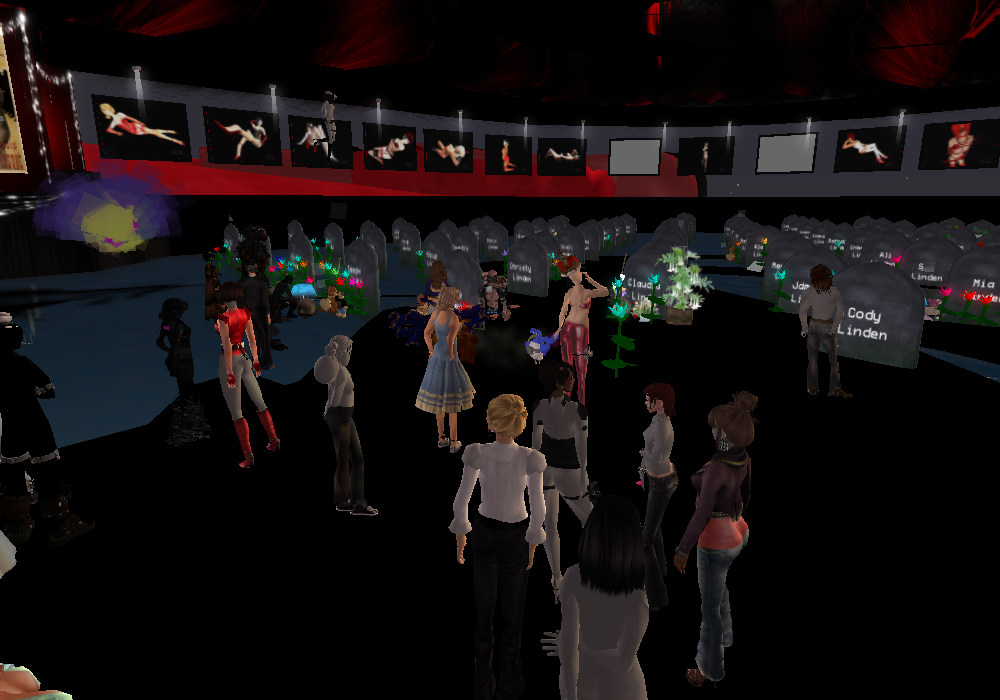
The Linden Graveyard. The fact that this place was made still haunts me.
John is doing well and every time I hear that he’s back near virtual worlds, I’m so pleased (and I’m still part of his fan club).
My last call of affection goes to the VWER Planning Committee of 2012. I’m still in touch with Evelyn. 🙂
- AJ Kelton, Montclair State University (SL: AJ Brooks)
- Joe Essid, University of Richmond (SL: Ignatius Onomatopoeia)
- Ann Steckel, California State University, Chico (SL: Olivia Hotshot)
- Evelyn McElhinney, Glasgow Caledonian University (SL: Kali Pizarro)
- Margaret Czart, University of Illinois at Chicago (SL: Margaret Michalski)
- Charlotte Burch, retired middle school principal/Pres. Friends of Humboldt Bay NWR (SL: Mimi Muircastle)
So in response to the question: Is Second Life still around? Yes.
She has her children now, Sansar, sinespace, and High Fidelity.
See you in world!
#SecondLife #Metaverse #XR #VR #VirtualWorld #Avatar #Sansar #sinespace #HighFidelity #VWER #VWBPE #VirtualAbility #immersive #MUVE #multi-player online #persistent #HIVE #highlyinteractivevirtualenvironments #onlinegames #simulations #visualizations #onlinereenactments #distributedclassrooms #hypergrid #cyberspace
This article was posted simultaneously to my LinkedIn account on 11/23/2021. https://www.linkedin.com/pulse/tribute-second-life-yes-its-still-around-heather-dodds