Tag: Future

  • FrameVR: Showing their cards

    FrameVR: Showing their cards


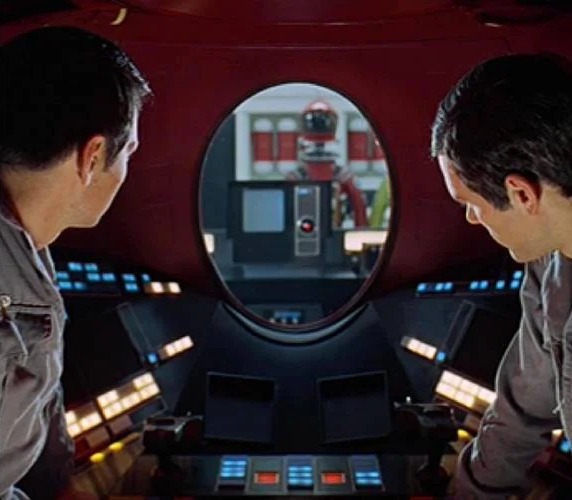
    Capture from movie 2001 A Space Odessey showing HAL reading lips in a crucial scene
    LANDMARK MEDIA / Alamy Stock Photo

    For quite some tie, I’ve been wondering what cards FrameVR.io (hereafter called Frame) had to play in the AI-in-XR space. They were flirting with the concept right around the time of the Mozilla Hubs announced shutdown, but despite witnessing the entire XR industry contract around them, they kept claiming “We’re all in on AI”.  They seemed to mean more than just AI characters in XR space. I just didn’t know how.

    With Gabe Baker’s “AI In Meetings: Treading on Sacred Human Space” LinkedIn article of January 23, 2025, I got a much clearer vision.  And I’m disturbed.

    This post, therefore, is a response. I write it with a pang of regret, but here goes.

    A Brief History of FrameVR, from Heather’s perspective

    I have the date when Frame arrived on my radar: March 27, 2020. I was exploring easy-to-access XR platforms and spent some time exploring Frame with the great Scot Daniel Livingstone.

    Capture of a fun photosphere of Star Wars Lego toys in Daniel Livinstone's living room.
    Exploring Daniel’s 360 photosphere in Frame

    Frames are essentially web rooms in 3D. As Frame’s website says, “Frame is a beta product from Virbela. Frame makes it easy to communicate and collaborate in 3D environments, right from the web browser.”  Frame was one of several no-download required (hence WebXR) platforms that included Mozilla Hubs, Janus, rumii, and Cryptovoxels. Similar competitors had native apps that needed to be downloaded including ENGAGE, Second Life, and Somnium Space.

    Awkwardly, the landing page for Frame used to drop a visitor directly INTO a Frame, which while demonstrating what it was immediately, was unnerving for the unready.  I’m glad to see now that they redirect into a more traditional webpage now that has a bit more of “who we are, what you get, and how much this costs” layout.

    After that first exploration, I’d go back into Frame on and off for years, mostly for events, meetings, and conferences. To give Frame some credit, they were and still are marketed towards business or professional use, that is meetings and events. From the default spaces available to the business attire avatars, they bend to the professional market.

    As of today, Frame’s top 6 use cases listed on their website are professional: team meetings, recruitment, vendor showcase, meetings, campus twins, and networking.  This is not to say that they didn’t cater to the education market – they did! It’s just that most education uses were from the same list: meetings, recruitment, campus classrooms, etc. I see one “soccer strategy” use in the use cases– that’s interesting. But most the education uses are just the same as business uses. I’m going to guess that if there’s an educational use that is completely unique (Hmm…underwater basket weaving?), that’s either proprietary and therefore NOT shared by Frame or those Frames relay entirely on clients bringing their own 3D builds with them and not having Frame provide them.  Either way, it looks like overall “creative” use is limited to creatively using what they already offer.

    Disclosure


    It’s time to veer off and talk a bit about Virbela and I have to throw out TONS of disclosures now.
    I owned a Virbela Virtual Campus (VC) in my role as Chief Operating Officer of the Immersive Learning Resource Network (iLRN).  iLRN’s deal with Virbela was:

    iLRN had unlimited capacity campus for free for spin-ups. We could generate new rooms, new building floors, new buildings, and entire new islands at our demand. (That was actually wicked fun.) In return, we paid Virbela 50% of the rent we collected on contracts that we signed into our Campus. So iLRN was a subletter.

    My COO responsibility was that Campus, account management, and finances. I also conducted tours, did training, and provided tech support. We hosted some lovely events, but meetings were basically all we did.  There were a few random boat rides as well.

    However, as anyone that knows me could guess, I tangled horns with Virbela.

     
    Here are two specific times:

    Sales


    When I came on board as COO, I was soon contacted by a Virbela employee to set up a daily meeting to ‘talk about my pipeline’.  She wanted to talk about sales leads. Virbela could always see a Google doc where I kept all leads. She spent her time encouraging me to frame (haha) my conversations with future clients with Virbela essentially answering their (whatever) needed use case. Said another way, sales; I was being treated like I was a salesperson, learning the ropes.

    Bear in mind that Virbela had a right to see the future as grand and rosy. 🤩🌹 I had heard informally that the home Virbela Virtual Campus had leaped from a paltry 30 visitors a day to over 300 visitors a day during the pandemic. So much traffic had increased that they staffed a concierge desk with 1 or 2 salespersons standing by for many hours each day, ready to break off, give tours, and assist in collecting specs for contracts.  They saw no end to the possible companies and schools that would want to walk in and book a contract for fully made and ready to go VR space.

    This request to meet everyday to discuss sales struck me very badly.  

    1. My job was not pushy sales. I’ve never loved sales. Yuck.
    2. My ethics as a instructional designer forbids me from recommending an educational product that does NOT meet a clients’ needs. If it doesn’t fit, you don’t recommend it. 
      Screen capture from inside of a Virtual Campus meeting room showing blurred faces.
      Capture from a meeting inside of the VC with a client where the VC did not fit their needs; they had users mostly with smartphone technology.  VC was a native app that needs a computer. I voted against offering a contract. Fortunately, the client didn’t take one either.

    3. We were a non-profit, so beating the bushes for money was not our style. Later, iLRN would get chided by Virbela for offering rental prices 5x lower that other Virbela campuses, to which we were stymied and replied with “You, Virbela, told us our prices.”  Talk about greedy.


    So one day I had a chance to fill in a “how are we doing?” Virbela survey which I thought was large and somewhat anonymous. I said “I don’t need daily watching over my sales lead pipeline.”  Virbela sat me down in a following meeting and said “Sorry, I guess you don’t need daily meetings.”  To which, I was more perplexed that my feedback had been directly identified with me.  Oops. Either way, sales lady backed off.

    Avatars

    iLRN had booked in a major speaker into an event, but we also knew that this speaker would prefer to wear a hijab.  We had no hijabs in our avatar collection. We checked. We checked because we knew it was important to be as ready as possible in advance for a speaker. I think we also asked Virbela if we could have hijabs on our VC. I don’t remember a response.

    Our speaker arrived, worked on their avatar, and settled on a hat/hair combo that was the same color, which visually was close to a hijab.  But as we thought they might, they blasted Virbela on social media, pointing out that hijabs were not available.

    Before you could say spit spot, Virbela socials responded right back, “Oh but we do have hijabs! You must have missed them!”

    I call bullshit. OUR VERSION of Virbela did not have them. We checked, in advance, remember? My conspiracy theory is that Virbela loaded them into our version just after the speaker complained publicly.

    Total freaking bullshit, to claim that we had them. I really didn’t like the way Virbela treated the speaker OR us as their subletters.

    ~~

    After I left iLRN, I’ve used FrameVR as a contractor to host a fun student trivia game; the ability to turn audio zones on and off was fun.

    In all of my dealings with Gabe up to this point, I found him to be a kind, dedicated, upbeat, and friendly ‘would do anything to help you’ person in the WebXR world. It’s funny that I had a friend that also knew Gabe but confusingly (to me), he did NOT get along with Gabe at all. I eventually broke off that friendship but I joked that “In the divorce, I got Gabe.” 😁

    The horizon darkens

    When Mozilla announced that they were no longer be supporting their Hubs WebXR product, Gabe wrote a lovely tribute initially on LinkedIn.  I thought it was a classy move, given that FrameVR and Hubs had been up to that point been direct competitors.  I was hoping that Gabe would hold Frame above the fray that was about to happen over at Hubs…but alas, in reply to one comment on his post, he pitched Frame to a listless Hubs user. 

    Oh. Those warm fuzzies were nice while they lasted. 🤦 But, abrupt end.

    Seeing XR companies contracting and closing (AltspaceVR closed in March 2023, Mozilla Hubs closed in May 2024), I wondered how Gabe was seeing Frame go forward. He kept sending out the “Frame’s going all in for AI”-type message.


    Capture of Gabe Baker's AI in Meetings: Treading on Sacred Human Space LinkedIn article header.

    From the title of Gabe’s January 23, 2025 article AI In Meetings Treading on Sacred Human Space, I was a bit hopeful thinking, “OK, an acknowledgement that humans have such a thing as sacred space…and it means something.”  Initially, Gabe does a good job acknowledging the tasks that AI does well and not well in meeting space (because remember Virbela/Frame is all about meetings). It really sounds like Gabe has had a year+ of AI attending meetings and he’s got his finger on the pulse of what works and what does not. Still, most of his examples are stale & predictable.

    He seems to claim that when teams are talking about something, “seeing it” in 3D is the next and better step to take:

    “When people come together to meet, I think there should be as little friction as possible when this question comes up: ā€œI wonder what that would look like?ā€
     
    Yet many meetings don’t need 3D or a visualization at all (i.e. working on accounting on a spreadsheet or writing for a webpage).

    Red flag

    In as much as I want to give Gabe all kinds of doubt, with this, my spidey-sense meter went to 100:


    “As someone who has seen how helpful AI can be across many domains,
    I desperately want AI to be present and accessible during meetings.
    When people see the results of our vision, they will want it too. In
    fact, I think it will seem silly not to have it!

    Those who don’t want
    it will be the people who really want to seem like the smartest person
    in the room at all times.
    But those who are interested in results and
    not ego will be happy to have AI-powered teammates at their meetings.”
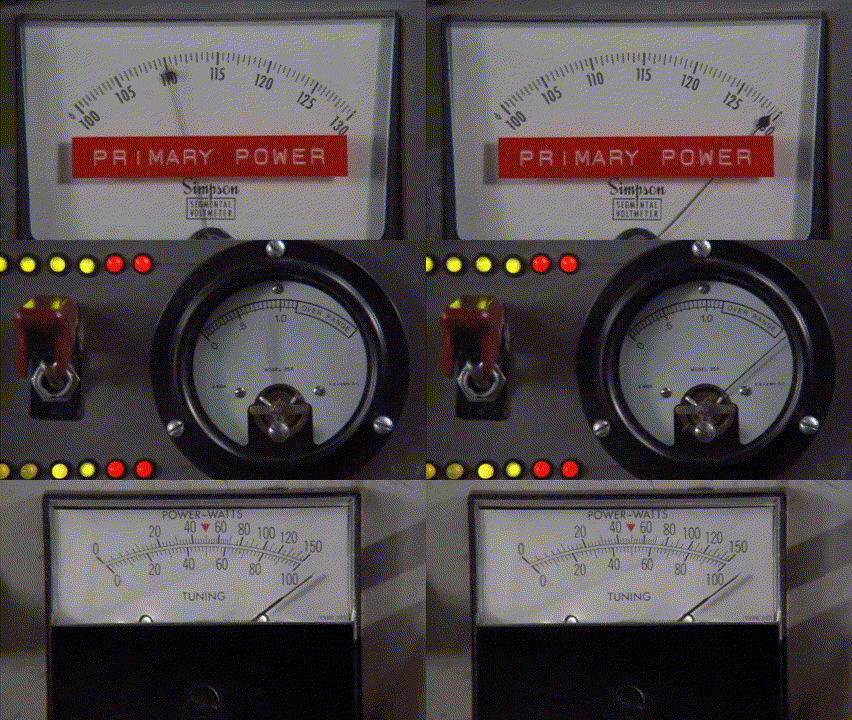
    Gif of the amp maxing out analog dials from Back To the Future movie


    Wait, what?

    People who don’t want AI in a meeting room ‘want to seem like the smartest person in the room’? 

    What about people who don’t want AI in the room stealing the peoples’ creativity and sharing it to who knows who or selling it to who knows who? Or what if AI just plain summarizes it wrong? Or AI gets it wrong? It’s been known to happen. (Schools Using AI Emulation of Anne Frank That Urges Kids Not to Blame Anyone for Holocaust)


    Gabe made it seem as through if you are anti-AI, you are anti-Google, anti-learning, and much worse, egotistical!  I guess privacy got checked at the door? For the record, I’m very pro-Google and pro-internet use during meetings or classes.

    This specific statement is a red flag because it is an emotionally laden argument popping right out of the middle of this discussion. It is as if Gabe ran out of patience and burst out “If you don’t want AI, you’re an ego monster!” 😠

    When a calm reasonable discussion suddenly goes emotional, something is wrong. Gabe lost his shit for a moment there. As Spock would say “Reverting to name-calling suggests that you are defensive and therefore find my opinion valid.”  So, he’s probably getting pushback on this AI thing.

    I hoped he didn’t really mean it so I read on.

    Nope, he doubled down…I mean tripled down. He wants AI agents in every meeting, in the name of eliminating duplicated work across companies. (So much for visualization?) He wants AI inserting itself fully into conversations, setting up follow up meetings etc.

    Is anyone else getting a creepy feeling here?  This is way beyond “all meetings will be recorded” –which would make me make tracks outta there anyways. The invasion of freedom of speech (because some folks will NOT say things if they knew they were going to be hyper-on-the-record) during work meetings will be staggering.  Stymied talk equals failing organizations and failing people. This is going to end badly.
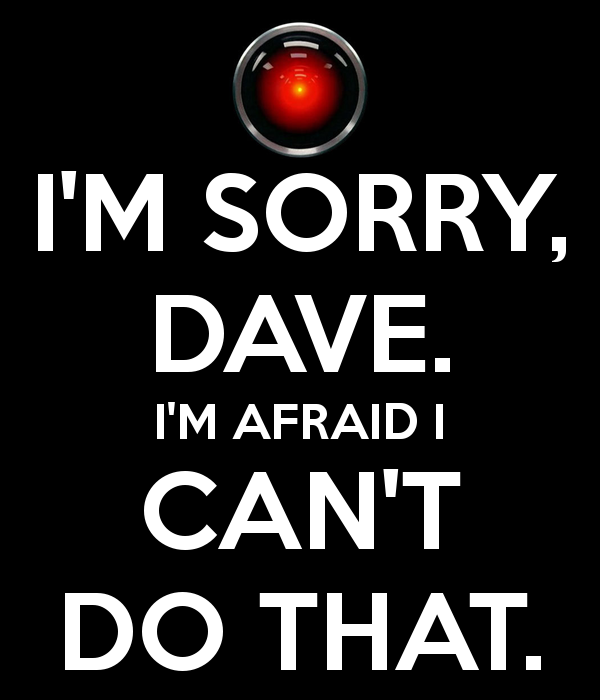
    Meme showing HAL and the text: I'm sorry Dave I can't do that line from 2001 A Space Odessey

    OK, so here’s the $64,000 question: Would I, as a consultant, recommend Frame for educational contexts in the future?

    My answer: I’ve agonized over this, but I probably could not recommend it.  I cannot in good faith recommend using a platform that might record children or learners without their expressed consent and use those recordings, summaries, or derivatives for a future plethora of uses not being disclosed now.  It’s not worth it to “visualize” a solution or have an AI set a future meeting. I can do those on my own, thanks.

    For the moment, I find that sacred human space IS being treaded upon. I can’t in good faith say that’s a direction that education needs to go.

    ~~

    #InstructionalDesign #edtech #XR #VR #AIInXR #AI #Frame #Virbela
  • Instructional Design in the Metaverse Part 8

    Instructional Design in the Metaverse Part 8

    Decorative image: Our metaverse explorer heads off into the golden sun.

    What fights won’t we fight? What is our secret weapon? And what lies ahead? It’s the final part of this series. 

    (more…)

  • Seeking Integrity in VR Educational Research

    Seeking Integrity in VR Educational Research


    Banner image of a woman in a hooded cloak looks out from a dark scene
    Credit: Midjourney and me

    I’m starting a new article series today, calling out ‘bad research’ or research that is quoted badly in virtual reality for educational use. I thought I would start with a whopper – a really egregious example to start this series with a bang. Then I checked my notes and realized that this example is from LAST MONTH, June 2023. I’m not even going into the vault for this. I’m barely picking myself up off the ground from the shock wave.

    So, like Mario says “Here we go!”

    What Is Said About The Research Versus What The Research Says

    June 2023, LinkedIn Post:

    “According to a study from the University of Maryland in 2018, learners remember an astounding 90% of what they experience in VR compared to merely 10% of what they read and 20% of what they hear.”

    LinkedIn post with quote and photo. Details blurred.

    I believe this is the research referred to:

    Krokos, E., Plaisant, C., & Varshney, A. (2019). Virtual memory palaces: immersion aids recall. Virtual reality, 23, 1-15. https://obj.umiacs.umd.edu/virtual_reality_study/10.1007-s10055-018-0346-3.pdf

    Hey, I’ll give you the abstract because I know you don’t like to read long papers:

    “Virtual reality displays, such as head-mounted displays (HMD), affords us a superior spatial awareness by leveraging our vestibular and proprioceptive senses, as compared to traditional desktop displays. Since classical times, people have used memory palaces as a spatial mnemonic to help remember information by organizing it spatially and associating it with saliļæ½ent features in that environment. In this paper, we explore whether using virtual memory palaces in a head-mounted display with head-tracking (HMD condition) would allow a user to better recall information than when using a traditional desktop display with a mouse-based interaction (desktop condition). [OK skip to here because this is the interesting part:] We found that virtual memory palaces in HMD condition provide a superior memory recall ability compared to the desktop condition. We believe this is a frst step in using virtual environments for creating more memorable experiences that enhance productivity through better recall of large amounts of information organized using the idea of virtual memory palaces.”

    Google Scholar tells me this study has been cited 461 times. That’s a low-medium citation number. Not bad, and remember that’s in ~3 years of time.

    Believe it or not, I’m walking RIGHT PAST that 90%, 10%, and 20% because it has already be debunked here and here. Also, to be fair to the research paper, it never quotes those 10 and 20% numbers.

    My Take on the Research

    Research found 90.48% recall in the headset condition, with a 78.57% score from the desktop display control group. So that’s ~10% higher with the headset. 

    From Section 4.1 “Using a paired t test with Bonferroni–Holm correction, we calculated p = 0.0017 < 0.05 which shows that our result was statistically significant.”

    Interesting. I’m not familiar with Bonferroni-Holm correction. Just looking at it, it appears to be a method of discarding some data. I wonder if NOT using it showed a not statistically significant difference between the 90 and 78. Their n was 40. Smaller group sizes means it can be harder to justify the data as fitting a normal bell curve.

    Figure 5 shows the data and just looking at it, you can see that the numbers landed in similar scores. The boxes overlap, so whatever the effect of VR is, it’s not that substantial in this study. Students were learning, regardless.

    But here comes the whopper. Check out this little detail in the Materials section:

    “For this study, we used a traditional desktop with a 30 inch (76.2) cm—diagonal monitor and an Oculus DK2 HMD. The rendering for the desktop was configured to match that of the Oculus with a resolution of 1920 Ɨ 1080 pixels (across the two eyes) with a rendering field of view (FOV) of 100ā—¦. In order to give the desktop display the same field of view as the HMD, the participants were positioned with their heads 10 inches (25.4 cm) away from the monitor.”

    10 inches away

    The “control group” sat 10 inches from their desktop monitor to use the desktop condition.

    WHO DOES THAT?

    You know, I was curious. I grabbed my ruler. 

    How far away are you sitting from YOUR monitor?

    I’m currently sitting 24 inches from my monitor. I leaned in to feel what 10 inches is like.

    At that point, it became no wonder to me that the control group scored about 10 points lower. It was maddening. Remember, the learners had to look all around themselves so completing learning at 10″ from the monitor would be…uh…weird?

    This is a great example of not seeing the forest for the trees in VR in education design. In order to match the field of view, they forced learners to unusually use their desktop monitors.

    There is too much. Let me sum up.

    The quote is from a keynote speaker at a research conference. I can’t believe anyone in the audience did not flag the play on the quote, the percentages, or the design setup of the U. of Maryland study. At the industry.

    • The difference between 90 and 78 *might* be too close to call a difference caused by VR.
    • Setting up learners to use a monitor from 10 inches away is unusual, to say the least.
    • When research sets up unfair comparison conditions, the results should be questioned.

    As Hill Street Blues would say, “Let’s be careful out there.”


    What do you think?

    #VirtualReality #VR #XR #VRForLearning #Technology #Future #edtech #learning #education #UserExperience #InstructionalDesign #research #ComparisonResearch #Media #MediaForLearning #BonferroniHolm #ImmersiveExperience #Desktop #Design #MemoryPalace #ResearchIntegrity


    This article is co-published to my LinkedIn account here: https://www.linkedin.com/pulse/seeking-integrity-vr-educational-research-heather-dodds-ph-d-


    Attribution-NonCommercial-ShareAlike

    CC BY-NC-SA

  • Prognostication

    Prognostication


    Photo by Olena Kamenetska on Unsplash

    I’m getting a pretty strong reputation for being the most anti-XR person associated with XR. That’s fine. Proud of it. Trying hard to explain my point of view.

    But I thought I would get into writing my prognostication about the future of XR.

    In the next 5-10 years (closer to 10 than 5), the XR education market will explode. Entering the metaverse for a class or meeting will be JUST AS COMMON as entering a Zoom meeting is now (very common in 2023, and hated, such as the phrase “Zoom fatigue”). BTW, similarly maligned analogous technologies: PowerPoint or Second Life.

    The quality of what will be produced will run the gamut; great to garbage.

    After the market becomes saturated (and here comes the kicker) learning results will decrease (from what will appear to be ever increasing highs) and the overall impact of XR on education will be essentially nil.  It will be “another thing”.

    There. Forecast made.

  • Tenure should be abolished because tenure is slavery

    Tenure should be abolished because tenure is slavery


    Tenure is one of our current day forms of slavery. Response post to: https://www.insidehighered.com/digital-learning/blogs/online-trending-now/communicating-realities-higher-ed-2022?fbclid=IwAR3B_Sp0QFDigHRGAfPDG852F3DGX5uMWwgae6FIg3iS-0Z5dYo44KsVNu4

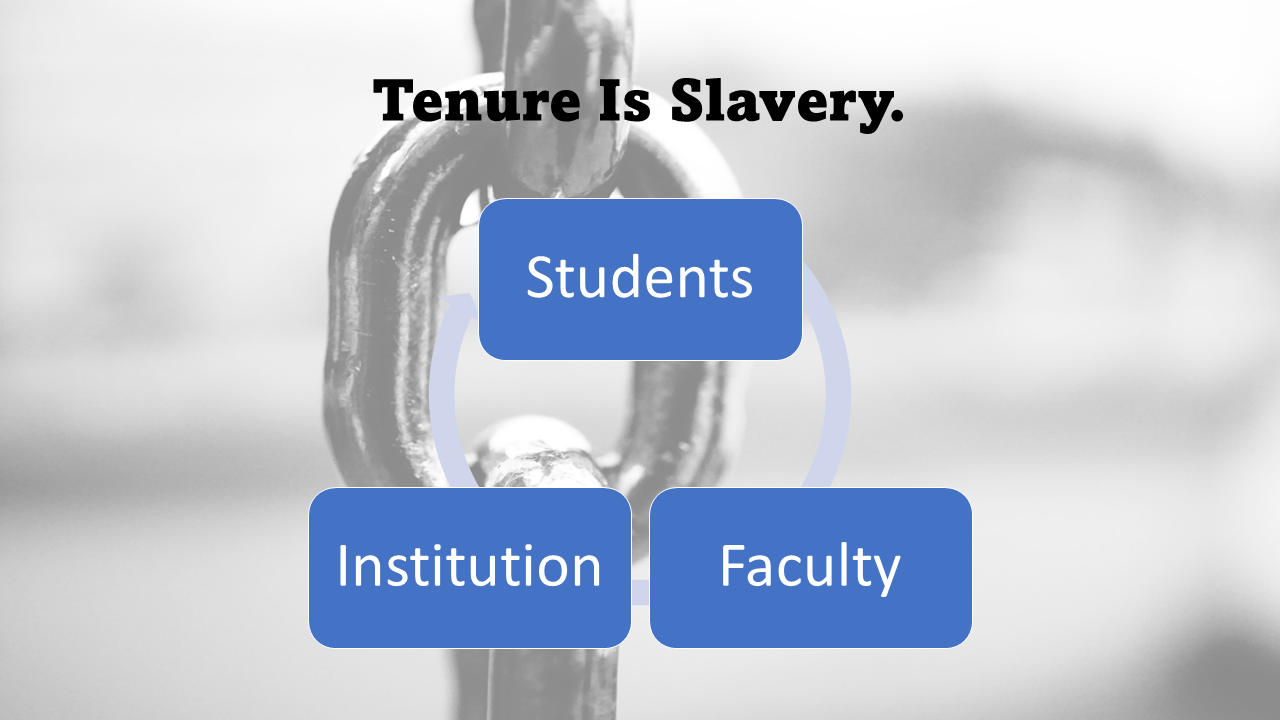
    It’s is not direct slave-is-slave, master-is-master slavery. It is, as is some forms of education now, disaggregated. The parts of slavery now are possessed or embodied within different entities, but it is still slavery if one defines slavery as a lack of freedom combined with a lifetime of benefit.

    Here me out.

    1. Students pay the price–their tuition literally becomes the forever paycheck that will output last in this process. As long as students keep joining the institution–and really, ask any university how important “Enrollment” is to them– the input into the system keeps happening.  This is the input of “lifeblood” for lack of a better analogy.  Without students, a university dies. In this model, the debt that students carry becomes the disaggregated “lack” or deficit.

    2. Faculty pay the entry price to attain the status of “tenure”.  (Note: I can point out that paying this price is one-time technically.) They will go through the YEARS of hoops it takes to get this status. Now, I will not pretend to know what this is. I’ve simply turned my head and hands away from this entirely. I worked at institutions that did not offer it OR I did not work in roles that had tenure in the career path. (Sabbatical is a completely different idea, BTW.) But I’ve heard the horrors stories. I can’t even LINK to one article because a Google search of just “Chronicle of Higher Education gave up pursuing tenure” pulls up 8 articles in just the past 5 years and that’s just the surface!

    But I know we’re talking years of:

    • Attending faculty meetings but being on time AND contributing more than one’s fair share
    • Publishing and its attendant research
    • Excellent teaching record
    • Carrying the load of freshman courses that would make one cry daily
    • Simultaneously carry strong academic conversations while respecting other tenured profs
    • Attend non-academic events for the university to look like you have ‘team spirit’ (READ: Football)
    • Don’t forget to buy a house in the university neighborhood.

    Side point: I won’t get deep into the scandalous price that adjuncts are paid for what is known as often EQUIVALENT or HARDER work with many less benefits and pay. It’s very true that adjuncts could be paid a fraction (the article says 1/4) of what a full time faculty member is paid for the same work.  THE SAME. How is that EVEN legal?

    3. Then there is the “forever” part. The faculty member, once they get tenure, supposedly has a ‘forever paycheck’ and now a benefit of this lauded extra thing called “Academic Freedom” (which…actually….checking the paperwork was a right awarded to all faculty (including adjuncts) from the date of hire…but no one noticed that) but still… FREEDOM.

    And yet, that forever is only contingent on the university being open.  Which brings us back to #1. Students. A university is only open if it has students.

    Post-pandemic. Students are realizing they have a much broader choice. I hope they embrace that and walk with their dollars. Universities will shut down, profs will lose tenure, and hopefully that concept will pass from memory. Bye bye slavery.

  • The Future Of Higher Education

    The Future Of Higher Education


    Question: What does oversight of every instructional design (ID) department on the planet give you?

    Answer: Vision.

    This vision of the future of higher education is summarized in this video (3:18).


    Prior
    to 2017, instructional designers (IDs) at their institutions were often
    a department of one. As such, instructional designers work in an
    isolated position. Tasked with working with an entire university’s
    faculty & staff, instructional designers often find it rare to find a
    sympathetic ear for their common concerns. 

    Peter Shea created a Facebook group, Instructional Designers in Education,
    in April 2017 with the hopes that instructional designers working in
    educational institutions could gather and use each other for support. In
    joining, instructional designers in education are part of a virtual department and
    can discuss the sociology of being an instructional designer. In this
    way, this group leverages the power of connections to add a human touch.
    At this writing, the group has doubled in size since 2020. 

    The most common post themes include:

    • Challenges
      with working with faculty, who while being subject matter experts,
      rarely have even a basic foundation in educational theory.  
    • The recurrence and tamping down of myths such as learning styles and using highlighters.
    • Learning Management System (LMS) tech fixes and recommendations
    • Job postings (huge uptick here with MANY classroom teachers converting to ID)
    • Explorations of the impact of new technology on teaching pedagogy.

    As
    soon as the black swan event of COVID-19 struck, we knew that
    instructional designers were going to get hit hard: hit up for advice,
    course building tasks, anything and everything related to creating
    instructional content for online. 

    True
    story: As soon as a residential campus shut down and sent students
    home, administration sent out one email with three items: 

    • A link to the campus web conferencing provider,
    • a link to the campus course management system, and 
    • a link to the campus IT help desk.

    The campus administration was confident that they could handle this situation. 

    I
    was personally approached to give advice for an in-person class that
    was converting to online. I asked, ā€œWhat experience do you want to
    create for your learners?ā€ The answer I received was ā€œExactly the same
    as in class.ā€ I said quietly to myself ā€œNo, you don’t.ā€ 

    With
    decades of research in online learning successfully pushed into
    instructional design programs (because online or not, the IDs are the
    assumed experts in the campus LMS–an online resource), we knew that
    instructional designers were about to get hit VERY hard.

    At first,
    some of the comments were cute and I’ll admit I had to stop myself from
    reaching out to pet these instructors on the head and say ā€œoh, you are
    so cute!ā€ when I heard things like ā€œI find it much easier to work online
    when the music I listen to has no lyrics” (cough multimedia principle)
    or ā€œI find it is much more important to reach out to and show care to
    each of my students as compared to when I was in the
    classroom.ā€ (<-OK, that instructor gets points! Good job!) This
    article, COVID-19 Lessons To Take Forward for Higher Education, has some positive conclusions about the push to online teaching in the pandemic.

    Futurists
    kept whispering that COVID-19 pandemic was not a black swan event. We
    paid attention to that. We immediately started thinking 6 months to 1
    year down the road. Higher education administrators were going to want
    to move as quickly as they could to pandemic-proof their campuses. So I looked at the future and said ā€œwhat’s next?ā€

    No alt text provided for this image

    Here’s my version:

    1. Web conferencing software captures all lectures.


    Screen caputer of BBC news page with title Zoom sees more growth after unprecedented 2020
    Source: https://www.bbc.com/news/business-56247489

    In
    the frantic move to online, instructors did not want to leave any
    students behind and records all of their classes. Within one year, the
    world has the entire existing knowledge base of every class recorded.

    Effect: Those videos can be analyzed for teaching style.

    Really, who has time for that? Most higher education campuses barely have capacity to observe each instructor once per semester.

    Artificial Intelligence: Hi.

    2. Artificial Intelligence evaluates all instructors.

    Artificial
    intelligence has the time. Sorting through this data would not be hard
    to program. The characteristics of a great teacher that separates them
    from a good teacher are quantifiable. It’s not in the content  (Congratulations, your YouTube video covered the content in 55 minutes, perfect! Err. No.)

    Great teaching is in how the teacher interacts with the students. After
    all, if you just want content covered in 55 minutes with audio overlay
    and visuals, that’s a Discovery channel video or even ditch the audio
    track and hand out a PDF. Content does not need to be a
    lecture. Teachers are about interaction and engagement. A great teacher can teach a good lesson even on a bad day. That’s a needle NOT hard to find in this haystack.

    This will be called Quality Control.

    In the process, universities discover that…some teachers are just bad teachers.

    No going back from online education though.

    Source: https://www.nature.com/articles/s41928-020-00534-0

    Look at that last phrase: could permanently change how education is delivered.

    3. Consultants advise higher education that there are too many instructors.

    (The following is my recollection
    of events, not written here as factual.) Around 20 years ago, a couple
    state university systems had the epiphany that they were no longer
    serving students within their state geographically as land-grant
    institutions were originally designed to do.  For example, if you live
    in PoeDunk Town, you would naturally choose to go to PoeDunk University
    where they offered a version of an academic major you *might*
    want.  You didn’t go anywhere else (and certainly not out of state!)
    because your needs were being served locally. About 20 years ago, state
    universities realized that students were willing to get in their cars
    and drive hours to a different in-state university to get the program
    they really wanted.  That meant that each university had to stop
    competing against every other university in the state for the same
    students in the same program. Instead of geographical dominance, the
    universities decided to divvy up academic programs and let each
    university specialize in around 10 program areas and not compete outside
    of those areas. That meant that if you were in PoeDunk town and you
    really wanted to go to medical school, you would go to Medical School
    University and not the local university. Problem solved. Temporarily.
    We are far past keeping students within state borders now.

    Earth
    is facing this problem world-wide.  Really want to learn Alaskan
    Wildlife Resource Management but live far away? No problem. Within 5
    years, every school will have a retinue of online programs that you can
    take from anywhere.

    Harvard not in your home country? No problem.
    Take their online program. Want that unique program out of New South
    Wales? You got it, online!

    Suddenly, we have too many courses online teaching exactly the same content (albeit different instructors/styles).

    Wait, what if Subject X has always been the bane of your existence and that is the problem. You just can’t pass that course.

    Oh, here is where this entire vision gets VERY interesting. 

    Enter blockchain.

    Enter global enterprise.

    They have been getting ready.

    Blockchain is already coming into higher education in several places: Woolf University and transcripts (Aamir, Qureshi, Khan, and Huzaifa, (2020).

    Blockchain
    eliminates the need for the university to be the arbiter of reputation.
    It allows for reputation-based “coinage” (I only use coinage to convey using a term associated with value–this actually has no connection to cryptocurrency.)

    In my video, I show the current model. I’ll skip that here and go into the future model.

    Student A shops for a class on Subject X.  She comparison shops at Amazon Education, Walmart.edstore, and Google.edu (these are mockups!)

    Mockup of future imagined Amazon-based education platform

    Mockup of future imagined Walmart-based education platform
    Mockup of future imagined Google-based education platform

    She
    considers her price-point, preferred instructional approaches, time
    available, compatibility of format and purchases a course from
    Instructor B.

    Mockup of a web store page selling student seats in a course on Subject X.


    Student A earns a blockchain coin for ā€œSubject Xā€ issued by Instructor B.

    Both of their reputations are now connected.

    Student A goes on to work for Boss C where Subject X is part of her daily job.

    Boss
    C evaluates how competent Student A is with Subject X. He awards her a
    coin that indicates that she is competent working with Subject X.

    Student A gets most of the positive reputation coin.

    But,
    because part of the awarding of a coin from Boss C is reputation and
    Boss C is, in part, telling Instructor B that she did a good job instructing Student A– part of the positive bump in reputation goes back to Instructor B and it is reflected in her
    ratings. She can now charge a little more for her course teaching
    because she can prove that her students go on to work with Subject X
    successfully.

    Notice in all of this, an institution of higher education was not needed. 

    Up
    to now, universities have been arbiters of transcripts.  If they kept
    the transcript sacred (and they really do) then all of the reputation in
    a student’s transcript is bound up and captured by the university. The
    university charges for it and doesn’t release those transcripts easily
    at all!  But in this blockchain model, you do not need a university.

    You
    do not need a university for physical hosting of the course.  The
    instructor can run it all with one Zoom and Dropbox license.

    You
    do not need a university to collect tuition or pay the instructor. The
    money passes directly between them and instructor can charge a
    market-supported rate for their courses. Cheaper courses with less
    instructor inaction and poorer instructors are available. Better
    teachers are literally raised up due to blockchain coinage.

    Look at the positives:

    • The relationship between what Student A is competent in and her Instructor and Boss is fluid.
    • At any point, reputation could be modified or retracted.
    • There is a direct feedback loop between employers and instructors.

    I
    can hear you from here. You are asking…but if we don’t have
    universities, what about research? We depend on universities to be the
    bastion of unbiased research.  If we simply don’t need them anymore,
    won’t research disappear?

    OK, once I stop laughing about putting the word ā€œunbiasedā€ and
    ā€œuniversitiesā€ together in the same sentence (as I hold these truths to
    be self-evident, they never were unbiased), I’ll tell you that
    research won’t stop. There is such a thing as a research center– where
    courses do not play second fiddle to research and
    academics-as-researchers can do their great and necessary work.

    I’m actually ALL FOR research. My disdain for the rat race known as
    tenure has leaked out in social media before and I’m really sorry for
    those that have worked so hard but it is slavish institution that
    protects professors that give high grades to women with short skirts. 
    And about a million other problems.

    What about the fact that a
    degree is a purposeful gathering of subjects that outside industry
    advisory boards have authorized that are intended to create a
    well-rounded citizen and competent first-day-on-the-job ability?  (I am a
    Liberal Studies major myself!) The disconnect between what industry
    wants and what industry gets from employees is already a strong flowing
    objection out there. I do respect that getting certifications to solve
    problems doesn’t solve every employment skill problem. For example, some
    workers have years of technical experience. But they are unpleasant to
    work with, to say the least, and they will not rise up the career ladder
    without a ā€œdegreeā€.  Here is the key: I find that employers often
    shuttle these workers off for a degree NOT to prove technical skills–
    the candidates already have them and find school work monotonous and
    pointless. The employers want the workers to pick up those finer skills that would be covered in the ā€œrequiredā€ courses outside of a major (aka
    learn to embrace diversity by taking a course that forces a learner to
    embrace diversity.  Learn an appreciation of alternative ways of thought
    by taking a humanities course.  Learn other world viewpoints by taking a
    course about another culture. And so on.)  I find that this could be
    solved.  Just make humanities, art, and writing required certification
    courses in jobs! What about the overall idea of a program or
    degree; the concept that a program is a well though out gathering of
    courses balancing requirements against electives.  What if the
    student-become-employee doesn’t check every traditional program box?  

    It
    is current bane of higher education that students graduate after X
    years with a degree that is already out of date. So I kick pre-formed
    degrees to the curb too. More ebb and flow. More consumer choice.
    Employers should just look for what they need and by-pass the rubber
    stamp of the degree.

    I’d like to see what education looks like with less medieval serfdom
    and more market demand. Some places have been getting away with
    educating us for years and it seems to have worked (cough, military,
    church, media, cough).

    So, what do you think is coming next?

    #blockchain
    #HigherEducation #Future #Vision #Research #OnlineEducation
    #InstructionalDesigners #ArtificialIntelligence
    #WhereWeAreGoingWeDoNotNeedUniversities


    This article originally posted to LinkedIn on  July 14, 2021. Updated with images (because Google might eat old images) and one slight edit deleting a comment about Amazon Education overlords on February 18, 2026.

    https://www.linkedin.com/pulse/future-higher-education-heather-elizabeth-dodds-ph-d-

  • State of XR 2020 – My Conclusions

    State of XR 2020 – My Conclusions


    After my participation of the State of XR 2019 2020 project, I
    have come to the following three conclusions. The overall results
    edited by iLRN will replace what was known as the New Media Consortium
    (NMC) Report for 2020, albeit for XR topics (Virtual Reality, Augmented
    Reality, Mixed Reality, Virtual Worlds) only. The following are the
    schisms present within XR that most fascinate me.

    Decorative image showing a venn diagram with text: Accessibility overlapping with Immersion saying "Almost Impossible To Find"


    Accessibility versus Immersion

    Again
    and again, when my fellow researchers and I examined sources, papers,
    and examples of XR being used in research and education, we found gaps
    in either of these concepts. It is as if you can have one but not the
    other.

    If a technology is accessible, it is not fully immersive.

    If a technology is amazingly immersive, it is not accessible to some population.

    This
    tension spreads far beyond a physical campus or location as well. If a
    university is investing in maker spaces, 3D printing, or immersive
    headsets (all items that are by definition limited to a certain space
    and time), the tradeoff is that only a few users can partake of an
    experience at any given time. This opens up the conundrum of do you
    invest heavily in spaces where only a few students benefit? To increase
    accessibility, do you design immersive rooms instead of VR headsets?
    Then, if you have a room, do you put more than one person in it? 

    To be clear, I feel that this conundrum can be overcome. We’re just not there yet. I feel that the solution lies in the fact that we (as in humanity) will be able to adapt to not fully immersive experiences and we’ll call that good enough.

    The Most Effective XR has the Highest Stakes

    Over
    and over, as I stack up the pile of research studies that show that XR
    is an effective conduit of education, the majority of studies right now
    are from the emergency services: medical, military, police, and fire. 

    Why is that?

    Putting this conundrum in another light, we know that immersive experiences heretofore have used fear as their greatest emotional coinage
    (2018, Bailenson). For example, put a learner into a training situation
    where they have to find and rescue a person from a burning building and
    then begin CPR, you will find that XR gives very impressive learning outcomes. 

    So
    why was the high stakes emotion of fear the same effective coinage in
    both situations? Was that destined to be XR’s first proven success?

    I don’t have a problem with this. Don’t misinterpret me.

    But
    I wonder what it is about ā€˜high stakes’ and fear that made this emotion
    the first to show it works via the research in XR? Bring humans into an
    experience where it feels scary, but make sure they remember that the
    situation isn’t real. The result becomes high entertainment value (i.e.
    Grand Theft Auto). My point is that there are many other emotions that
    we could pick for XR to ellicit/play on.

    We could have selected love as our emotion. What about wonder? Awe? Compassion?

    I’m not saying that there are not XR applications out there that don’t pull upon the non-fear emotions; there are. But why did fear get to the front of the ā€œeffectiveā€ line?

    The Role of Justice is Coming to XR

    If you followed my exploration of the History of XR series, you know that I was engaging in an exercise of future prediction. As such, I sensed two choices:

    1. All possibilities are possible.
    2. Patterns predict what will happen.

    After
    my study, I decided, as a designer, that choice #2 is the better bet.
    That is, if I could find a foundation upon which a feature, design, or
    product was built and *that* foundation was successful, then I would bet
    that the future feature would be successful.

    Here is a simple example:

    At this point, books
    are one of humanity’s greatest design successes. Many users want to
    read (there is market desire) and are more successful after reading
    (effectiveness is high). Books are predictable; they contain many
    patterns that are widely understood: title, table of contents, letters
    form words, words form sentences, sentences form paragraphs, paragraphs
    are contained arguments, books proceed through an argument from
    beginning to an end (in different directions depending on language).

    An
    example conclusion, therefore, is that future XR technologies *must*
    contain some element of text to be successful. Purely icon-based
    communication does not feel successful.

    But back to XR as an entire picture. Justice was built into the very first concepts of human’s imaginings of alternate realities.
    (Hello Plato!) I believe justice is still there, but it is very buried.
    I look for justice to show up more prominently in the future. There are
    already calls for XR to be a harassment-free or a prejudice free zone.

    I’ll be spending 2020 contemplating this and looking for examples of justice in XR applications.

    I seek to find justice in:

    AR
    – I look forward to the day when disciplines described today as ‘for
    those who have vision’ to be opened to all. For example, in science we
    know it is very hard to envision electron orbitals as
    ‘statistically-likely places to find electrons.’ AR will be able to add
    that sight to anyone studying the Periodic Table. Just the same for
    envisioning the flow of electrons in electricity.

    VR
    – Lucas Rizotto’s recently released Oculus game “Where Thoughts Go”
    introduces a much more subtle version of empathy, not a bang you over
    the head version.

    VW – Some quiet and yet profound results are coming from the social application of virtual platforms. Virtual Ability
    has been doing spectacular work for years on all kinds of physical and
    mental ability fronts. I look for this to open up as an increasingly
    socially acceptable form of support and thus, justice.

    It’s almost a new decade! I can’t wait to see what the future does hold. See you there.

    #StateOfXR
    #Research #Conclusions #AccessibilityInXR #ImmersionInXR #XR #AR #VR
    #VW #Fear #HighStakes #Effective #Compassion #Awe #SocialSupport
    #Justice #EmergencyServices


    This article originally appeared on LinkedIn on December 23, 2019. Updated font and images on February 23, 2026.

  • The Future of XR Headsets

    The Future of XR Headsets


    Photo by Drew Graham on Unsplash


    I’ve been working on a project to predict the future of XR technology
    within a 5-10 year time frame. That means I’ve been reading research
    reports, digging through Twitter posts for conference photos, and
    reading thought pieces by some of the most valued opinions on XR in
    industry and education.  

    Simultaneous to this project, I’ve been brushing up my skills in User Experience (UX) and my most favorite, Design Thinking
    One of the most fun aspects of Design Thinking is that I’m allowed to
    let my inner empath run on full tilt. And it’s really great to let your
    emotions run through bunny-filled sunshine meadows and just see what
    she has to say about anything and everything.  Let me tell you: she has
    some real opinions on XR headsets. And almost ALL of those opinions
    come from the images being used to portray headsets. Come along on this
    mystical magical ride of the visuals of headsets.

    At the end of
    the journey, I will make a prediction about headsets.  And as with
    every project of mine, I’ve figured out how to work Disney into it (as much as possible).

    As our starting point, I’ll state something very strongly.   I’m sick of headsets where people are supposed to be wowed by XR.  To
    be realistic, 90% of XR headset images are these. I’ve gathered these
    images from across the internet and to preserve some degree of
    anonymity, I’m NOT providing the reference location.  I’m not trying to
    make fun of people. Please be clear on that. I’m commenting on *how we
    are portraying XR to others* to, supposedly, encourage others to join
    us in XR.

    Unknown person expressing surprise while wearing a VR headset and earphones. Her hands and fingers are spread wide, her mouth is agape.

    So
    we have the ā€œOh my I’m surprised!ā€ look. I think that’s what this photo
    is trying to say. It’s possible she was frightened, but more on fear in
    a little bit.

    No alt text provided for this image

    Honorable
    mention in this category: hipster dude
    looking…uh…surprised. Actually, he looks ā€˜tired and being forced to
    look surprised’ but that could just be me overlaying college student
    thoughts onto this photo.

    The next one we have is the *very*
    ubiquitous ā€œHey, we’re trying out headsets…somewhere.ā€  I’ve got about
    10 of these photos collected.

    No alt text provided for this image

    So
    they are all smiling and facing the same direction.  We’re supposed to
    like that, right? Uh, remember that those headsets are designed to cut
    off all vision except that which the designer wants you to see and those
    are four women standing really close together in a public place.  Where
    is everyone’s hands? How did they know to stand that close together?
    They were probably prompted and stood close together and *then* put the
    headsets on. Yeah, that’s realistic. Is it any wonder that women, in
    particular, note less comfort with XR?

    Hey here’s a few more.  Do you want to try yet?

    No alt text provided for this image

    I’m
    solo and still comfortable standing here showing you this thing. 
    Wait…are you still there? Did walk away? Oo, a whole new way to
    indicate non-interest at vendor tables if every vendor wore one!  I
    might like this.

    No alt text provided for this image

    We are friends and happy even though we can’t see each other…and you!

    It’s a coincidence that those last two were Magic Leap.  I’ve got nothing against Magic Leap.

    Before we leave the emotional theme of happy, catch this image *from a real article*.

    Hello Clarice.

    I
    am so creeped out by this.  If you don’t see it, look closely at the
    mouth.  Where is the mouth???? Why is the mouth from someone else????
    Ah, the Hannibal Lecter of XR images.

    And finally, before things get better, just remember that your XR headset isn’t this.

    No alt text provided for this image

    I got nothing for this.  It’s so…nope…nothing.  Someone help her.

    So
    back to the topic of the future.  I’m asked occasionally which
    technologies to invest in over the 5-10 year time frame that are winning
    bets for XR.  I’ve got a multiple-part article series coming on how I
    arrived at my conclusions, so stay tuned for that. However, the more
    XR headset images I’ve seen (like all of those images above),
    the more I think we are doing a very poor job enticing new users into
    XR.  I feel like we are hitting all the wrong notes.

    The more and
    more I thought about what disturbs me about these headset images, the
    more I realized that I saw a theme to headsets where I’m like ā€˜Yes, I
    would try that,ā€ and ā€œNope, I would not try that.ā€  And here is a hint
    to the theme:

    Graphic image of The Incredibles Family wearing masks over their eyes.

    Recall the custom that some fiction writers use to disguise some superheroes: they mask their eyes. 
    If the eyes are covered, we can’t completely know who it is. By day,
    it’s just mild mannered Clark Kent.  He can’t possibly be Superman.
    Think that premise is just in stories? We block off someone’s eyes when
    we want them to have anonymity in photos/video, etc.  It seems we humans use eyes as our ultimate identification card.

    While
    headsets in VR are designed to take the user to different places and
    times to experience the normal and phantasmagorical (<-love that
    word), they do so by cutting off all view of the current space the user
    is in.  That’s on purpose. I got no beef with that. We have data that
    these headsets *can* generate empathy. Great! I buy that too.

    My problem is what if empathy when involving headsets is a two-way street?
     What if I cannot believe that the user is truly impacted by an
    experience until I see their eyes?  Isn’t that the problem with all of
    the prior VR headset images? You cannot see the user’s eyes. Ooo, so I
    have hit on a real tech problem here.  If I want to see the user’s eyes
    and yet the user needs to see nothing of the real world in order to be
    immersed in virtuality, how do we solve that problem?  Right now,
    headsets cannot answer to both sets of demands. However, I have also
    never met a tech problem that hasn’t been able to be overcome.

    The short term solution is already at hand and I’ve been discussing it on LinkedIn:

    • The
      solution is that immersive headsets (mostly for VR, VW, and games) will
      do what they do best with full immersion.  Said another way, Magic Leap
      and Oculus Quest– if they pursue full immersion activities, will be
      fine. We hope that the users are in a safe space with assistance
      available in case they fall or need some body space security.
    • The
      solution is also that AR headsets (which are not designed for immersion
      but for information display) will focus on information display.  Since
      AR is not quite pulling on the emotions as VR, it’s not as important to
      see the user’s eyes but, bonus points, I can see them.

    My favorite headset therefore is…Microsoft Hololens
    It allows me to see the user’s eyes. It also has the body profile of
    safety glasses (a familiar pattern).  Also I believe that Microsoft is
    following their own playbook that worked for Office Suite and they are
    pumping the Hololens into the business market *first* and that will
    create back pressure through education. (i.e. we’ve got to get some
    Hololens headsets because our graduates will go out to work X job and
    will be expected to have experience in headsets as part of the job
    requirement.)

    Said another way, as of today, let AR headsets do AR and let VR headsets do VR.  Never the two shall meet. Until…

    The future can and will contain headsets that will do both.
     That’s my prediction.  A user wearing AR technology will find their
    way to their subway train, sit down, and switch over to a VR scene of
    the latest episode of the Mandalorian. 

    OK, I realize it won’t be
    *full* immersion but I think the tech is going to get better (refresh
    rates, etc.) and users will accept non-full immersion. What makes me
    predict that? I’ve been a glasses-wearer since kindergarten. Ask me if
    it bothers me that about 30% of my field of vision at any given moment
    is not in focus. Answer: Nope. Users will accommodate to non-immersive
    VR.

    Once at their destination, the headset will fade down the
    immersion and fade up to a map to a restaurant and some jazzy music (or
    what-have-you-AR-experience-on-demand).  

    How do I foresee that?  As a designer, I look for patterns in what has successfully worked in the past to predict what will successfully work in the future. 
    So what do we have in the past or present that predicts that AR/VR
    combined headsets will totally be a workable thing in the future?

    Two things:

    1. Sunglasses. 
      (Not just regular glasses as I mentioned earlier.)  I see a few
      commentators skeptical how comfortable users will be wearing glasses
      that they *don’t need to*, aka vanity glasses, aka AR glasses, just to
      get AR.  I think it will very much work! Because I don’t think of them
      like glasses…I think of them like sunglasses. Sunglasses are the
      harbinger of wearable tech because as we know, there are many examples
      of people wearing sunglasses for reasons that have nothing to do with
      sun protection.  If people are willing to wear sunglasses at night,
      wearing AR headsets whether or not one is using AR will be an easy idea
      (see: the wearable technology fashion industry).
    2. The ubiquity of
      the smartphone space-wise currently to users’ bodies. I don’t think I’m
      going out on a limb when I say that most users keep their smartphones
      with a meter’s radius of their bodies. As I’ve said on LinkedIn (and I
      should get this embroidered on a cushion), smartphones are the gateway drug for AR. 
      Users are getting very used to having customizable information at their
      fingertips (or voice, as it may be).  Switching from that smartphone
      interface to our vision or auditory range? Easy. Consider it done.

    Until we get to the future, a few recommendations:

    • The emotional nuance possible via XR is stunning.  Let’s stop using fear as our primary XR coinage. 
      (I’m looking at you, Plank.) Emotional reactions such as peace, wonder,
      laughter, curiosity, sadness, and honor all have a place in XR.  Those
      emotions are how you are going to get not just gamers into XR.
    • Stop it with the ā€œI’ve put on a headset and I’m amazed” images. Just stop. I am looking for other
      emotions or events expressed with headsets…it’s just my hobby to
      collect these now. I’ve made my own ā€œwearing a headset and barfing!ā€
      image. I’m not posting it here yet. You are welcome.
    • Debate
      me!  My opinion has been shaped and formed on this topic over years. 
      But I’m always open to new thoughts and different points of view!  

    What do you think?

    • Did I pick on Magic Leap too much? Maybe.
    • Am I paid to espouse Microsoft Hololens? I wish!
    • What comes after AR glasses? Implants? Already on the way. #omega opthamaltics

    I look forward to your comments.

    P.S.
    I totally held off picking on any LinkedIn personal account photos of
    people wearing headsets.  You are an interesting crowd. On one hand, I
    admire that you are *clearly* sending the message that you are pro-XR.
    Way to go!  On the other hand, you are going to regret that image in 20
    years. I’m just saying. And to the dude’s profile I saw last night
    where you are wearing 3 headsets at once: You, sir, are next level bananas. Carry on.

    #Transmedia
    #virtual reality #virtualworlds #crossreality #mixedreality
    #augmentedreality #design #AR #VR #XR #headsets #images #eyes #wearing
    #Immersion #Glasses #future #Users #Problem #Experience #Technology
    #Emotions #Empathy #Empath #UX #UXinXR #MicrosoftHololens #Disney
    #IllWearMySunglassesAtNight

    This article originally posted at LinkedIn on November 12, 2019

    https://www.linkedin.com/pulse/future-xr-headsets-heather-dodds


  • What Does the Space Age Teach Us about Instructional Design?

    What Does the Space Age Teach Us about Instructional Design?


    Source: NASA

    The 50th Anniversary of the Apollo 11 Mission to the Moon is upon us. As a science lover, I’ve been soaking up all of the ceremonies
    as well as the updates of future space missions ahead including
    Artemis. Space science has been inside of science learning standards for
    years. Several themes have emerged that intersect with instructional
    design and I want to mark the 50th Anniversary of the Mission to the
    Moon by noting these lessons.

    First, a little history.

    The
    urgency within modern STEM education within the U.S. traces it’s
    history directly back to geopolitical sources. With both Sputnik in
    low-space orbit and a man in “space” already, the Russians were ahead
    during the Cold War and fears were rampant that enemies could be
    anywhere on the planet because they could look down or drop down from
    above. Since the dawn of the Space Age, there has been a call to
    increase the number of working scientists in the United States in order
    to achieve and maintain supremacy of near-Earth space. Interestingly,
    this call for more mathematicians and scientists goes on today, even
    though the U.S. is undeniably one of the top three countries in the
    world with viable dominance in space. Therefore, lesson one is: Never
    underestimate the power of geopolitical influence in guiding overall
    learning and education. If you thought science and space could float
    off together un-tethered to any human notions of greed, you are very
    wrong. (Reference: the entire movie Interstellar.)

    Coincidentally,
    the field of Instructional Design tends to trace its history to nearly
    the same time period, starting in the 1950s Post-World War II America,
    with ID edging out the space race by less than 10 years. ID was born to
    the idea of planning and putting edges and method to the art and science of learning. How nice that ID was considered both an art and a science! That’s a theme coming up.

    Next lesson: It’s all about teamwork.

    This one is the biggest lesson for me. There were two types of people directly involved in the Moon Missions:

    First, Ground Control.
    Notice the name. Ground Control. Not Ground
    We-Think-We-Have-A-Good-Idea, Can-We-Run-It-Past-You. Not
    I-Have-10,000-Twitter-Followers-So- Obviously-I’m-Thinking-Clearly.
    Ground Control. They called the shots. The people on the ground had
    access to:

    • The most amount of data. (Crossover with AI here)
    • The most amount of experts.
    • Prototypes and the ability to change technology setups on the fly. Hint: Cross-over with UX technology here.

    I
    look at the footage of the control rooms, practice areas, and hear from
    the astronauts themselves and I see one theme over and over: Checklists.
    Controls. Contingency plans. And training until it is automatic. And
    this is a great lesson for instructional design. When designing
    learning, make sure every step is documented. Make checklists. Keep
    checklists. Update them. You will need to know about every fuse, knob,
    switch, and procedure that your learners will need to engage. In Space
    travel, there is no “hand waving” approach. That means that there are no
    shortcuts or middle parts that are so ubiquitous that they are not
    documented. You can’t skip launch to get to orbit. You can’t skip orbit
    to get to the Moon. Checklists make me happy. Every step is important.
    This is learning science.

    Second, Test Pilots.
    As we reflect on history, we’ll have to just weigh the balance as to why
    the test pilots were only white males. Grr. But alas, the specific
    personality characteristics of test pilots is the point here. Test
    pilots need to know as much as they can. They need to be trained to the
    point of automatic responses (just the same as police, fire, and
    medical personnel on Earth). And then the most important point: they need to be able to improvise and take the leap from the known to the unknown. Another name for this characteristic is bravery. This is the art.

    If I may insert an analogy here, we had our Spock on the ground and sent our Jim Kirk to space. We need both.

    Instructional
    designers need to have a little of both within them. They should know
    everything about everything within the instruction they are working on.
    (I’m not saying that they should be SME’s on the content. We have
    SMEs, it’s the SME’s job to be the Subject Matter Expert.) But
    instructional designers should know the learning inside and out.

    Instructional designers should have a test pilot streak; the ability to say “I wonder what this will do” and be willing to try.

    As I’ve written about before, most of the bad rap that online education has comes from badly done online education. We have to experiment to do better. Strap on a parachute and get up there and try something new.

    Next lesson: It’s worth it to “shoot for the moon.”

    There
    is a quaint phrase out there that says “Shoot for the moon. If you
    miss, you’ll land in the stars.” Beside the annoyance you give
    scientists over the concept of accuracy, the point is to try because
    other things besides your main goal are achievable; to reach out. It is
    good when the instruction you designed reaches its goal. It is an
    absolute delight when the instruction you designed reaches another unplanned
    but desired for goal. But you don’t get that second goal until you try
    for the first. It is this degree of bravery that helped us get where we
    are. To this day, we have advanced in many areas of Earth habitation,
    not just space exploration, with the Moon Missions. We need more bravery
    in instruction to go forward.

    Final lesson: After 50 years, we’ve only just started.

    NASA
    has plans and I entirely support their explorations both in space and
    on Earth. (Indeed, without Earth, where are we going to keep our stuff?)
    The blue marble in space idea reminds us that we are all in this
    together. Within instructional design, brain-based learning is getting
    some great traction and I support this as it erases differences of
    gender and race to look at the neurological underpinnings of learning.
    As I’ve noted
    before, I’m researching the future of transmedia, cross-reality, and
    virtual reality as it relates to instructional design and we are only
    just beginning to know what it can do.

    Our Moon shot is still ahead, instructional designers.

    Come along for the launch. I’ll save you a seat.


    #Apollo11
    #Moonshot #space #NASA #spaceexploration #50thAnniversary #Transmedia
    #virtual reality #virtualworlds #crossreality #mixedreality
    #augmentedreality #design #instructionaldesign
    #everythingilearnedfromStarTrek #Spock #JimKirk #GroundControl
    #TestPilots #brainbasedlearning #neuroscience #teamwork #artandscience
    #science #heatherpolicy #heatherlovesscience #5DayChallenge


    This post originally appeared on LinkedIn on July 16, 2019

    https://www.linkedin.com/pulse/what-does-space-age-teach-us-instructional-design-heather-dodds  This post was updated on April 3, 2026 with a better font and removal of missing images.