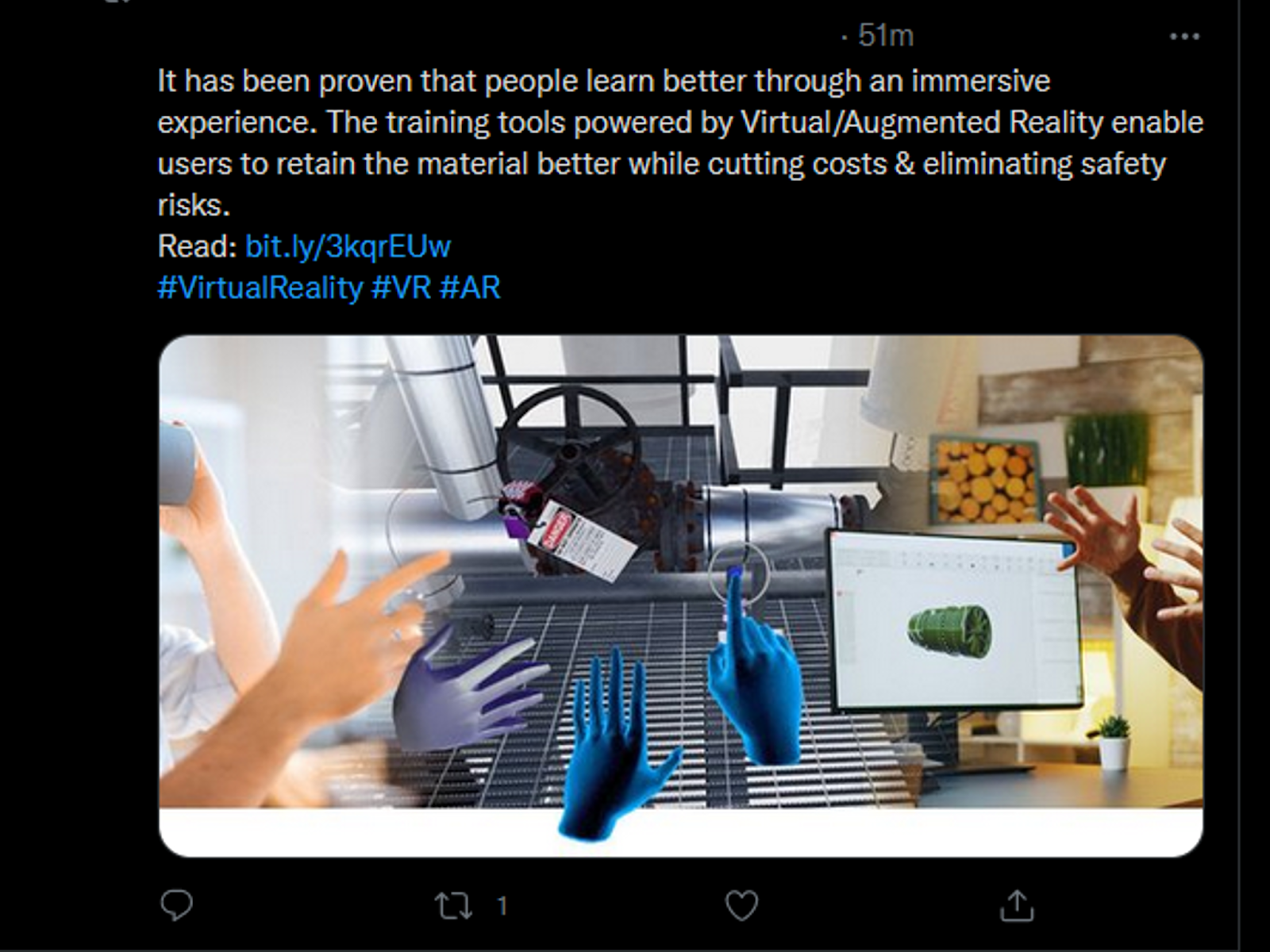

Twitter post dated November 29, 2021.
“It has been proven that people learn better through an immersive experience. The training tools powered by Virtual/Augmented Reality enable users to retain the material better while cutting costs & eliminating safety risks. Read [link]. #VirtualReality #VR #AR
So there are 4 claims here:
A. people learn better through an immersive experience
B. enable users to retain the material better
C. cutting costs
D. eliminate safety risks.
And here’s my vote on these claims:
A. people learn better through an immersive experience – No. 👎
B. enable users to retain the material better – No, because ‘better’ is flaky. I’ll shoot at “retain” too. 👎
C. cutting costs – Yes. 👍
D. eliminate safety risks.- Yes. 👍
The link provided goes to a business website that is selling developer services to make things in Unity. On the front page, there are NO claims about learning that I can find at all. So the “Read:” doesn’t seem to invite you to read more about facts supporting those claims. They are asking you to read all about how their business is cool.
Overall. that’s a score of 50%. Still, failing.
Remember that I’ve pointed to how dangerous & misleading “hand waive” language is. As soon as this started with “It has been proven that…” my hackles go up.
😦